Choose a route through the Museum of Fine Arts, rather than trying to see everything. Ancient collections, European paintings and monumental halls invite very different ways of looking. Pick the part that draws you in, then leave room for one surprise.
The setting beside Heroes’ Square makes it easy to combine art with an outdoor pause in City Park. Keep the museum visit focused: a few rooms explored properly are more satisfying than a hurried circuit through centuries.
Permanent collections, temporary shows and your visit time
Permanent-collection admission and temporary exhibitions are different ticket choices. A ticket for a temporary show includes the permanent exhibitions open that day. The normal museum day ends at 18:00, but admission stops at 17:00 and galleries begin closing at 17:30. Special events and holidays can alter the schedule.
The Hall of Prints and Drawings is listed as closed until 10 December. Check the current gallery notice before building a visit around that room.
Start with ancient Egypt or the classical world
The ancient collections give you a route that feels different from the painting galleries. Begin with one culture or theme and compare a small group of objects: materials, scale and intended use often reveal more than a rapid sequence of labels.
With children, let an object prompt a question before moving on. What might it have been used for, and what details support that guess? You do not need to turn every room into a lesson.
Old Masters: follow a period, a subject or a detail
The European galleries run from medieval and Renaissance art through the seventeenth and eighteenth centuries. Choose a manageable route: a period you know, a subject you enjoy or a repeated detail such as fabric, landscape or the direction of a figure’s gaze.
Stand back before reading the label, then move closer. Comparing two paintings can make differences in colour and composition easier to notice than looking at each in isolation. Leave gaps in the itinerary for works that unexpectedly hold your attention.
The Romanesque Hall: look up before you move on
The Romanesque Hall is a museum interior, not a medieval church. Its monumental columns and painted decoration evoke the architecture of a basilica. Look for tree-of-life motifs, peacocks and heraldic imagery rather than treating the room simply as a grand backdrop.
Created as part of the museum’s historic architectural sequence, the hall was damaged during the Second World War and later used for storage. Its restoration brought a remarkable space back into public view. Pause near the centre, then look from the side to see how the decoration changes across the room.
Add one temporary exhibition without exhausting the day
A temporary show can become the main reason for visiting. Bonjour Monsieur Gauguin runs from 30 October 2026 to 28 February 2027. If that is your priority, choose the corresponding ticket and leave a shorter, selective route for the permanent galleries.
Allow a break between the two. The temptation to use every part of a ticket can turn a rewarding museum visit into a marathon; decide what you most want to remember before adding more rooms.
One museum admission or a Budapest Card?
A single museum ticket is the simple choice for a focused art visit. Budapest Card Classic holders can obtain one-time permanent-exhibition access after the card is checked at the ticket office. Temporary shows are excluded from that benefit.
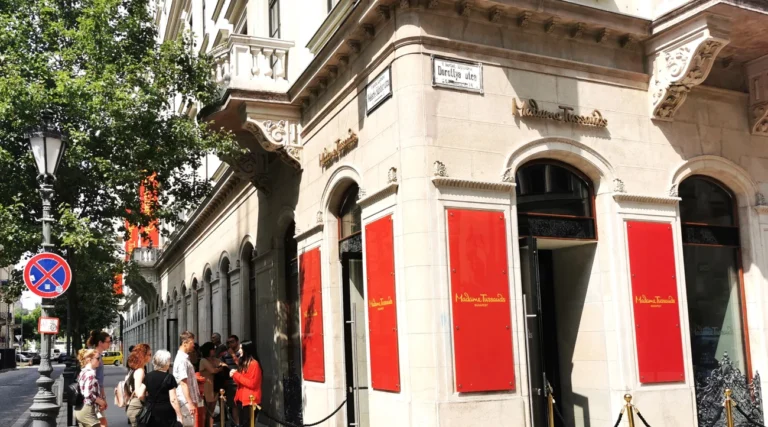
The card below is a city pass, not a standalone museum ticket. Compare its transport and other included visits with your actual plans before choosing a duration. For a temporary exhibition, calculate that separate admission too.
- Fine Arts and the Hungarian National Gallery are different museums.
- Choose a permanent route or make a temporary show the priority.
- Admission ends before the building closes.
- Bring evidence when requesting a concession or free ticket.
- Start with one collection rather than every floor.
- Leave time to look up inside the Romanesque Hall.
- Take a break before adding a temporary exhibition.
- Continue outside into Heroes’ Square or City Park when you have had enough art.
Arrive at Heroes’ Square, with a separate lift approach
The museum stands at Dózsa György út 41, with its entrance facing Heroes’ Square. M1 Hősök tere is a useful arrival point; choose the exact route in BudapestGO rather than relying on a straight-line map distance.
A museum opened for the city’s artistic ambitions
The museum opened in 1906, following the decision to establish it in the Millennium Act of 1896. Albert Schickedanz and Fülöp Herzog designed the building opposite the Kunsthalle, giving the collections a monumental home beside Heroes’ Square.
Collections assembled through donations, purchases and earlier institutions formed the basis of the museum. The building and artworks suffered during the Second World War; much of the evacuated collection returned from Germany in 1946–47.
Hungarian works were separated after 1957, while later institutional reunification and the major restoration brought art from before 1800 back to the Museum of Fine Arts in 2018. The collections now place Hungarian and international works within a shared historical setting.
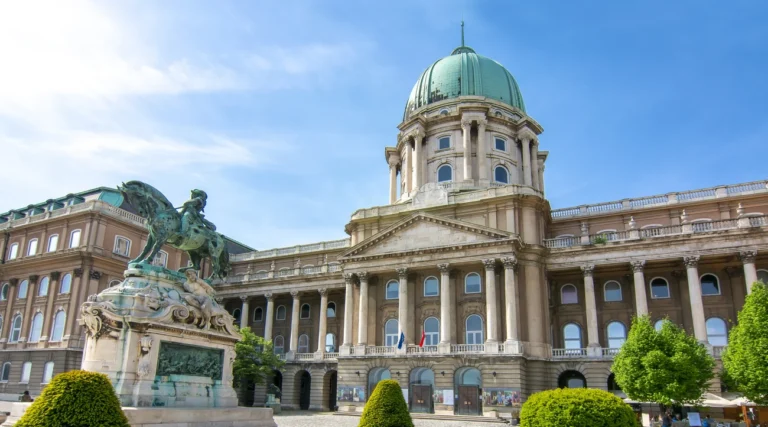
That background helps explain why a visit here differs from the National Gallery in Buda Castle. Treat the two as complementary institutions, with different collections and a separate journey between them.
Compare city passes and a guided introduction to Pest
Museum of Fine Arts visiting questions