Royal landmarks and bridges
along the Danube

Grand squares and boulevards
on both sides of the river

Historic churches, sacred art
and panoramic terraces

Sculptural fountains and water
features across the city

Hungarian art and history
in museums and galleries

Island paths and leafy parks
for a slower city break
Explore the Castle District, follow the Danube riverfront and discover Budapest’s museums, historic churches, squares and parks.
Choose a manageable route between Buda and Pest, allow time for hills and bridge crossings, and plan the bookings that matter for your first stay.
Plan journeys around Budapest by metro, tram and bus, and check the ticket and airport connection that fit your route.

Painted façades, ceramic art and Danube walks
by H5 or a guided day trip

Basilica visits and hilltop castle views
around Esztergom and Visegrád

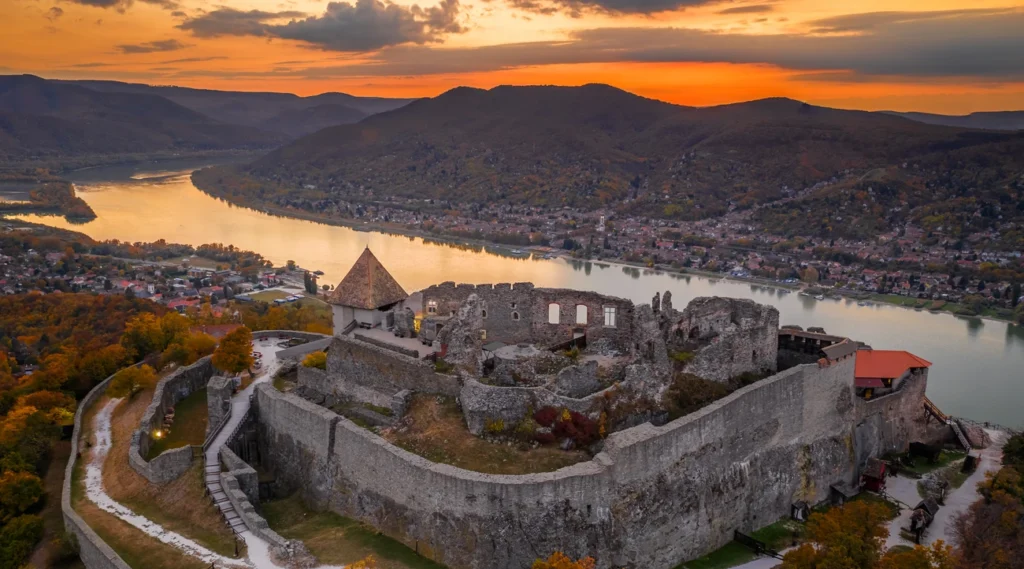
Explore the Danube Bend, historic towns and royal residences beyond Budapest. Compare the route and time available before choosing an independent trip or organised excursion.
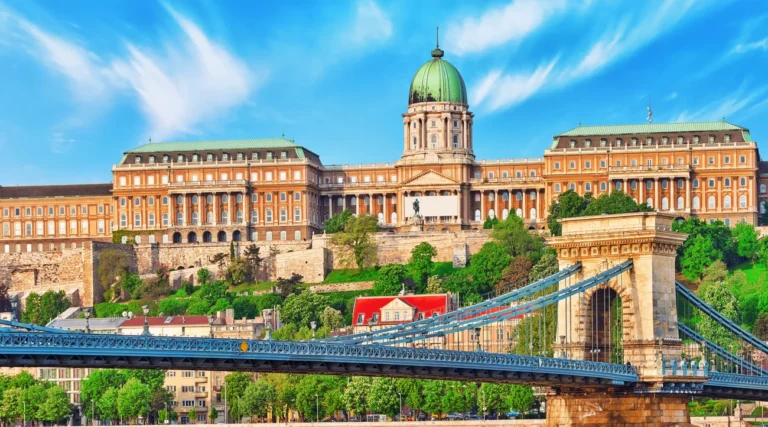
The Chain Bridge makes the change from Pest to Buda feel like part of the visit. Walk between the stone lions, look along the Danube and watch Castle Hill grow closer as you approach the western bank. Crossing on foot is free; you do not need a ticket or sightseeing pass.
This is a working city bridge, not a ticketed attraction with an admission desk. You can normally walk across at any time, subject to temporary closures, events and maintenance. The pavements are open to pedestrians; the roadway still carries buses, taxis and other permitted traffic.
Temporary closures and events can affect access
Daylight for details; dusk for the riverside lights
Approximate time with stops for views
No admission ticket or pass needed
Optional paid activity, not entry to the bridge
The uphill journey is separate from the river crossing
Look at the bridge from the bank before crossing it. The pylons and chains are easier to appreciate from a little distance, while the lion sculptures reward a closer look at either end. Keep to the pavement and leave space for people passing.
Look for the four lion sculptures at the bridgeheads. Their raised position explains why the famous tongues are hard to see from below.
Pause on the bank to take in the suspension structure. From the pavement, notice how the chains frame the view rather than stopping in the flow of walkers.
Approaching from Pest puts Buda Castle ahead of you. Take a wide riverbank view before moving onto the bridge for closer details.
At Clark Ádám tér, turn back towards the Pest riverfront. The view changes as you leave the bridge, so there is no need to crowd a single photograph spot.
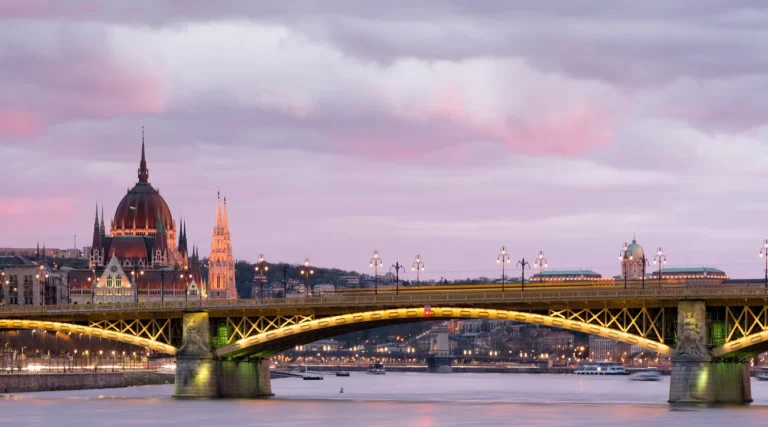
The illuminated structure and riverside create a different scene after daylight fades. Keep a steady position out of the walking route and bring an extra layer in cooler weather.
Allow around 10 minutes for a straightforward crossing, or 20–30 minutes if you stop for views and photographs. Those are planning estimates, not a timed attraction visit. Choose one bank for the next part of your day rather than walking back simply to collect another photograph.
Best moment
Daylight for stonework; dusk for the bridge and riverside lights.
Crowds
Leave room on the pavement and step aside for photographs.
Kid friendly
Keep children close near the roadway and river; shorten the route if they are tired.
Unmissable
The stone lions, suspension chains and views between the two banks.
Suggested visit length
About 10 minutes to cross, or 20–30 minutes with view stops; these are approximate planning times.
What to expect
An outdoor crossing exposed to wind and rain, with permitted traffic on the roadway.
Start on the Pest bank if you want Castle Hill to become the backdrop as you walk. Begin at Clark Ádám tér on the Buda side if you want to finish near the central Pest streets. The bridge crossing itself stays at river level; reaching the castle district afterwards is a separate uphill journey.
A Danube cruise offers a different view of the bridge from the water. It is an optional paid activity with its own boarding point and departure time, not admission to the bridge. Check the actual sailing route and inclusions before booking.


The eastern end meets Széchenyi István tér in Pest; the western end reaches Clark Ádám tér below Castle Hill. Use those square names when checking your route in BudapestGO. Choose the bank that best fits your next stop, and check service changes before setting out.
For a Pest-side approach, plan towards Széchenyi István tér and allow a final street-level walk to the bridge. Use BudapestGO to compare the nearest operating stops with your starting point; there is no metro station on the bridge itself.
BKK buses use the bridge. Check a current journey to Clark Ádám tér for the Buda end or Széchenyi István tér for the Pest end, including the direction and temporary stop changes. A bus ride follows public transport ticket rules; it is separate from the free walk.

Follow the riverside streets to either bridgehead and cross on the pavement. Use marked crossings around the squares. Street-level approaches avoid choosing a riverbank staircase by mistake; Castle Hill is a separate uphill route.

Széchenyi Lánchíd, between Széchenyi István tér and Clark Ádám tér, Budapest
The Chain Bridge opened in 1849, decades before Buda, Pest and Óbuda united as Budapest. It turned a difficult river crossing into a permanent link, helping the two banks function more closely together.
Count István Széchenyi championed the project. English engineer William Tierney Clark designed the bridge, while Scottish engineer Adam Clark supervised construction. The shared surname can be confusing: the designer and the engineer on site were different people.
The bridge was destroyed during the fighting in 1945. Reconstruction restored its familiar silhouette, and it reopened on 20 November 1949, a century after its original inauguration. The major renovation completed in 2023 repaired the structure and restored historic details, including the stone lions.
Yes. Walking across the Chain Bridge is free. No admission ticket, reservation or sightseeing pass is needed for the ordinary pedestrian crossing.
Plan roughly 10 minutes to cross without long stops, or 20–30 minutes for views and photographs. Add separate time for riverbank walks or the uphill route to the Castle District.
The pedestrian route crosses at river level, but the approaches and any onward journey matter. Do not assume the riverbank stairs or the climb to Castle Hill are step-free. Check a suitable street-level approach and current access conditions for your mobility needs.
No. Private cars are restricted, but the roadway is used by buses, taxis, cyclists, motorcycles and other permitted traffic. Stay on the pavement and use marked crossings at the bridgeheads.
For a first crossing, starting in Pest gives you Castle Hill ahead of you. Starting in Buda works well if you want to finish near the central Pest streets. Neither direction requires a ticket.
Yes, provided you supervise children near traffic and the river and leave room for other pedestrians. A short crossing can work better than a long bridge-and-castle walk when children are tired.
No. A cruise is a separate paid activity from a designated pier. You can cross the bridge on foot without booking anything; a boat trip is an optional way to see the riverside from another angle.
They do. The tongue-free lions story is a local legend, explained by the viewing angle from below. The sculptor was János Marschalkó.
Optional Danube sightseeing cruise