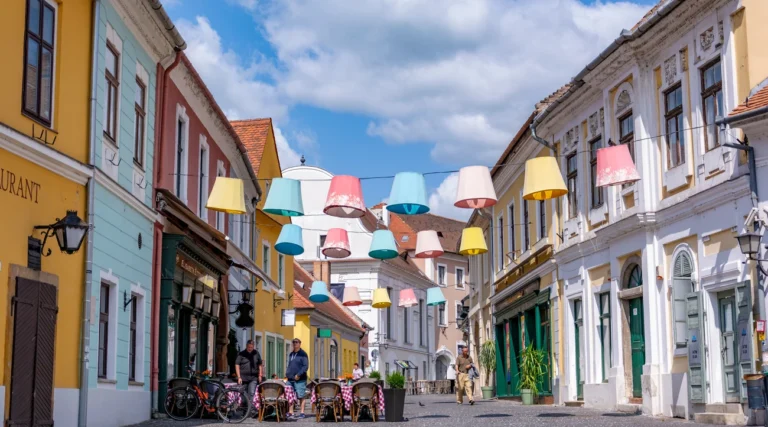
Szentendre is a day out for looking closely rather than rushing between big sights. Its small old town brings painted houses, church towers and art collections together beside the Danube. You can build a relaxed independent visit around H5, or choose a guided trip with transport included.
- Keep the old town and the Skanzen separate: the open-air museum is outside the centre and needs another transfer.
- Choose one art collection: Margit Kovács’s ceramics make a focused indoor stop between the lanes and the river.
- Allow the station walk: H5 reaches Szentendre, then you continue on foot into the historic centre.
- Check the return format: a boat journey is a seasonal option, not an automatic part of every tour.
Before booking a day in Szentendre
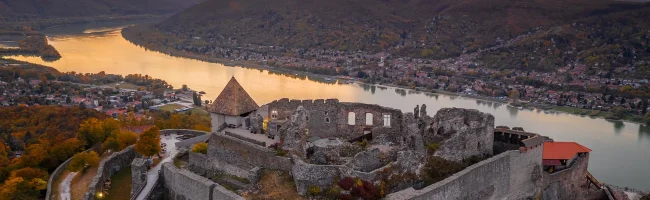
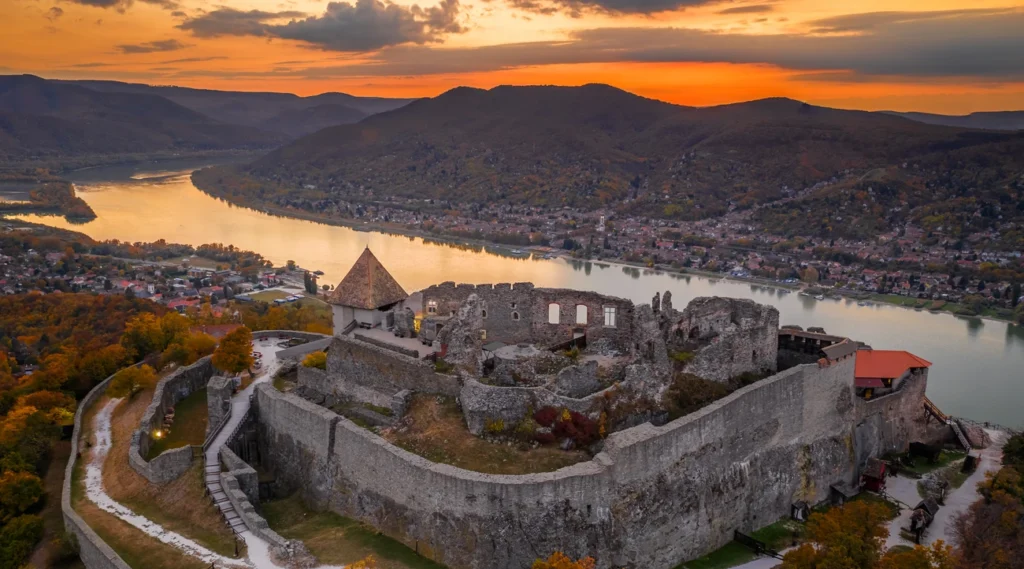
Decide whether you want time in one town or a wider Danube Bend circuit. An independent old-town day leaves room for a museum, lunch and the riverside. A half-day guided trip provides a shorter introduction. A multi-stop excursion adds Esztergom and Visegrád but gives you less time to wander Szentendre itself.
- A compact historic centre with small streets and painted façades.
- Ceramic art and other collections give the day more than shopping.
- H5 makes an independent visit practical from the Buda side.
- A riverside pause balances the lanes and museum interiors.
- H5 travel outside Budapest needs the appropriate suburban fare.
- Museum calendars can limit a visit, especially out of season.
- Cobbles and Church Hill steps require a different access plan.
- Boat returns depend on the chosen product, season and river conditions.
Distance and travel time from Budapest to Szentendre
From Batthyány tér to the old-town Fő tér, the road route is about 21 km. H5 takes about 39 minutes from Batthyány tér to Szentendre station; add the walk into town and the journey from your accommodation to the departure station. The estimates below describe travel, not the time you should spend visiting.
Fő tér and the lanes: look beyond the shopfronts
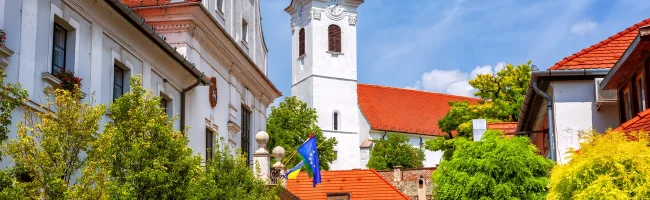
Fő tér is the natural place to pause before following the smaller streets. Look at the scale of the buildings and the way the church towers rise above them. The town’s trading past is still legible in the compact centre; at number 18, the former lodging house dates from around 1770 and has Rococo details.
Turn away from the busiest frontage for a short lane loop, then return to the square to reorient yourself. The pleasure here is the relationship between houses, corners and steeples. Leave time to look up and to stop without blocking narrow entrances, rather than trying to turn every building into a separate attraction.
Choose ceramics or painting for the indoor part of the day
The Margit Kovács Ceramic Museum gives a first visit a clear artistic focus. Its figural works range across everyday and religious subjects, and the display includes the artist’s working world. The museum opened in 1973 following her donation of the collection.
Szentendre also has collections connected with painters such as Czóbel and Kmetty. Choose according to your interests and the current programme instead of assuming every gallery will be open on the same day. One well-paced collection leaves space for the streets and river; several museums turn the outing into a more concentrated art day. Opening calendars and exhibitions are separate decisions from booking transport.
Church Hill or the lower lanes: choose the walk that suits you
Church Hill adds height and another perspective on the tightly packed old town. The parish church has medieval origins and later Baroque rebuilding, reflecting how often Szentendre’s buildings have changed. Church services take priority over casual visiting.
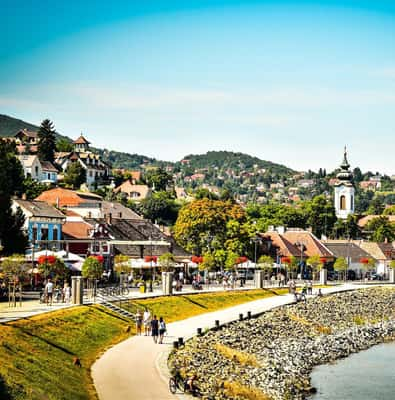
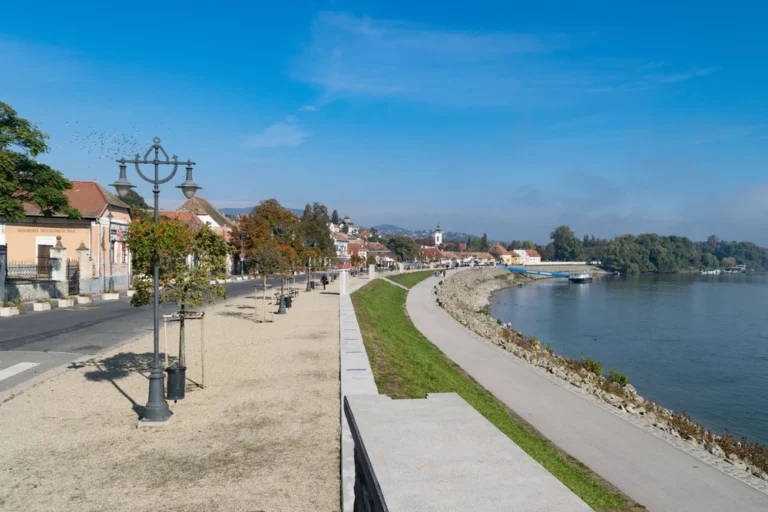
Treat the climb as an option, not a test you must complete to have seen the town. If steps or uneven surfaces are a concern, stay with a gentler route through the lower streets and towards the Danube promenade. The river gives the day a more open setting after the lanes, and it is a sensible place to leave time unplanned before the return journey.
The Skanzen belongs to a separate, seasonal plan
The Hungarian Open Air Museum is outside the historic centre. Reaching Szentendre by H5 is only the first part of that visit: you then need the onward local connection or a taxi. Do not mistake a tour of the old town for admission or transport to the Skanzen.
Choose it when traditional buildings and rural life are the main purpose of your outing, and give it enough time on its own. Its seasonal calendar, special-event openings and connecting services need checking before departure. Trying to add it after a full museum-and-lunch loop in the centre can turn a relaxed day into a sequence of transfers. A separate Skanzen day is often the clearer choice.
A slower route through the old town and along the Danube
Build an independent day around the lanes, one art collection and the river. Fit the museum between your morning walk and lunch, adjusting these suggested times to openings and your return.
The trip to Szentendre
Keep the day centred on the old town unless you deliberately choose another destination. These details help you match the route to the weather, your group and the amount of time you want indoors.
Guided Szentendre visits: compare the shape of the day
These are different ways to organise the journey, not three identical tickets. The coach visit offers a half-day introduction; the rail-based option adds a town walk and street-food tasting. The longer Danube Bend trip combines several towns and leaves a shorter Szentendre stop. Compare the programme before the starting price.
A return by boat is available only on the operator’s specified dates and can change with river conditions. Do not build your day around a cruise until the selected booking confirms it. None of these tours is presented as admission to the out-of-town Skanzen.
How to reach Szentendre
H5 from Batthyány tér is a straightforward independent approach. Use the suburban train to Szentendre, then walk into the historic centre. A Budapest city pass does not cover the whole ride beyond the city boundary at Békásmegyer: arrange the appropriate ticket for the outer section as well. Check the current service before departure.
Where to eat in Szentendre
Give lunch enough time if it is part of the pleasure of the day. These two central choices offer different approaches to Hungarian cooking. Check availability and the current menu before arranging a meal around your museum visit; no meal is assumed to be included in an excursion.
- H5 is not the whole visit: allow the station-to-centre walk in both directions.
- Separate the Skanzen: it has its own transfer and seasonal opening calendar.
- Check the selected tour: transport, tastings and admissions differ between products.
- Choose the museum before planning the meal and remaining walk.
- Keep a gentler lower-town alternative if Church Hill steps do not suit your group.
- Follow the booked boat or coach time; independent H5 plans are more flexible.
History of Szentendre
Szentendre’s small streets carry a history of migration, trade and art. Serbian, Dalmatian and Greek settlers helped shape the town after the Ottoman period, especially following the migration of 1690. Wine growing, crafts and commerce supported the prosperity visible in its eighteenth-century buildings.
The town’s story reaches much further back: the Roman fort of Ulcisia Castra belonged to the Danube frontier. Later settlement and rebuilding layered new communities onto the same riverside setting.
Nineteenth-century floods, fires and the devastation of the vineyards weakened the older economy. Szentendre retained its compact historic fabric rather than becoming a heavily industrial town, and its buildings and colour attracted painters.
The artists’ colony founded in 1926 helped make art a lasting part of the town’s identity. Museums devoted to artists connected with Szentendre, together with Margit Kovács’s ceramic collection, now offer a way to see beyond the picturesque street view. Choose one collection and the town’s reputation as an art destination becomes more tangible.
Continue your Budapest plans after the day trip
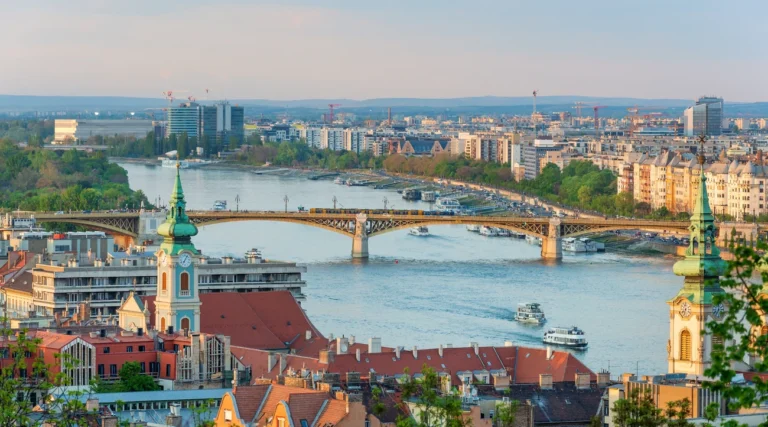
Back in Budapest, compare the city pass with your actual sightseeing plans, or choose a Danube cruise for a separate river experience. Neither is a substitute for planning the H5 suburban fare or a confirmed Szentendre return.
Frequently asked questions