Terézváros rewards a turn away from the avenue. The Opera gives the neighbourhood its grand entrance, but the more relaxed pleasures are a theatre street, a table on Liszt Ferenc Square and a detour towards Hunyadi Square. Use Andrássy Avenue as a spine, then let the side streets give the day its shape.
- Start around the Opera for architecture, theatre and photography.
- Make Liszt Ferenc Square a proper pause rather than a passing photograph.
- Choose one museum, exhibition or Opera visit; leave time for the streets between.
Step off Andrássy Avenue into Terézváros
Terézváros is District VI, on the Pest side. For a first visit, the useful central cluster runs from the Opera through Nagymező Street and Liszt Ferenc Square towards Oktogon. Beyond the Grand Boulevard, Hunyadi Square and the streets around Vörösmarty utca bring a different, more residential scale. Farther out, Andrássy Avenue opens towards villas and City Park.
This is a neighbourhood walk, rather than a requirement to follow the whole avenue from end to end. You can combine the inner theatre-and-café area with one booked interior, or continue outward if you want more walking. Do not confuse the district with the Jewish Quarter next door: Király Street forms a useful seam between their different street patterns.
- The Opera, photography venues and theatres form a compact inner cluster.
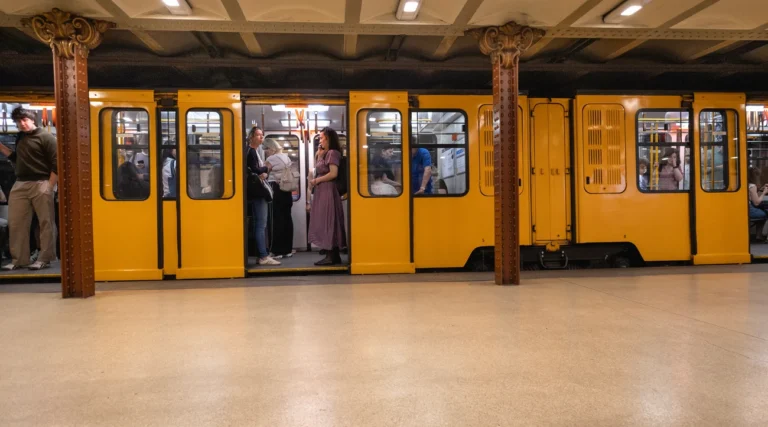
- M1 offers several possible arrival and finishing points along the avenue.
- Liszt Ferenc Square gives you a natural café pause off the main traffic route.
- A short detour towards Hunyadi Square adds a different neighbourhood setting.
- The full district is larger than the inner Opera–Oktogon walk.
- An attractive façade does not mean an interior is freely open.
- Gallery programmes, performances and guided tours need separate planning.
- The Grand Boulevard and avenue crossings deserve attention, especially with children.
Six anchors for a music-and-street-life walk
Choose a cluster, then one interior. The six places below are route anchors, not six admissions to squeeze into an afternoon. Start with the Opera and Nagymező Street, pause on Liszt Ferenc Square, then decide whether to finish at Oktogon or continue to Hunyadi Square and the outer avenue.
Nagymező Street: theatres and photography behind the avenue
Nagymező Street makes the neighbourhood feel like a cultural district. It crosses Andrássy Avenue between the Opera and Oktogon, linking theatre façades with photography venues. The Budapest Operetta Theatre and the Mai Manó House give you reasons to look beyond the avenue’s more uniform frontage; the Robert Capa Contemporary Photography Center adds another possible exhibition stop.
Choose the current programme that interests you. A photography exhibition, a performance and an Opera tour involve different tickets and time commitments. Enjoy the street without assuming that a theatre lobby or historic studio can be entered simply because the front door is nearby. If an interior is the main purpose of your outing, build the walk around its actual opening and booking arrangements.
Liszt Ferenc Square: a café pause beside the music academy
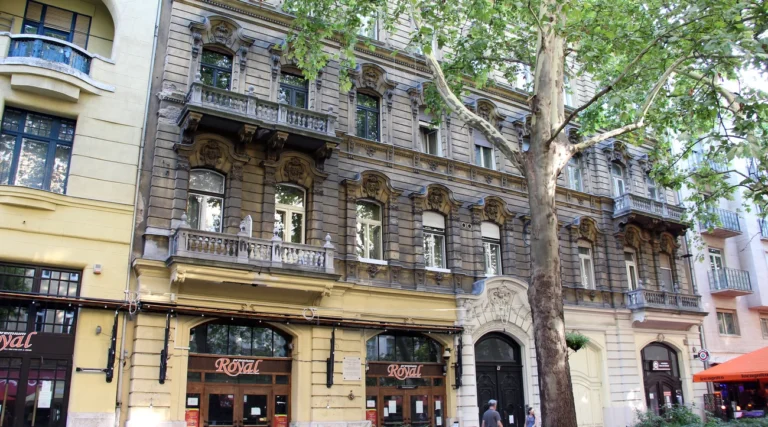
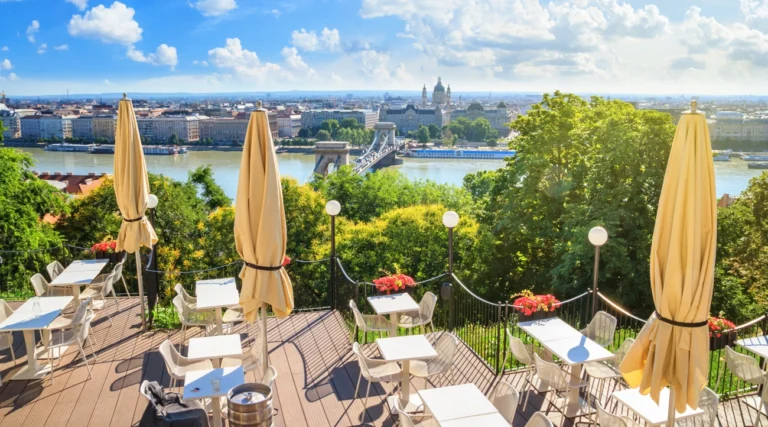
Liszt Ferenc Square is where this walk can slow down. Step away from the avenue and compare the tables, menus and shade rather than choosing the first terrace you see. The façades around the square are part of the pleasure: balconies, carved stonework and tree branches soften the transition from boulevard to side street. The cover photograph shows this setting, not an endorsement of any restaurant visible in it.
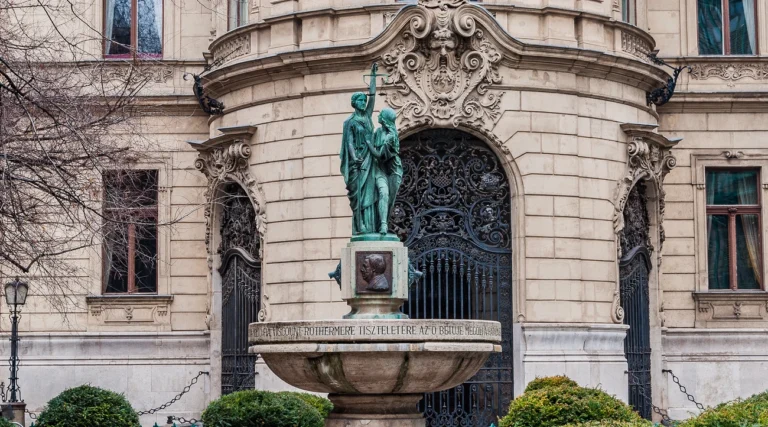
At the far end, the Liszt Academy gives the square a clear cultural destination. Its present main building opened in 1907; the statue above the entrance and rich decoration make it worth a look even when you are not attending a concert. A performance or a scheduled building visit is a separate plan. Do not confuse this academy building with the Liszt Memorial Museum in the older academy building near Vörösmarty utca.
Hunyadi Square: market façades and a greener pause
Hunyadi Square changes the rhythm from theatre street to neighbourhood square. The historic market hall at numbers 4–5 was built in 1897 to Győző Czigler’s design. Look at its decorated exterior and how the market building meets the surrounding residential streets; it is a smaller setting than the Great Market Hall and should not be presented as the same kind of large visitor attraction.
The square also provides a green pause near the Vörösmarty utca part of the avenue. A market visit depends on the day, stalls and any works or access arrangements, so make it an optional browse rather than promising a particular stall, tasting or meal. The square is still a useful detour when your main aim is a break from the grand avenue and a look at everyday Pest.
- Do not try to fit the Opera, two photography exhibitions and a concert into one short walk.
- Distinguish the Liszt Academy on the square from the Liszt Memorial Museum near Vörösmarty utca.
- Check actual entrance conditions; historic buildings may have steps or controlled access.
- Use current menus and programmes rather than relying on businesses in an older cover photograph.
- Begin at the Opera, explore Nagymező Street, then pause on Liszt Ferenc Square.
- Use Oktogon as a natural finish for a short version.
- Add Hunyadi Square if you want another neighbourhood setting.
- Book one interior separately and keep the rest of the route flexible.
Opera, Oktogon and Nyugati: choose your starting point
Opera on M1 is the simplest starting point for the inner cultural cluster. Oktogon combines M1 with the Grand Boulevard tram corridor and works as a finish or an alternative start. Nyugati, on M3 beside the railway station, approaches the district from its western side; check the final walk against your actual destination.
For a compact outing, allow roughly 90 minutes to two hours for streets and a relaxed pause, as a planning allowance rather than a fixed tour duration. An exhibition or guided Opera visit adds its own time. At large junctions, use designated crossings and allow for traffic lights rather than trusting a straight line on a map.
One interior is enough: plan the Opera around the walk
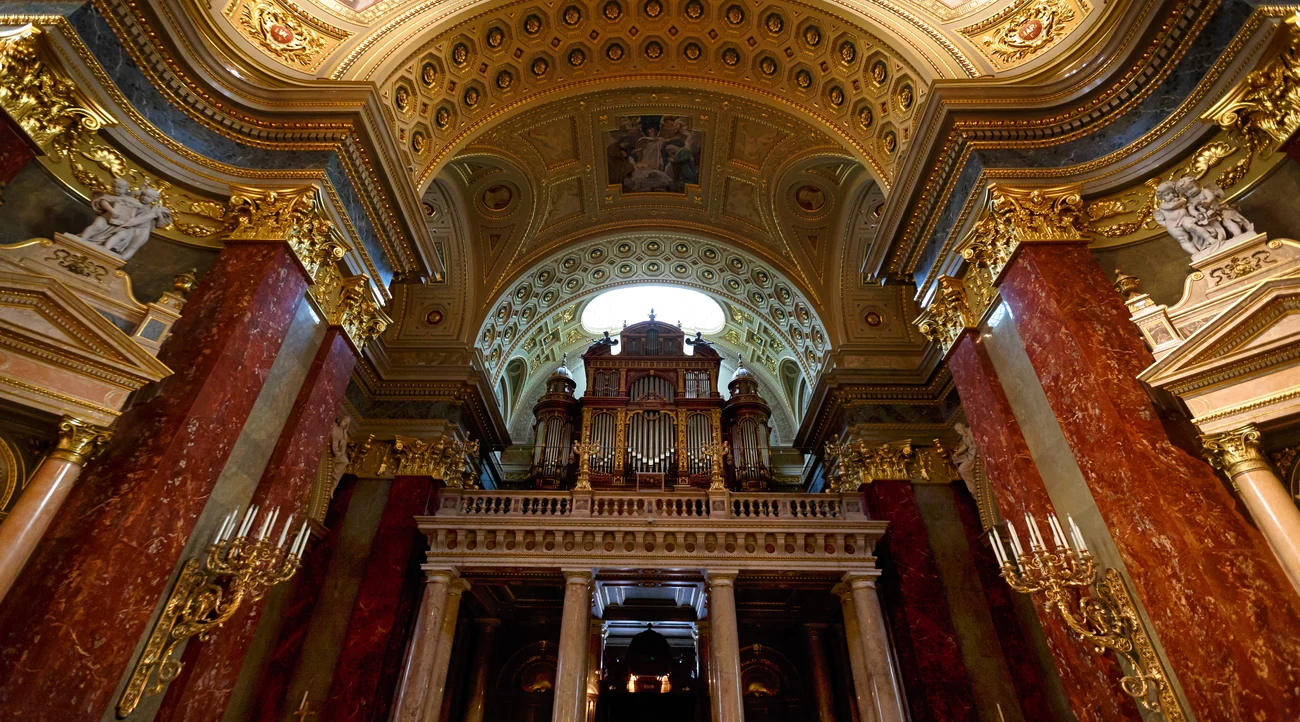
The Opera can be the booked centrepiece, with Terézváros as the walk around it. The official OperaTour combines a guided building visit with a short concert, while a full performance is a separate ticket and programme. Auditorium access can change around rehearsals, so do not treat a particular view of the hall as guaranteed.
Leave time before or after the booking for Nagymező Street and Liszt Ferenc Square. This keeps the day varied: a substantial interior, a little street architecture and a table, rather than a sequence of rushed admissions.
Concert tickets and Opera visits for your Terézváros day
An expanding Pest finds its cultural stage
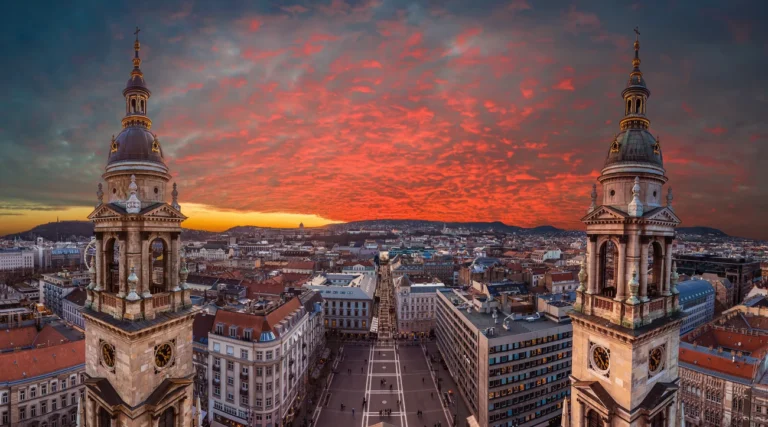
Terézváros reflects the expansion of nineteenth-century Pest. The development of Andrássy Avenue in the 1870s gave the city a new ceremonial route towards City Park. The Opera, opened in 1884 to Miklós Ybl’s design, placed a major cultural institution on that new urban stage. The side streets developed their own mix of theatres, residences, cafés and artistic life.
The contrast between avenue and side street is still the key to reading the neighbourhood. Near the Opera, continuous urban façades and cultural venues create a dense inner-city setting; farther along Andrássy, the streets broaden and eventually give way to villas and gardens. The Millennium Underground, opened in 1896, connected this expanding corridor with the city centre.
Music also moved between addresses. The academy founded by Liszt in 1875 occupied an earlier Andrássy Avenue building before its grand 1907 home on Liszt Ferenc Square. Today, the academy, the older memorial-museum setting and nearby theatre streets give the area several different musical stories. Treat them as separate places with their own uses, rather than one institution spread across interchangeable buildings.
Terézváros: questions for a first walk