Heroes’ Square (Hősök tere) is Budapest’s grand introduction to Hungarian history: mounted chieftains, royal figures and a memorial arranged at the end of Andrássy Avenue. Walk the monument slowly, then continue into City Park rather than treating the square as a quick photograph from the road.
The square is free; museums, baths and organised tours are separate.
Find the seven Magyar chieftains around the central column.
The Heroes’ Memorial Stone is a place of remembrance, not an actual grave.
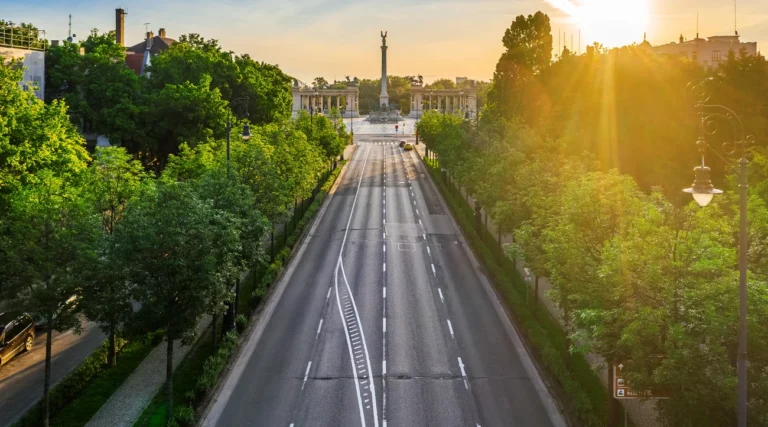
Gabriel’s statue has been removed for restoration; the cover photograph shows the earlier arrangement.
M1 Hősök tere brings you close to the square; leave time for the surrounding crossings.
Read the square from the centre outwards
Arrive along Andrássy Avenue and the monument seems to close the boulevard like a stage set. Once you reach the open paving, its details become easier to separate: the chieftains at ground level, the tall central column and the two curving colonnades behind it. Start with that overall arrangement before trying to identify every ruler.
A visit of 20–40 minutes is a useful planning estimate for the square itself. Photographs, reading the reliefs and a quiet pause at the memorial can easily take longer than the first view from the metro exit suggests. Add a separate block of time for a museum or the park.
Chieftains, kings and the stories beneath them
You do not need to memorise a list of Hungarian rulers to enjoy the sculpture. Move from the centre towards the colonnades and look for the connection between a figure and the scene below it. The monument brings different centuries into one carefully staged space.
Gabriel’s restoration: understand the changing skyline
The archangel was removed for major restoration. Official project information describes work on both the bronze statue and the supporting column; its return depends on that work being completed. Do not plan around an assumed unveiling date or expect a historic photograph to match the view exactly.
The square still offers plenty to see at ground level. If the absent statue is the detail that interests you most, the City Park Visitor Centre in the Museum of Ethnography has presented a free exhibition about Gabriel with a full-size replica. Check its current visiting arrangements separately from the museum’s exhibitions.
From a monumental square to a slower City Park visit
The easiest way to soften the scale of Heroes’ Square is to walk beyond the colonnades towards City Park (Városliget). Paths, gardens and the lake area create a very different rhythm from the exposed paving. Choose a direction before you go: a park stroll, an art collection and a thermal bath are different outings, not a single quick stop.
Museum of Fine Arts: the monumental museum on one side of the square is a separate indoor visit, with its own admission and exhibition arrangements.
Műcsarnok / Kunsthalle: on the opposite side, contemporary exhibitions offer a different reason to come indoors; check the programme before choosing it over a park walk.
Széchenyi Baths: continue into the park for a bathing session only if you have allowed time, swimwear and the appropriate admission. It is not included with a visit to the square.
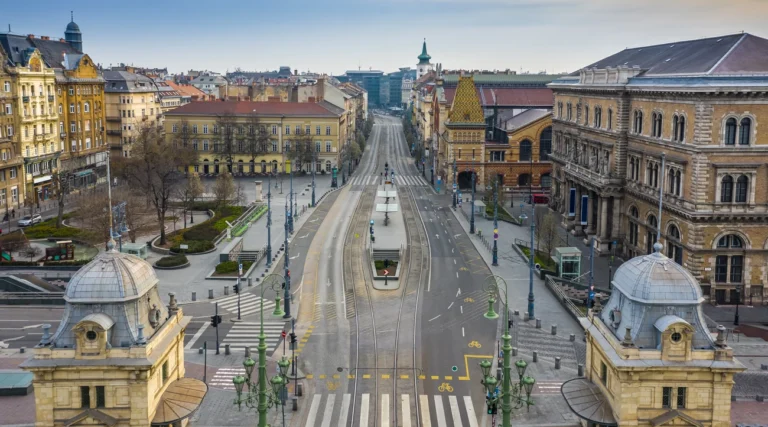
Andrássy Avenue: if you prefer to keep walking through the city, head back along the avenue towards Oktogon rather than trying to fit every nearby attraction into the same afternoon.
See the square on a wider city route
No ticket is needed to enter Heroes’ Square. These optional sightseeing services make sense if you want to connect the square with other parts of the city. They are transport and guided experiences, not admission to the monument or neighbouring museums.
The two hop-on hop-off services include a Heroes’ Square stop in their routes. The guided bus-and-cruise option follows a fixed itinerary with a stop at the square: it does not let you board and leave at will. Compare the route, operating day, language and meeting point before choosing.
Free outdoor visit: the square has no general admission charge.
Museum of Fine Arts, Műcsarnok and Széchenyi Baths have separate admission.
Gabriel’s restoration may change the monument’s appearance and access around work areas.
Ceremonies can affect where you walk; give commemorations space.
Start with a wide view, then move closer to the chieftains and reliefs.
The paving is exposed: bring shade and water in hot weather, and an extra layer on a windy day.
Meet at a named landmark or metro exit rather than simply “Heroes’ Square”.
Allow crossing time between the station, museums and park; the surrounding roads carry traffic.
Getting to Heroes’ Square
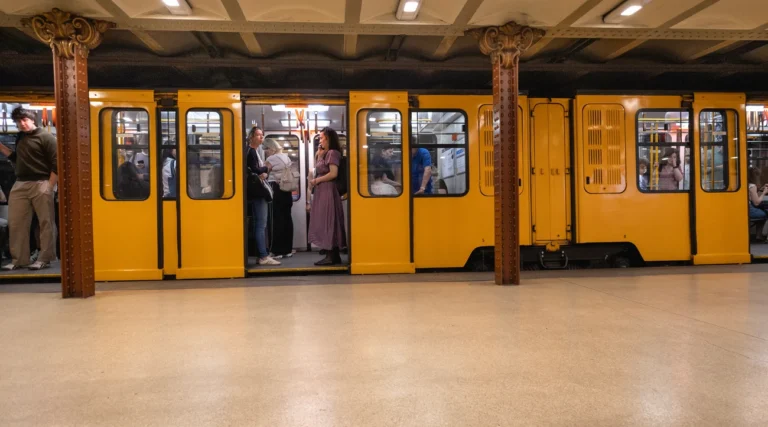
M1 Hősök tere is the most straightforward metro approach. The station is close to the end of Andrássy Avenue; use the signed pedestrian crossings to reach the monument and the museums. An M1 journey also works well with a walk back along part of the avenue.
Stay along the avenue if this is your kind of day
A base near Andrássy Avenue, Opera or Oktogon can suit a trip that combines central Pest with City Park. Check the property’s exact position: “near Andrássy” covers a long avenue, and a room by Opera gives a different walk home from one beside the park. Our area guide compares those choices and nearby accommodation.
A millennium monument with a changing national story
The Millennium Monument grew out of the celebrations marking a thousand years since the Magyar settlement of the Carpathian Basin. 1896 was the commemorative starting point, not the completion date of every part of the ensemble. Architect Albert Schickedanz and sculptor György Zala shaped a monument that brought national origins and later history into one view.
The central group looks back to Árpád and the Magyar chieftains, while the colonnades move through later rulers and national figures. That arrangement gives the square a readable sequence, but the selection of statues has not stayed fixed. Political change also changed who was represented in this most public account of the nation.
The space became a setting for ceremonies and mass gatherings as well as a monument to the distant past. The reburial ceremony for Imre Nagy in 1989 made Heroes’ Square part of the story of Hungary’s political transition. The memorial stone in front of the column adds a quieter register of remembrance to the grand architectural setting.
Restoration of Gabriel and investigation of the column show that the ensemble is also a working conservation site. Seen this way, the square is more than a fixed postcard: it is a place where sculpture, commemoration and changing interpretations of history remain visible together.
Plan a park-side visit and your city route
Heroes’ Square visiting questions