Budapest’s four metro lines are useful for crossing the city and connecting railway stations, thermal baths and the historic centre. Deák Ferenc tér is the main interchange for M1, M2 and M3; M4 meets M3 at Kálvin tér and M2 at Keleti pályaudvar.
- M1 follows Andrássy Avenue towards Heroes’ Square and Széchenyi Baths.
- M2 links central Pest with Batthyány tér, Széll Kálmán tér and Déli station in Buda.
- M3 and M4 have step-free stations, but check the entrance and current lift status.
- No metro reaches the airport. Choose the separate-fare 100E or combine bus 200E with the metro when it is running.
Which metro line fits your visit?
Read the line number and the terminus before boarding. M1 stays on the Pest side; M2 crosses to northern central Buda; M3 runs north–south through Pest; M4 links the Kelenföld and Keleti railway stations across southern central Budapest.
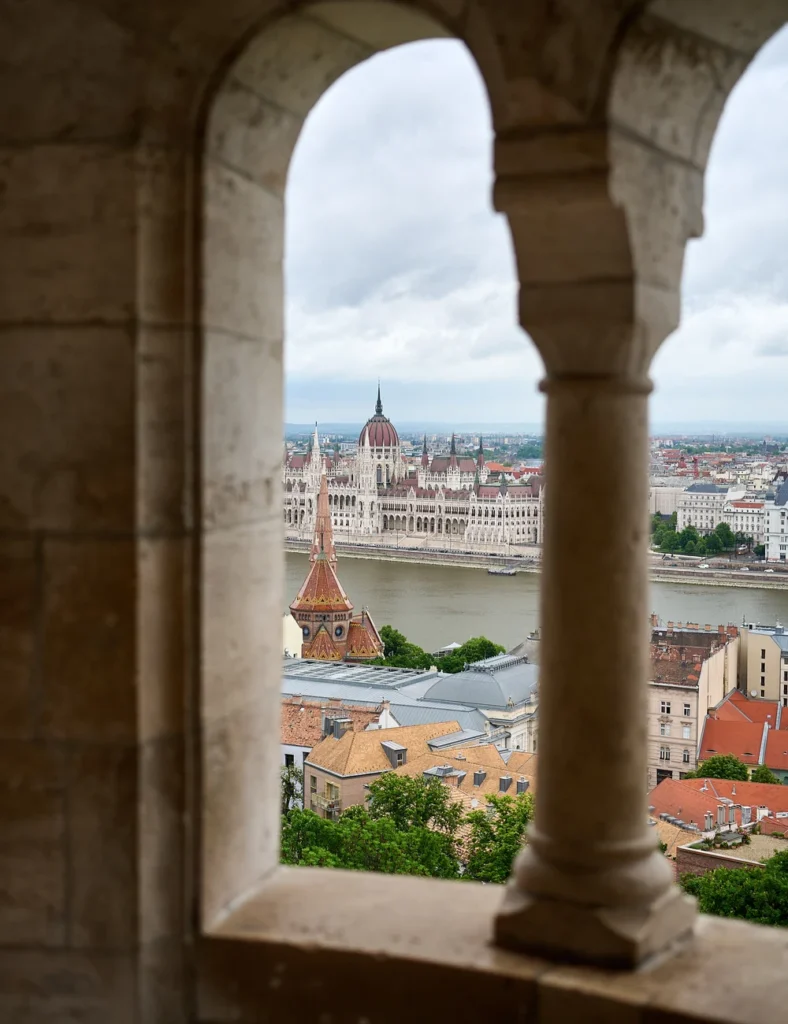
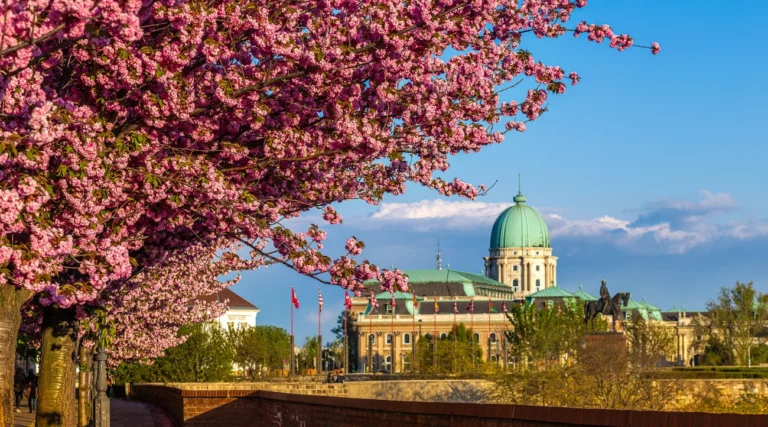
A station name is a starting point, not an attraction entrance. Allow a short walk to the Basilica from Bajcsy-Zsilinszky út, to Parliament from Kossuth Lajos tér and to the baths from Széchenyi fürdő. The Castle District is uphill from the river and has no metro station at the castle itself.
Budapest metro map: lines and interchanges
The most useful interchanges are Deák Ferenc tér (M1/M2/M3), Kálvin tér (M3/M4) and Keleti pályaudvar (M2/M4). Follow the line symbols inside the paid area rather than leaving the station and validating a second single ticket unnecessarily.
Single tickets, timed tickets and travelcards
Choose a fare for the journeys you will actually make. A single ticket works for one continuous, one-way metro journey, including changes between metro lines. Changing from the metro to an ordinary bus or tram needs another single ticket; a time-based ticket or valid travelcard can cover that connection instead.
These are standard adult BKK fares in Hungarian forints. Buy paper tickets from machines or supported digital products in BudapestGO. Pay&GO terminals at metro entrances offer another option: tap a bank card or compatible device to buy and validate one single ticket, then wait for confirmation. Use that same card/device during inspection. This is a single-ticket purchase, not unlimited travel or an automatic daily cap.
- Paper single ticket: stamp it before entering the metro’s paid area, then keep it until you have left the station.
- Digital single or time-based ticket: scan the station QR code or supported NFC point before entering and show the moving validation image when requested.
- 30- and 90-minute tickets: allow transfers within their time window; you may finish the last journey boarded before expiry.
- A single ticket does not permit a return trip or a sightseeing stop followed by re-entry.
- Scan a digital time-based ticket again when changing to a surface vehicle; an internal metro-line change does not require a new scan.
- Digital tickets need a working phone and internet connection. Keep the app ready before reaching the inspection point.
- The airport bus 100E has a separate fare; an ordinary metro ticket or 24-hour travelcard does not cover it.
How to validate, change lines and leave the metro
Validate before the escalator or platform access point, not after you see an inspector. Keep both your ticket and any required ID accessible throughout the trip. Metro stations use ticket checks even where there are no automatic gates.
- Find the correct entrance. Check the line symbol, destination and whether that entrance has a lift if you need one.
- Validate or display your product. Stamp a paper single ticket; scan a digital single/time-based ticket and show its animation. With Pay&GO, wait for confirmation of your single-ticket purchase. For a travelcard or pass, follow that product’s display instructions.
- Change inside the station. Follow the next line’s signs without leaving the paid area when making a permitted single-ticket metro transfer.
- Keep your proof on exit. There is no routine metro check-out tap. Keep your ticket, app or Pay&GO payment device available for inspection until you leave the station.
Do not confuse ticket validation with buying the ticket. A fresh paper single ticket is not valid until stamped, while a travelcard runs from its specified start time. If a machine or app causes a problem, resolve it before entering the paid area.
Airport connections: 100E or 200E plus M3?
Budapest Airport has no metro station. Bus 100E connects the terminal with central Pest, including Kálvin tér and Deák Ferenc tér. It uses a dedicated airport fare. Bus 200E is the alternative for an ordinary BKK fare: during metro operating hours, change at Kőbánya-Kispest for M3.
For a late arrival, use BudapestGO with your actual landing time. The 200E night connection differs from the daytime metro connection; do not travel to the end of M3 expecting trains to run all night. A single ticket for 200E does not also pay for a metro transfer: use a second single ticket or a valid time-based ticket/travelcard.
Late journeys: the last metro is not the same every night
M2, M3 and M4 finish later on Friday and Saturday nights: their last central departures are around 01:00, compared with around midnight from Sunday to Thursday. The precise time depends on the station and direction. M1 is not part of that later-running arrangement.
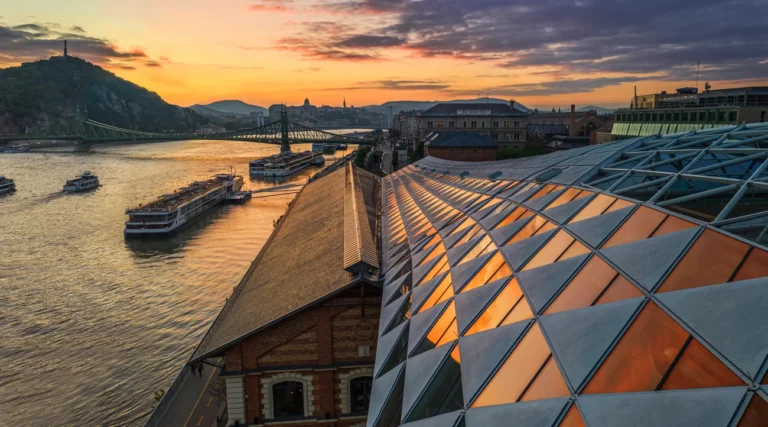
Check the final departure for the whole journey, including your interchange and onward walk. After the metro finishes, use the night-bus network or a suitable night tram connection. A late Danube cruise can end at a dock some distance from the nearest station, so plan the return from the actual landing point.
Step-free stations, lifts and the final walk
M3 and M4 provide step-free station access, but a lift symbol is not a guarantee that the lift you need is working. Check current BKK service information and the correct entrance before departure. M1 is generally unsuitable for a step-free journey; M2 has only a limited number of accessible stations.
On M2, Örs vezér tere, Pillangó utca and Puskás Ferenc Stadion have step-free access; do not assume that central interchanges on this line do too. Include the station exit, street crossings and attraction entrance in your plan. A river-level arrival in Buda still leaves an uphill journey to the Castle District.
When walking, a tram or a bus works better
Use the metro for the longer connection, then choose the street-level route that suits the visit. Budapest’s river views, hilltop streets and market approaches are not all reached directly from a metro entrance.
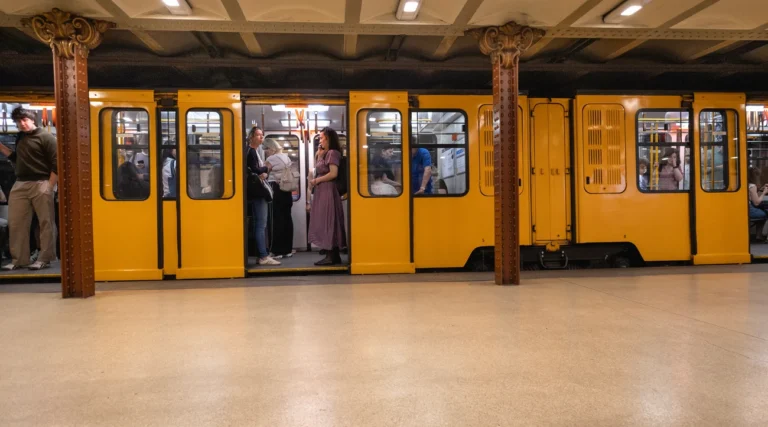
M1: a working piece of metro history
M1 opened on 2 May 1896 for Hungary’s millennium celebrations. Built for electric trains from the start, it became continental Europe’s first underground railway. It still carries everyday passengers beneath Andrássy Avenue.
The Millennium Underground was a different engineering idea from the deep metro lines visitors use today: a shallow electric railway that carried people along the grand avenue towards the City Park. Its modest stations and small trains explain why M1 feels so different from M3 and M4.
In 1973, the line was renovated and extended to Mexikói út, with the entire route placed underground. The original railway remains part of the city’s everyday transport network, so its historic character does not change the normal ticket-validation rules.
Baths and Parliament: plan the visit beyond the metro
M1 reaches Széchenyi Baths; M2 serves Kossuth Lajos tér near Parliament. Admission and guided visits are separate from your transport fare. Choose the bath ticket or Parliament visit below for the outing you want.
Frequently asked questions