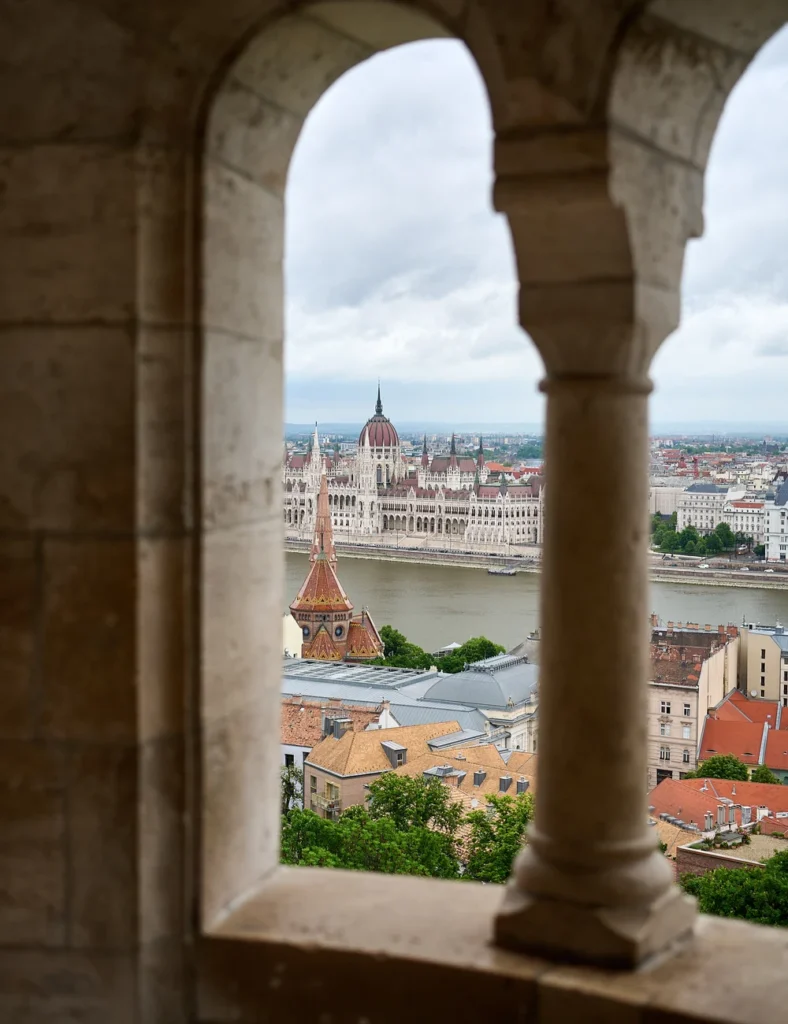
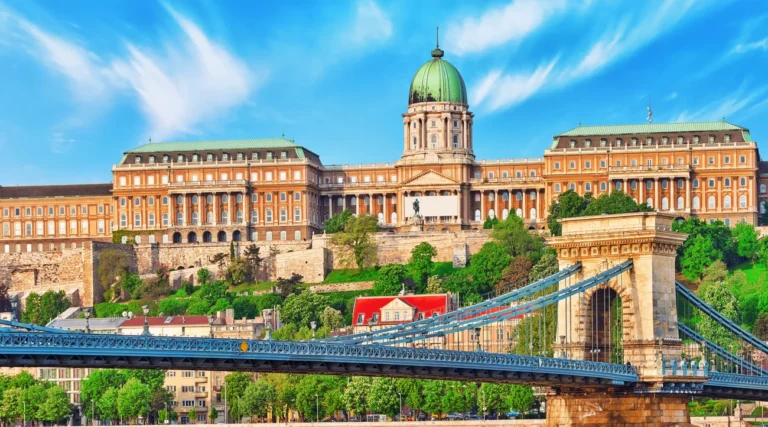
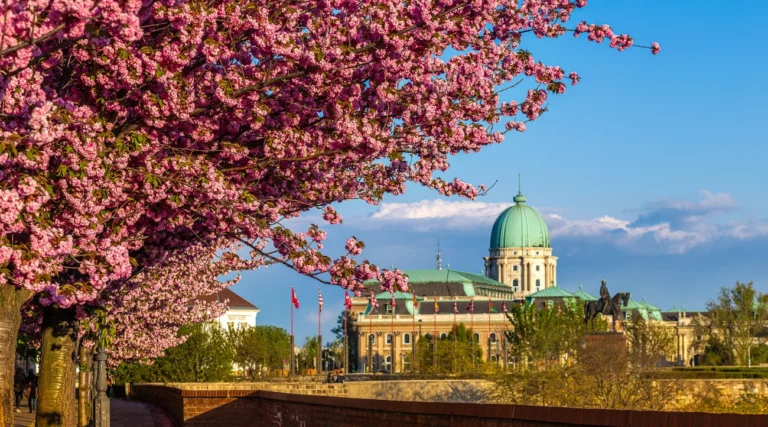
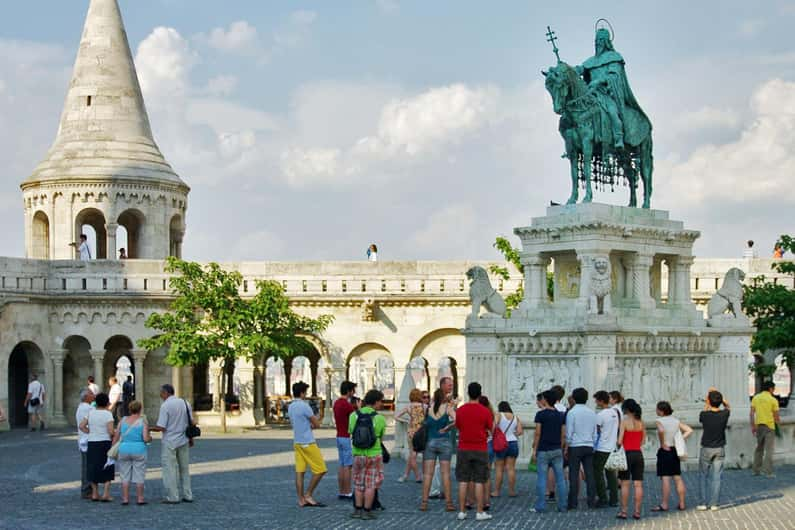
The Castle District is more rewarding when you leave time between its landmarks. The palace courtyards, Matthias Church and Fisherman’s Bastion give a first visit its obvious stops. The streets between them, and the western promenade beyond the busiest views, give the walk its rhythm.
Start with one interior you want to see, then build a loose outdoor route around it. The district is a neighbourhood as well as a visitor destination: look closely, respect doorways and allow yourself a quiet stretch without another booking.
Read the hill as a palace end and a town around the church
The royal palace and the streets around Matthias Church are parts of a larger hilltop visit. Do not use “the castle” as though it meant one building with one entrance. Decide whether your priority is art in a museum, a church interior, an outdoor viewpoint or the streets themselves.
A half-day is a useful editorial planning allowance when adding one substantial interior. Without that booking, keep the route flexible and stop when the hill has given you enough; there is no prize for covering every courtyard.
- Landmark viewpoints and historic streets within one hilltop area.
- A useful mix of open-air walking and separately ticketed interiors.
- Different river-facing and western-side perspectives.
- Churches, museums and paid terraces have separate tickets.
- The palace area can have work-related route changes.
- Slopes, steps and paving need consideration when choosing an approach.
Six stops to shape a first hilltop walk
Use these stops as a menu, not a compulsory circuit. Begin at the end of the district that suits your arrival, make your timed interior the fixed point and leave the rest open. A pause on a promenade can be as valuable as another attraction.
Tóth Árpád sétány: give the western side its own pause
The western promenade tells a different story from the river-facing arcades. Its route developed after the hill’s military role weakened, replacing an earlier service alley beside the walls. The name honours the poet Árpád Tóth.
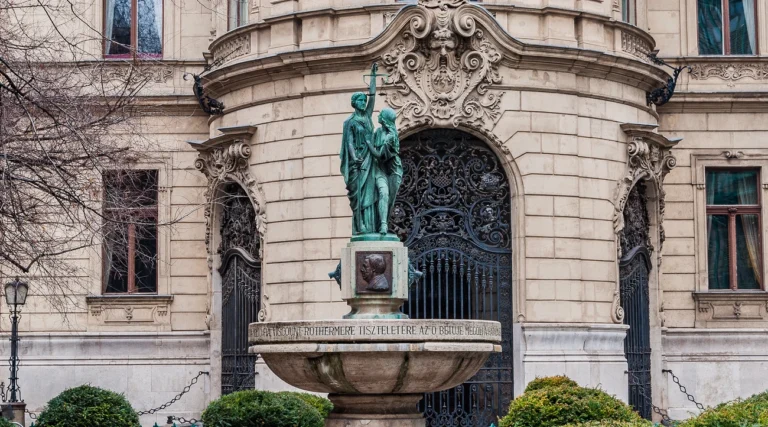
Look for the hussar memorial and the Ancient Source fountain as you walk. The sculptures give you reasons to pause without needing another interior ticket. Choose a stretch that suits your energy rather than turning the promenade into one more timed task.
Doorways and streets: enjoy the neighbourhood without intruding
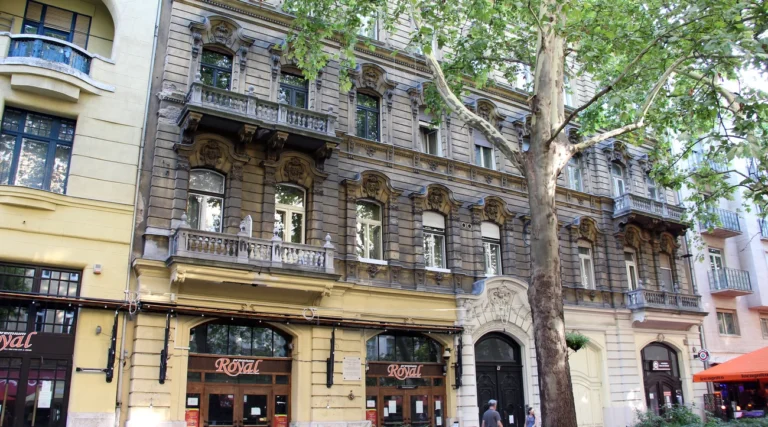
A slower street can be a better place to look than a crowded landmark. Notice how an entrance sits within a façade, how the roofline changes and how the street opens into a square. Keep your attention on the public space rather than assuming every appealing doorway leads to a visitor courtyard.
People live and work here. Step aside for deliveries and pedestrians, keep entrances clear and follow signs around construction. The quieter character of a street depends partly on how visitors use it.
Choose a guided walk around the interiors it actually includes
A guide can join the palace setting, church square and bastion into a coherent district story. Compare an outdoor walk with an option that adds an interior; the name “Castle District tour” does not establish that any church, museum or upper terrace is included.
The offers below concern this district. Check the selected route, meeting point and language before booking, and leave time afterwards to explore a street at your own pace.
- Outdoor streets and paid interiors are separate visits.
- Confirm exactly what a guided option includes.
- Follow open routes around palace-area works.
- Choose a hilltop bus if you want to reduce the climb.
- Plan one interior before adding another timed visit.
- Keep a western-side pause in the route.
- Wear shoes suited to uneven paving.
- Respect private doors and keep the pavement clear.
Arrive on the hilltop or make the climb part of the visit
Choose the arrival point around the first stop you actually want. A hilltop bus reduces the ascent, while the funicular brings you to the palace end. Neither choice removes every slope or step from a longer district walk.
Staying on the hill: atmosphere and the return journey
A hilltop stay suits travellers who value the setting as part of the trip. Check how you will return in the evening, where you plan to eat and whether the exact property involves steps. A beautiful address is only useful if the daily route works for you.
Compare a room within the district with a riverside Buda base. They can offer different approaches to the same hill, so read the location carefully rather than treating all “Buda Castle” accommodation as interchangeable.
Old street patterns beneath a rebuilt townscape
The reconstruction after the 1686 siege preserved much of the earlier street and plot pattern, even as houses, religious buildings and squares changed. That mix helps explain why the district can feel compact and old while displaying architecture from several periods.
Rebuilding brought new accommodation, workshops and institutions into a severely damaged town. Some plots merged, squares expanded and large religious buildings altered the scale of particular blocks.
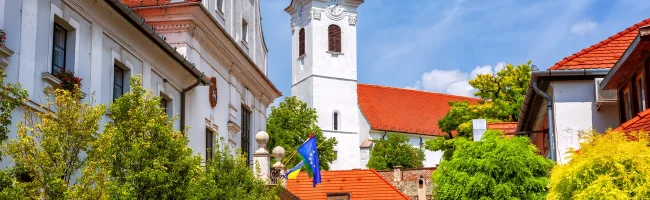
The western bastion promenade became a distinctive addition to the rebuilt town. Walking from the main streets towards the walls makes that relationship between an inhabited hilltop and its former defences easier to see.
Read the district as a layered place rather than a perfectly preserved single period. A doorway, a square and a palace courtyard can each belong to a different part of its long history.
Compare wider city passes and a Castle District walk
Castle District visiting questions