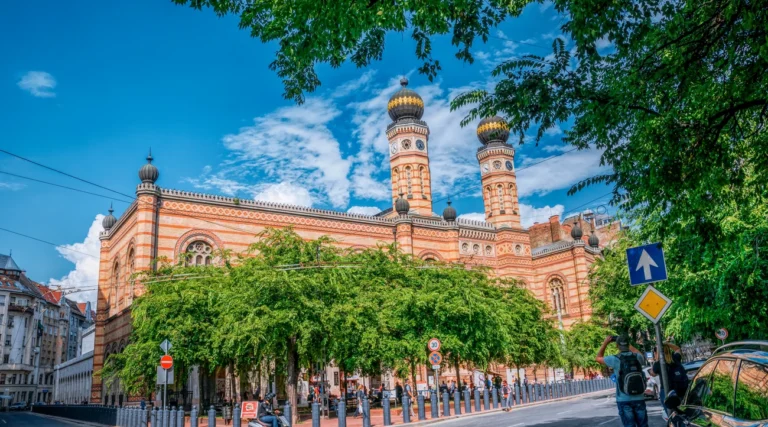
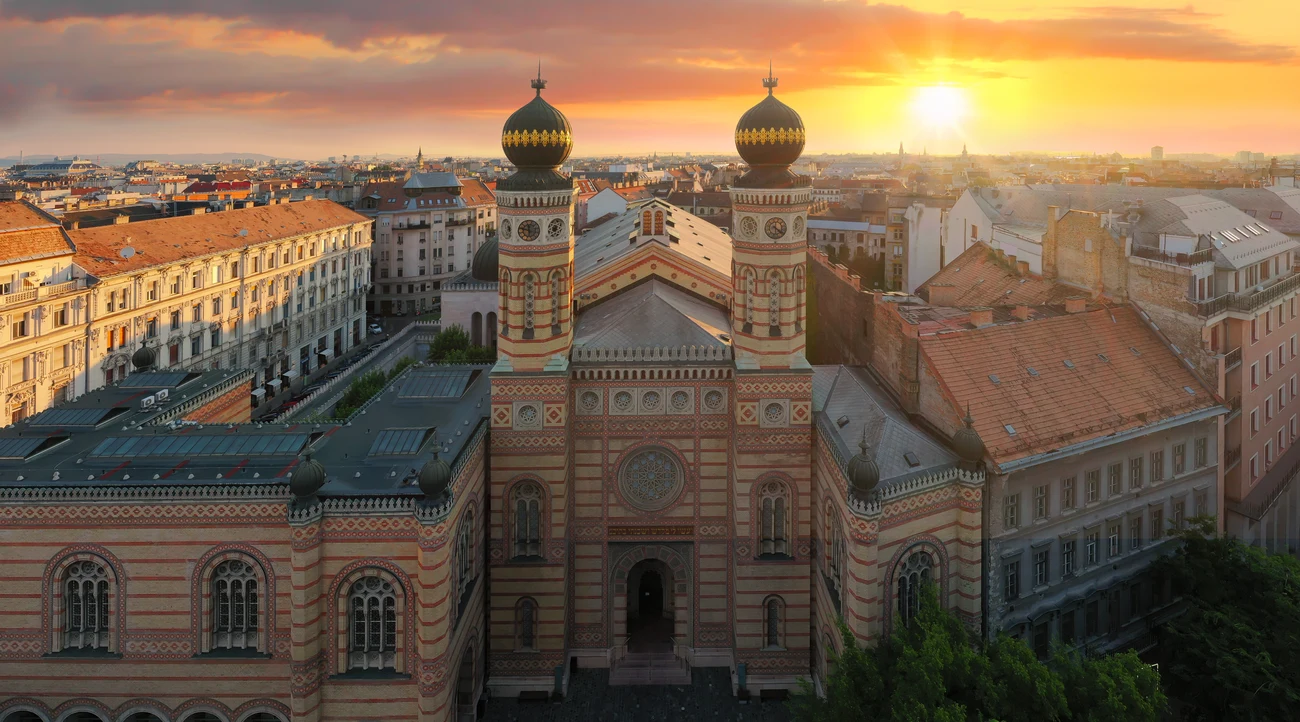
Dohány Street Synagogue is more than its twin-towered façade. The Moorish-style worship space, Jewish Museum, cemetery and memorial garden ask for different kinds of attention. Begin with the architecture, then leave time for the objects and the people remembered here.
- The complex is closed every Saturday and on specified holidays.
- Last entry is one hour before closing.
- An admission visit and a wider Jewish Quarter tour have different scopes.
Opening hours and admission: leave time beyond the doorway
Plan around the season, the weekday and the last-entry cutoff. Winter hours are shorter, particularly on Friday. Saturdays are closed, and Jewish holidays can override the normal schedule. The figures below are the operator’s published local admission categories; euro amounts are approximate rather than a separate euro tariff.
Inside the synagogue: arches, galleries and a living place of worship
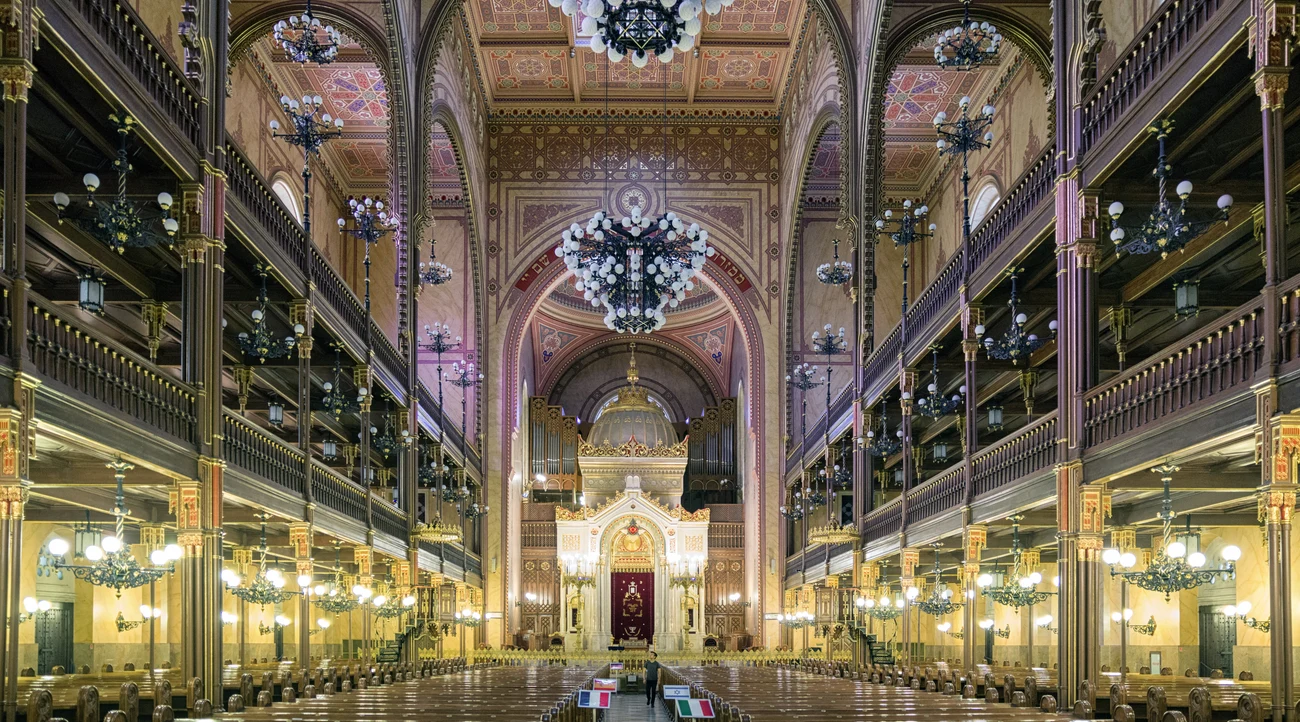
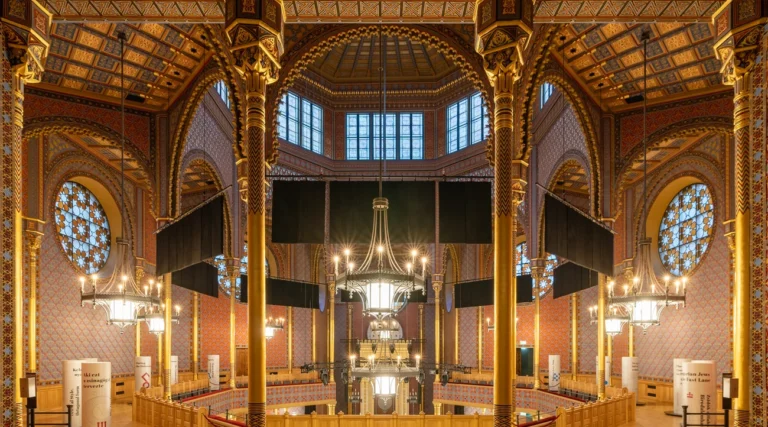
The interior rewards a pause before you start moving. Follow the repeated arches and galleries towards the sanctuary, then look up at the chandeliers and decorated ceiling. Ludwig Förster designed the synagogue, while Frigyes Feszl designed the inner sanctuary. The grand scale belongs to a congregation whose economic and cultural presence was growing in nineteenth-century Pest.
It remains a Neolog synagogue and a place of worship. Let that shape the pace of your visit: keep voices low, follow the route set by staff and avoid treating every space as a photo backdrop.
The cemetery and memorial garden deserve their own quiet pause
The cemetery is not simply a landscaped courtyard. Dohány Street marked the edge of the wartime ghetto, and the synagogue grounds became a burial place for Jewish victims of the Holocaust. Move through this part of the complex with the same care you would give any cemetery.
In the Raoul Wallenberg Memorial Park, Imre Varga’s Emmanuel memorial tree stands alongside plaques remembering rescuers. The operator credits Tony Curtis with envisioning the tree. Read the memorials individually rather than reducing the garden to one quick photograph.
The Jewish Museum adds objects and everyday life to the story
The Hungarian Jewish Museum gives a different focus from the large worship space next door. Leave room for the museum rather than spending the entire visit on the synagogue interior. Its place within the Jewish community is part of the story: this is an institution presenting a culture and its history, alongside a functioning religious site.
The operator lists the synagogue, Jewish Museum, ghetto exhibitions in the cellar, memorial park, Lapidarium and cemetery within the admission’s scope. Follow the actual route on the day; a ticket’s list of areas does not mean every space has identical access arrangements.
Choose synagogue admission or a wider Jewish heritage route
Book according to what you want to understand. Admission to this complex is different from a guided walk across District VII or a multi-synagogue itinerary. The operator invites admission guests to language-based guided explanations inside the complex; this does not turn every entry ticket into a full neighbourhood tour. Compare the selected offer’s inclusions, meeting instructions and language.
- Dress for a sacred place: avoid sleeveless tops, shorts and short skirts.
- Men cover their heads: a kippah is provided after ticket validation and must be worn throughout the complex.
- Security check: remove metal objects and phones from pockets as directed.
- Backpacks larger than hand luggage are not allowed.
- Keep Saturday out of your interior-visiting plans.
- Leave a buffer before the last-entry deadline.
- Food and drink are allowed only in the café, not throughout the site.
- Do not record the guide’s audio or video explanation.
Getting to Dohány utca from central Pest
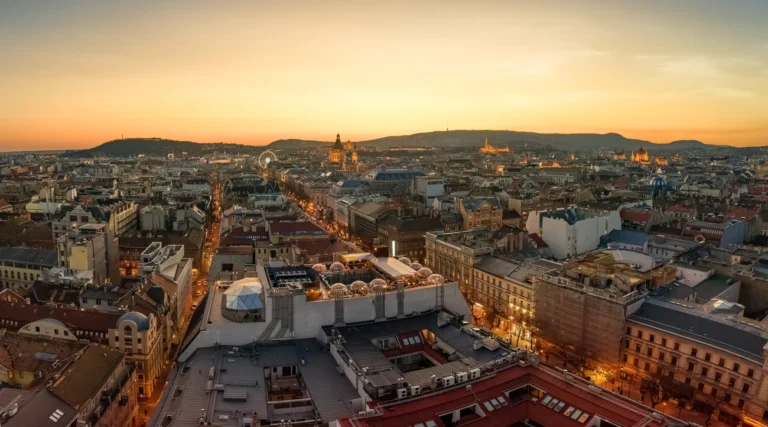
The visitor address is Dohány utca 2, on the edge of District VII. Astoria is a useful nearby transport reference, while a walk from Deák Ferenc tér lets you approach through central Pest. Check the current street crossing and entrance arrangements rather than walking directly towards whichever door looks closest.
A neighbourhood walk after the complex, with a change of pace
The surrounding Jewish Quarter holds layers of religious, residential and commercial life. A wider walk can help connect them, but do not treat an exterior stop at another synagogue as equivalent to an interior visit. Opening schedules and tickets differ between buildings.
Leave enough time after the cemetery and memorial garden before changing the pace of the day. A quiet walk through the nearby streets is a more considered transition than rushing straight to the next attraction.
From nineteenth-century Pest to a place of remembrance
The synagogue was consecrated on 6 September 1859. Förster’s Moorish-style building, with a sanctuary by Feszl, expressed the scale and confidence of Pest’s Jewish community. Its galleries and large interior accommodated close to 3,000 worshippers.
The history of the site cannot be separated from the Holocaust. Dohány Street stood at the boundary of the wartime ghetto, and the grounds became a burial place for those who died. The memorial garden and its plaques remember victims and rescuers, while the synagogue continues as a religious and cultural institution.
Compare synagogue tickets and Jewish heritage tours
Frequently asked questions