The Jewish Quarter rewards a daytime walk as much as an evening out. In the inner part of District VII, the routes between Dohány, Rumbach and Kazinczy streets bring places of worship, Holocaust remembrance and everyday neighbourhood life close together. Give each its own attention: a synagogue visit asks for a different pace from a courtyard café or a busy bar.
- Choose one interior first: opening calendars and admission arrangements shape the rest of the walk.
- Use the streets as the connection: the neighbourhood itself has no entrance ticket.
- Return after dark if you want nightlife: it is a different experience from seeing the architecture by day.
- Remember that people live here: courtyard doors and residential entrances are not automatic visitor routes.
Finding your bearings between Dohány, Király and the boulevard
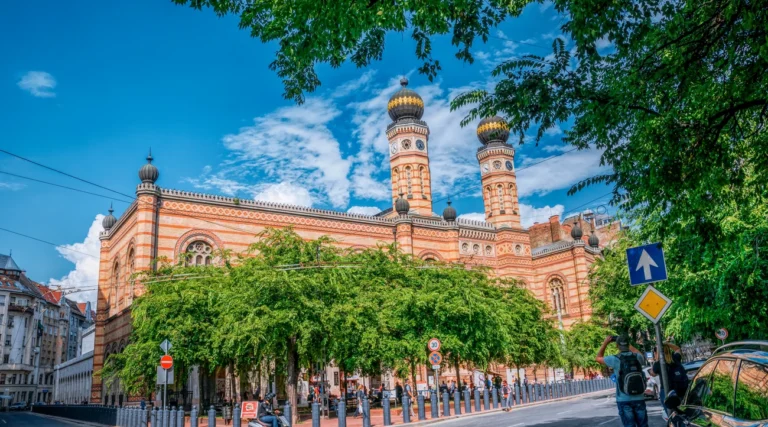
Begin with the inner streets of Erzsébetváros rather than trying to cover all of District VII. Dohány Street Synagogue makes a clear southern starting point; Rumbach and Kazinczy streets lead farther into the neighbourhood, while Király utca and the Grand Boulevard help you judge how far you have wandered. The historic quarter and the whole administrative district are not interchangeable.
A useful first loop links Dohány, Rumbach, Gozsdu Courtyard and Kazinczy. Add Klauzál tér when you want a square and a change from the narrower streets. Keep the route loose enough to stop: the interest is in the contrasts between buildings and uses, rather than a race to collect façades.
- Three synagogue streets within a walkable part of central Pest.
- Courtyard passages and cafés give the walk natural breaks.
- A daytime route can stand on its own without a night out.
- Synagogues have separate visitor calendars and admission arrangements.
- Memorial grounds require a different manner from entertainment venues.
- Evening noise and activity vary by street and by the position of a room.
6 stops for a first walk through the quarter
Choose a few stops and allow one of them to become a proper visit. Passing three synagogues outside does not give the same experience as entering one and understanding its community. These places form a neighbourhood route, not a single admission package.
Synagogue streets by day, courtyard life after dark
Make the interior visit the fixed point and let the streets fill the time around it. Start at Dohány, continue to Rumbach, cross towards Gozsdu and then turn along Dob and Kazinczy streets. This is a suggested walking sequence, not a promise that every interior will be open or included in the same ticket.
In daylight, look above the shopfronts: the façades and upper-floor windows tell a different story from the signs at pavement level. In the evening, Gozsdu and the entertainment streets become a different kind of destination. Choose a venue deliberately rather than expecting the whole quarter to offer the same atmosphere. If you prefer conversation and architecture, an earlier visit is often the better fit.
Courtyards, doorways and the neighbourhood above eye level
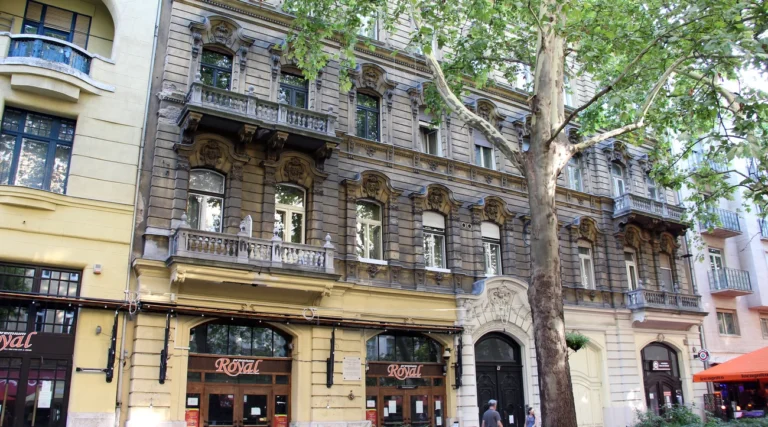
Do not let the ground-floor signs become the whole view of the quarter. Compare the upper façades as you move between Dohány, Rumbach and Kazinczy. Synagogue architecture sits among apartment buildings, shops and changing commercial uses: the walk becomes more interesting when you notice those relationships.
Gozsdu offers an obvious passage between two streets, but that does not make every open gateway elsewhere a public shortcut. Follow signs and keep entrances clear. A quieter side street can be a useful pause from a busy entertainment corner; it is also someone’s address, so keep the same care with voices and photographs.
Choose a heritage walk by the interiors it includes
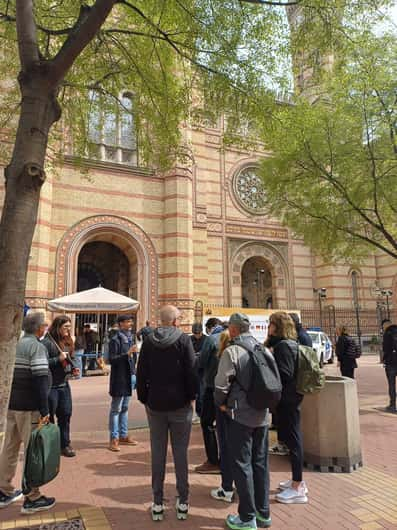
A specialist guide can connect the streets with the communities and events behind them. Compare the route, language and interior access before choosing. A short guided Dohány visit, a wider Jewish Quarter walk and a longer tour adding Kazinczy are different bookings; the lowest starting price does not make their inclusions equivalent.
The quarter remains freely walkable. These offers add a guided programme or specified admissions; they are not an entry fee to the neighbourhood. If you prefer an independent visit, use the separate synagogue admission guide below.
- Check the religious calendar: Dohány closes on Saturdays and Jewish holidays; other sites have their own arrangements.
- Keep remembrance separate from entertainment: the cemetery and memorial grounds are places to pause respectfully.
- Read the ticket: a walking route past a synagogue does not necessarily include its interior.
- Plan one interior before adding a second timed visit.
- Use Király, Dohány or the boulevard to reorient yourself when the smaller streets feel similar.
- For accommodation, check the room’s position as well as the street: courtyard-facing and entertainment-facing rooms can differ.
Getting to the quarter: choose the edge that suits the walk
Deák Ferenc tér, Astoria and Blaha Lujza tér serve different edges of the area. Pick an arrival for your first stop rather than treating them as the same destination. Astoria works for Dohány Street Synagogue; Deák Ferenc tér suits the Madách and Király street side. From the boulevard, continue on foot into the smaller streets.
Staying here: a central base with an evening trade-off
Choose the Jewish Quarter if you want cafés, restaurants and central Pest within your daily walking area. Before booking, examine the exact street and room orientation, particularly near entertainment venues. A district label alone cannot tell you whether the room will be quiet.
Separate the accommodation decision from the sightseeing route: you can enjoy a full daytime walk here while sleeping elsewhere. Our area guide compares hotels, B&Bs and apartments for a more detailed choice.
A living quarter shaped by worship, persecution and renewal
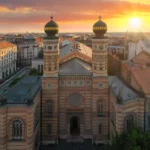
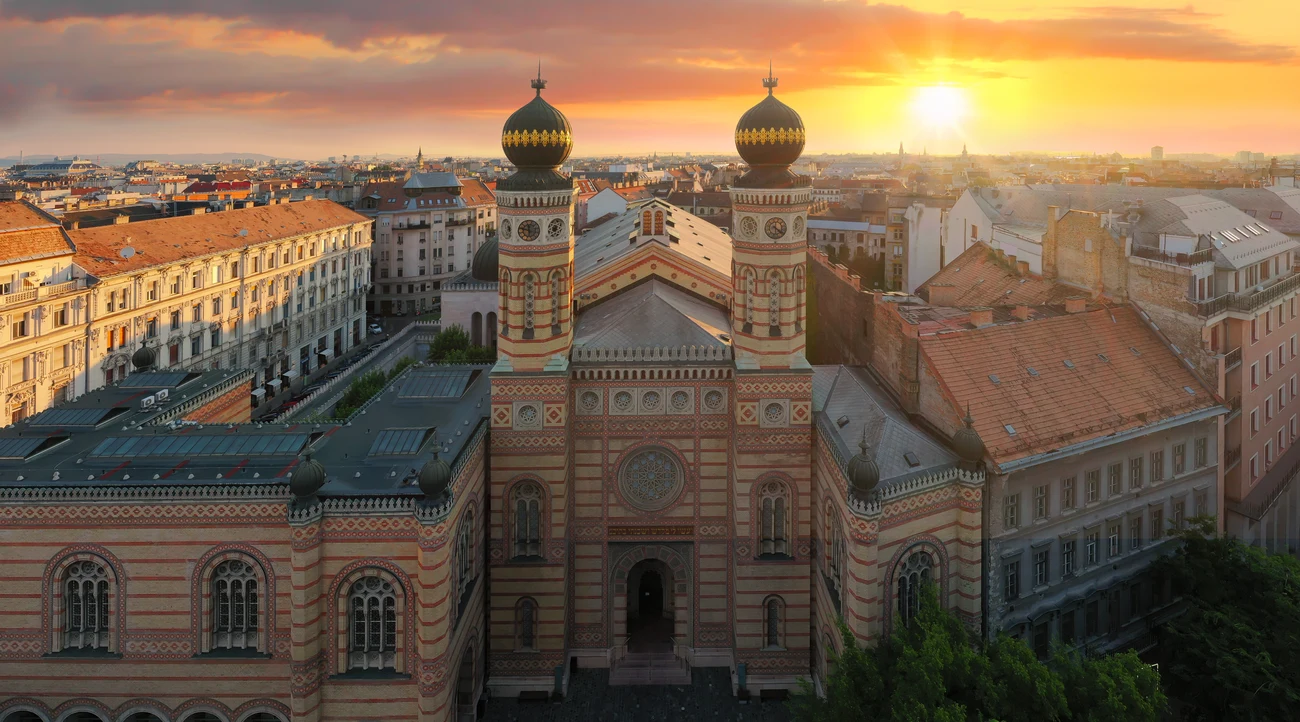
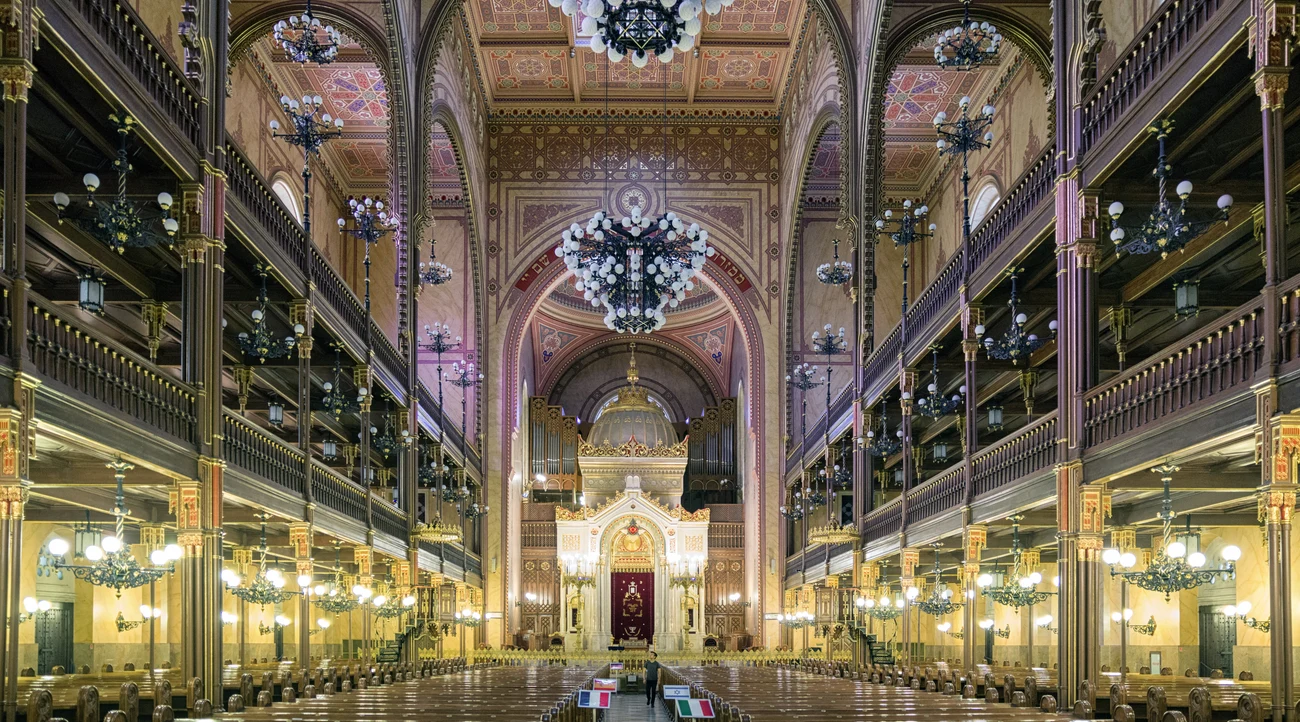
Dohány Street Synagogue was consecrated in 1859, expressing the scale and confidence of Pest’s Jewish community. The building remains a place of worship. The nearby synagogue streets reveal different religious and architectural traditions, rather than a single uniform institution.
The Holocaust changed the meaning of these streets. Dohány utca formed a boundary of the wartime ghetto, and the synagogue grounds became a burial place for people who died during the persecution. The cemetery and the Emmanuel memorial tree make remembrance part of the present-day visit, not a detached historical footnote.
The memorial tree was created by Imre Varga; the surrounding park also remembers people who helped rescue Jews. Give this part of the complex time of its own before returning to the busier streets.
The quarter’s later commercial life adds another layer. Gozsdu’s courtyards, once associated with trade, now host hospitality and entertainment. That contrast does not erase the religious communities or the neighbourhood’s residents. A thoughtful walk leaves room for all three: memory, living culture and everyday city life.
Synagogue admission and a guided heritage walk
Frequently asked questions