



















Castle Walk & Saint Stephen’s Hall
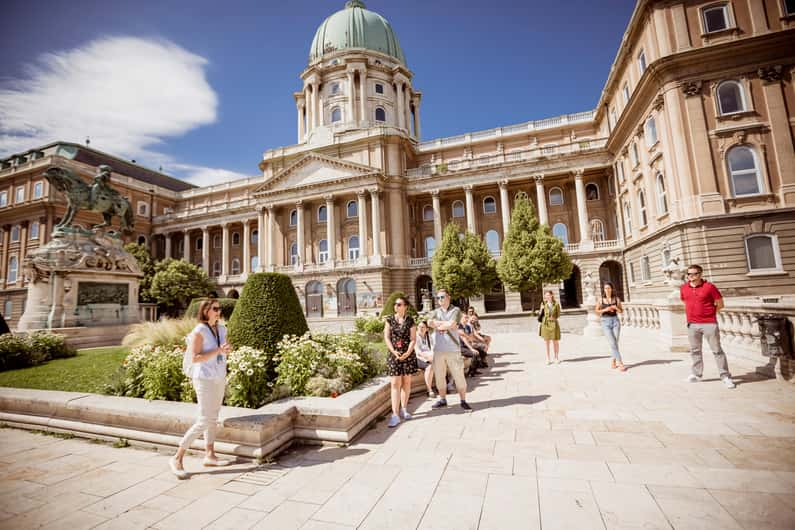
Walk through the palace courtyards, including Hunyadi Court, with an English guide, then visit Saint Stephen’s Hall. Hall admission is included; about 1.5 hours in total.



Royal landmarks and bridges
along the Danube

Grand squares and boulevards
on both sides of the river

Historic churches, sacred art
and panoramic terraces

Sculptural fountains and water
features across the city

Hungarian art and history
in museums and galleries

Island paths and leafy parks
for a slower city break
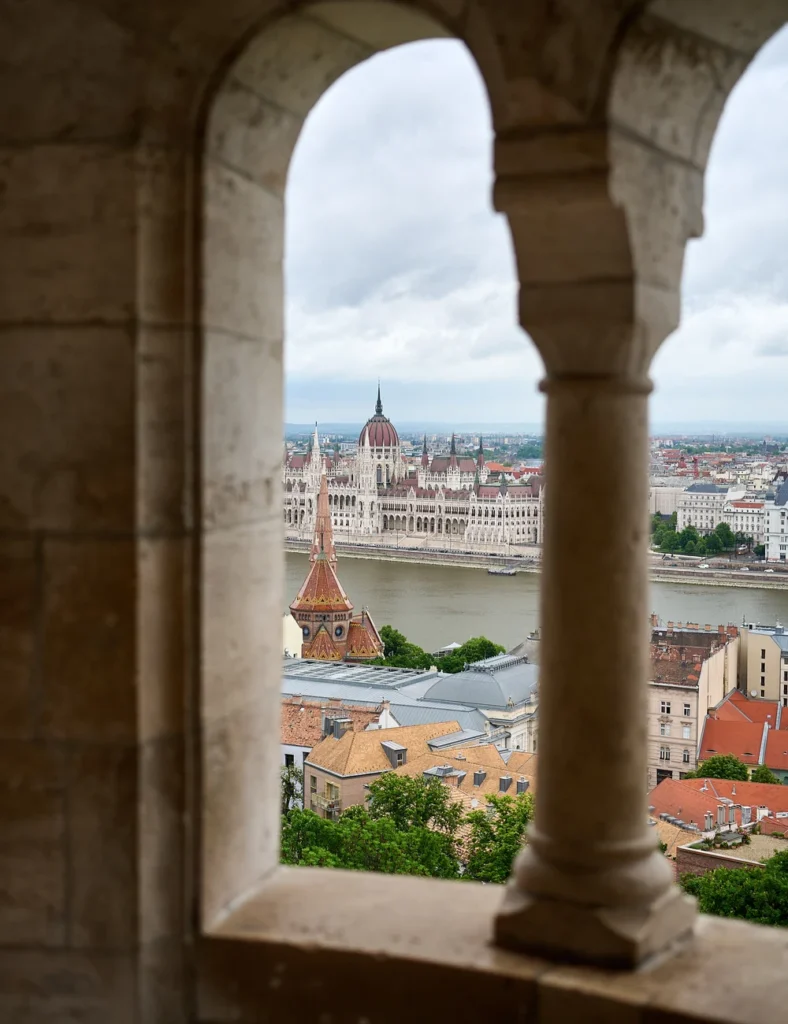
Explore the Castle District, follow the Danube riverfront and discover Budapest’s museums, historic churches, squares and parks.

Choose a manageable route between Buda and Pest, allow time for hills and bridge crossings, and plan the bookings that matter for your first stay.
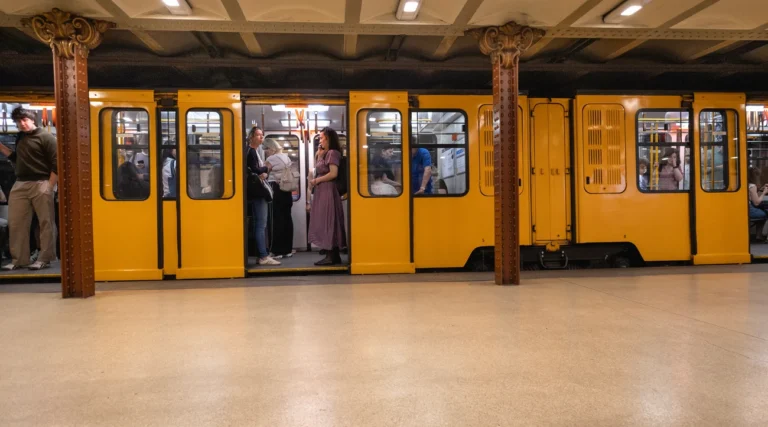
Plan journeys around Budapest by metro, tram and bus, and check the ticket and airport connection that fit your route.
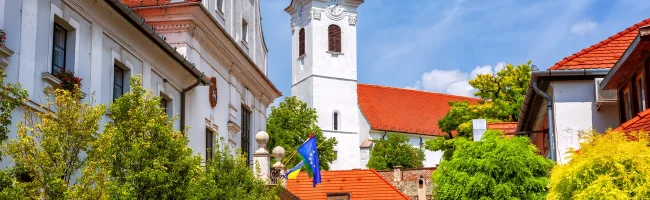
Painted façades, ceramic art and Danube walks
by H5 or a guided day trip
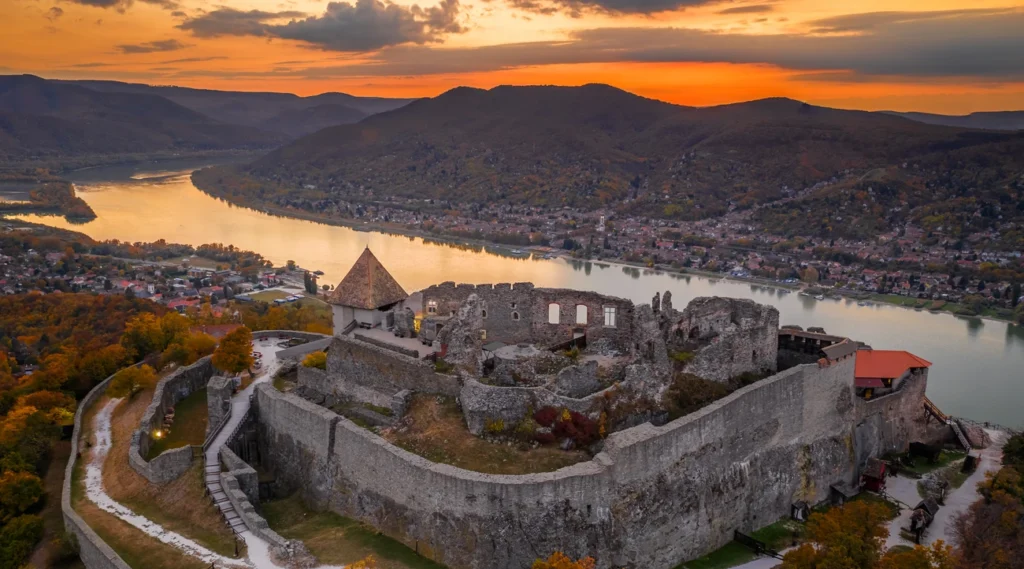
Basilica visits and hilltop castle views
around Esztergom and Visegrád

Explore the Danube Bend, historic towns and royal residences beyond Budapest. Compare the route and time available before choosing an independent trip or organised excursion.
Matthias Fountain makes a palace courtyard feel like a scene unfolding. A king stands above hunting dogs and companions, with rough-looking rocks set against the palace wall. Give it a few unhurried minutes: the changes in height, the bronze figures and the movement of water are more rewarding than a quick photograph from the passing crowd.
Find Hunyadi Court in the palace complex, rather than heading to Matthias Church.
Start with the whole group, then look more closely at the dogs and the king’s hunting equipment.
The fountain is a free outdoor stop; museum admission and guided walks are separate choices.
Use the open signed approaches through the palace district, where reconstruction can change the route.
The fountain is set against the south side of Hunyadi Court, within the Buda Castle Palace grounds. It is a good pause between courtyard walks or before a planned museum visit. Allow around 10–15 minutes as a suggested stop, adding separate time for the approach and anything you book indoors.
Look for Mátyás-kút on local maps and signs. Matthias Church is a different attraction farther north in the Castle District; sharing the king’s name does not put the two sights at the same entrance.
A planning allowance for looking at the group; the walk through the palace grounds takes additional time.
No separate fountain admission. Follow open courtyard routes; museum and guided-tour tickets are separate.
Begin at the highest figure and let your eye move down through the group. King Matthias appears as a hunter, with the animals and people arranged at different levels below him. The rock setting gives the scene depth: from the side, the dogs and figures separate from one another more clearly than in a straight-on snapshot.
Find the standing hunter at the top, then notice the crossbow and the detail of his dress.
The animal beside the king establishes the hunting setting before you begin reading the smaller figures.
Look at their different poses and the leashes connecting them to the human group.
Widen your view to include the seated figures. They balance the central action rather than simply decorating an empty corner.
Notice the contrast between green bronze, pale masonry and the uneven rock forms. The sculpture still rewards a look when water is not running.
Take a few steps back after looking at the individual figures. The scene is pressed against a formal palace façade, yet the rocks suggest an outdoor hunting landscape. That contrast is part of its appeal: a carefully framed piece of courtly storytelling opens within an architectural courtyard.
For photographs, try one wider view that keeps the wall and side figures, then a closer composition of the dogs or the hunter above them. Daylight helps separate the bronze details. Leave space for other visitors and keep your viewpoint on the public ground rather than climbing onto the stonework.
Best light
Daylight for bronze details and the relationship with the palace wall.
A shared courtyard
Wait for a clear view without blocking the route through Hunyadi Court.
With children
Turn the visit into a short search for dogs, antlers and hunting equipment.
Look closely
Compare the rough rock forms with the ordered columns behind them.
Keep your bearings
The fountain belongs to the palace courtyards, not the Matthias Church square.
Water and access
Neither running water nor an unchanged courtyard route should be assumed.
The restored details give you a useful second way to look. During the 2020 conservation work, missing elements such as the hounds’ leashes and the king’s crossbow string were reinstated. Look for these fine lines after taking in the larger silhouette.
The green surface is also part of the work’s appearance. Conservators cleaned the statues while retaining their protective patina, rather than making the bronze look new. A close view is a reminder that restoring a monument can mean recovering small connections as well as repairing its main structure.
You do not need a tour to see the fountain independently. If you want a longer palace visit with historical context, the selected Castle Walk with Saint Stephen’s Hall lists Hunyadi Court on its route and includes admission to the restored hall. It combines roughly an hour outdoors with half an hour inside; the fountain is part of a wider setting, not the ticketed attraction itself.
Check the current itinerary and meeting instructions before booking. This tour lists an English guide and excludes children under 12 and visitors for whom its mobility restrictions apply. The meeting point is Savoyai Terrace, not the fountain; arrive with time to negotiate the palace’s changing access routes.
The fountain is free to view from the open courtyard. A museum ticket is not a general palace-grounds ticket.
Reconstruction, events or maintenance can change the available approach. Follow local signs and barriers.
The fountain and Matthias Church are different places within the Castle District.
Treat the basin as an ornamental feature, not a drinking-water point or paddling pool.
Start with a whole-group view, then look for the dogs, leashes and crossbow.
Choose daylight when you want to read the sculpture’s small details.
Leave extra time between reaching Castle Hill and an indoor booking.
If you book the featured guided walk, follow its own meeting point and age/access conditions.
Reach Castle Hill, then allow time for the final walk through the palace district. Bus 16 is a useful approach from Deák Ferenc tér or Széll Kálmán tér, depending on your starting side; choose the current stop and follow the open signed route towards Hunyadi Court. A palace address alone is not enough to identify a tour meeting point.
Check BudapestGO for the current Castle Hill stop and any diversion. Continue on foot through the open palace routes to Hunyadi Court; keep reconstruction barriers in mind.
The funicular is a separate paid transport option, with its own operating and maintenance arrangements. Walking routes climb the hill and can involve steps or diversions; do not treat the uphill distance as a level stroll.
The fountain is within the palace complex near the Gallery area. From Matthias Church, allow roughly 15–20 minutes as a walking estimate, with extra time for detours. They are separate sights, not neighbouring doors.
Mátyás-kút · Hunyadi Court, Buda Castle
If you like the idea of early walks through the Castle District, compare hilltop accommodation with the lower Buda riverfront. A room near the Danube and one on Castle Hill create different journeys with luggage and different evenings after sightseeing. Our Buda accommodation guide helps compare the setting before you choose the room.
Sculptor Alajos Stróbl created the fountain for the palace setting. Installed here in 1904, it presents King Matthias and his companions during a hunt, using a Renaissance ruler as the subject of a much later monumental composition. It is not a fountain surviving from Matthias’s own reign.
The group suffered serious damage during the Second World War and was only partly reconstructed afterwards. Later deterioration affected the structure and water system, leading to the comprehensive restoration completed in 2020.
That project addressed the statues and the engineering together. Conservators recovered missing sculptural details while repairs renewed the basin and water machinery. Lighting was also replaced. These layers of work explain why the fountain can be read both as a turn-of-the-century palace monument and as a carefully conserved object.
Look once more at the contrast between the informal hunting scene and the formal courtyard around it. The figures give the palace a human and animal scale, making this a satisfying pause even when you do not plan to enter a museum.
Yes. There is no separate fountain admission for an independent visit from the open Hunyadi Court. Museums, the funicular and guided tours have their own charges and conditions.
Look for Mátyás-kút at the south side of Hunyadi Court in the Buda Castle Palace complex. Use the open signed routes through the palace district, where reconstruction can affect access.
No. The church stands farther north by Trinity Square. The fountain is in the palace grounds. Allow a separate walk between them rather than treating their shared name as one location.
Do not rely on it. Maintenance and seasonal conditions can affect an ornamental fountain. The sculpture remains worth looking at without running water; no fixed operating schedule is promised here.
Alajos Stróbl’s fountain was installed in 1904. It depicts King Matthias and a hunting party but is a later palace monument, not a surviving Renaissance fountain.
No. The selected experience is a 1.5-hour English guided palace walk that lists Hunyadi Court and includes Saint Stephen’s Hall admission. Independent fountain viewing is free. Follow the tour’s Savoyai Terrace meeting instructions and its own restrictions.
Allow roughly 10–15 minutes for a relaxed sculpture stop, plus the approach. Children can look for dogs and hunting details with supervision, staying off the basin and stonework. The featured guided tour has a separate minimum age of 12.
Do not assume every approach is step-free. Castle Hill has slopes, steps, cobbles and changing palace routes. Check the actual route for your needs. The selected guided tour lists mobility restrictions and is not suitable for wheelchair users.
Compare hilltop streets, riverside rooms and lower Buda bases
Explore neighbourhoods and accommodation for your stay
Compare access options for Budapest’s attractions
Official Tickets & Authorized Partners
Explore river cruises, tours and activities