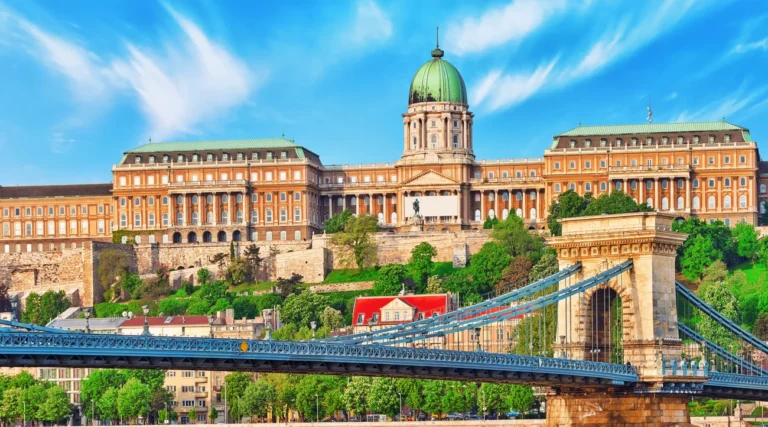
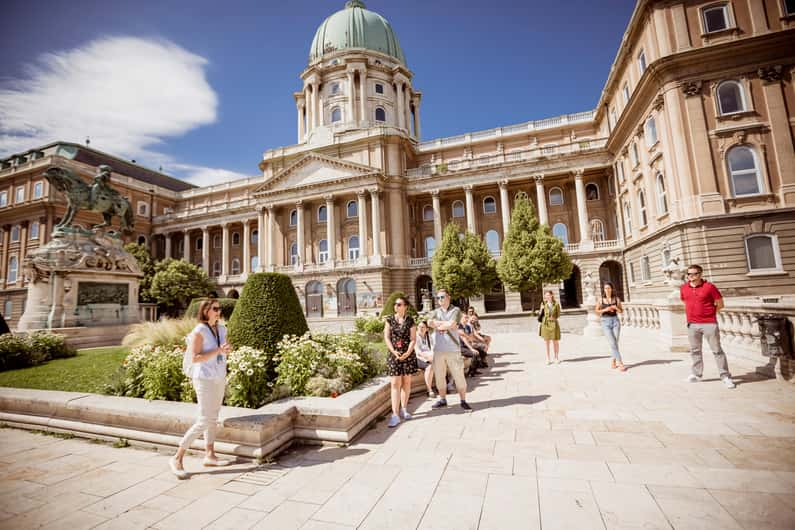
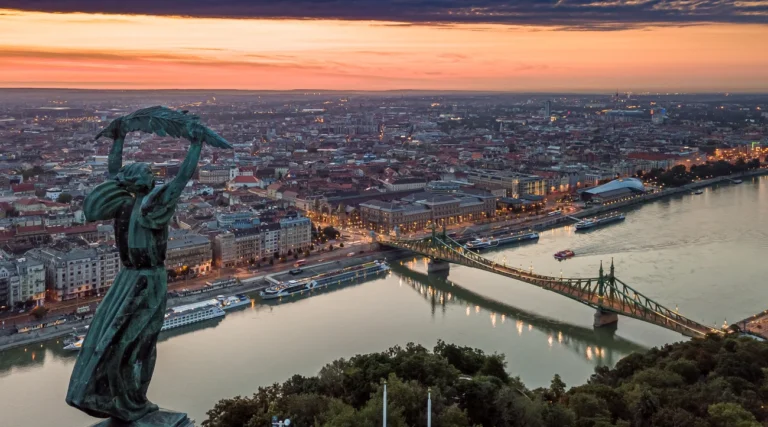
Buda Castle is best approached as a group of places to explore. The former royal palace stands above the Danube, with open-air courtyards and terraces around cultural institutions. A walk outside, a visit to St Stephen’s Hall and an afternoon of Hungarian art are different outings.
Start with the palace’s scale and riverside setting, then choose an interior that interests you. Leave room for the uphill approach and for diversions around reconstruction work.
Palace grounds and interiors: plan separate visits
There is no single ticket that opens every part of Buda Castle. Public outdoor spaces are free to explore; museums, the restored royal hall and guided walks have their own arrangements. Reconstruction, events and temporary barriers can change the route between courtyards, so avoid relying on unrestricted access to every terrace.
Courtyards, fountains and the Danube-facing terrace
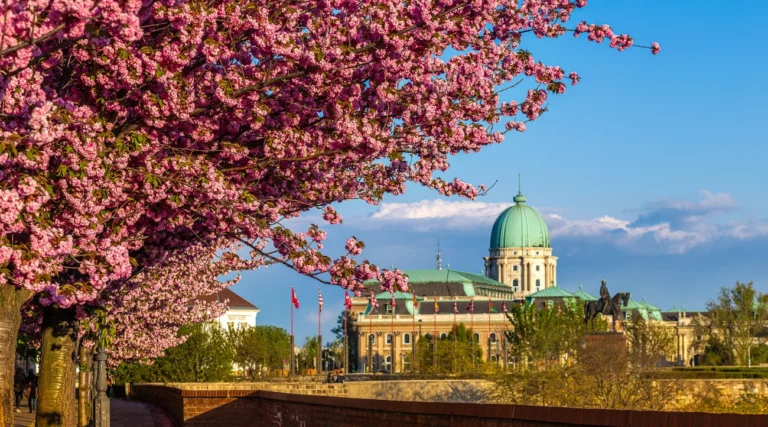
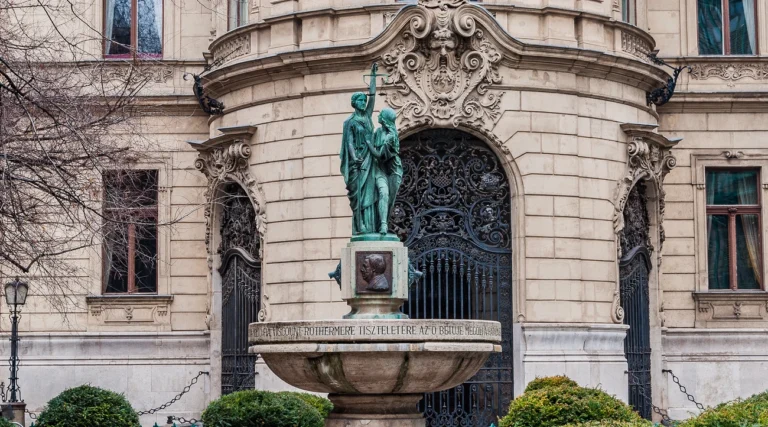
Think of the palace exterior as a sequence of small stops. Move between a broad viewpoint, a sculpture and a change in level, rather than trying to photograph the whole complex from one position. Follow the signed pedestrian route whenever work interrupts the usual circuit.
St Stephen’s Hall: a closer look at royal craftsmanship
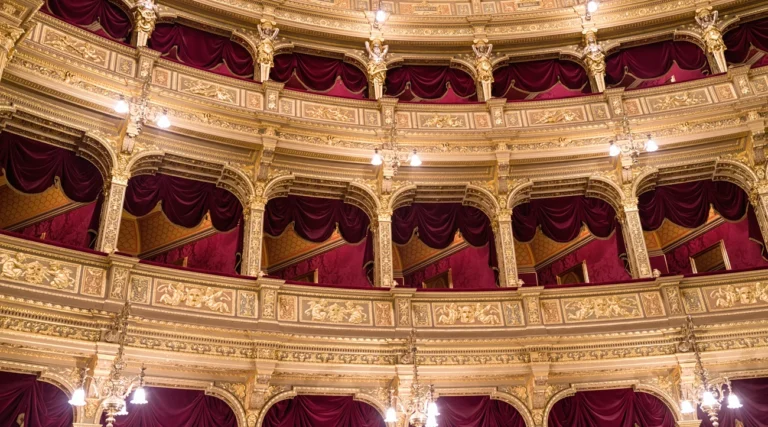
St Stephen’s Hall is the choice for an ornate royal interior. Its walnut panelling, Zsolnay ceramics and large fireplace bring the focus down from the palace skyline to materials and workmanship. Portraits by Ignác Roskovics and the bust of St Stephen by Alajos Strobl add faces to the room’s dynastic theme.
The original room opened in 1902 after its craftsmanship had been shown at the 1900 Paris Exposition. Destroyed in the Second World War, it was recreated and reopened in 2021. What you see today is a carefully reconstructed historic interior.
Choose a Castle Hill walk with the right inclusions
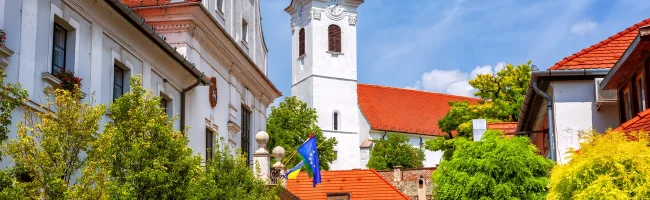
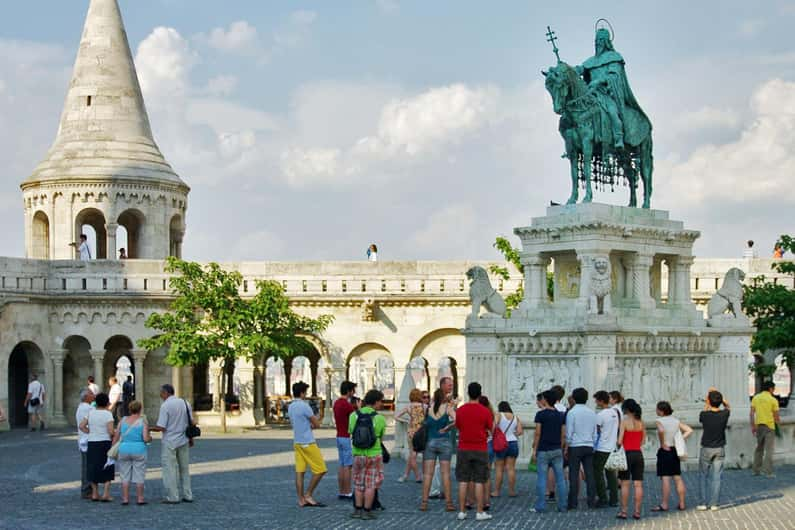
A guide can help make sense of a place rebuilt across several eras. Choose an outdoor district walk for streets, courtyards and viewpoints, or a tour that explicitly includes St Stephen’s Hall if you want an interior. A church visit is another distinct inclusion: check the selected option before booking.
Compare the meeting point as well as the price. Tours can start near Matthias Church or by the palace terraces, and these are different parts of the hill. The three offers below are guided experiences, with different routes and admissions.
- A public courtyard walk does not include museum or hall admission.
- Reserve a timed slot for St Stephen’s Hall and allow time to find the entrance.
- The National Gallery normally closes on Mondays; holiday arrangements can differ.
- Expect uneven surfaces, slopes and occasional construction diversions.
- Choose one interior rather than rushing through several institutions.
- Use the river terrace as a pause between courtyard stops.
- Wear shoes that suit cobbles and steps, and carry water in warm weather.
- Keep a separate visit to Matthias Church in your plan if you continue north through the district.
Getting up to the palace: bus, walk or funicular
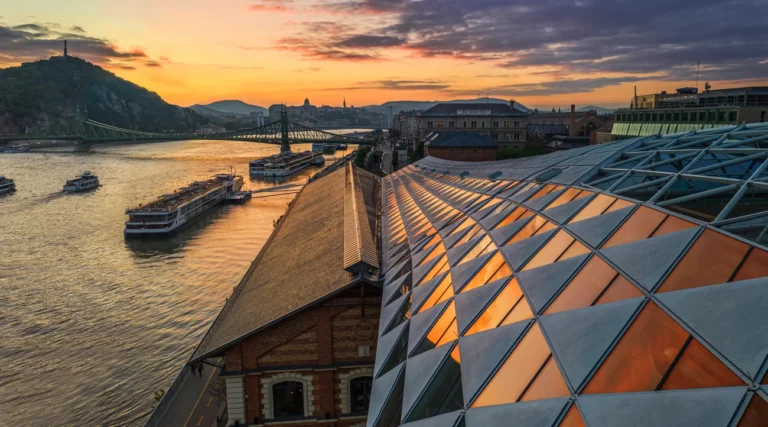
The palace occupies the southern end of Castle Hill. Choose your approach before setting off: climbing from the Danube, arriving by bus through the district and taking the funicular lead to different parts of the complex.
Hungarian art or the city’s past: choose your museum
The Hungarian National Gallery is the natural choice if you want paintings and sculpture. Its collection follows Hungarian art from medieval works into the twentieth century. Plan a proper museum visit rather than treating it as a short route through the palace.
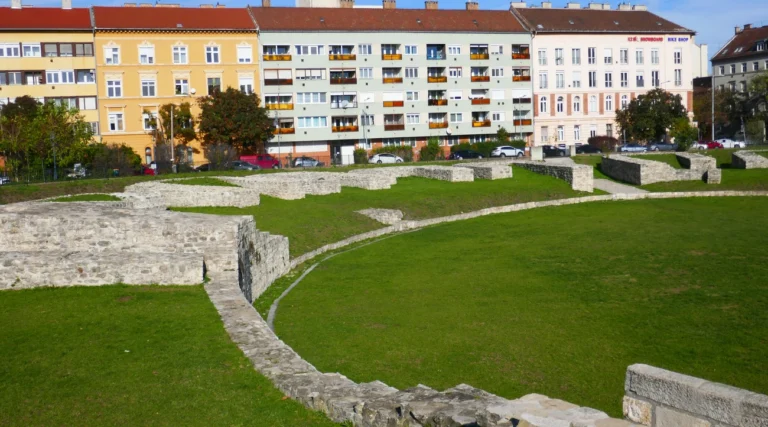
The Budapest History Museum – Castle Museum focuses on the capital’s past and includes medieval remains within the palace complex. Check its exhibition programme and admission arrangements separately from the Gallery and from St Stephen’s Hall.
If you mainly came for the setting, spend your time outside and save an indoor visit for another day. It is more enjoyable to leave with a clear impression of one part of the castle than to hurry between unrelated ticket desks.
A palace shaped by destruction and reconstruction
Buda’s royal centre developed after the thirteenth-century Mongol invasion, when Béla IV established a castle on the hill. Later rulers expanded it, and under Matthias Corvinus Buda became an important artistic centre. The palace visible today reflects many later changes.
After Ottoman rule, large-scale rebuilding reshaped the royal complex. Around the turn of the twentieth century, Alajos Hauszmann gave the palace a new architectural scale and elaborate interiors, including St Stephen’s Hall.
The siege and fires of the Second World War caused devastating damage. Post-war rebuilding changed the palace again, bringing museums and other cultural uses into the complex. The current reconstruction programme has restored selected structures and recreated historic spaces; it also means visitor routes can change.
The Castle Quarter forms part of Budapest’s UNESCO World Heritage property. Its significance lies in the relationship between the palace, the historic district, the riverbanks and the city beyond, rather than in a single room or viewpoint.
Compare city passes and Castle District tours
Frequently Asked Questions - FAQ