The Hungarian State Opera is both an architectural landmark and a working theatre. The marble, gilding and painted interiors make a daytime visit worthwhile; an opera or ballet performance gives the building a different rhythm, from arrival to the final curtain.
- Choose a guided building tour for architecture and a short musical finale.
- Book a performance separately if you want a complete theatrical evening.
- Keep auditorium access flexible: rehearsals can change the tour route.
Tour times and the difference between visit tickets
OperaTour is a scheduled guided visit, not general admission to wander freely. The regular English tour lasts 60 minutes and starts in the entrance hall at the information desk. Its short concert is part of the visit; it is not a ticket to an evening production.
Official tour prices are in Hungarian forints, with approximate euro equivalents below. Performance prices depend on the production, date and seat, so there is no single admission tariff for an opera night.
Look beyond the gilding: spaces that shape the theatre
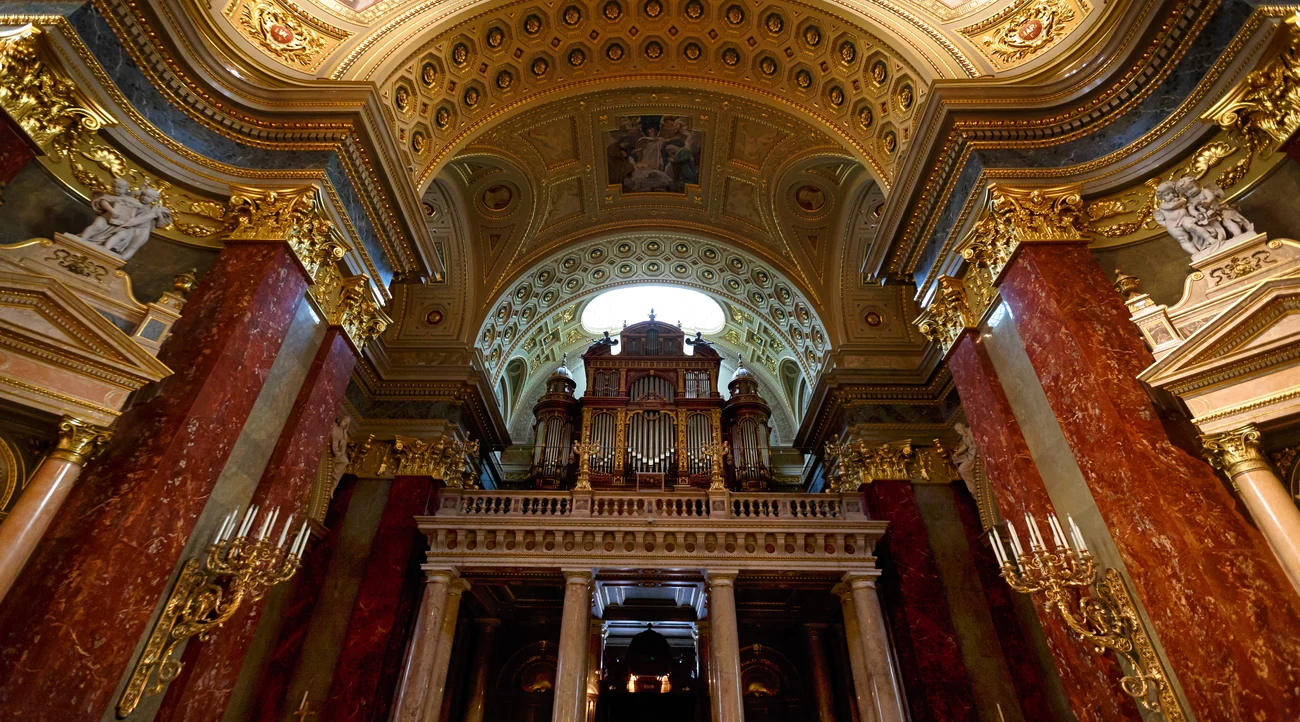
The pleasure of the building is in the progression from the avenue to its ceremonial interiors. Notice changes in material, scale and light: the coloured marble of the foyer gives way to the grand staircase and the intimate curves of the auditorium. Your exact tour route depends on the theatre’s work that day.
A guided visit or a full evening: choose the experience
A daytime tour fits a sightseeing day; a performance deserves an evening of its own. The tour explains the building and includes a short appearance by opera singers. A staged opera or ballet asks you to choose a production, a seat and enough time for the complete event.
If you are new to opera, read the production details and running time before choosing solely on price. The programme may use different venues, including Eiffel Art Studios, so check the actual address: a Hungarian State Opera booking does not always mean this historic house on Andrássy Avenue.
Rehearsals, photographs and what the tour can promise
The Opera is a working institution, and the auditorium closes to visitors during rehearsals. When that affects a guided visit, the route can use other spaces instead. Guided tours do not operate during performances. This is a useful reason to book around the theatre’s schedule rather than assuming fixed museum-style access.
Non-commercial photography is allowed on the tour, but flash and tripods are not permitted. A performance has its own audience rules: permission to take pictures during a daytime tour should not be carried over to a staged event.
- Book ahead: regular tour tickets are released one week in advance.
- Group size: the guaranteed tours are limited to 30 visitors.
- Language: English is scheduled daily; other language options need checking.
- Meeting point: the information desk in the entrance hall.
- Arrive with enough time to find the entrance and your group.
- Check the venue address before booking an evening production.
- Keep flash and tripods packed away during the tour.
- For mobility requirements, confirm the actual tour route and seat access before buying.
Getting to the Opera on Andrássy Avenue
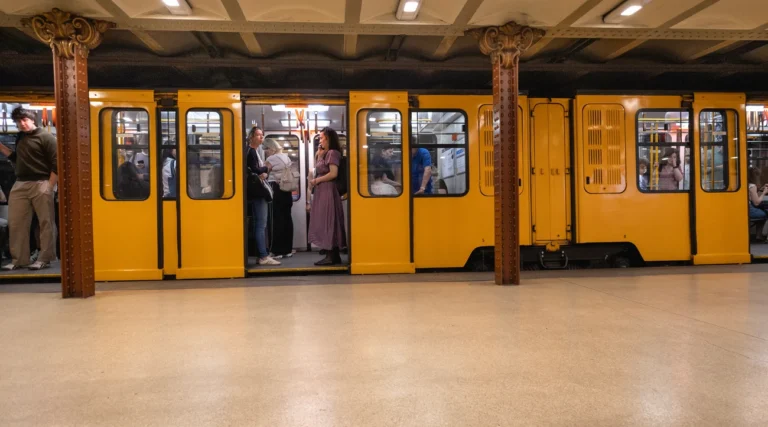
M1 Opera station is beside the historic house. A walk along the lower part of Andrássy Avenue is also a natural approach from central Pest. For an evening performance, plan the return journey before you enter, especially if the production finishes late.
Give the Opera room in an Andrássy Avenue afternoon
Use the Opera as the fixed point in a walk along the avenue. Before a daytime tour, look at the façade and nearby streets; afterwards, continue towards Oktogon or return towards the Basilica area. A short local route leaves more time for the building itself.
For an evening performance, a relaxed meal nearby works better than adding another distant timed attraction. The related music guide below covers other concert venues and formats in Budapest; it does not replace an Opera performance ticket.
Concert tickets and city walking routes
Ybl’s theatre, opened in 1884 and restored for a new century
Miklós Ybl designed the Neo-Renaissance Opera House, which opened on 27 September 1884. The project belonged to the transformation of Pest around Andrássy Avenue, creating a purpose-built home for opera and ballet rather than sharing the National Theatre’s competing demands.
The building permit was issued in 1875 after revisions to the design. Architecture and decoration were conceived together, using stories from classical mythology to express music’s role. Hungarian craftsmanship was central to the project, alongside selected imported materials and stage technology.
The opening programme included music from Bánk Bán, Hunyadi László and Lohengrin. The house’s later life brought changing technical needs as well as conservation work. After an extensive refurbishment and modernisation lasting nearly five years, it reopened with a gala on 12 March 2022.
Hungarian State Opera: practical questions