Kossuth Lajos tér deserves a walk around the square, even if you are not going inside Parliament. The building is the dominant sight, but the memorials, tactile model and river-facing statue of poet Attila József give the stop more depth. Leave the visitor-centre entrance clear and make time to look beyond the first photograph.
- Separate a free outdoor visit from a booked Parliament interior tour.
- Use the tactile bronze model to understand the building and square.
- Continue towards Liberty Square or north to Olimpia Park, according to your day.
Begin with the Parliament façade, then look across the square
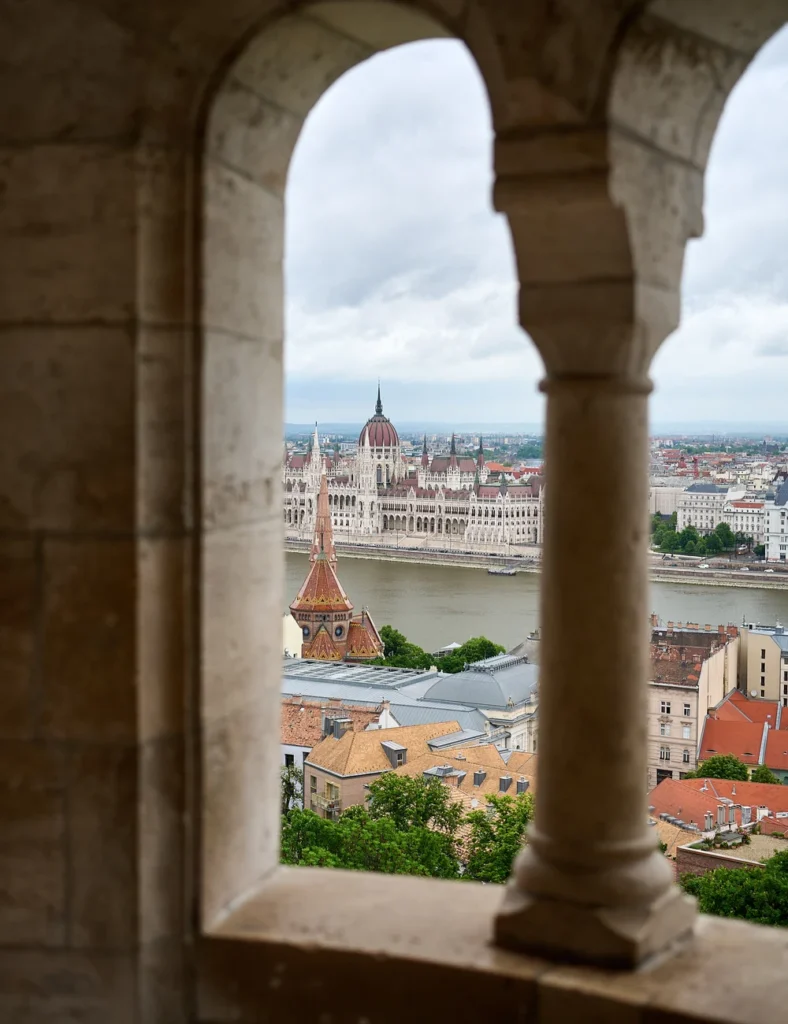
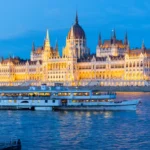
The Parliament building gives Kossuth Square its scale. Stand back to see the central dome, the long wings and the surrounding public space before moving towards individual details. The square is also a national ceremonial setting, so barriers or official activity can change the route available for an ordinary visit.
The tactile model: a useful way to read a monumental place
A bronze tactile model of Parliament and the square stands near the Visitor Centre entrance. Budapest’s tourism office notes its Braille inscriptions. It gives visitors a smaller-scale way to understand the relationship between the building and its surroundings, and is worth noticing even when the main façade holds everyone’s attention.
Attila József by the river: a quieter stop after the main façade
On the Danube side, László Marton’s statue shows the Hungarian poet Attila József seated on steps. It offers a more intimate pause after the monumental scale of the square. Take time to notice the figure and the river setting instead of treating every sculpture as a quick checklist item.
Monuments and remembrance: give the square more than a photo stop
The square’s memorial landscape includes the Kossuth sculpture group and remembrance of 1956. These belong to the public history of the place, rather than serving simply as decoration around Parliament. Read the names and explanations on site, and distinguish a memorial in the square from an indoor exhibition with separate access arrangements.
If you are visiting during a national ceremony or public gathering, keep your route flexible. An ordinary sightseeing walk does not take precedence over security instructions or the use of the square for remembrance.
- A public-square walk is separate from Parliament admission.
- The tactile model is near the Visitor Centre entrance.
- Official activity can affect the open route.
- Keep queues, entrances and memorials clear.
- Look beyond the first façade photograph.
- Watch for steps near the Attila József statue.
- Check a suitable route if you need step-free access.
- Leave enough time before a booked interior visit.
Getting to Kossuth tér: plan the route for your access needs
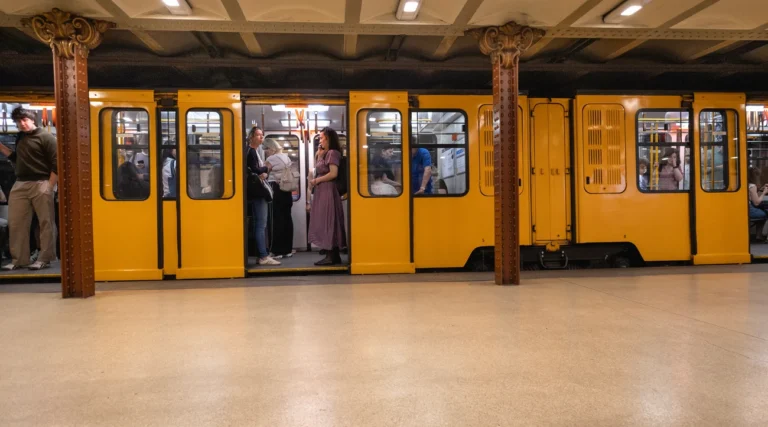
Kossuth Lajos tér on M2 is the square’s metro reference. A nearby station is not by itself proof of a step-free journey. Budapest’s tourism office identifies the Szemere utca stop of bus 15 as an accessible approach; use current BudapestGO information to check the complete journey and any service changes.
Continue to Liberty Square, or north towards Olimpia Park
Choose the extension that fits the rest of your day. Vécsey Street leads towards Liberty Square and the streets of Lipótváros. Northwards, Balassi Bálint Street leads to Olimpia Park, a public space with a playground and an Olympic memorial, then onwards towards Jászai Mari Square and Margaret Bridge.
For an interior Parliament visit, arrive according to the instructions on the selected booking and leave time for security. A walk outside the building does not include entry to the Grand Staircase, Dome Hall or other rooms.
A square of public history, beyond the Parliament building
Kossuth Square brings political architecture, national remembrance and literary memory into one public setting. Parliament dominates the view, but the Kossuth monument, the 1956 memorial and Attila József’s riverside figure encourage different ways of reading the place.
The Office of the National Assembly’s public-education programme has presented the square through its buildings, memorials and earlier urban life, including former cafés and Danube baths. That broader perspective is useful on the ground: the square is more than a waiting area for an interior tour.
Look at the relationship between the large state building, the surrounding façades and the smaller memorial stops. A visit becomes more meaningful when there is room to read an inscription or pause by the poet, rather than collecting the entire area in a single wide photograph.
Parliament tours and city passes for the rest of your visit
Kossuth Lajos tér: practical questions