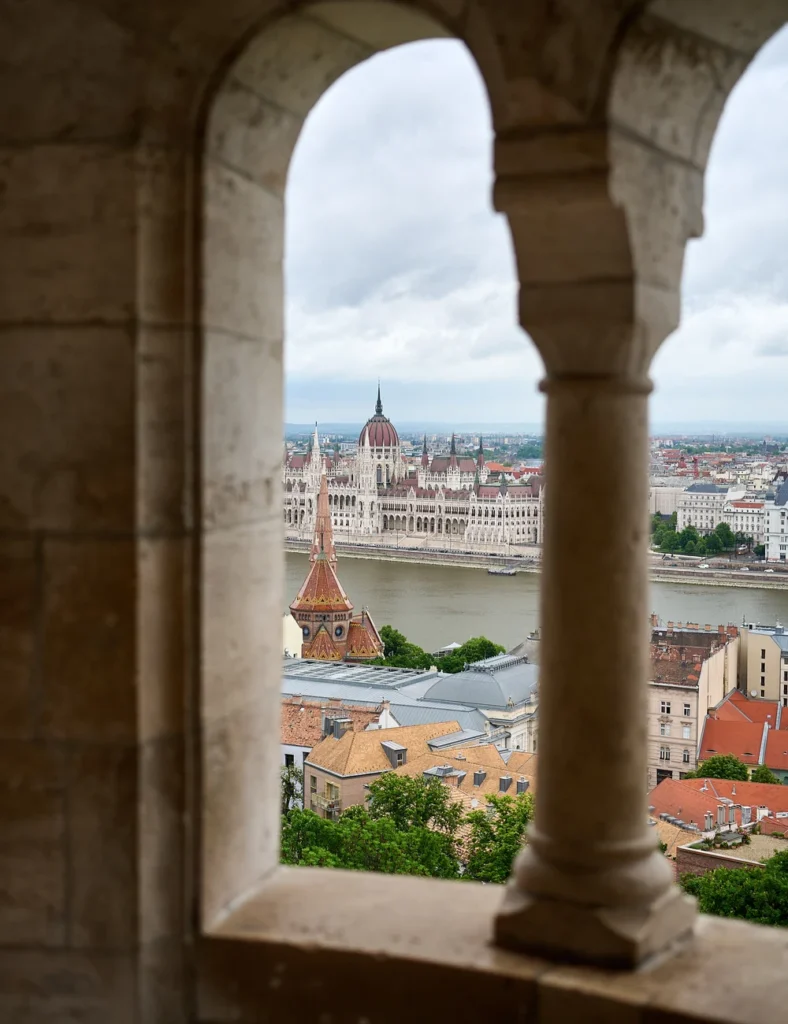
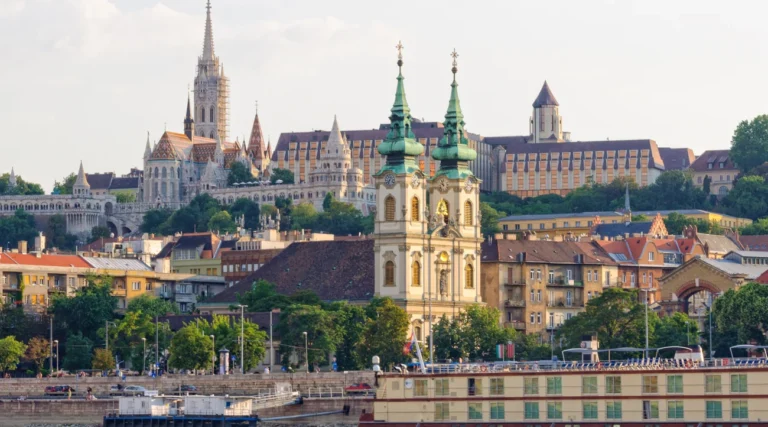
Szentháromság tér is the place to slow down between Matthias Church and the Castle District’s streets. The Holy Trinity Column gives the square a focus; a few steps change the balance between carved stone, patterned roofs and the open space around them.
- Explore the outdoor square without buying an attraction ticket.
- Keep church visits, tower climbs and terrace admission separate.
- Leave time for a side street after the busiest viewpoints.
A square to circle before you choose an entrance
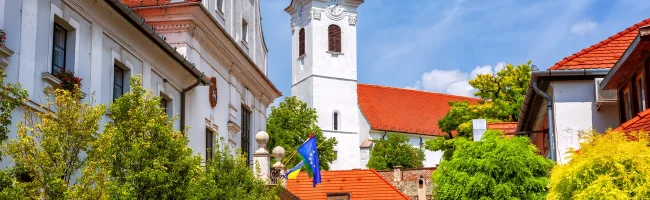
Start with a circuit of the square rather than heading straight for the next entrance. Look back toward Matthias Church, then turn to the column and the buildings framing it. From one position the church dominates; from another, the sculpture becomes the foreground and the rooflines become the setting.
Choose a meeting point at the edge of the open space, clear of entrances and moving groups. If you are travelling together, agree where to regroup before someone goes into the church or follows the route toward the bastion. A small pause here makes the rest of the Castle District easier to organise.
The column: a closer look at Buda’s plague memorial
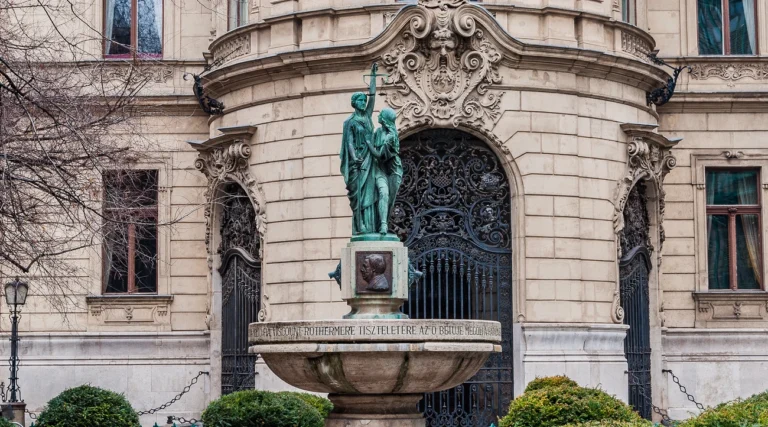
The Holy Trinity Column belongs to Buda’s response to plague epidemics. The present monument followed an earlier column and was erected in 1710–1713. Its clustered figures deserve a closer look than a quick photograph from the opposite pavement.
Walk around without stepping onto or climbing the monument. Compare the outline against the sky with the smaller figures nearer eye level. You do not need to identify every saint to notice how the sculpture directs attention upward.
Find a photograph that includes the square
The square rewards a change of viewpoint. Try a wider photograph that includes the space around the column, then a closer study of stone carving or roof patterns. A bright sky can leave a façade in shadow, so turn and look at the light before deciding that the first angle is the best one.
Keep your camera position on a safe pedestrian route and leave room for other visitors. Early or later parts of the day may feel different, but quiet conditions and an unobstructed frame are never guaranteed. The square is part of a living district, with services, residents and organised groups.
Church, bastion or a street walk: choose the visit
A walk through the square and an interior visit to Matthias Church are different plans. Decide whether you want time inside before building a tight route around the hill. Worship, events and the visitor arrangements on the day can affect what is possible.
For Fisherman’s Bastion, check which part you intend to use: looking across the square is not the same as admission to every terrace or tower. The dedicated guides explain the individual visits. Avoid buying a package merely because its photograph shows the same church or skyline.
- Outdoor square: an ordinary walk has no general admission ticket.
- Separate visits: church interiors, towers, tours and any paid terrace access have their own conditions.
- Meeting point: specify the side of the square and keep entrances clear.
- Street access: temporary barriers or works can change the route.
- Look around the column before moving on to the next viewpoint.
- Allow extra time if someone in your group wants an interior visit.
- Choose comfortable shoes for the hill’s paving and slopes.
- Check the return route before you walk downhill: the outward and return journeys may feel very different.
Getting to Szentháromság tér
The square is on Castle Hill, not beside a metro platform. Plan the final approach as part of the journey, with an uphill walk or an appropriate bus connection. The nearby Szentháromság tér stop is a useful destination to check in the live transport planner.
Use current BKK journey and service information for your starting point. For a step-free trip, check the actual route, working lifts where relevant and the surface between the stop and your destination; a short distance on the map does not describe the slope or paving.
Continue along Tárnok utca and through the district
After the main square, choose one direction and let the street become part of the visit. Follow Tárnok utca toward Dísz tér for a continuation through the district, or take a quieter detour before returning to the viewpoints. There is little benefit in rushing between every photographed spot without looking at what connects them.
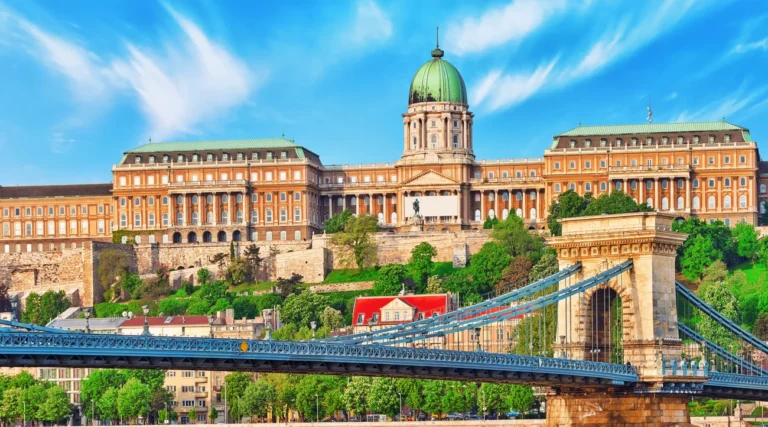
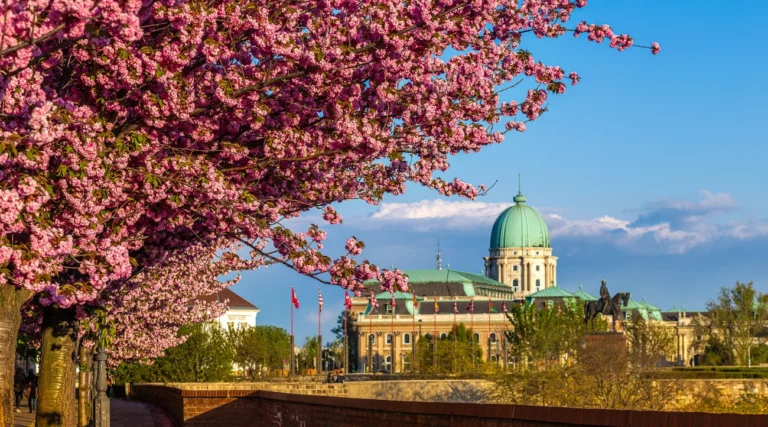
If your day also includes the palace end of Castle Hill, leave room for that separate area. The Castle District guide helps connect the square with a wider walk; choose museum or guided-visit plans around your interests rather than treating everything on the hill as a single attraction.
How a cleared block became the square
The square was opened up after 1686, when a block of houses that had stood in front of the parish church was cleared. The space visitors see today therefore grew out of changes to the district, rather than surviving unchanged from medieval Buda.
Later rebuilding altered the surroundings again, including work around the church and reconstruction after the Second World War. The research centre’s history also notes that original figures from the column were taken to the Kiscelli Museum and replaced on the monument by replicas.
Keep those layers in mind as you look around: a historic square can contain both old fabric and later reconstruction. For a first walk, that is more useful than assuming every façade and sculpture has remained in the same form for centuries.
City passes and guided Castle District visits
Szentháromság Square: practical questions