The Ludwig Museum is a place to change how you look, rather than collect another historic interior. Inside Müpa beside the Danube, its collection brings Hungarian and international contemporary art into conversation. Pop culture, ideas, machines, cities and the environment can all become ways into a work.
Start with the exhibition that interests you most, then decide whether to add another floor. The closing times differ: the collection display closes earlier than the current first-floor temporary exhibition. A late arrival needs a deliberate choice, not a general assumption that every gallery remains open until the building’s final hour.
Different floors, different closing times: choose the right ticket
The museum is closed on Mondays. The current third-floor collection display is listed Tuesday–Sunday, 10:00–18:00. Walk This Way on the first floor runs 10:00–20:00 during its announced period, 9 October 2026–31 January 2027. The ticket office normally closes at 19:30; that does not extend the collection’s 18:00 closing.
Official listed full-price admission is 3,300 HUF (≈€9.03) for the named collection display or Walk This Way, with a combined ticket at 5,000 HUF (≈€13.68). Confirm the exhibitions included in the selected ticket. Euro conversions are approximate.
The museum lists closure on 24–26 December 2026 and 1 January 2027, and opening 10:00–14:00 on 31 December. Special notices override the usual schedule. A second-floor show still appears on the general hours page although its own dated page ended on 25 October, so check the exhibition calendar instead of assuming that floor has the same programme.
Bing Bang: a growing collection rather than a fixed greatest-hits room
Bing Bang. Expanding Collection Horizons follows how the museum’s holdings have grown. Its twelve units connect acquisitions with broader themes, including pop culture, ideas as art, hyperrealism, graffiti, movement and ecological concerns. That approach encourages comparison instead of a simple march through styles.
Choose a theme and follow it across several works. A familiar name such as Warhol, Lichtenstein or Picasso can be a starting point, but the selection also opens onto artists and regions you may know less well. The exact display changes; a name in the collection does not guarantee that a particular famous work will be on view during your visit.
Walk This Way: an ordinary action becomes an artistic question
Walk This Way. The Art of Walking explores walking as an act of discovery, thought and criticism. The international group exhibition asks how moving through a city or landscape can become an artistic process, a way to map a place or a response to political and ecological questions.
It offers a useful connection with a city break spent on foot. Instead of treating walking as the empty time between attractions, look at how artists make the route itself meaningful. The announced exhibition includes artists such as Francis Alÿs, Mona Hatoum, Bruce Nauman and Yoko Ono; follow the labels for the works actually present.
A first contemporary-art visit: choose a thread and stay with it
You do not need to recognise every artist to have a rewarding visit. Start with one work that makes you stop, read its label, then compare it with a neighbouring piece. A theme such as public space, consumption or the environment can be more useful than trying to memorise an art-historical sequence.
Around two hours is an editorial allowance for a selective visit, not an official duration. Add time if you want both the collection and a temporary show, particularly where film or video needs a longer pause. With children, a smaller selection and a clear stopping point usually works better than every room in order.
Müpa and the Danube: give the museum its own place in the day
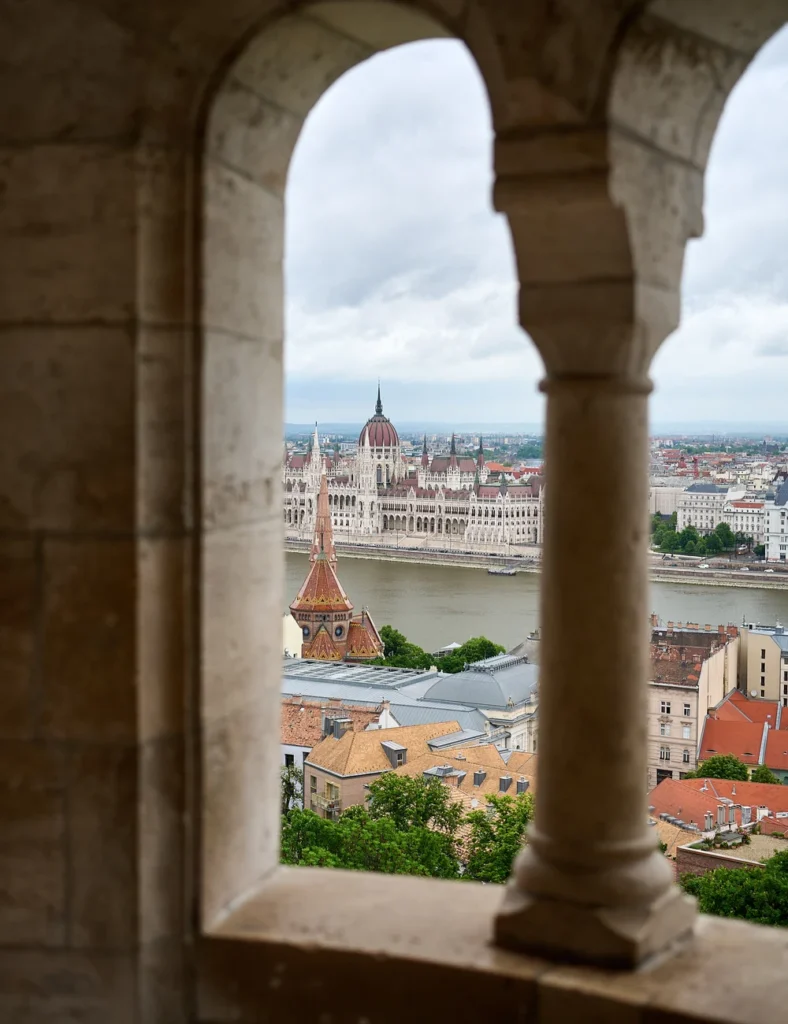
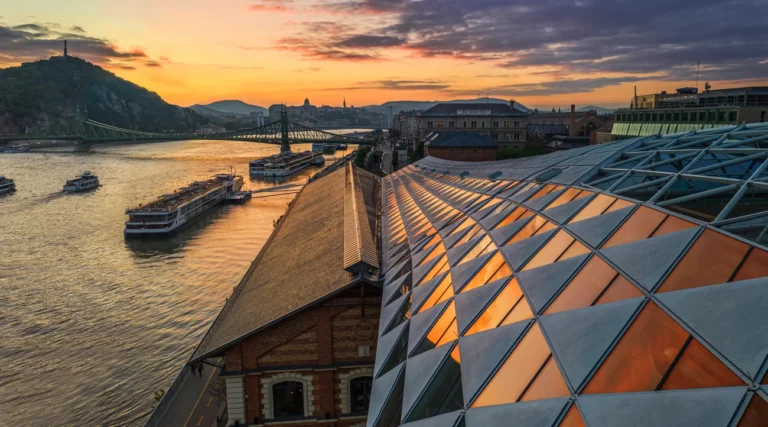
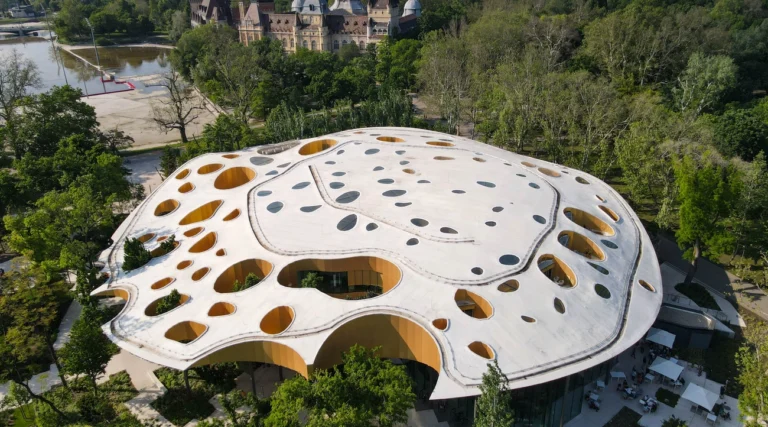
The museum occupies three floors in Müpa’s Danube-facing west wing. Its setting can form a quieter cultural outing beyond the busiest central sightseeing circuit. Keep the museum entrance and exhibition hours distinct from the concert halls and other activities in the same complex.
A concert can be a separate part of the plan, but leave enough time between the gallery and your performance. The museum lists a concession allowing one exhibition visit with a valid Müpa ticket up to and including the concert date; check the current conditions and your ticket before relying on it.
Budapest Card, concessions and free entry: match the exact conditions
The museum lists Budapest Card entry to the permanent exhibition and a 50% reduction for temporary exhibitions. Compare those benefits with your actual plans; they do not mean that every activity or guided programme is included. A single museum ticket may be simpler when Ludwig is the only paid visit you want.
Children under six enter free. Visitors with disabilities and one accompanying person also qualify with appropriate documentation. The museum lists further age, citizenship and professional concessions, including free entry for EEA citizens over 70, and free admission on 15 March, 20 August and 23 October. Bring proof and obtain the required free ticket at the information desk.
Its monthly free collection-display rule applies on the last Sunday to eligible EEA visitors under 26, or up to two close relatives accompanying someone under 18. It is not a blanket free day for every visitor or every temporary exhibition. Check the exact entitlement before arranging your date.
- The third-floor collection closes at 18:00, before the first-floor temporary exhibition.
- Ticket-office hours do not extend gallery opening.
- Concessions require the appropriate proof and sometimes a free ticket.
- Concert venues and museum exhibitions have separate schedules.
- Choose your main exhibition before booking or arriving late.
- Read one work closely before trying to see every room.
- Allow time for films, video or a second exhibition.
- Confirm wheelchair loans and special programmes in advance.
Getting to Müpa and the museum entrance
The address is Komor Marcell utca 1, Budapest 1095. Plan the journey to the Ludwig Museum inside Müpa rather than to a similarly named gallery or a general city-centre point. The museum’s directions identify the Müpa–Nemzeti Színház and Közvágóhíd transport area; check the live route and the final entrance in BudapestGO.
From a Ludwig donation to a museum beside the Danube
The museum’s collection began with a donation of 70 works in 1989. Irene and Peter Ludwig sought a contemporary-art institution that could connect across a politically divided Europe. The first autonomous exhibition opened within the Hungarian National Gallery in 1991, before the institution developed further in the 1990s.
In 1996 the museum was reorganised as the Museum of Contemporary Art, with a stronger Hungarian component alongside the international collection. Its collecting and exhibition work brought different artistic contexts into the same conversation rather than presenting Hungarian art in isolation.
The move to Müpa in 2005 gave the museum a Danube-facing home with around 3,300 square metres of exhibition space. Photography, video, new media and work from the former eastern bloc became important parts of its developing scope.
That history helps explain the visit today. The collection is a growing set of relationships between artists, places and media, while temporary exhibitions create new ways to question the familiar.
City passes and a separate guided day in Budapest
Ludwig Museum: practical questions