Mai Manó House makes the building part of the photography visit. Behind the decorated façade on Nagymező Street, a nineteenth-century photographer’s house holds changing exhibitions and a restored daylight studio. Come for both: the pictures on the walls and the spaces created for making portraits. It is an intimate alternative to a large museum, with a staircase, stained glass and architectural details that reward a slower look.
Mai Manó House opening hours and admission
Plan an afternoon visit: the exhibition rooms open at noon. Regular admission is 3,600 HUF, with reduced categories requiring the appropriate proof. The ticket desk and last admission close half an hour before the galleries. Rounded euro equivalents are for comparison, using an indicative 365.60 HUF/€ conversion. The venue accepts payment in forints, by card or cash, not in foreign currency.
The Daylight Studio: a room built for portrait photography
The Daylight Studio reveals how a portrait studio worked before modern lighting became routine. Located on the second floor, its generous glazed surfaces are an essential part of the house’s identity. Look at the relationship between the windows, the room and the restored painted backgrounds: the architecture helped shape the photographs made here.
The studio was restored in 1996–97, when original backdrop frescoes were found beneath white wallpaper. Rather than treating it as just another attractive room, pause to imagine the arrangement of photographer, sitter and background. Access to individual rooms may vary with the programme, so check any closure notice on arrival.
A photographer’s façade, carved staircase and stained glass
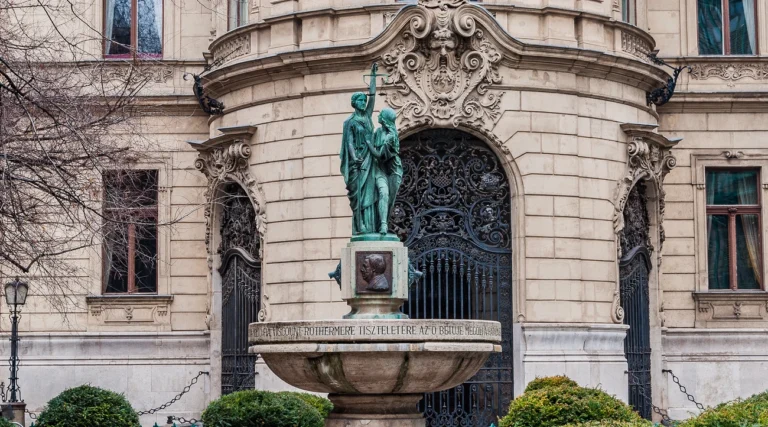
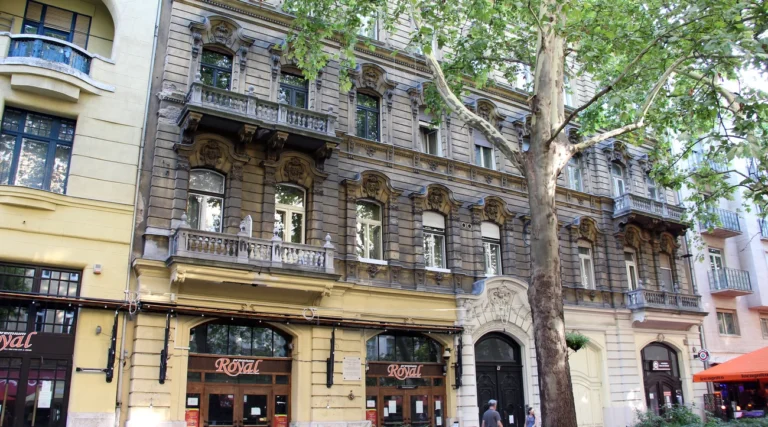
Start noticing the house before you reach the exhibition rooms. The Neo-Renaissance façade uses sculptural and ceramic decoration to announce a photographer’s world. Small figures, ornament and the glazed studio above distinguish it from the neighbouring street fronts.
Inside, the carved wooden staircase and stained glass associated with Miksa Róth deserve their own attention. The climb is part of the experience, but also a practical limitation: Mai Manó House explicitly states that it is not barrier-free. Do not infer access from the arrangements at the separate Capa Center nearby.
Changing exhibitions in a historic house
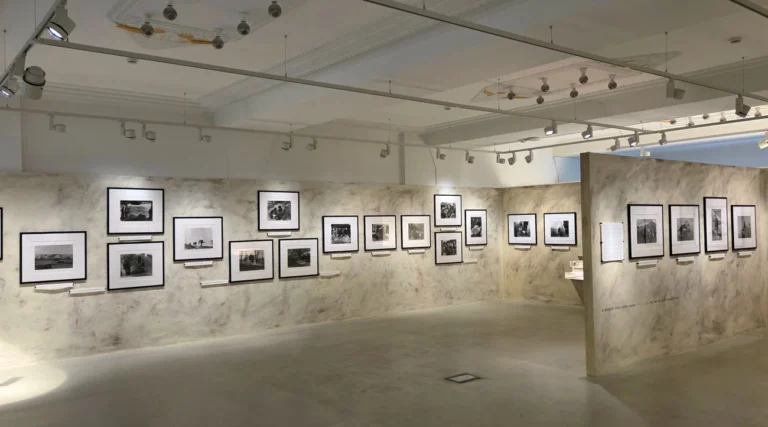
Changing exhibitions give the historic rooms a contemporary purpose. The programme ranges across different photographers and ways of seeing; a return visit can be quite different from the last. Choose a few images to look at closely before moving on, rather than letting the decorative building distract you from everything on the walls.
The current programme lists Caught in the Act – René Maltête (1930–2000), a selection of 122 vintage prints exploring visual humour, coincidence and carefully constructed scenes. The exhibition’s own suggested visit is 40–60 minutes. Allow additional time for the house, and confirm the programme for your travel date.
Look for visual surprises, then look back at the building
Give yourself a simple looking exercise: find one frame that becomes stranger the longer you study it. In Maltête’s work, people, signs and the built environment can line up in unexpectedly witty ways. A scene may look accidental while also showing deliberate construction; that uncertainty is part of its appeal.
After the galleries, return your attention to the house. A window, a painted backdrop and a staircase belong to a different photographic story: how images were commissioned and made in a working studio. The connection between display and setting gives this venue its character.
ProjectLab, Budapest Card and concession rules
Free access has a defined scope. The venue lists the ProjectLab Gallery as free to visit, while the main exhibitions normally require admission. A valid Budapest Card is also listed among the main exhibition’s free-entry entitlements; check the exact product and validity before buying a pass solely for this visit.
Age-related concessions depend on conditions such as EEA eligibility and proof. The recurring free-entry day is the second Saturday of the month for the eligible young visitors and accompanying family groups listed by the museum, not a blanket free day for everyone. Events and guided programmes have their own charges. Use the detailed concessions guide to check the category that applies to you.
- Tuesday–Sunday: exhibitions open 12:00–19:00.
- Last admission: 18:30; Mondays closed.
- Access: the historic house is not barrier-free.
- Payment: forints only; cash and card accepted.
- Bring a small bag: there is currently no staffed cloakroom.
- Carry backpacks in front or in your hand in the galleries.
- Personal photography has restrictions; no flash, tripod or selfie stick.
- Check exhibition-specific photo rules and leave food and drinks outside the rooms.
Getting to the house and planning a photography afternoon
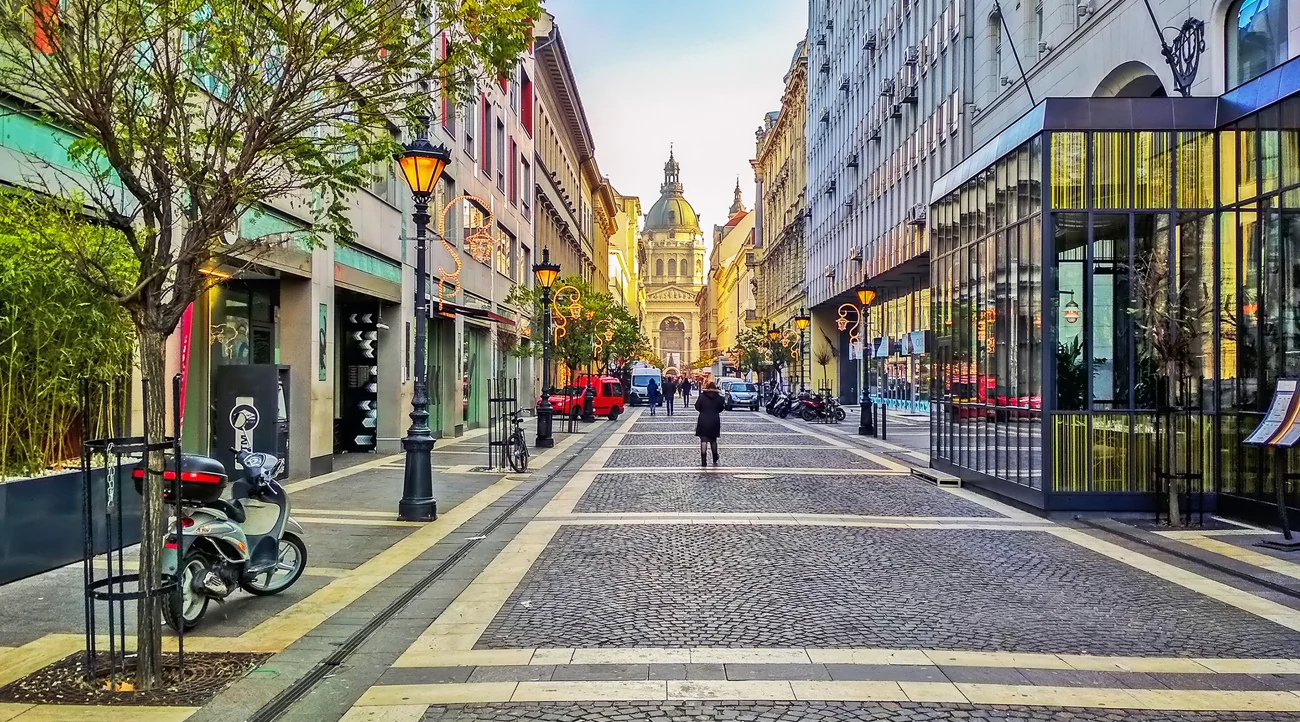
Go to Nagymező utca 20, opposite the Budapest Operetta Theatre and beside Thália Theatre. M1 at Opera or Oktogon and trams 4 or 6 at Oktogon are useful approaches. The venue also lists trolleybuses 70 and 78 at Andrássy út (Opera M), and bus 105 at Opera M. Check the service operating on your travel day.
Mai Manó House and the Capa Center occupy separate addresses on the same street. Both can fit into a photography afternoon, but tickets, opening hours and accessibility are different. Avoid arriving with luggage: the house currently provides coat racks rather than a cloakroom, and bicycles and scooters are not allowed inside.
From Manó Mai’s studio to the Hungarian House of Photography
Manó Mai built a house around the art and business of portrait photography. Constructed in 1893–94 in just fourteen months, the studio-house served the Imperial and Royal Court Photographer, known particularly for photographs of children. Its distinctive façade and purpose-built studio connected professional work with a prestigious city address.
The studio operated until 1931. The building later housed the Arizona entertainment venue, followed by offices and apartments after the war. Its photographic identity was recovered through restoration and renewed cultural use.
The house became a protected heritage building in 1996. Restoration of the Daylight Studio in 1996–97 uncovered original painted backgrounds, and the Hungarian House of Photography has operated here since November 1998. That layered history is visible in the shift between richly decorated domestic architecture, a working studio and present-day exhibition rooms.
Compare a city pass or plan a separate photography experience
Mai Manó House questions before visiting