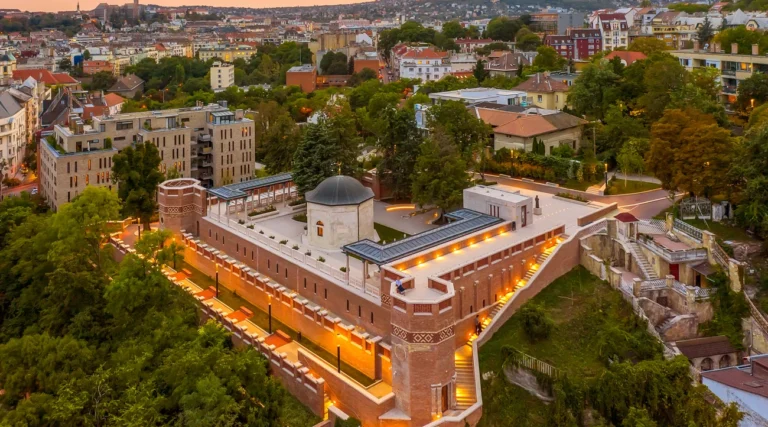
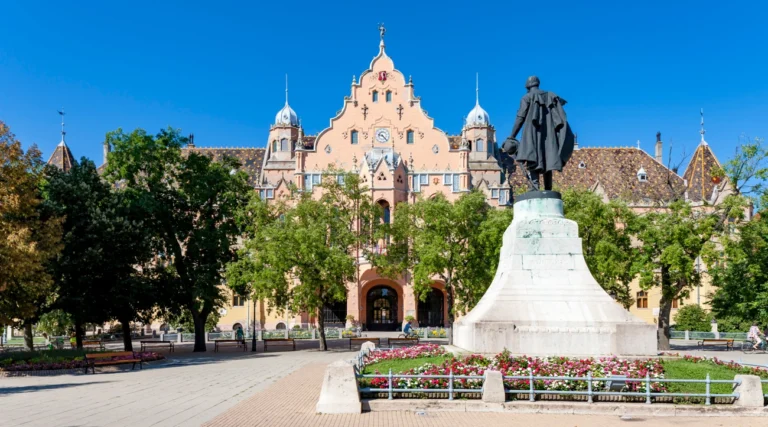
Vajdahunyad Castle is an architectural walk through several centuries, assembled for a single exhibition. A Romanesque portal leads towards Gothic towers and an ornate Baroque museum building. The contrasts are the point: this is a late nineteenth-century interpretation of historic styles, rather than a medieval royal residence.
- Start with the exterior and open courtyard routes before choosing paid interiors.
- The agricultural museum ticket includes the Gatehouse Tower; the Apostles Tower has its own guided climb.
- Combine the visit with City Park and Heroes’ Square, rather than crossing the city between stops.
Museum hours and the two tower tickets
The museum and towers do not share one timetable. The museum closes on Mondays, while the Gatehouse Tower normally opens daily. Apostles Tower tours leave hourly in English and Hungarian, with the last departure at 16:00. Prices below are adult tariffs in Hungarian forints; euro equivalents are approximate.
Romanesque arches, Gothic towers and a Baroque palace
Walk slowly through the changes in scale. The low, richly carved entrance associated with Ják’s medieval church feels very different from the steep-roofed towers and the elaborate museum façade. Look for transitions between styles instead of expecting a single coherent fortress.
Inside the museum: horses, farming and everyday ingenuity
The Hungarian Agricultural Museum gives the castle a subject beyond its picturesque walls. Its collections follow the tools, animals and food production that shaped rural life. Highlights include the skeleton of Kincsem, the racehorse unbeaten in 54 races, an early agricultural traction engine and objects connected with wine making and shepherding.
Choose this stop if the practical history interests you, or if you want an indoor part of your City Park day. It is a museum housed in an architectural showpiece, rather than a sequence of furnished royal apartments.
Which tower is worth adding?
The Gatehouse Tower is the simpler addition and is already included with a museum ticket. Avoid paying for it twice if you plan to enter the museum. The Apostles Tower is a guided visit with 150 steps, so choose it for the climb and upper views rather than as a substitute for the museum rooms.
A combined adult ticket can make sense when you want both the museum and the guided tower tour. Ask about the next departure before committing to the rest of your park itinerary; an hourly tour does not mean entry whenever you arrive.
- Mondays: the museum is normally closed, even though the Gatehouse Tower has a daily schedule.
- Holiday closures: the museum and towers close on 1 November, 24–26 December and 1 January.
- Discounts: some reduced categories have EEA eligibility rules; bring the required evidence.
- Special exhibitions: separate charges or event arrangements may apply.
- Check tower departures before spending time photographing the courtyard.
- Choose comfortable shoes for uneven paving and stair climbs.
- Leave room in the plan for the park rather than booking every hour.
- For step-free needs, confirm the museum route separately; a 150-step tower tour is a different visit.
Getting to Vajdahunyad Castle through City Park
M1 to Hősök tere or Széchenyi fürdő gives you a straightforward park approach. From Heroes’ Square, continue into Városliget towards the castle buildings. From Széchenyi Baths, cross the park on foot, following the open routes rather than a straight line across landscaped areas.
Make a City Park day without rushing between sights
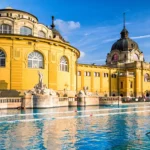
Begin with Heroes’ Square, then explore the castle’s exterior before the museum or a tower. Afterwards, choose one substantial extra: an art museum, the park itself or a separate bathing session at Széchenyi. Bath admission is separate from the castle.
The related guides below help with that wider day: the bath ticket page covers its own pool options, while the walking-tour guide compares city routes. Check each route’s actual stops; a general city walk does not automatically include the castle interior.
A castle designed to tell an architectural story
Ignác Alpár designed the ensemble for Hungary’s 1896 millennial exhibition. Its buildings brought together references to historic architecture from different regions and periods. The temporary exhibition setting proved lasting in appeal, and the complex was rebuilt in durable materials in the early twentieth century.
The design draws on Romanesque, Gothic, Renaissance and Baroque sources. Rather than copying one complete castle, Alpár placed recognisable architectural elements together to create a walk through changing styles. The name Vajdahunyad recalls one of the best-known Gothic references, the castle at Hunedoara.
The permanent complex opened in the early twentieth century, and the agricultural museum officially opened here on 20 June 1907. Repairs after the Second World War continued into the 1950s. The towers opened to public visits in 2015, adding another perspective on the ensemble and its park setting.
Bath tickets and walking routes for a wider day
Vajdahunyad Castle: practical questions