Váci Street is most rewarding when you look beyond the shop windows. Walk from Vörösmarty Square towards the market end, noticing how the northern shopping stretch changes into smaller shops and bistros farther south. A side street towards the Danube or a pause to study the upper floors gives the route more variety than one continuous shopping trip.
- A free walk through the pedestrian heart of Pest.
- Two different sections, divided around Kossuth Lajos Street.
- Historic façades above modern shops and cafés.
- A natural finish near Fővám Square and the Great Market Hall.
Choose the shopping stretch or continue towards the market
Vörösmarty Square and Fővám Square make clear endpoints, with the Kossuth Lajos Street crossing dividing the route. The northern part is the busier shopping promenade; farther south, smaller boutiques, souvenir shops and places to eat change the pace.
You do not need to walk the whole street twice. Begin at the end that fits your day, choose one café or food stop and finish with a different return route or public transport. The pleasure is in the change of streetscape, rather than completing a set distance.
North from the central crossing: look above the retail signs
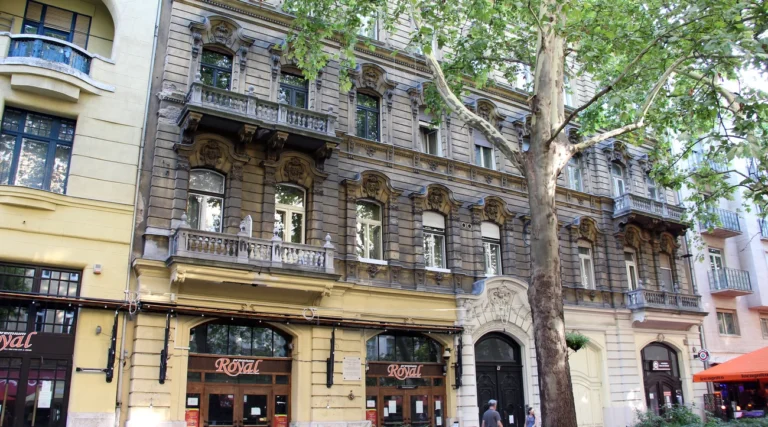
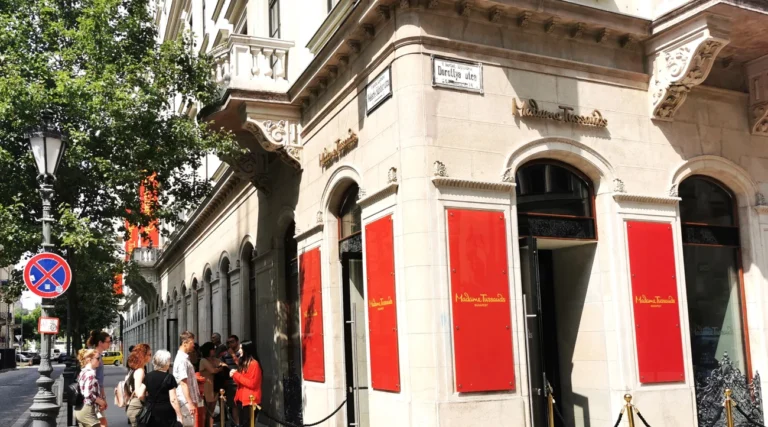
Between Vörösmarty Square and the central crossing near Ferenciek Square, shops and terraces draw attention at ground level. Lift your eyes to balconies, window surrounds and rooflines to see a different street from the shopping frontage.
At number 13, the tourism office identifies a neoclassical house dating from 1805. It offers a useful contrast with the later grand façades along the route. Look from public space and leave entrances clear: an interesting doorway does not mean an apartment building is open to visitors.
South towards Fővám Square: smaller shops and a different rhythm
Continue beyond Kossuth Lajos Street for the southern section. Use the pedestrian crossing arrangement at the busy road; the shopping promenade should not make you forget that this junction is a working part of the city.
Farther towards Fővám Square, compare smaller shops and souvenirs without assuming everything displayed is made locally. If an object’s origin matters to you, ask about the maker and material before buying. Browsing can be part of the walk without becoming its whole purpose.
Plan lunch at the market end, with a Sunday alternative
The Great Market Hall is a useful next stop near Fővám Square, but its opening hours are separate from the public street. Check the dedicated market guide before treating the walk as a guaranteed market lunch; the hall is normally closed on Sundays.
On Váci Street itself, read the menu before choosing a table. Compare the price in forints, any stated service charge and what is actually included. A restaurant’s position on a famous pedestrian street does not tell you whether its menu suits your appetite or budget.
- Váci Street is a public walking and shopping route, without admission.
- Kossuth Lajos Street divides the northern and southern sections.
- Shops, restaurants and the market keep individual opening hours.
- Side streets can connect the walk with the Danube.
- Look above shop level for historic façades.
- Use the crossing arrangement at Kossuth Lajos Street.
- Read menus and service charges before sitting down.
- Check the market’s opening day before planning your finish.
Choose a starting station instead of retracing the whole street
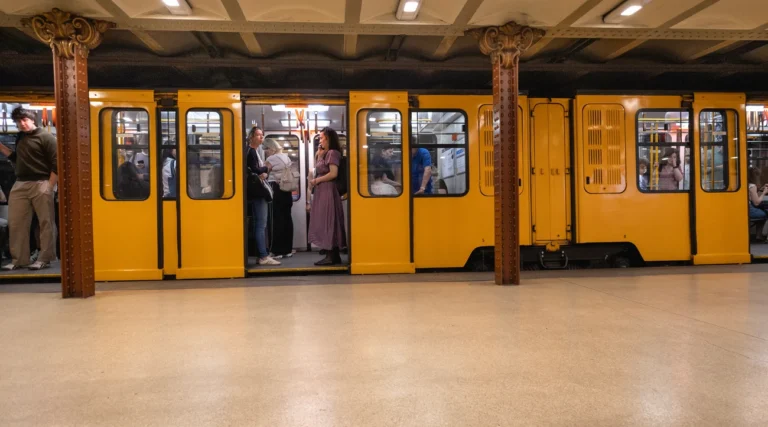
Vörösmarty tér on M1 suits the northern end; Fővám tér on M4 suits the market end. The choice lets you walk in one direction and continue elsewhere, instead of returning along the same shopfronts. Our metro guide covers the lines, tickets and interchanges.
If you approach from another central street, check the exact walking route and crossings. The traffic-free feel of much of Váci Street does not extend uninterrupted across every connecting road.
Finish by the river, rather than making another shopping lap
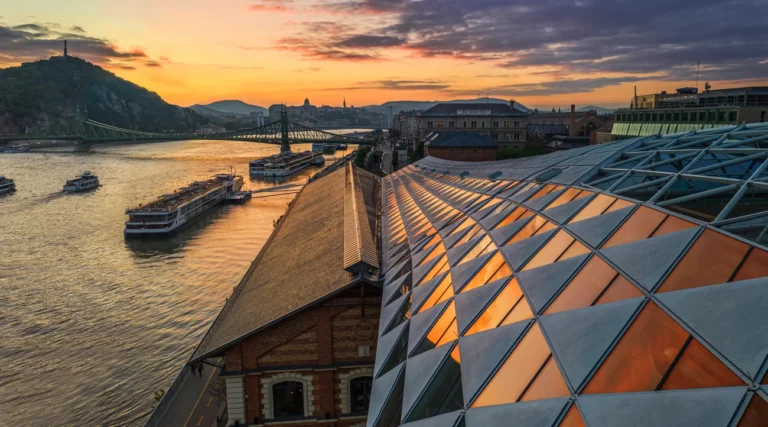
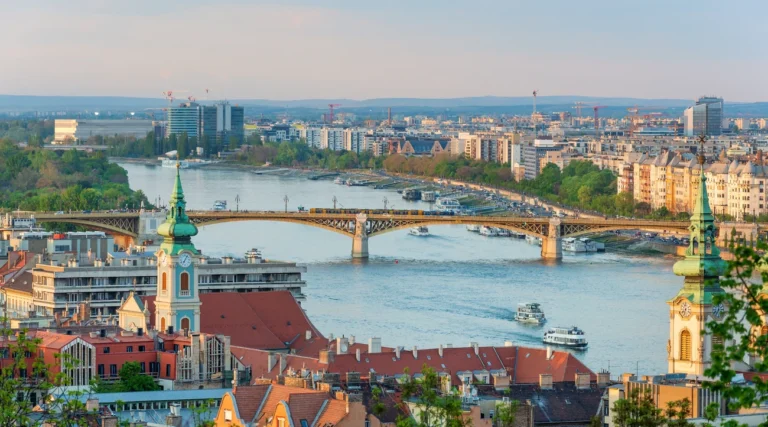
At the southern end, Liberty Bridge offers a clear change of scene. Cross towards Gellért Square if you want to continue into Buda, or stay on the Pest side for a river view and a shorter finish. The bridge walk is free; a climb on Gellért Hill adds a separate commitment.
For a compact outing, combine one section of Váci Street with a café and a riverbank pause. For a longer afternoon, leave time for the market during its opening hours, then use the bridge as the next part of the route.
A shopping street on the line of older Pest
The street’s story reaches back to medieval Pest and its city walls. The Váci Gate stood near what is now Vörösmarty Square, giving this part of the inner city a role long before the modern shopping promenade.
The street took its later form in the eighteenth century, while many of the grand façades belong to the nineteenth and early twentieth centuries. That layered history is easier to read above ground level, where modern retail signs no longer dominate the view.
The 1805 house at number 13 is one place to pause before comparing later neighbours. The modern walk is still a city street, with residents, businesses and visitors sharing the space; its heritage is not confined to a single monument or ticketed doorway.
City passes and food walks for the rest of your visit
Váci Street: walking and shopping questions