Choose the kind of shopping you want before choosing a street. Váci Street and Fashion Street suit a central browse; Paloma offers a different encounter with local designers; the Great Market Hall is a useful place to compare edible gifts. These stops can fit into a Pest walk without turning the whole day into a search for souvenirs.
Choose a shopping route: Váci Street or Fashion Street
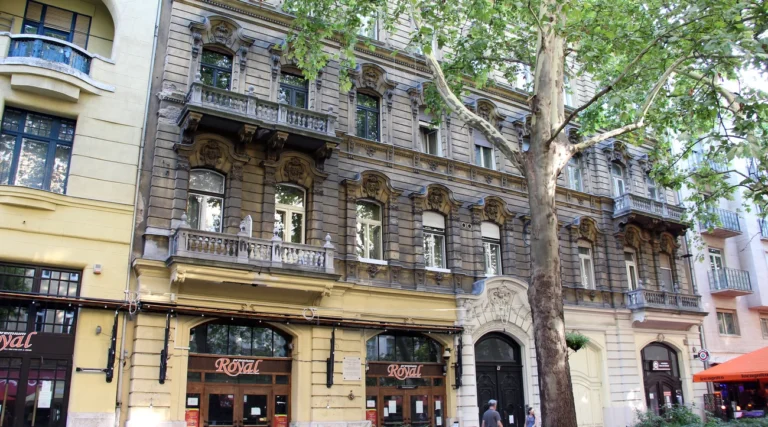
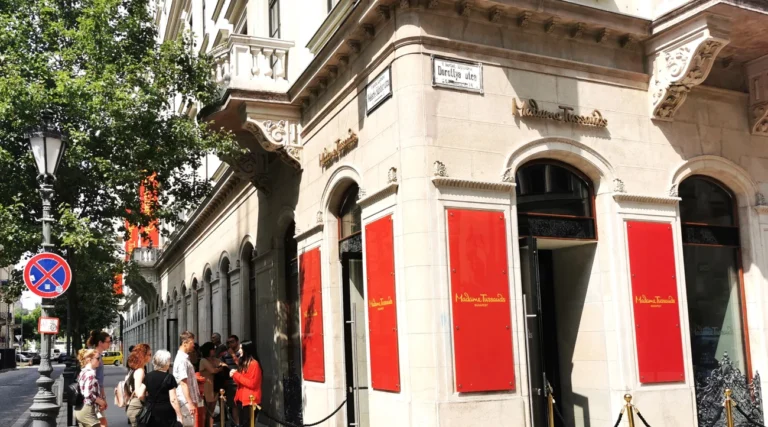
Váci Street and Fashion Street are nearby, but they are not the same place. Váci utca is the pedestrian shopping street leading south from Vörösmarty Square toward the market area. Fashion Street is the retail stretch of Deák Ferenc utca: choose it when you want a compact look at international fashion and lifestyle shops.
Start at the Vörösmarty end if you want to combine both. Spend time looking above the shop windows as well as inside them: the façades make the walk worthwhile even if nothing in the shops appeals. Continue south along Váci only if you also want the market or the streets around Fővám Square.
Keep the distinction between Váci utca and Váci út clear when using a map. The latter is a different road; a shop address containing “Váci” alone is not enough to plan the route.
For a locally made gift, allow time for a conversation. At a maker’s showroom, ask who designed the item, where it was produced and whether a different size or colour is available. The answer is more useful than a generic “Hungarian souvenir” label.
Paloma: small showrooms and Hungarian makers
Paloma Artspace is at Kossuth Lajos utca 14–16. The historic courtyard contains small showrooms for Hungarian designers and artists. Look here for jewellery, clothing, leather goods, ceramics or graphic work rather than expecting a conventional department store.
The general published hours are Monday–Friday 11:00–19:00 and Saturday 11:00–15:00, with Sunday closed. Individual rooms have their own schedules: some open later, keep a shorter Saturday or operate by appointment. Choose a particular maker first if that is the reason for your visit.
Approach the visit as a chance to find one object you like. Ask about materials, care and packaging, and leave enough time to compare neighbouring rooms. You do not need to buy something merely because the designer has explained the work.
Market shopping: edible gifts or a browse under the roof
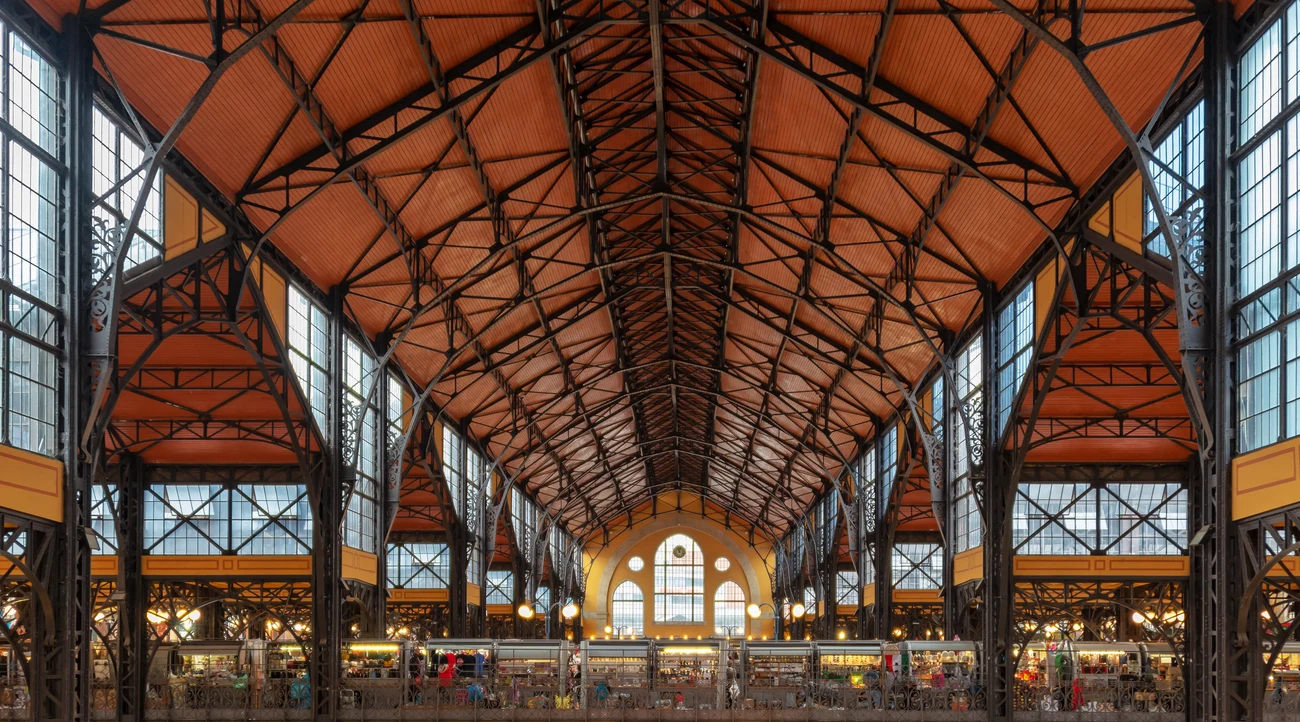
The Great Market Hall is useful for food shopping as well as sightseeing. Its operator lists grocery, produce, gift and food businesses at Vámház körút 1–3. Paprika or another packaged food can make a more practical gift than a bulky object, but check what the particular stall is selling and read the label.
The building’s published hours are Monday–Friday 06:00–18:00, Saturday 06:00–16:00 and Sunday 10:00–16:00; public holidays are closed. Those are building hours, not a promise that every counter is trading throughout. If lunch or one particular shop matters, check that business separately.
Make a first circuit before buying. Compare pack size, ingredients and the final price, then return to the stall you prefer. An independent browse and a booked food tour are different outings; a tour includes only the tastings and visits actually stated by its operator.
What to bring home: choose the object before the packaging
A good purchase fits the person receiving it and the journey home. For ceramics or glass, check the finish and ask for protective packaging. For jewellery, ask about the metal and care instructions. For clothing or leather goods, consider size, weight and whether you will use the item after the trip.
With food, check the ingredient list, package size and storage needs. A decorative box does not tell you whether paprika is sweet or hot, whether a product needs refrigeration, or how well it will travel. Ask the seller about the particular item rather than relying on the look of the stall.
Do not buy a large quantity simply because the first package seems inexpensive. Work out the price per useful unit and the space in your luggage. Any transport or import restrictions depend on what you buy and where you are going; check the rules for your own journey before committing to restricted or fragile goods.
A short Pest shopping walk without crossing the whole city
Keep a central shopping walk compact. Begin around Vörösmarty Square and Deák Ferenc utca, then decide whether you want to follow Váci south. Paloma is a separate stop on Kossuth Lajos utca, rather than a shop directly on the pedestrian street; add it when local design is part of your plan.
For an edible-gift finish, continue toward Fővám Square and the Great Market Hall. For a shorter outing, stop after the central streets and a café break. You do not need to reach every place in this guide to have a satisfying browse.
Match the route to the opening hours of the stop that matters most. A leisurely Saturday start can work for the pedestrian streets but leave less time for a small Paloma showroom. If rain becomes persistent, prioritise a covered stop and use transport for the connection rather than stretching a wet walk simply to complete a sequence.
- Fashion Street: Deák Ferenc utca, distinct from Váci Street.
- Paloma: Kossuth Lajos utca 14–16; room hours vary.
- Great Market Hall: building hours and individual trader hours differ.
- Compare materials and pack sizes, not only the headline price.
- Ask about protective wrapping before buying fragile work.
- Choose the most important showroom first, then build the walk around its hours.
Hours, payment and the final price
Use the displayed forint price as your starting point. Check the amount and currency shown at payment, and keep the receipt. If a terminal presents a currency-conversion choice, read the actual offer before accepting it; your own card provider’s terms also matter.
Small showrooms, market counters and larger shops need not share the same payment options or hours. Ask before relying on a particular card, and check the complete price before a purchase is wrapped or altered. If a product will be made to order, clarify the collection arrangements and applicable conditions with the maker.
Set yourself a spending limit before browsing. The pleasure of shopping here is in finding something particular—a ceramic piece, a useful bag, a print or food you genuinely want—rather than bringing home the largest possible souvenir haul.
Old shopping streets and a new generation of makers
The central shopping streets still carry traces of earlier commercial Pest. On Fashion Street, historic buildings that mixed shops with other uses now house contemporary retailers. Paloma adds another layer: a historic courtyard has become a shared home for designers.
The Fashion Street history records that the nineteenth-century building at Deák Ferenc utca 21 combined vaulted ground-floor shops with residential flats above. Looking beyond present-day signs makes that older relationship between retail and city life easier to recognise.
Paloma’s own history dates the arrival of the creative community to 2014, after the courtyard had previously served as a shopping plaza. Today’s makers give the old setting a different purpose: a visitor can ask about a piece directly rather than encountering only a finished product on a shelf.
Explore the market and its food traditions
Questions about shopping in Budapest