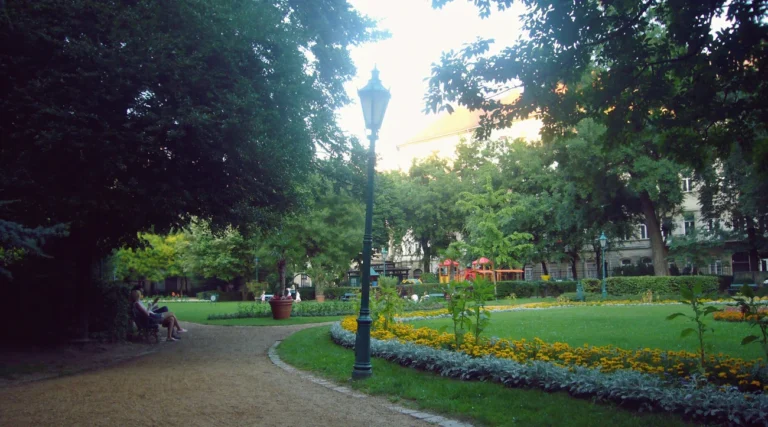
Szent István Park is a reason to linger in Újlipótváros. Come for a bench pause between residential streets and the Pest riverbank, then give the Wallenberg memorial more than a passing glance. The buildings around the park are part of the attraction: their interwar façades frame an everyday neighbourhood space.
This is a small urban outing rather than a whole afternoon of hiking. Combine a circuit with Pozsonyi út, leave children time for the playground and keep the river walk as a separate part of the route. Szent István Park is not the Basilica’s Szent István Square.
A daytime pause between the neighbourhood and the river
Choose a daytime visit and follow the notices at the entrances. A short circuit and a bench pause make a useful break from central Pest sightseeing. Allow around 20–40 minutes as a planning suggestion, then add time if children want to play or you stop along Pozsonyi út.
Published material about earlier improvement proposals is not a reliable guide to today’s equipment or access restrictions. Check the park itself for current rules and any temporarily closed areas. Do not plan a late-night shortcut on the assumption that every gate remains open.
Make a circuit, then choose a place to sit
Start with the park paths and the relationship between the green space and the surrounding streets. Walk first, then choose a bench according to the shade, weather and activity around you. The playground and everyday neighbourhood use mean that a restful pause does not necessarily mean silence.
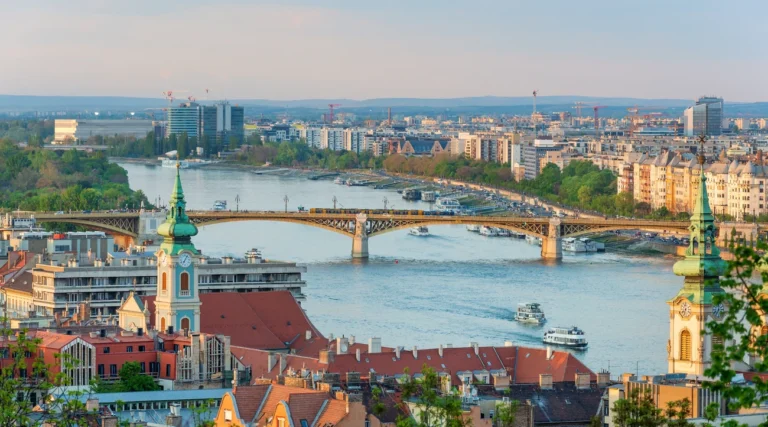
The Danube is close, but the park and the riverfront are different spaces. Use the pedestrian route and crossings appropriate to your next stop. For Margaret Island, continue towards Margaret Bridge; there is no direct bridge from the park to the island.
The Wallenberg memorial: a monument with an interrupted history
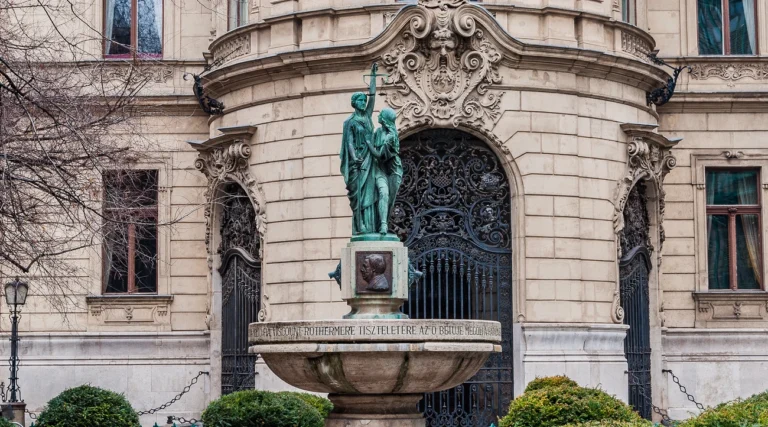
The Raoul Wallenberg memorial is the park’s most important commemorative stop. The sculpture stands on a tall base, so step back to see its whole form before approaching to read the dedication. It honours the Swedish diplomat’s humanitarian work in Budapest during the persecution of the city’s Jews.
The work here is a later reconstruction of Pál Pátzay’s monument. The original was completed in 1948 but removed before its planned unveiling in April 1949. The replacement was inaugurated on 18 April 1999. This is a memorial to pause at respectfully, rather than a piece of playground equipment.
Playground time in an everyday neighbourhood park
Leave a flexible gap for the playground. For families staying in Újlipótváros, the park can be the easy part of the day between a meal and another outing. Visitors crossing the neighbourhood can use it as a short break without turning it into a long detour.
Bring water and use the posted rules for play areas and planted spaces. Equipment and sections may be unavailable during maintenance, so avoid promising a particular play structure to children in advance. Choose a bench away from the busiest activity if you prefer to read or rest.
Interwar façades around the green space
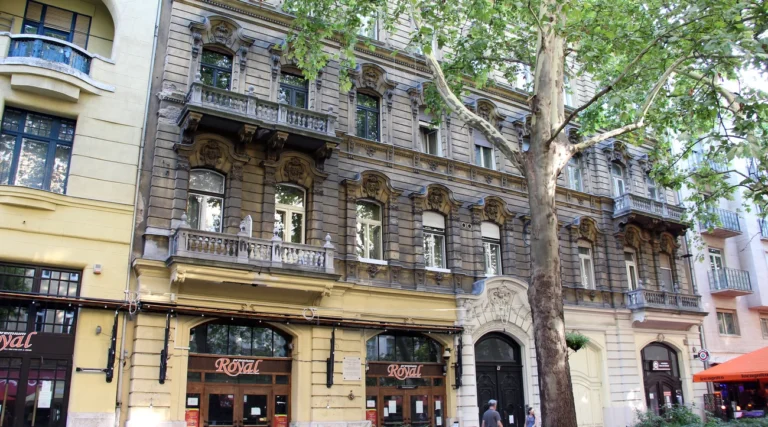
Look up at the residential buildings around the park. Újlipótváros grew into a distinctive interwar neighbourhood, and the park’s setting makes that architecture easy to appreciate from the street. At Szent István park 10, the corner building designed by Gyula Jakobik dates from 1933; Budapest100 describes its relationship with the corresponding building at Pozsonyi út 36.
The interest lies in the façades, corners and way the buildings frame the public space. These are residential buildings: a good exterior view is not an invitation to enter private staircases or courtyards. Walk around the edges and let the street-level details give the park a wider setting.
- Szent István Park is in Újlipótváros, in District XIII.
- The Wallenberg memorial is a 1999 reconstruction of an earlier work.
- The Basilica’s Szent István Square is a different destination.
- Riverfront routes and Margaret Island need their own onward walk.
- Allow a relaxed daytime pause rather than a hurried crossing.
- Read entrance and playground notices for current restrictions.
- Respect the memorial and private residential entrances.
- Keep food, café stops and any transport costs separate.
Getting to Szent István Park
Trolleybus 76 serves Szent István park. Its route connects Jászai Mari tér with Keleti pályaudvar M, making it useful for journeys that fit that corridor. Check the current departure and direction before boarding rather than relying on an old printed timetable.
For an outing on foot, approach through Újlipótváros and Pozsonyi út or continue north from the Margaret Bridge area. Use the actual pedestrian route for street crossings and the riverfront. The park is on the Pest side of the Danube.
Continue along Pozsonyi út or towards Margaret Bridge
Pozsonyi út makes a natural continuation. Browse the surrounding streets and choose a café or sweet stop according to where you are heading next. Our kürtőskalács guide includes Mütyür at Pozsonyi út 7, farther south along the street, with verified menu examples rather than an invented food stop inside the park.
If you want a longer walk, continue towards Jászai Mari tér and Margaret Bridge. Keep Margaret Island as an additional outing with its own time allowance. A short park visit, a look at the residential façades and one neighbourhood stop can already make a satisfying detour.
From a factory site to a residential park
The green setting replaced an industrial one. Budapest100 records a 1928 municipal decision to create a park on the site of a former parquet factory. The space was initially known as Rakovszky Park and, from 1935, Lipótvárosi Park. The surrounding interwar housing gives this transition a visible architectural frame.
The Wallenberg monument adds a later, interrupted history of remembrance. Pál Pátzay completed the original in 1948, but it was taken down and removed shortly before its planned inauguration on 10 April 1949. The association’s account describes its subsequent disappearance.
For the replacement unveiled in 1999, sculptor Sándor Györfi was commissioned to make the copy, architect László Rajk redesigned the base and sculptor István Marosits recreated the Wallenberg portrait. The memorial seen today therefore tells both the story of Wallenberg’s humanitarian work and the difficulties of commemorating it in post-war Hungary.
Passes and river outings for a wider Budapest day
Szent István Park: practical questions