The Museum of Ethnography asks you to look at familiar objects differently. Clothing, household possessions and tools become a way to think about the people who made, used and collected them. Choose a few stories to follow rather than treating the displays as a catalogue to finish.
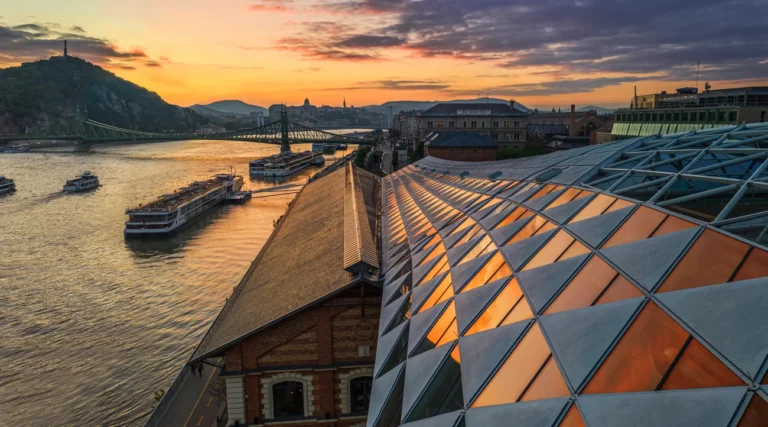
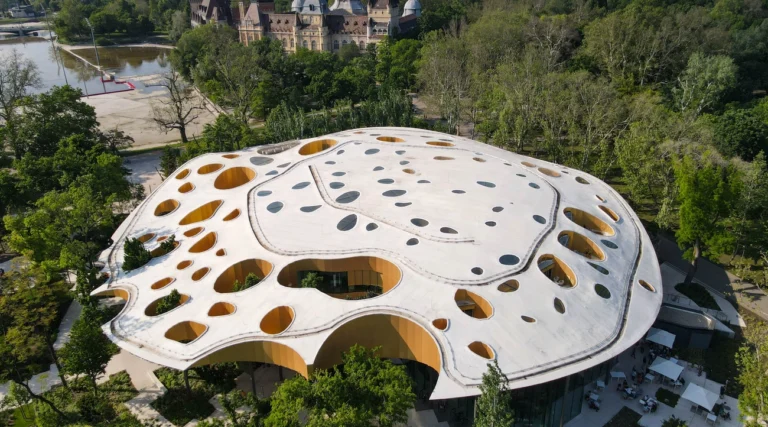
The curved building and its green roof also make this a worthwhile stop at the edge of City Park. Keep the outdoor roof visit distinct from the exhibitions below: they offer different experiences and do not share the same access arrangements.
Choose the exhibition ticket around the time you have
ZOOM alone is a shorter ticket choice than the Collection Exhibition with ZOOM. The all-in ticket adds the temporary exhibitions. Choose what you genuinely want to see rather than buying extra access only because it is available.
The normal exhibition schedule is Tuesday to Sunday. Keep the ticket QR code during your visit, as it also operates access to the building’s toilets. Holiday and event arrangements can differ.
The Collection Exhibition: objects with lives beyond the display case
The Collection Exhibition brings Hungarian and international material into eight thematic units. It considers everyday life, collecting, heritage and the relationship between art and ethnography. This is a route through questions and stories, rather than a single chronological account of Hungary.
Give yourself permission to linger over one case. Ask how an object’s meaning might change when it leaves a home, workshop or ceremony and enters a museum. Reading fewer labels with more attention can make a stronger visit.
A short visit can still reward close looking
Do not make the whole building your minimum target. If you have limited time, choose ZOOM or a focused part of the collection that interests you. A deliberate short visit works better than a rushed attempt to see every display.
Keep the next appointment flexible when possible. Once a story catches your attention, it is worth having a few spare minutes to follow it rather than watching the clock throughout the room.
Ceramics Space: compare shape, surface and purpose
The Ceramics Space is listed by the museum as free to visit. Its display brings together ceramics from around the world. Choose a small group and compare silhouettes, handles, decoration and the traces of how a vessel might have been used.
It can give a shorter stop a clear focus without a full exhibition circuit. The museum lists it as closed on Mondays, so do not assume that all public-looking areas remain open whenever the entrance hall does.
The green roof: a separate outdoor visit from the park
The freely accessible roof garden is reached from outside the building. The public portions are listed as open around the clock, but closed or fenced areas remain off limits. The roof and the paid galleries should be planned as separate parts of the day.
Use it as a quiet panorama stop. Keep children close, follow staff instructions and choose another park route if conditions make the steps uncomfortable. The planting and changing outline of the building deserve as much attention as the view.
Let City Park provide the break between exhibitions
After a concentrated museum route, continue outdoors before choosing another interior. City Park gives you room to change pace; Heroes’ Square provides a different, monumental setting close by.
Keep the combination selective. A museum visit, a park pause and one further stop can make a complete day without turning the area into a checklist.
- Choose ZOOM, the Collection Exhibition or all-in access deliberately.
- Keep your ticket QR code for access to facilities.
- Ceramics Space and the roof have separate visiting arrangements.
- The current museum is beside City Park, not opposite Parliament.
- Choose a few stories rather than every display.
- Allow a break between substantial exhibitions.
- Reach the roof from outside the building.
- Use Entrance II for the independent accessible-lift approach.
Choose the correct entrance at the edge of City Park
The museum’s current address is Dózsa György út 35. Plan your route to the entrance you need, rather than to an older museum address or simply to the nearest part of the curved roof.
From a national collection to a new home in City Park
The museum traces its foundation to 1872, when János Xántus became curator of the ethnographic department of the Hungarian National Museum. Its later history brought Hungarian material together with collections from beyond Europe.
The institution became independent in 1947 and occupied several homes over its history. In 1975 it moved into the former Palace of Justice opposite Parliament, an address that can still cause confusion when planning a first visit.
The purpose-built City Park home opened in 2022. Designed by Marcel Ferencz and NAPUR Architect, its curved wings and motif-based façade create a new relationship between the museum and the surrounding public space.
The Collection Exhibition opened in 2024, bringing a fresh approach to the holdings. The move is more than a change of address: it gives visitors different ways to connect architecture, public space and the stories carried by objects.
Plan another City Park visit or a guided introduction
Museum of Ethnography visiting questions