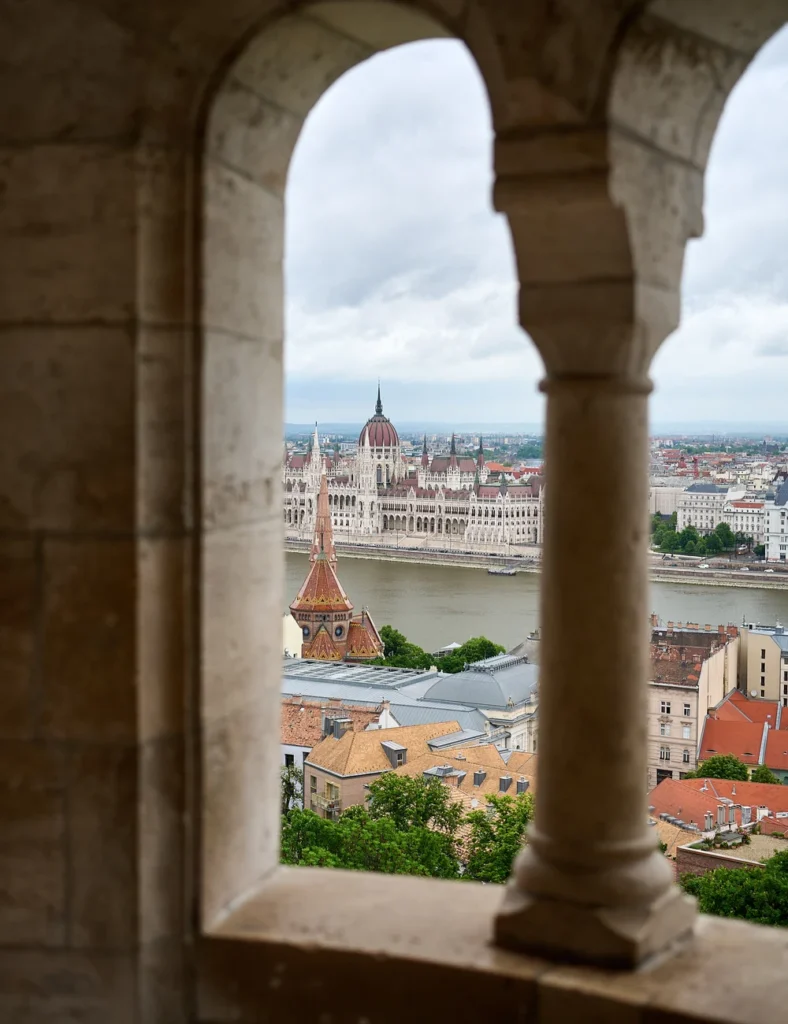
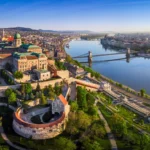
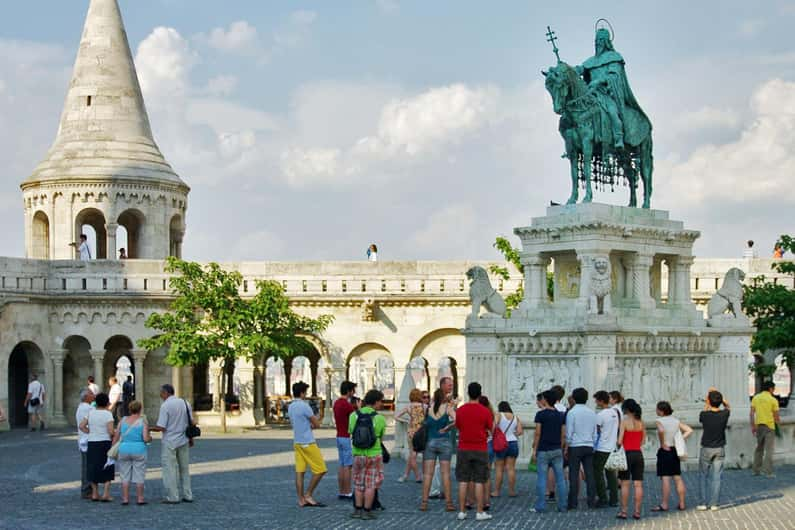
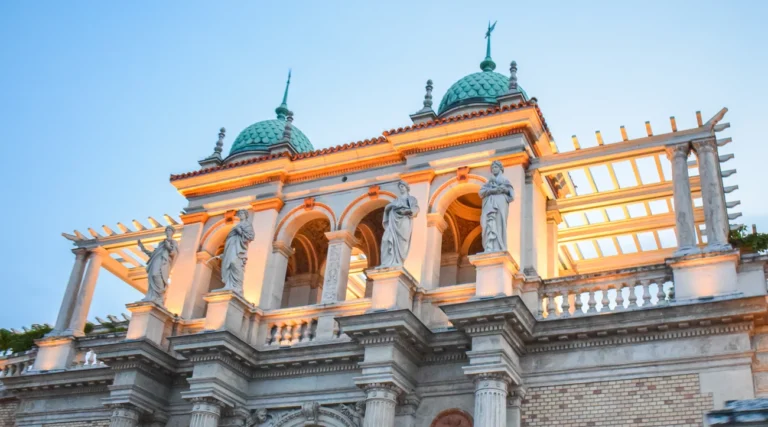
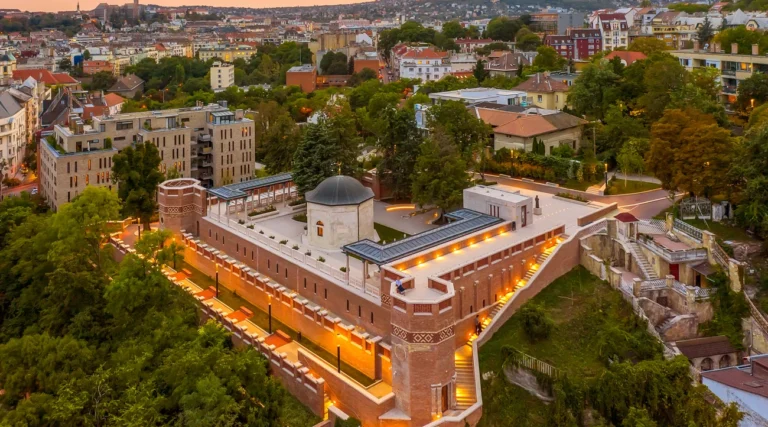
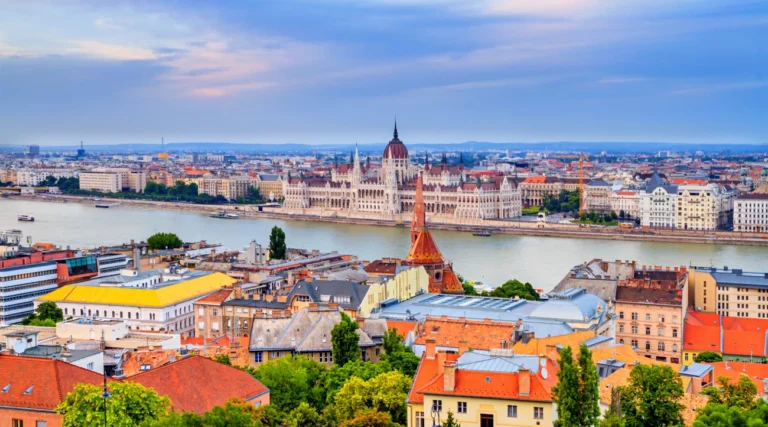
Fisherman’s Bastion is a lookout to explore slowly. Pale stone arcades frame the Danube and Parliament, while the seven turrets give Castle Hill its most playful silhouette. You can enjoy the lower public terraces without buying an upper-lookout ticket.
Start outside, walk along the arches and decide whether the extra height is worth paying for. Matthias Church stands beside the bastion but has separate admission: neither its interior nor its tower is included in the basic terrace ticket.
Free terraces or upper lookout: what do you need?
The lower public terraces and the upper lookout have different access arrangements. Walk the lower level first; the paid section adds height rather than an entirely different panorama. The hours below are the operator’s published 2026 upper-lookout schedule, rather than a closing time for the whole public square.
Arches, turrets and river views worth slowing down for
The pleasure of the bastion is in moving between open views and sheltered stone frames. Walk a little beyond the first crowded arch: the relationship between Parliament, the river and the turrets changes as you move along the terrace.
Sunrise or evening: choose the light for your visit
Morning and late afternoon offer different photographs. The bastion faces towards Pest across the river, so sunrise brings light from the direction of the skyline; in the evening, warmer light can fall onto the stonework from the Buda side. Clouds, season and the exact position along the terrace make a bigger difference than a rigid “best hour”.
For a quieter visit, choose an early start and leave time to look without a camera. In the evening, enjoy the transition from daylight to illuminated buildings, without relying on a fixed lighting timetable. The free lower arches already provide strong compositions.
Explore the bastion with a Castle District guide
A guided district walk makes sense if you want the bastion’s architecture placed in the wider story of Castle Hill. Compare an outdoor route with an option that adds a church interior; a walking tour is not the upper-terrace admission ticket.
The routes below visit the bastion or its immediate setting. Check the actual itinerary and selected option for paid upper-level access, Matthias Church entry, meeting point and language before booking.
- Start with the free lower terraces before deciding on the paid upper lookout.
- Matthias Church and its tower require their own tickets.
- Keep proof of eligibility if requesting an upper-terrace reduction.
- Café and restaurant seating is separate from public viewpoint access.
- Move along the arcade instead of waiting at the first busy arch.
- Keep steps and narrow passages clear while taking photographs.
- Bus access reduces the climb, but does not remove every cobble or staircase.
- Combine the visit with Holy Trinity Square, then continue through the district at your own pace.
Getting to the bastion without an unnecessary climb
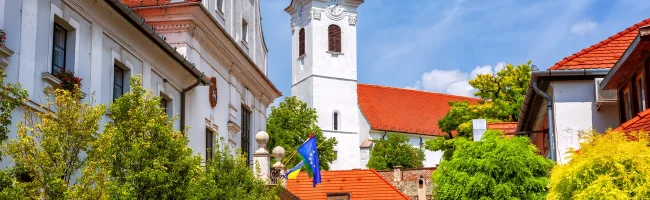
The bastion sits beside Matthias Church and Szentháromság tér, in the northern part of the main visitor route through the Castle District. Choose a hilltop bus arrival if you want to reduce the climb; the riverside approach is steeper.
Matthias Church or the palace: what to combine
Matthias Church is the natural next stop if you want an interior after the open-air viewpoint. Its patterned roof and colourful decoration reward a separate visit; church admission and the bell-tower visit are distinct options.
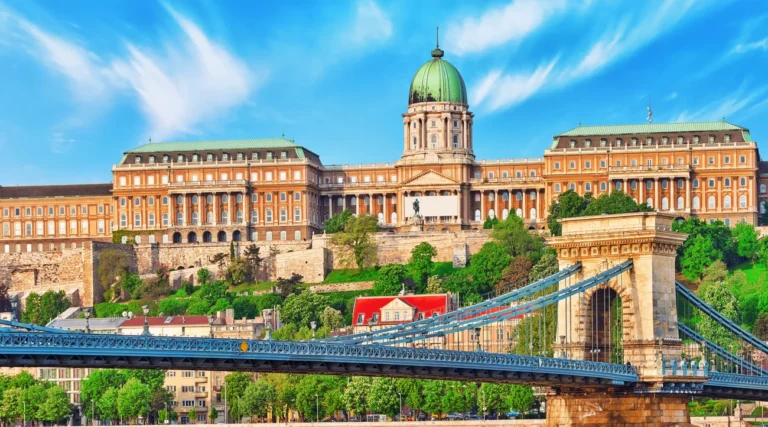
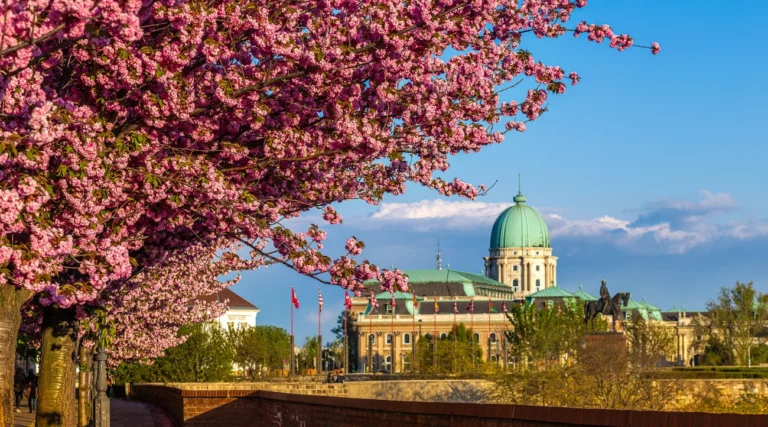
For a longer outdoor route, continue through the streets around Holy Trinity Square towards Dísz tér and the royal palace. Buda Castle’s courtyards and museums lie farther south: they are part of the same hill, but the bastion is not a palace entrance.
Keep the route selective. A relaxed terrace visit and one church interior can be more satisfying than rushing between every tower and museum on the hill.
A modern lookout inspired by an older city
The bastion’s story begins with the remaking of the setting around Matthias Church. Architect Frigyes Schulek designed a ceremonial lookout on the line of earlier defences, giving the hill a sequence of arcades, stairs and turrets. Its fairy-tale appearance belongs to the turn of the twentieth century.
The present structure was created around the end of the nineteenth century and opened to the public in 1905. Its Neo-Romanesque forms draw on older architecture, but the decorative lookout was not built to fight a medieval siege. Earlier walls and fortifications survive within the history of the site.
The seven towers symbolise the seven Magyar tribal leaders associated with the settlement of Hungary. Schulek also paid attention to the smaller details: capitals, windows and benches vary as you walk, so the building offers more than a single postcard view.
War damage required restoration after the Second World War, work associated with the architect’s son, János Schulek. Today the bastion works as both a landmark seen from Pest and a place from which to understand the city’s river setting.
Compare city passes and Castle District walks
Frequently Asked Questions - FAQ