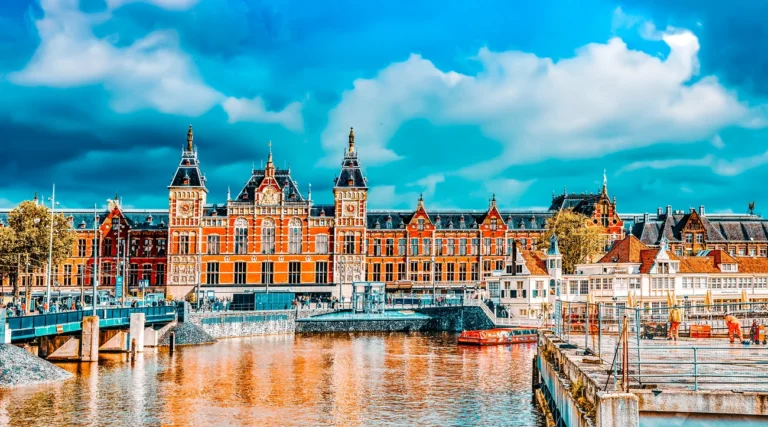
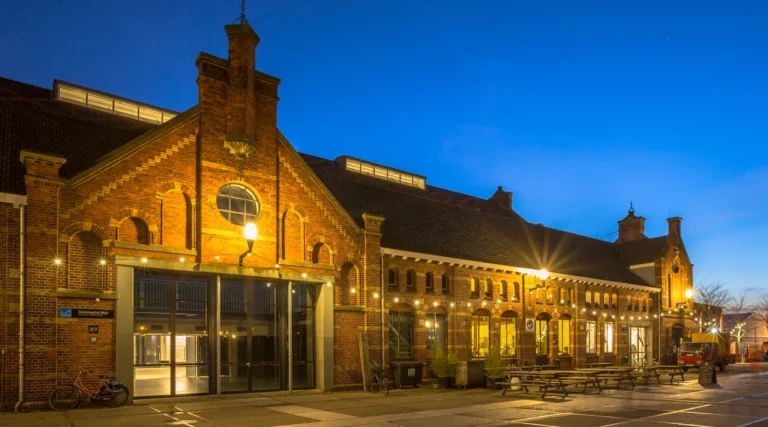
For many visitors, Amsterdam Centraal is their first encounter with the city’s architecture. Its long brick façade, towers and sculptural decoration turn a railway arrival into a monumental entrance. The station opened on 15 October 1889, designed by Pierre Cuypers and A. L. van Gendt.
It remains a working transport hub. Take time to appreciate the historic city-facing building and the public passages, while respecting passenger flows, ticket gates and the ongoing renewal of the station. This is an architectural visit fitted around everyday travel.
Amsterdam Centraal access, public spaces and ticket gates
You can appreciate the exterior and gate-free public passages without buying a sightseeing admission ticket. Platform areas beyond the railway gates follow NS access rules; public passages are a separate route. Royal and other reserved rooms are not part of an ordinary independent visit.
Access routes and services can change during works. Check current station signs and travel information on your visit date; do not rely on a fixed tourist opening schedule for the whole complex.
What to see at Amsterdam Centraal
Start outside on Stationsplein for the overall composition, then explore accessible public areas. The contrast between the decorated historic building and contemporary circulation spaces is central to the station’s character.
Plan an architecture stop around your journey
Allow a short architecture stop before or after a journey, with extra time for construction diversions. If you have a train to catch, check your platform and walking route first, then decide how much time remains for sightseeing.
How to explore Centraal with a guide or audio walk
Allow around 30–45 minutes for the façade and accessible public spaces, separate from your train connection. Avoid rush-hour bottlenecks and stand aside before looking up or taking photographs.
The three optional experiences below include Centraal as an itinerary stop or pass-by: a private introductory city walk, a private Jordaan walk and a self-guided audio route. The introductory walk lists a ten-minute station stop; the Jordaan route lists fifteen minutes. The audio tour begins here with commentary on the façade. These are wider city experiences, not station admission, royal-room access or train tickets. Check the selected format, language and meeting point.
- Keep public passages and gated railway areas distinct. Follow the signs for your intended route.
- Allow extra time for works, temporary entrances and platform changes.
- The royal waiting room is not an ordinary walk-in attraction.
- Do not block commuters, stairs or ticket gates while photographing.
- Begin on Stationsplein to see the façade’s full arrangement.
- Look carefully at the two tower dials rather than assuming they serve the same function.
- Use gate-free passages to reach the IJ side when open, following current signs.
- For a guided walk, check the exact meeting point; “near Centraal” can mean different exits.
Getting to Amsterdam Centraal and choosing the right exit
Amsterdam Centraal stands on Stationsplein, between the old town and the IJ. Trains, metro, trams, buses and ferries use different parts of the interchange. Check your operator’s current planner and distinguish the city side from the IJ side when arranging a meeting or onward journey.
A monumental gateway on the IJ waterfront
The decision to place the station on the IJ waterfront was contested: opponents feared the effect on shipping and the city’s relationship with its harbour. The building rose on reclaimed ground and opened to large public crowds in 1889.
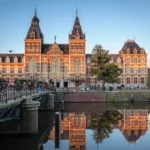
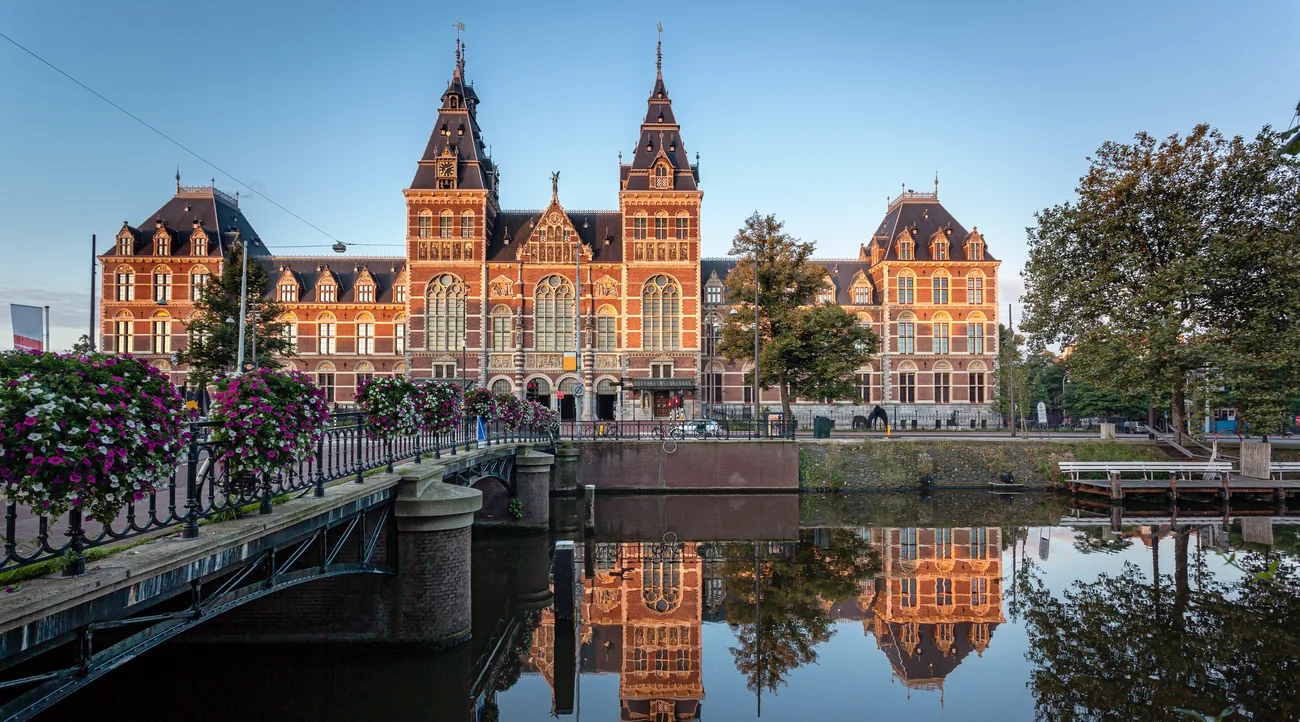
Pierre Cuypers and A. L. van Gendt combined a monumental public building with the needs of railway travel. Cuypers also designed the Rijksmuseum. His station’s central entrance and towers expressed the idea of a new gateway to Amsterdam.
The façade’s brickwork, pale stone and historicising decoration belong to the ambitions of the nineteenth-century city. Behind it, platforms and train sheds served the practical movement of passengers and rolling stock.
Modern interventions have reorganised circulation and connected rail, metro and the waterfront. Gate-free passages allow people to cross the complex without entering the platform zones. Further renewal continues, so the station is best understood as both protected architecture and changing infrastructure.
Details behind the station’s familiar façade
- The towers have different dials: look for the clock and wind-direction display.
- Cuypers also designed the Rijksmuseum, giving Amsterdam two major monuments with a related architectural vocabulary.
- The royal waiting facilities occupy the eastern corner pavilion, separate from ordinary public access.
- The waterfront location was a major planning choice, not an inevitable site for the station.
Cuypers’ Rijksmuseum and Amsterdam city walks
Stay near Amsterdam Centraal Station
Staying near Centraal, the western old town or the eastern station approaches can simplify arrival and day trips. Check the precise walking route, street noise and whether a room has a lift. The map below is centred on Amsterdam Centraal; confirm the property’s address and access before booking.
Amsterdam Centraal: architecture and visiting FAQ
More activities and experiences in Amsterdam