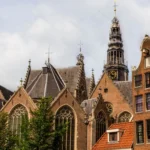
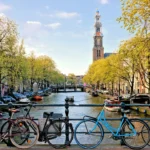
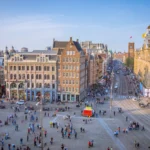
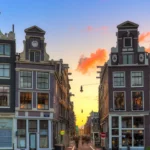
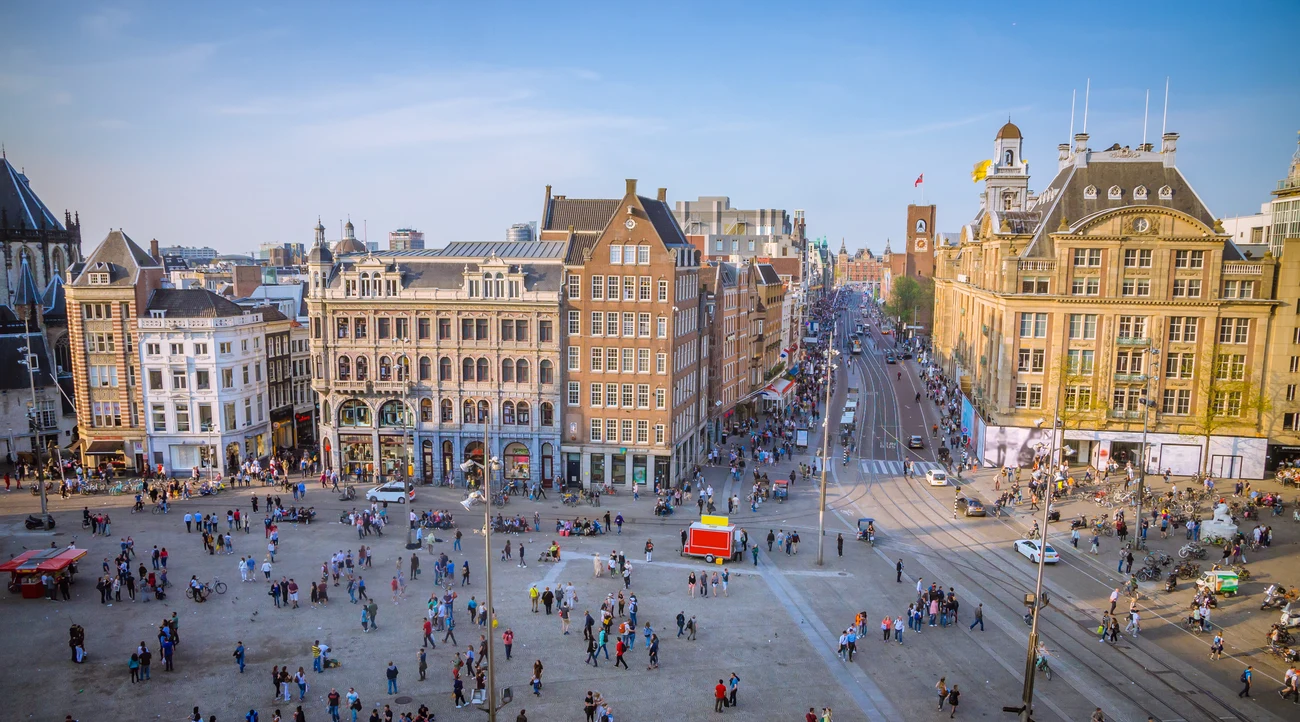
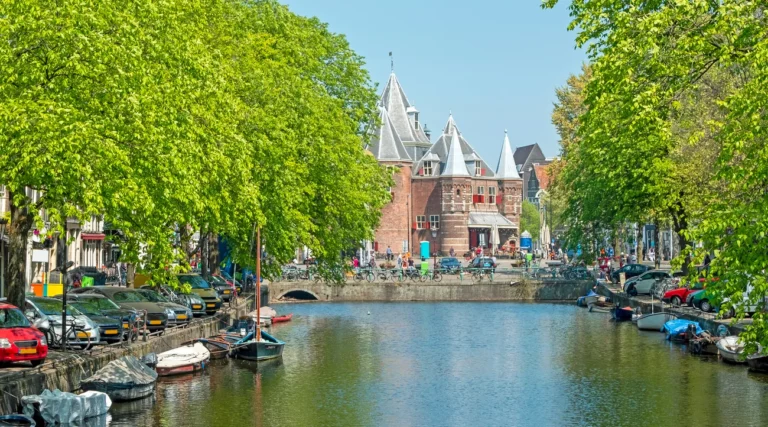
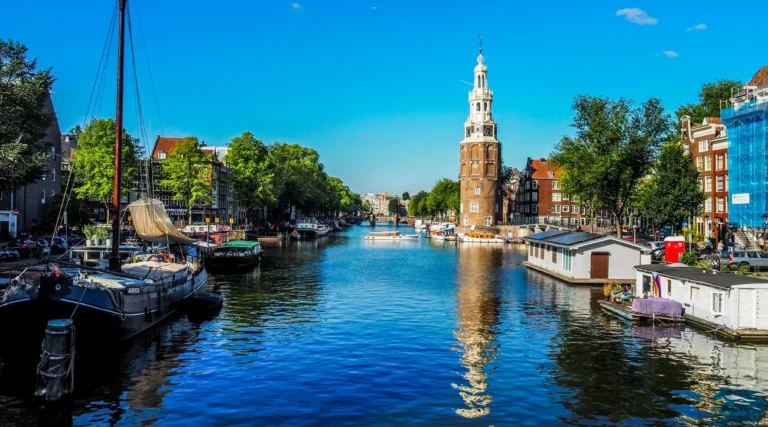
The Munttoren, or Mint Tower, rises above Muntplein where the Singel meets the Amstel. Its compact lower section recalls Amsterdam’s medieval defences, while the upper tower belongs to the city’s Renaissance skyline. Look up from the busy pavement and the contrast becomes clear: this is a fragment of an older Amsterdam surrounded by shops, waterways and constant movement.
The name comes from a brief period of coin production in the adjoining guardhouse during the seventeenth century. Today the most rewarding visit is a short, free stop outside, looking at the architecture and listening for the carillon. Do not plan it as a ticketed observation tower.
Munttoren access and visiting information
You can view the Munttoren from the public streets and canal-side approaches without an admission ticket. This is an exterior landmark, rather than a visitor attraction with a regular public climbing route. Allow daylight for architectural details; temporary street works or local restrictions can affect where you stand.
What to notice at the Munttoren
The tower rewards a few minutes of close observation. Compare its lower masonry with the lighter upper structure, then move away from the base to take in the complete silhouette. Choose a safe pavement position rather than stopping in a cycle route.
Plan a short stop at Muntplein
Include the Munttoren in a walk between the Singel, Rokin and the Amstel. It works best as a distinctive landmark along your route, with time to pause instead of a separate half-day visit.
How to visit Amsterdam’s Mint Tower
Allow approximately 10–20 minutes for the exterior and surrounding canal views. Begin on Muntplein, then try a viewpoint a little farther along the Singel. Viewing the tower outside is free.
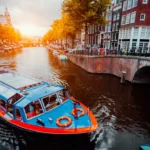
The optional guided walk and smartphone audio tour below list Munt Tower among their stops; the small-group boat tour lists it as a pass-by landmark. These are separate city activities, not admission to the tower. Choose the guided walk for a live guide or the audio tour for an independent visit. Boat routes can change, so confirm the itinerary if seeing Munttoren from the water is your priority.
- Exterior viewing is free. There is no regular public observation-deck visit included in this guide.
- The tower stands on a busy junction: keep clear of tram tracks, cycle routes and crossings.
- Carillon performances and maintenance can vary; do not rely on an old timetable.
- Nearby shops or businesses have their own access arrangements, separate from the monument.
- Step back along the Singel for a fuller view of the tower.
- Visit in daylight if you want to distinguish the masonry base and wooden upper structure.
- Combine the stop with a canal-side walk rather than making a special trip for an interior visit.
- For a separate palace visit, allow additional walking and admission time.
Getting to the Munttoren
The Munttoren stands at Muntplein, beside the eastern end of the Singel’s flower-market stretch. It is easy to include on foot between Rokin, the canal belt and the Amstel. Rokin metro station is a practical starting point; choose the exit that best suits your route and check current transport services.
From city gate to Mint Tower
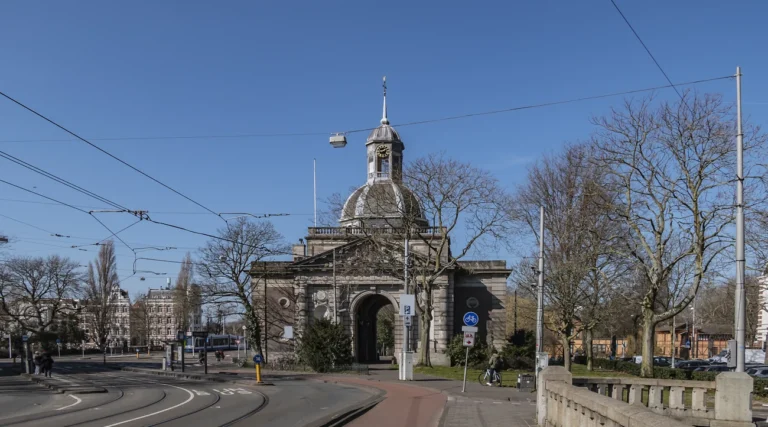
The tower began as part of the Regulierspoort, a gate in the late-medieval city wall. At that time the location marked a boundary rather than the middle of a shopping district. Its surviving lower section helps explain why several Amsterdam landmarks look like isolated fragments of fortifications.
A fire in the early seventeenth century destroyed much of the gate complex. The retained tower was remodelled and raised in 1620, with an upper structure designed by Hendrick de Keyser. The result combined an older defensive remnant with a much more decorative skyline feature.
The name Mint Tower belongs to a later chapter. During the crisis of 1672, Amsterdam temporarily received minting rights and coins were struck in the adjoining guardhouse. The activity was short-lived, but the name remained. It is more accurate to associate the mint with the guardhouse than to imagine a permanent royal mint inside the tower.
The carillon added a different civic role: a tower could announce time and carry music across the surrounding streets as well as mark a place on the skyline. Historic Hemony bells form part of the instrument, alongside later additions. The bell chamber is a working space, not a general visitor viewing platform.
The surrounding city changed repeatedly as former defensive edges became streets, trading areas and transport routes. Looking at the Munttoren from the water helps recover a sense of its older setting. Its interest lies in those overlapping uses—gate, landmark, musical tower and reminder of a brief minting episode—rather than a single unchanged medieval appearance.
Small details with a long history
- Munttoren means Mint Tower, but the coin-making activity took place in the neighbouring guardhouse.
- The national heritage register identifies a surviving Regulierspoort tower with a wooden upper structure added in 1620.
- The carillon includes bells made by the Hemony brothers as well as more recent bells.
- Muntplein is also a broad crossing over the water: the tower’s relationship with the Singel is part of its setting.
Canal history and Dutch food walks near Muntplein
Find a stay near Muntplein
Staying around Muntplein, Rokin or the Singel places you within walking distance of much of the historic centre. This is a lively area, so compare room orientation and noise reviews as carefully as the map distance. The map below is centred on the Munttoren; accommodation prices and availability depend on your dates.
Munttoren: frequently asked questions
More activities and experiences in Amsterdam