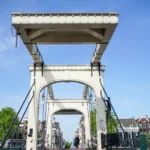
The Magere Brug, usually called the Skinny Bridge in English, is the white wooden drawbridge across the Amstel at Kerkstraat. Its low deck and lifting structure create a distinctive outline against the much wider river. It is a useful crossing as well as a familiar Amsterdam landmark.
The bridge’s story reaches back to a narrow seventeenth-century predecessor, but the present design dates from 1934. Come to look at the wooden structure, walk across the river and enjoy the views along the Amstel. A boat trip offers another perspective, but you do not need a ticket to cross the bridge.
Magere Brug access and crossing information
The Magere Brug is a public crossing, not a gated attraction with an admission desk. You can visit and cross it without paying. Bridge openings for vessels, maintenance or temporary local restrictions can interrupt access, so follow signals and barriers rather than assuming the crossing is always immediately available.
What to notice at the Skinny Bridge
Look at the bridge from the riverbank before crossing it. This makes the relationship between the low timber deck, the raised lifting structure and the broad Amstel easier to appreciate. From the middle, keep moving enough to leave room for other bridge users.
Plan your Amstel bridge walk
For a first visit, combine the crossing with a short riverside walk. Daylight helps you see the construction; an evening return gives a different atmosphere. Leave more time if you want photographs from both banks.
How to visit the Magere Brug
Allow around 15–30 minutes to cross the bridge, look at the lifting structure and find a riverside viewpoint. The crossing itself takes only a few minutes. Keep the deck clear for other users and obey the barriers if the bridge opens.
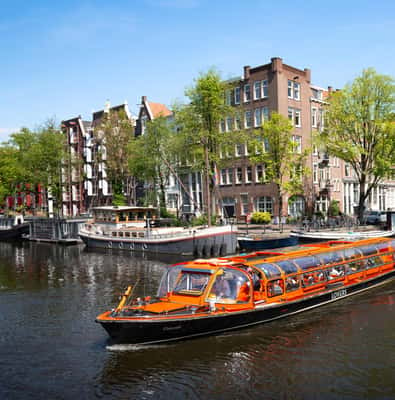
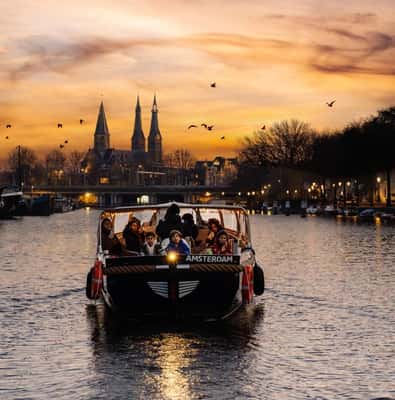
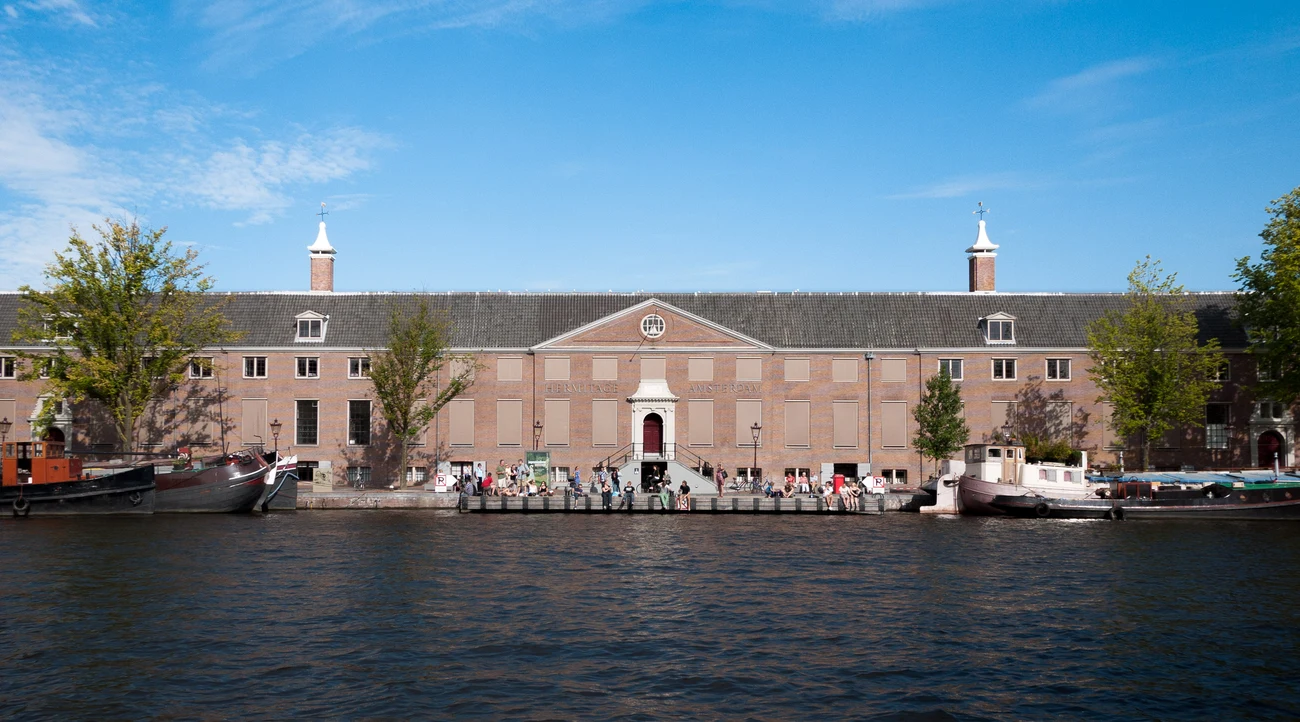
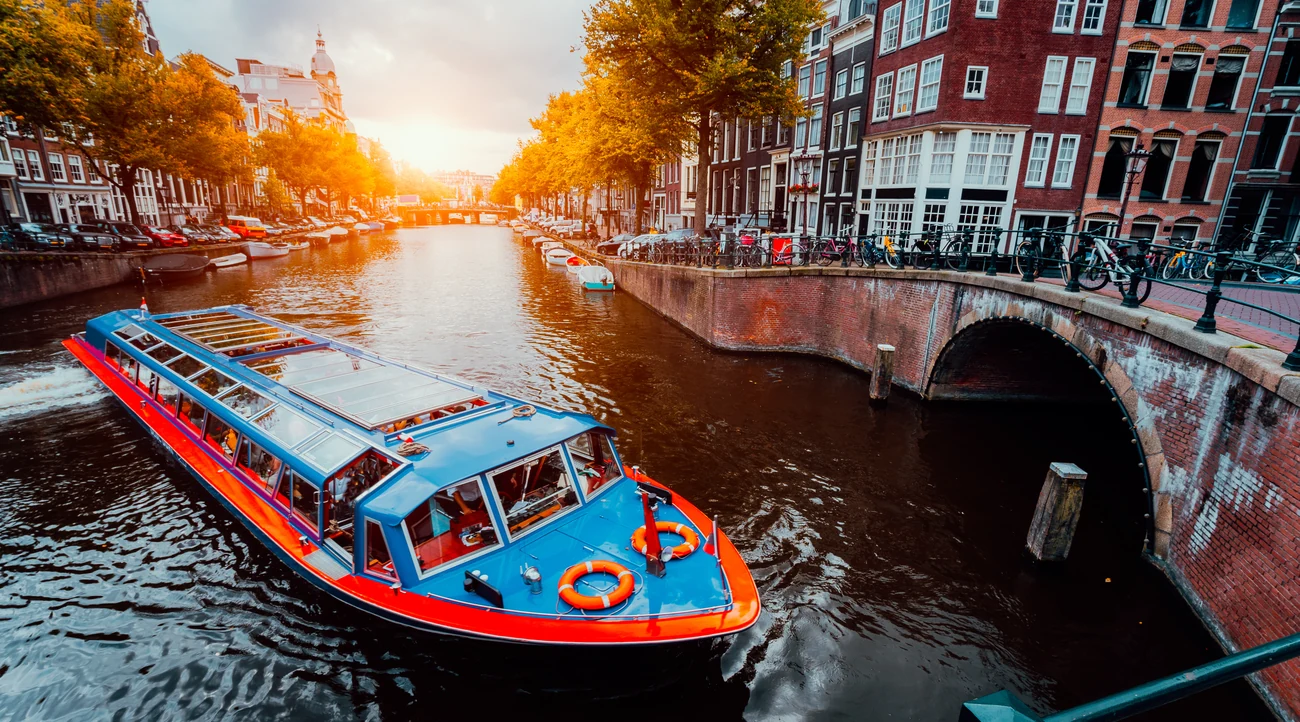
For a view from the water, the three optional cruises below list Magere Brug in their descriptions or indicative itineraries. They are separate boat bookings, not bridge-entry tickets. Departure points are elsewhere in the city and depend on the selected option; check yours before booking. Routes can change, and a cruise does not imply a stop or disembarkation at the bridge.
- Crossing is free. There is no bridge-admission ticket to buy.
- The bridge is working infrastructure: give way to other users and follow crossing signals.
- Boat departures are not automatically at Magere Brug.
- The story about two sisters building the bridge is a legend, not established history.
- Start on a riverbank to see the complete drawbridge shape.
- Keep the central crossing clear when stopping for photographs.
- Try an evening walk for the river’s reflections and a different view of the bridge.
- If booking a cruise, compare the boarding point, covered or open seating and any optional drinks.
Getting to the Skinny Bridge
The bridge crosses the Amstel at Kerkstraat, south of the Blauwbrug and Waterlooplein area. Waterlooplein metro station is a convenient starting point, followed by a walk along the river. The route from Rembrandtplein also works well for combining the bridge with a wider central-Amsterdam walk.
From Kerkstraatbrug to an Amsterdam icon
A narrow wooden bridge opened here in 1691, originally known as the Kerkstraatbrug. Its limited width gave rise to the nickname Magere Brug: the Skinny Bridge. The original structure had thirteen small navigation openings, rather than the broader arrangement seen today.
As the city’s needs changed, the crossing was replaced and widened. A new version followed in 1871. The present bridge, designed by Piet Kramer in 1934, continued the familiar wooden drawbridge appearance. The landmark therefore preserves a traditional character without being the untouched seventeenth-century bridge.
The famous story of two sisters living on opposite banks is not supported by the historical account published by the municipality. Versions differ over whether the sisters were named Mager, were thin themselves or could afford only a narrow crossing. These are colourful explanations, but they should be presented as folklore.
The practical history is more revealing: Amsterdam needed a connection across the Amstel, and the narrow early bridge became a recognisable part of the river. Later debates over replacement show how an everyday crossing could acquire a value beyond its transport function.
The movable section remains central to understanding its design. Amsterdam’s bridges have to connect people across the water while allowing navigation along it. Seeing the bridge from the bank or a boat makes that relationship clearer than looking only at a close-up photograph of the white beams.
The name, the sisters and the real history
- Skinny refers to the narrowness of the earlier crossing, not the width of the Amstel.
- The older official name was Kerkstraatbrug.
- The current bridge dates from 1934, although its appearance recalls earlier wooden versions.
- The two-sisters story survives in tourist storytelling but is identified as a myth by the municipality.
Explore art and canal cruises by the Amstel
Find a stay near the Amstel
Staying near the Amstel or the southern canal belt makes riverside walks easy to include in your day. Compare noise reviews, public-transport connections and the route to your chosen accommodation. The map is centred on Magere Brug; prices and availability vary with your travel dates.
Magere Brug questions answered
More activities and experiences in Amsterdam