






































De Waag: From Medieval City Gate to Historic Landmark

Discover the turreted landmark on Nieuwmarkt, from medieval gateway and public weigh house to guild rooms and contemporary city life.

In short

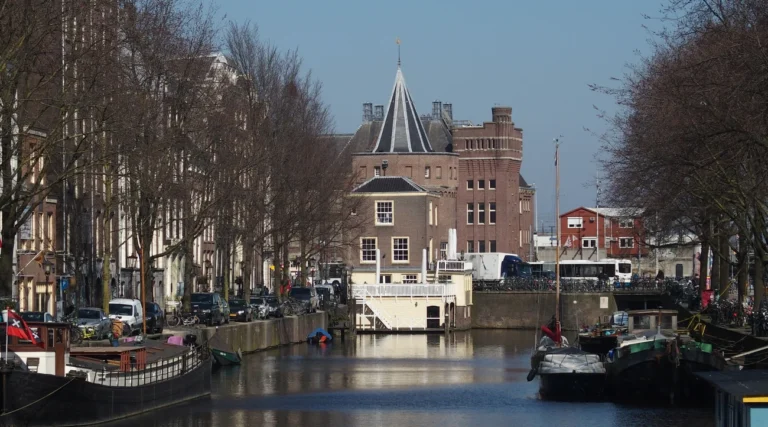
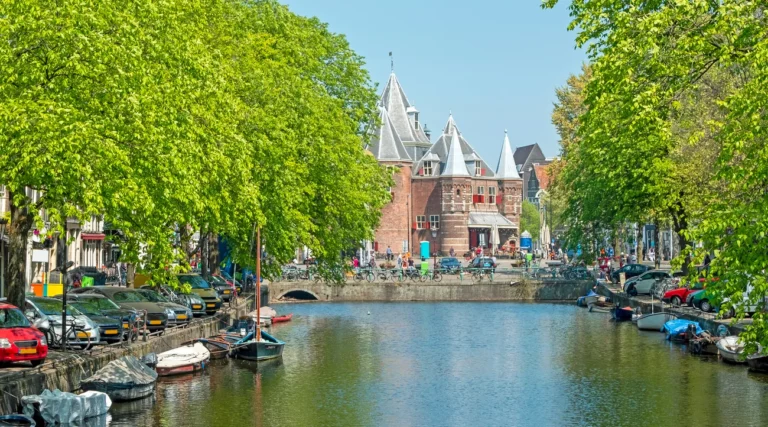
De Waag looks like a small castle in the middle of Nieuwmarkt, but its story begins with Amsterdam’s city defences. The former Sint Antoniespoort, dated to 1488, later became a public weigh house.

Its towers and separate doorways preserve traces of a building reused for trade, guild life and many later activities. Today, the ground floor houses a café-restaurant and the upper rooms are used by Waag Futurelab.

  • A surviving medieval gateway in the historic centre
  • Architecture adapted for weighing goods and guild meetings
  • A distinctive landmark to explore from the square
  • A starting point for a walk around Nieuwmarkt and the old canals

☰ Table of content

Seeing De Waag: access and practical information

The exterior can be viewed freely from Nieuwmarkt. De Waag is not a museum with a general admission route through every room. Restaurant access and Waag Futurelab events have separate arrangements; do not assume that a café visit includes the upper floors or anatomical theatre.

Hours

  • Exterior Outdoor viewing

    See the building from Nieuwmarkt

  • Restaurant Separate hours

    Check the café-restaurant’s current service and booking arrangements

  • Upper rooms Event-dependent

    Check the exact Waag Futurelab listing before planning entry

Prices

  • Exterior view Free

    No ticket needed to look around from the square

  • Dining Separate purchase

    A restaurant visit is not a general heritage admission ticket

  • Events and nearby museums Check the offer

    Each activity has its own booking terms and inclusions

What to notice around the old city gate

Walk around the building before settling on a single photograph. Its outline is the result of changing uses, and the entrances offer clues to the different groups that once worked here.

1

The gate-like silhouette Medieval origins

The turrets and robust brickwork make the old defensive purpose legible. Compare the building’s outline from different sides of Nieuwmarkt.

2

The weigh-house conversion Changing uses

In 1617–1618 the former gate was adapted as a weigh house. Trade replaced defence as its main role.

3

Guild doorways

Separate entrances served the guilds using the upper rooms. Their emblems help turn a walk around the exterior into a search for clues.

4

The anatomical theatre

The surgeons’ guild created an octagonal teaching space, completed in 1691. Access depends on the current programme, not an ordinary walk-in museum ticket.

5

Nieuwmarkt as the setting

Stand back to see how the building anchors the square. Its present openness contrasts with its original position within the city’s defences.

De Waag at a glance

Plan a short outdoor stop, with extra time only if you have arranged a meal or a public event. The durations below are practical suggestions, not official guided-visit times.

How to visit De Waag on Nieuwmarkt

Allow roughly 20–30 minutes to look around the exterior and Nieuwmarkt. Check the current programme before planning access to the upper rooms. A meal is a restaurant booking, not a heritage admission ticket.

For more historical context, the private historical walk and smartphone audio tour below list De Waag among their stops. The History & Highlights walk meets in front of the building on Nieuwmarkt. Choose a live guide or an independent phone tour according to your preference. These are city walks, not admission tickets to De Waag; check the selected language, meeting point and itinerary before booking.

Your guide Anna on on a bridge over the Prinsengracht Canal

Historical Highlights Walking Tour with private local Dutch guide

This luxury private walking tour encompasses the city's most charming historical neighborhoods and covers all the must-see landmarks. The tour is designed as the perfect introduction to Amsterdam,…
Amsterdam Walking Tour with Audioguide on Your Smartphone

Amsterdam Walking Tour with Audioguide on Your Smartphone

The Amsterdam Audio Guide offers an engaging journey through the city center's most significant landmarks via a mobile app. The GPS map guides you to various notable sites,…
Amsterdam: History & Highlights Tour with Stroopwafel Tasting

Amsterdam: History & Highlights Tour with Stroopwafel Tasting

Make the most of your stay with our 2-hour History & highlights Walking Tour, led by a professional local guide in your preferred language. Discover the city’s rich…
Good to know

  • No ticket is needed to view the exterior.
  • The café-restaurant and Waag Futurelab are separate uses of the building.
  • Upper rooms are not a freely accessible museum route.
  • Check the specific event listing before travelling for an interior visit.

Practical tips

  • Walk around the towers to compare the different façades and entrances.
  • Keep doorways clear for restaurant guests, staff and event visitors.
  • Do not assume an event or dining booking includes every historic room.
  • Allow time to explore the square rather than stopping only for a photograph.

Getting to De Waag

De Waag stands at Nieuwmarkt 4, in the historic centre east of Damrak. Nieuwmarkt metro station is the most directly named public-transport reference. Amsterdam Centraal is also within a manageable central walk.

Metro

Use Nieuwmarkt station and follow the signs towards the square. Check the current GVB route and any station works before travelling.

From Centraal

Walk through the old centre towards Nieuwmarkt. Allow around 15 minutes as a planning estimate, depending on your route and pace.

Walking

Explore the building from the square, then continue along the surrounding streets and canals. Allow time for crossings and keep cycle routes clear.

De Waag, Nieuwmarkt 4, 1012 CR Amsterdam

Walking times to De Waag
15
min · Walk
Amsterdam Centraal
2–5
min · Walk
Nieuwmarkt metro
5–10
min · Walk
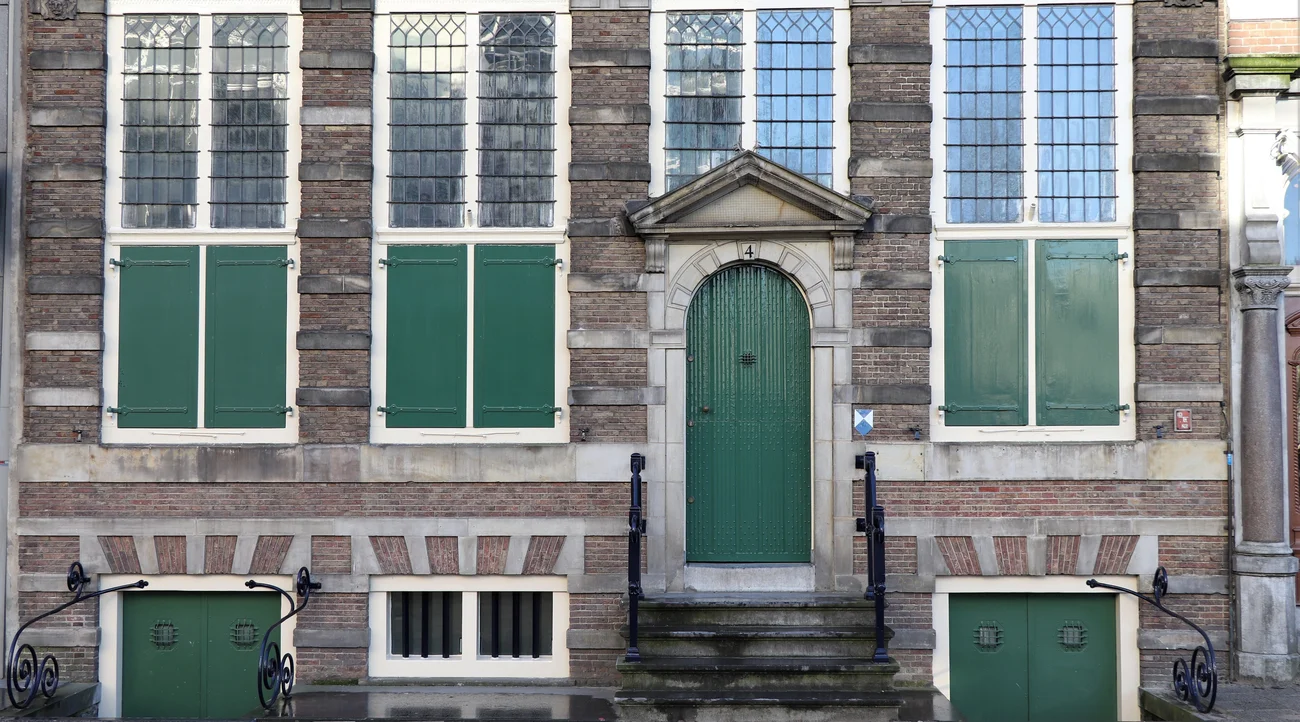
Rembrandt House Museum
Approximate walking estimates; allow for crossings and your own pace.

From Sint Antoniespoort to public weigh house

Amsterdam’s late-medieval defences included the Sint Antoniespoort, now known as De Waag. The gate is dated to 1488, while archaeological research records a more complex history of phases and earlier references. Its present appearance should not be read as an unchanged medieval snapshot.

As Amsterdam expanded, the old gate lost its defensive purpose. The conversion of 1617–1618 covered the space between its gate structures and created a public weigh house, linking the building to the city’s trade.

Upper rooms housed guilds, including the surgeons and masons. Their separate entrances and architectural additions left visible traces. The surgeons’ anatomical theatre was completed in 1691, adding a different kind of public activity to a building already shaped by commerce.

The weigh-house function ended in 1819. Later occupants included museums and municipal services. Today, a restaurant occupies the ground floor while Waag Futurelab uses the upper spaces. This long sequence of reuse helps explain why De Waag is best understood as a changing urban building rather than a preserved gate with a single original function.

Stories behind the towers and doorways

  • Waag means weigh house: the name describes a later commercial role.
  • The building began as a gateway, not a castle or royal residence.
  • Separate guild entrances made the same building serve different communities.
  • The anatomical theatre belongs to its history of medical teaching.
  • Its present-day use continues the long pattern of adapting old rooms to new activities.

Discover Rembrandt’s Amsterdam and the old town

Find a stay near Nieuwmarkt

Nieuwmarkt is a convenient base for walking through the older part of Amsterdam. Restaurants, visitors and evening activity can make the square lively, so check room location and noise reviews before booking. The map below is centred on De Waag and the surrounding neighbourhood.

Frequently Asked Questions - FAQ

What was De Waag originally built for?

It began as the Sint Antoniespoort, a gateway in Amsterdam’s medieval defences. The gate is dated to 1488 and was later converted into a weigh house.

The ground floor houses a café-restaurant, while upper spaces are used by Waag Futurelab. Interior access depends on the restaurant or a specific event; the whole building is not a walk-in museum route.

You can view the exterior from Nieuwmarkt without an admission ticket. Dining, public events and other nearby attractions have their own arrangements.

Waag means weigh house. The name comes from the building’s later role in weighing traded goods, rather than its original defensive purpose.

No. Its towers can suggest a small castle, but it was built as a city gate and later adapted for commerce and guild activities.

The historic Theatrum Anatomicum is in the upper part of the building. It is not automatically included in a café visit; check the current event programme for access.

Allow roughly 20–30 minutes for the exterior and square as a planning estimate. Add time separately for a meal, event or wider neighbourhood walk.

No. The museum offer is a separate cultural visit in the surrounding area. It does not provide admission to De Waag or its upper rooms.

More activities and experiences in Amsterdam

You might also be interested in...

The journey continues…

Gabled houses, arched bridge and moored boats at Brouwersgracht and Prinsengracht in Amsterdam in daylight
Woman getting a Train in Barcelona
Historic gabled houses framing a street in Amsterdam’s Nine Streets area at sunset
Gothic windows, brick gables and clock tower of Oude Kerk in Amsterdam in daylight
Flowers laid on the pink granite triangle of the Homomonument beside the Keizersgracht canal in Amsterdam in daylight
Bright interior, reading table and poster-covered central pillar at Café de Jaren in Amsterdam, photographed in July 2019

Must-Do Activities & Tours

Share:
Prev
Blauwbrug: Architecture & History of the Amstel Bridge
Next
National Monument: History & Meaning of Dam Square

Explore all cities