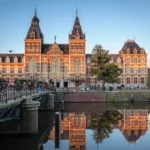
The West-Indisch Huis, beside Herenmarkt and Haarlemmerstraat, connects a quiet corner of Amsterdam with the Atlantic world. The Amsterdam chamber of the Dutch West India Company (WIC) used the building from 1623 to 1647. Its story includes commerce and migration, but also colonisation, warfare and the trafficking of enslaved people.
Today it is an events and wedding venue. Enjoy the public street setting, while treating the courtyard and historic rooms as spaces requiring an arranged visit or permission, rather than an independently ticketed museum.
West-Indisch Huis access and visiting arrangements
There are no ordinary tourist opening hours or general museum admission advertised by the current venue. You can view the exterior from the public street. Courtyard and room access depends on an event, appointment or explicit permission; a closed door is not an invitation to enter.
What to notice around West-Indisch Huis
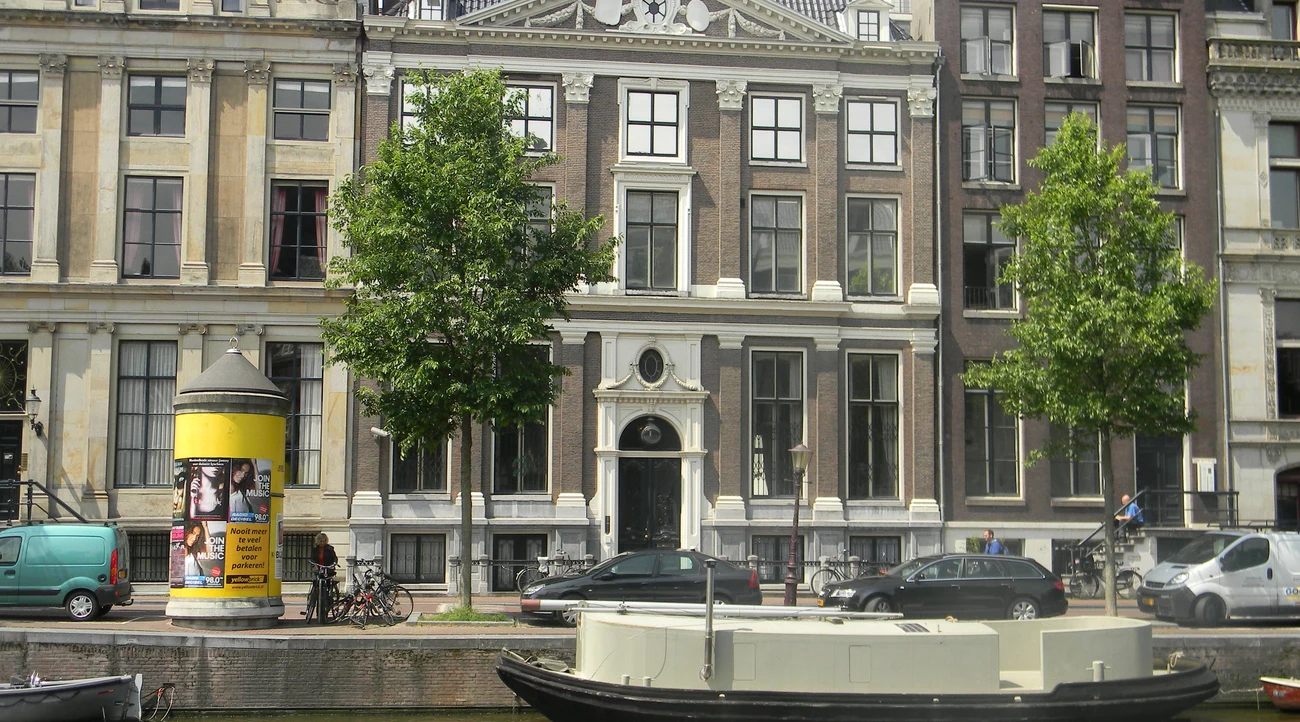
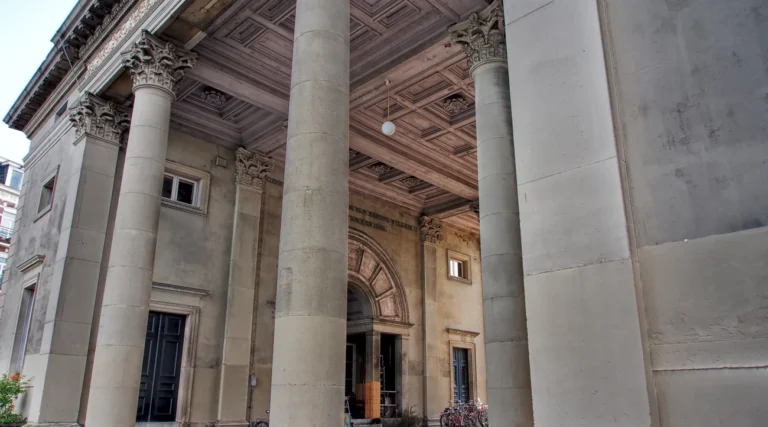
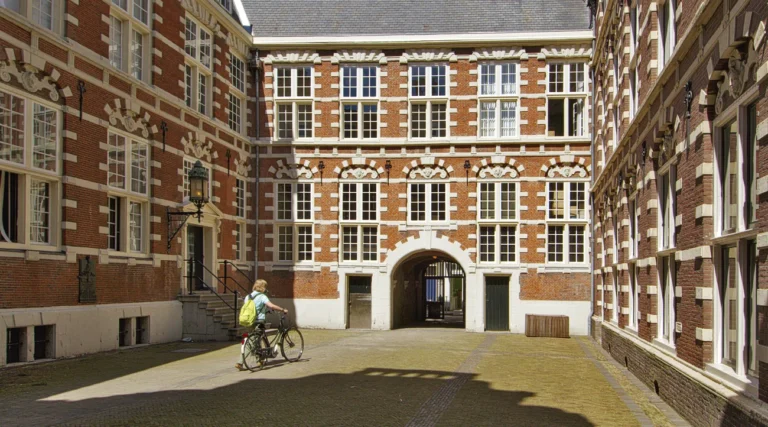
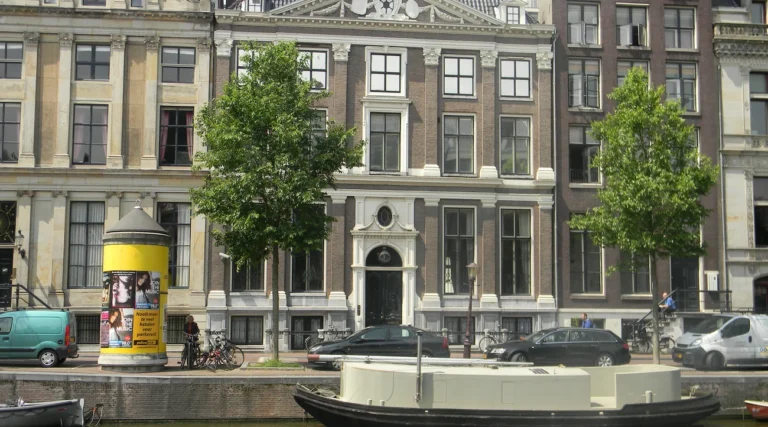
Begin with the entrance and the relationship between the house, Herenmarkt and the surrounding streets. The courtyard and rooms are part of the building’s appeal, but their visibility and access depend on the venue’s arrangements.
A short stop on an Atlantic history walk
This works best as a brief architectural and historical stop on a walk from Centraal towards Haarlemmerstraat or the northern canal belt. An arranged event is a different type of visit, with its own entrance instructions and access conditions.
How to see the house and explore the Jordaan
Allow about 10–20 minutes for the exterior and Herenmarkt. Do not plan on independent access to the courtyard or rooms unless the venue has confirmed it.
The optional private Jordaan walking tour below explicitly names the Dutch West India House among its highlights. It covers a wider neighbourhood route lasting approximately three hours. This is guiding, not an entrance ticket to West-Indisch Huis; confirm the route and selected option before booking. Anne Frank House museum admission is not included.
- West-Indisch Huis is an active event venue, not a museum with routine public admission.
- Respect closed doors, wedding parties and private bookings.
- A walking-tour booking does not establish interior access.
- Interpret the WIC’s history alongside slavery and colonial violence, rather than trade alone.
- Use Herenmarkt 99 for the current venue address.
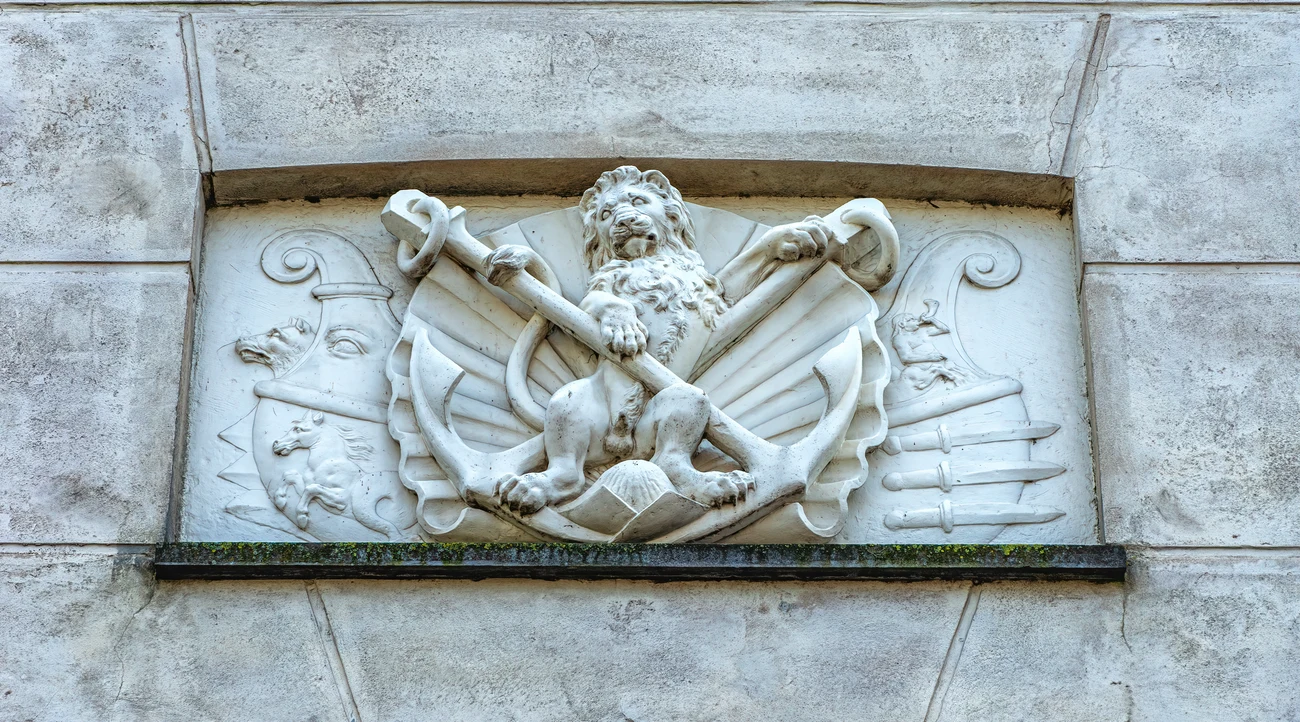
- Keep the entrance clear while photographing architectural details.
- Combine the exterior with Brouwersgracht and Haarlemmerstraat on foot.
- For an event, ask the organiser about the entrance, steps and accessible route in advance.
Getting to Herenmarkt and West-Indisch Huis
The venue is at Herenmarkt 99, 1013 EC Amsterdam, near Haarlemmerstraat and Brouwersgracht. Amsterdam Centraal is a practical starting point for the short walk west. Follow the venue’s arrival instructions if attending a booked event; the public street stop does not require entering the building.
The WIC, Amsterdam and the Atlantic world
The WIC was founded in 1621. From 1623 to 1647, its Amsterdam chamber occupied this former meat-market building. The company connected the city with Atlantic colonies and commercial routes, backed by military power.
Its Atlantic activities included privateering, colonial expansion and the trafficking of enslaved Africans. This makes the house a place to consider the consequences of decisions taken in Amsterdam, as well as the wealth associated with maritime enterprise.
New Netherland and New Amsterdam form part of this wider Atlantic history. The Dutch West India Company was distinct from the VOC, or Dutch East India Company, whose Amsterdam headquarters were at Oost-Indisch Huis.
The building now hosts events and weddings. That change of use also shapes a present-day visit: the historic setting can be appreciated from outside, while the courtyard and rooms follow private venue arrangements.
Four details that help explain the house
- West refers to the company’s Atlantic sphere, contrasting with the VOC’s eastern trading network.
- The Amsterdam chamber used the house for a defined period, 1623–1647; do not assume that every later WIC event happened here.
- A former meat-market building became a centre of overseas administration.
- The sheltered courtyard is an event space, not an automatically open public garden.
Maritime history tickets and guided city walks
Stay near Herenmarkt and Haarlemmerstraat
Staying near Haarlemmerstraat, Brouwersgracht or the western side of Centraal suits visitors who like exploring on foot. Check street noise, stairs and lift access in older properties. The map is centred on West-Indisch Huis; confirm dates and the precise property location before booking.
West-Indisch Huis: frequently asked questions
More activities and experiences in Amsterdam