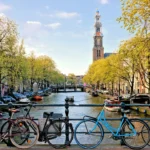
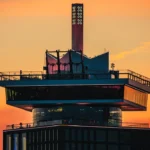
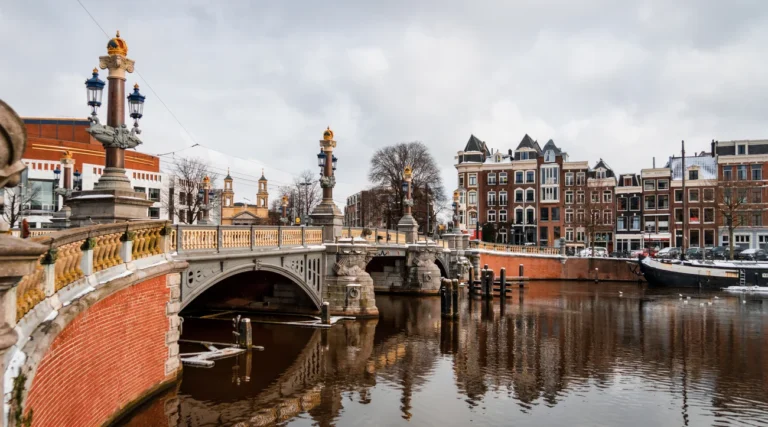
The Montelbaanstoren is one of the most distinctive landmarks along Amsterdam’s eastern canals. A sturdy round lower tower supports a much more decorative upper section, with clock faces and an open wooden spire. Its position on Oudeschans makes the relationship between architecture and water especially striking.
Built as part of the city’s early-sixteenth-century defences, it later became a civic landmark as Amsterdam expanded beyond it. Today it is best approached as a free exterior stop on a walk through the old harbour district, rather than a tower-climbing attraction.
Montelbaanstoren access and visiting information
The tower can be admired from the public quays and nearby crossings without buying an admission ticket. Do not assume that the interior is open for a regular public visit: building use and any special access arrangements are separate from looking at the monument outside. Daylight is best for distinguishing the different stages of its construction.
What to look for beside Oudeschans
Pause at more than one point along the canal. Close up, the lower tower feels solid and defensive; from farther away, the pale upper structure and spire become the dominant features. Reflections depend on the water and weather, so leave room to adjust your viewpoint.
A quick guide to your tower stop
This is a manageable outdoor stop between Nieuwmarkt and the old harbour area. Bring together the architecture, the waterfront setting and a little of the tower’s history instead of expecting a large exhibition inside.
How to visit the Montelbaanstoren
Allow approximately 15–25 minutes for the exterior and canal-side views. Walk along Oudeschans and look back towards the tower, keeping entrances and narrow pavement sections clear. Seeing the tower from the street is free.
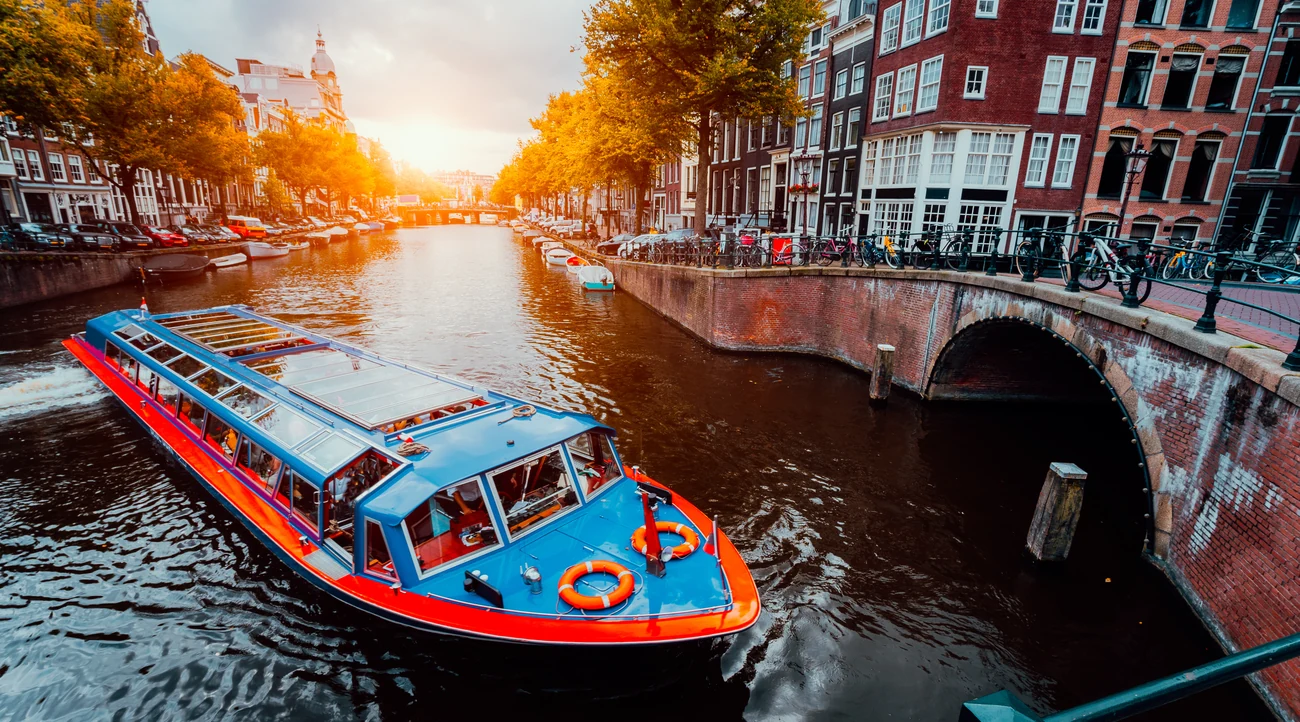
For a wider exploration, the private pedicab tour lists a Montelbaanstoren stop, while the self-guided mystery game and electric-boat cruise include the tower on their published routes. The game is an independent phone activity, not a guided historical visit. None of these activities includes entry to the tower; check the selected route and meeting point before booking, as itineraries can change.
- Exterior viewing is free. The public quays are the main visitor experience described here.
- Do not confuse a building with a spire with a public observation tower.
- Oudeschans is a working city street, with residents, deliveries and cyclists.
- Any special opening or event needs its own current access information.
- Use a canal-side viewpoint to include the tower’s full silhouette.
- Keep a safe distance from the water, especially with children.
- Try a second viewpoint if boats or parked vehicles interrupt your photograph.
- Combine the stop with Nieuwmarkt or a separate museum visit, leaving time to walk between them.
Getting to Oudeschans
The Montelbaanstoren stands at Oudeschans 2, northeast of Nieuwmarkt and close to the old harbour waterways. Walking is usually the simplest way to connect it with the historic centre. Nieuwmarkt metro station and Amsterdam Centraal provide practical starting points; check current services and choose your exit before setting off.
The tower’s changing role in Amsterdam
The tower was built in the early sixteenth century to help defend the eastern harbour approaches and the Lastage area. The municipal archive dates its construction to 1516. Its original role belonged to a city whose waterfront and defensive limits were very different from those visible today.
As Amsterdam grew, the tower’s strategic importance declined. Rather than remaining purely military infrastructure, it was adapted to other uses. In 1606 a decorative upper structure and wooden spire transformed its appearance, turning a defensive remnant into a prominent feature of the city skyline.
The remodelling is associated with Hendrick de Keyser. The contrast between the massive lower tower and the lighter upper stages is still one of the clearest ways to read the building. From across the water, you can appreciate the layered composition without needing to enter it.
Later municipal uses included water-management offices and a police post. The tower also survived a nineteenth-century threat of demolition. Its continued presence therefore reflects adaptation and preservation as well as the survival of old masonry.
The nickname Malle Jaap recalls a story about the bells striking at unexpected times and then remaining silent for long periods. Treat this as an explanation of a historic nickname, not a prediction of what the clock will do during your visit. The origin of the name Montelbaanstoren itself remains uncertain; competing stories should not be presented as established fact.
Names, bells and other curiosities
- The tower’s defensive base and decorative upper stages belong to different chapters of its history.
- The municipal archive records water-management and police uses after its military role had ended.
- Malle Jaap refers to the tower’s historically unreliable striking bells.
- The name Montelbaanstoren has several proposed explanations, but no settled origin.
Canal cruises and Rembrandt’s historic Amsterdam
Stay near the Montelbaanstoren
Accommodation around Oudeschans, Nieuwmarkt and the eastern historic centre offers access on foot to canals and several cultural sights. Compare the walking route as well as the distance, particularly if you have luggage. The map is centred on the Montelbaanstoren; check room access, noise reviews and prices for your actual travel dates.
Montelbaanstoren questions answered
More activities and experiences in Amsterdam