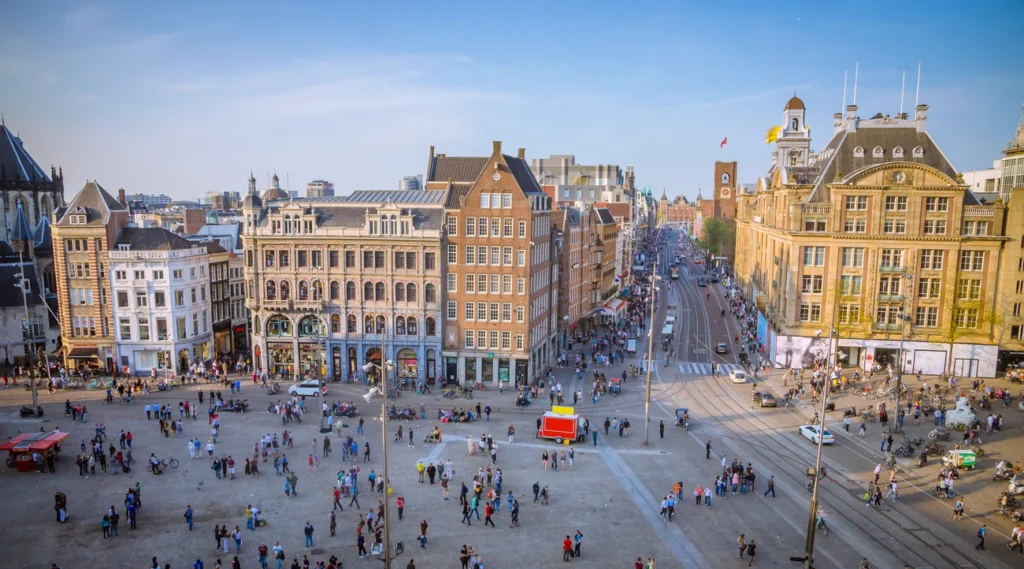
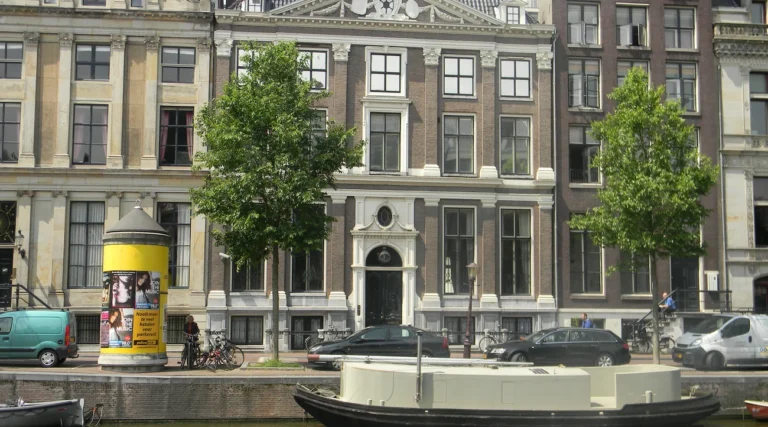
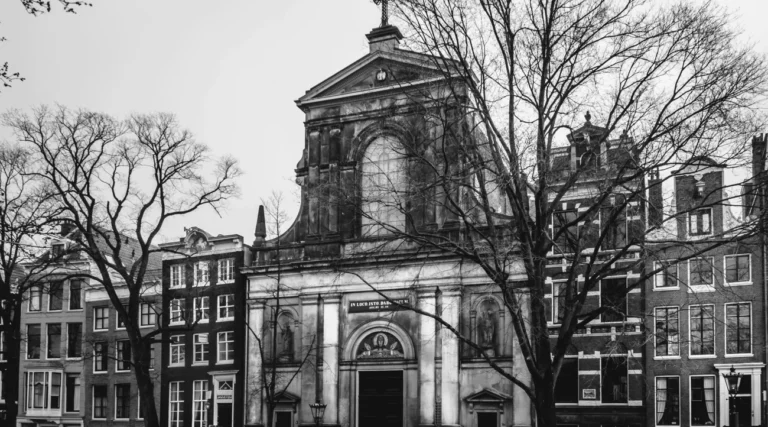
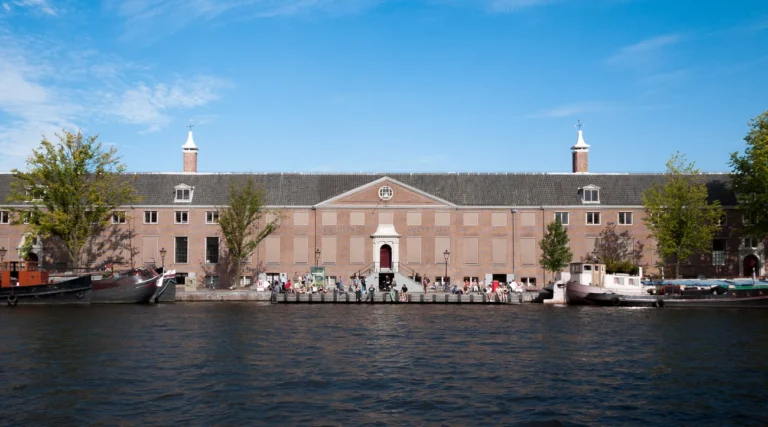
The Begijnhof is a historic residential courtyard tucked into Amsterdam’s busy centre, close to Spui and Rokin. Behind the entrance, gabled houses surround lawns and churches, creating a striking change of pace from the shopping streets outside.
Its story belongs to the beguines: religious women who lived in a community with more independence than a conventional enclosed convent. The homes remain private, so the reward is a quiet look at the setting and its history, rather than unrestricted access to every garden or building.
Begijnhof opening hours and visitor access
The Begijnhof’s own visitor information lists daily opening from 10:00 to 18:00, including public holidays, with a tourist closure on King’s Day, 27 April. The visitor entrance is at Gedempte Begijnensloot, at the end of Begijnensteeg. Follow current signs and hosts’ instructions; church services and access to individual buildings are separate.
What to notice inside the historic courtyard
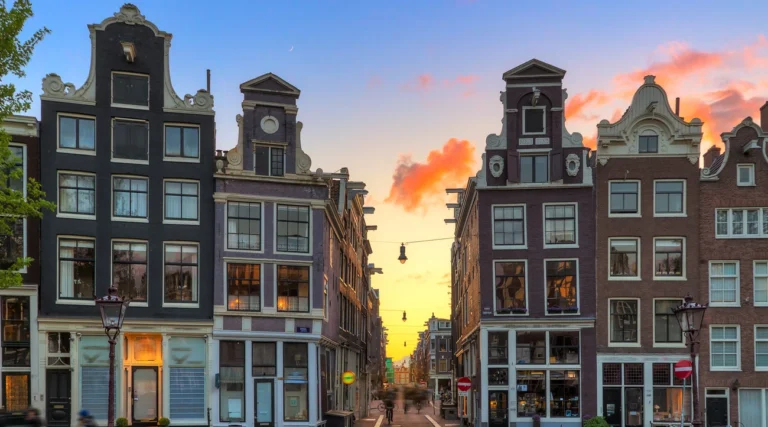
Look at the courtyard as a group of buildings that changed over centuries. Different gable shapes, the timber-fronted house and two distinct places of worship help explain a history more complex than the impression of an untouched medieval enclave.
Plan a quiet Begijnhof visit
A short, quiet visit is usually enough to appreciate the accessible part of the courtyard. Plan around the residents’ privacy and the posted visitor route rather than trying to explore every doorway.
How to visit the Begijnhof respectfully
Allow approximately 20–30 minutes for the courtyard, depending on how busy it is. Enter through the signed tourist entrance, keep voices low and remain in the area open to visitors. Do not treat the lawn, house steps or residential doors as public sightseeing space.
The optional city walks below include Begijnhof in their published route; one describes a pass-by rather than entry. They provide a wider introduction to Amsterdam, not paid admission to the courtyard. Access is subject to opening hours and local rules. The site limits visiting groups to twelve people, so larger tours must not assume courtyard access. Check arrangements before booking.
- This is private residential property, with a designated visitor area.
- Keep conversations quiet and respect hosts and residents.
- Bikes, dogs and trolley cases are not permitted under the published visitor rules.
- Eating and drinking inside are not allowed; finish refreshments before entering.
- Use the Gedempte Begijnensloot visitor entrance rather than relying on an old description of a different gate.
- Take photographs without looking into homes or blocking doors.
- Plan church visits separately and respect worship.
- Leave bikes and large luggage out of your courtyard visit, and follow the marked route.
Getting to the Begijnhof visitor entrance
The visitor entrance is on Gedempte Begijnensloot, reached via Begijnensteeg from the Kalverstraat side. Rokin metro station and the Spui area are convenient starting points. Use the signed entrance on arrival rather than treating the site’s postal address as a promise that every gate is open.
The beguines and a courtyard that survived change
The exact foundation date is uncertain. The Begijnhof’s historical account records a reference to beguines in 1307 and a transfer of a house to the community in 1346. The settlement developed over time, with rules governing the women’s lives and the use of their homes.
The beguines were religious women, but not nuns taking lifelong convent vows. Their independence had limits and obligations: the community had rules, religious oversight and expectations of conduct. Understanding that distinction makes the courtyard more than a picturesque collection of old houses.
Amsterdam’s Alteration of 1578 changed the religious life of the city. The beguines lost their church, while their privately owned houses helped the community survive. The church was assigned to English Presbyterians in 1607 and became known as the English Church.
The architecture also records change. Many façades were replaced during the seventeenth and eighteenth centuries, although older timber structures survived behind them. The Houten Huys at number 34 preserves a rare wooden façade. It is best described as an important surviving timber house, without relying on disputed claims that it is the city’s single oldest building.
The last beguine died in 1971. The residential purpose of the courtyard continues, which is why present-day visitor rules are part of the experience rather than a minor practical detail.
Small details behind the peaceful setting
- Begijnhof refers to the beguines’ courtyard, not a conventional monastery.
- The gables include several different shapes: the ensemble was rebuilt and altered over centuries.
- A house can have an older timber structure behind a later façade.
- The English Church and Catholic chapel represent different chapters in the courtyard’s religious history.
Canal-house history and guided walks near Spui
Stay near Spui, Rokin and the Singel
Staying around Spui, Rokin or the Singel puts much of the historic centre within walking distance. Compare lift access, room position and noise reviews in older buildings. The courtyard itself is residential, so do not assume its houses are tourist accommodation. The map below is centred on Begijnhof; check availability for your dates.
Begijnhof: frequently asked questions
More activities and experiences in Amsterdam