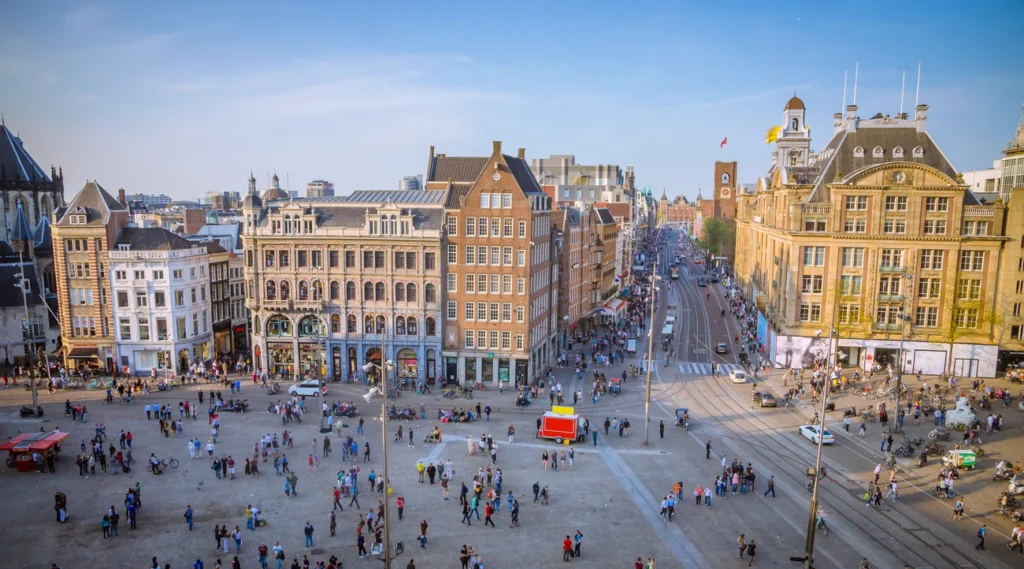
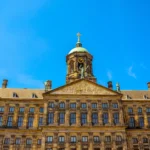
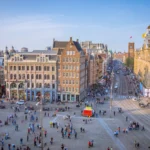
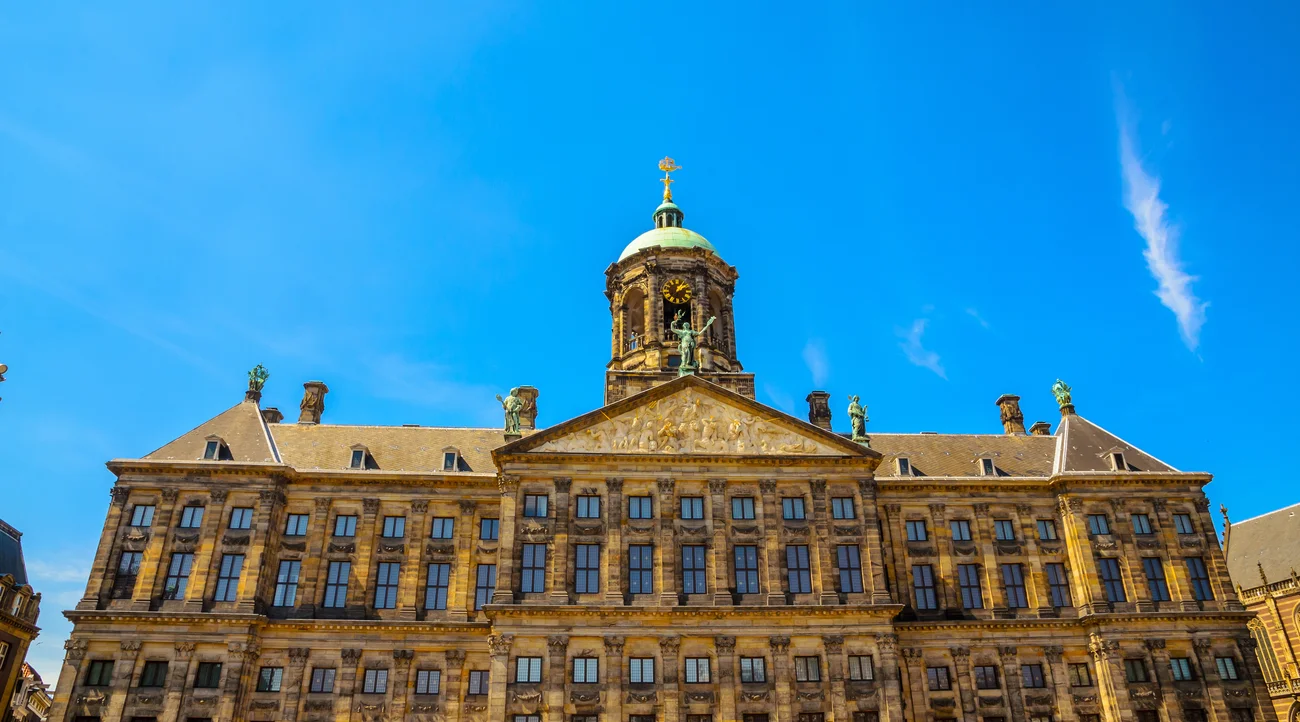
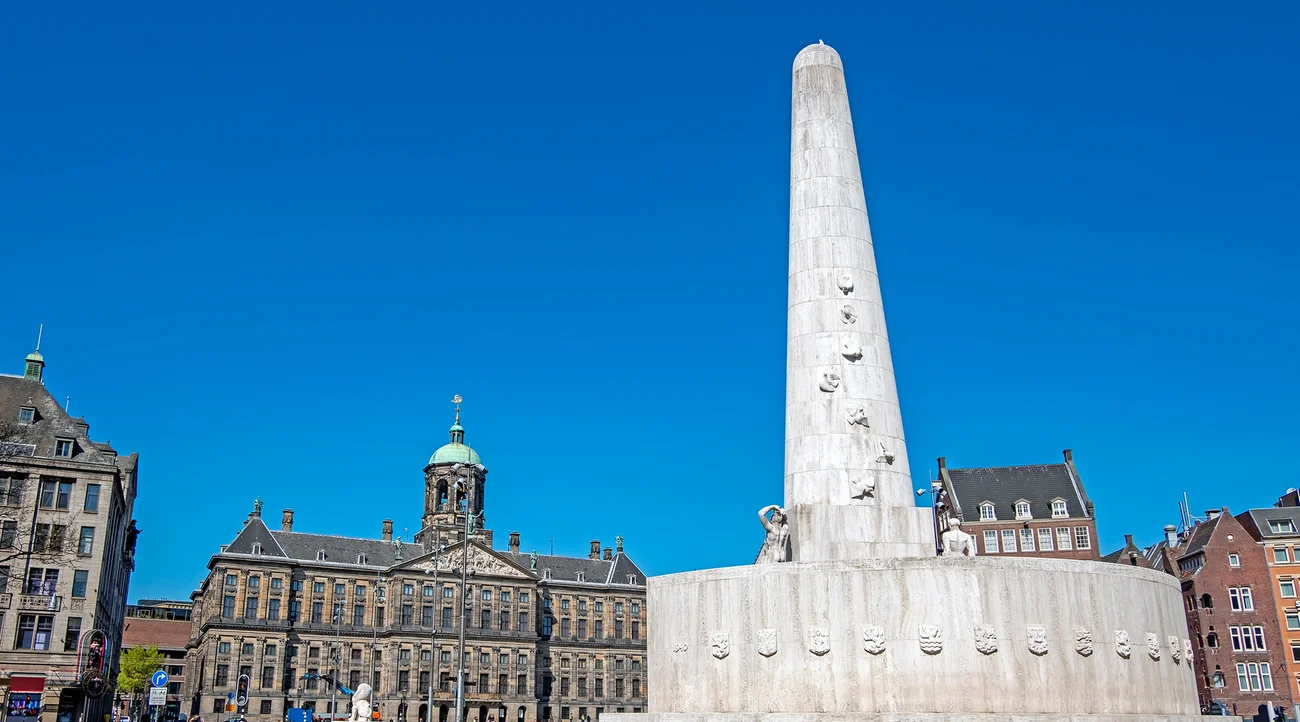
The Royal Palace Amsterdam dominates the west side of Dam Square, but it began as a monument to city government rather than monarchy. Designed by Jacob van Campen, the former town hall opened in 1655; Louis Bonaparte converted it into a palace in 1808.
Today it is an official royal reception palace, open to visitors when ceremonial duties allow. Inside, marble sculpture, floor maps and Empire furniture reveal two very different chapters of Dutch history.
- Citizens’ Hall and its marble maps
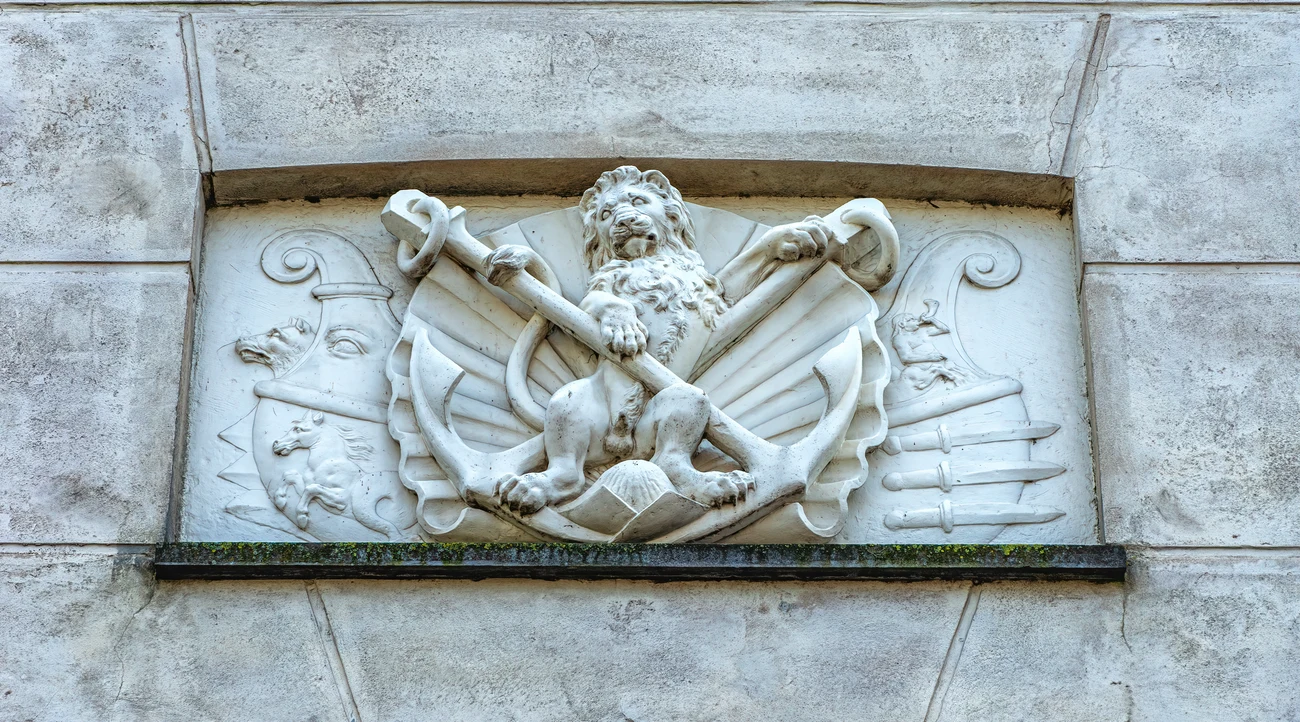
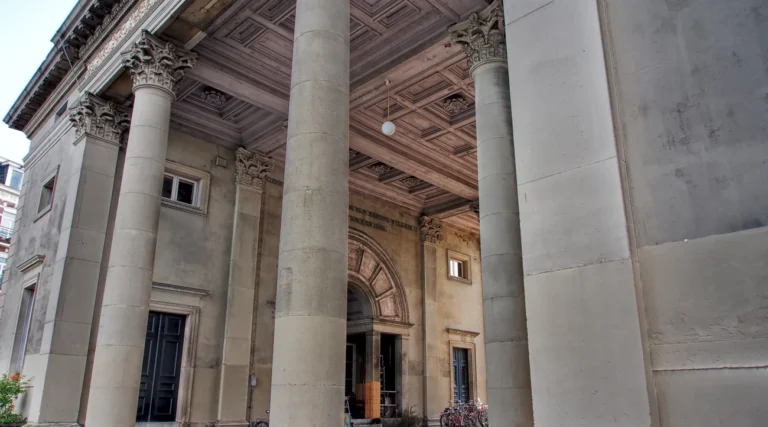
- Classical architecture and allegorical sculpture
- Empire furnishings introduced under Louis Bonaparte
- Historic rooms still used for royal receptions
Royal Palace Amsterdam opening days and admission
The palace opens to visitors on selected days, generally from 10:00. Royal receptions can change the schedule, so check availability for your exact date and do not assume it opens every day. Admission includes an audio tour; the starting time printed on your ticket is the time to plan around.
What to see inside the Royal Palace
Look beyond the ceremonial grandeur: the building combines the visual language of a seventeenth-century republic with rooms furnished for a nineteenth-century king.
Royal Palace visit at a glance
Set aside time for the Citizens’ Hall, the surrounding rooms and the audio tour. The palace works well as a focused indoor visit within a wider walk through the historic centre.
How to visit the Royal Palace Amsterdam
Allow around one to two hours as a practical planning estimate, depending on how closely you follow the audio tour. Start in the Citizens’ Hall, then explore the accessible rooms at your own pace. Choose a date when the palace is open and check what your selected admission includes before booking.
The three options below offer palace entry with an audio guide, a private visit with a live local guide, or palace admission combined with a self-guided city audio walk. The city audio walk has no in-person guide. Compare the individual inclusions and meeting instructions before choosing.
- Royal events can close the palace; check your date first.
- The standard audio tour is included with admission.
- The I amsterdam City Card is not valid for palace admission.
- A wheelchair-accessible entrance, lift and accessible toilet are available.
- Look down at the floor maps and up at the sculptures in the Citizens’ Hall.
- Bring only a small bag; large backpacks and suitcases cannot be stored.
- Photography is allowed without flash; filming, tripods and selfie sticks are not permitted.
- There is no café inside, so plan refreshments around Dam Square.
How to reach the palace on Dam Square
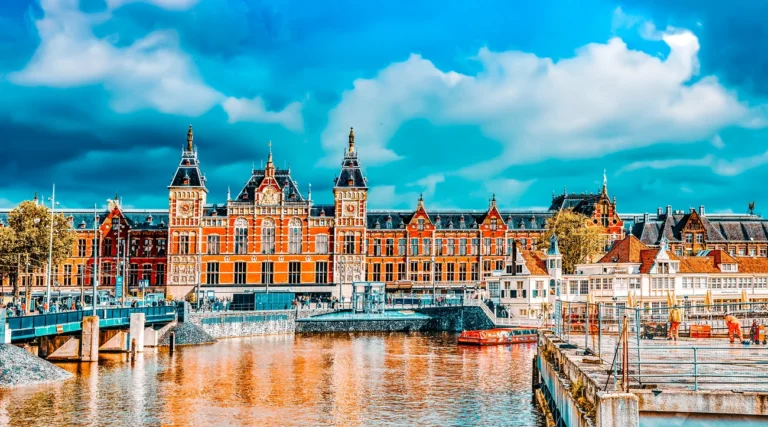
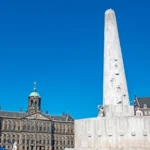
The palace faces Dam Square in Amsterdam’s historic centre. The visitor entrance is on the right-hand side of the main façade. It is easy to combine the visit with a walk from Amsterdam Centraal or the Rokin metro area.
From Amsterdam city hall to royal palace
Construction began in 1648, as Amsterdam’s leaders commissioned a new town hall worthy of a powerful trading city. Jacob van Campen’s classical design opened in 1655, although work continued afterwards. Civic offices, courts and ceremonial spaces occupied a building whose decoration presented good government as the foundation of prosperity.
In 1808, Louis Bonaparte, King of Holland and Napoleon’s brother, took over the town hall. Offices became royal apartments, textiles softened the stone interiors and a balcony was added to the façade. Furniture made in Paris and Amsterdam introduced the Empire style still visible today.
Louis left the throne in 1810, but the palace retained its royal role. It now hosts state visits, receptions and other official occasions, while admitting visitors whenever the programme allows.
The building also deserves a critical reading. Its maps and allegorical decoration celebrate a global trading network whose wealth was connected to colonial exploitation, forced labour and slavery. The palace’s own historical interpretation addresses these connections rather than treating prosperity as an uncomplicated success story.
Details and stories to look out for
- The Citizens’ Hall was originally a public civic space, not a royal ballroom.
- Maps of the Earth and the northern sky are set into its marble floor.
- The city maiden, elements and planetary figures form a symbolic miniature universe.
- The balcony belongs to the palace conversion under Louis Bonaparte.
- Historic Empire furniture is still used for royal receptions.
Palace admission and walks around Dam Square
Find your stay near Dam Square
Staying near Dam Square puts the palace, shopping streets and much of the historic centre within walking distance. This is a busy central district, so compare room location, noise reviews and access before choosing. The map below shows accommodation around the palace rather than the Museum Quarter.
Frequently Asked Questions - FAQ
More activities and experiences in Amsterdam