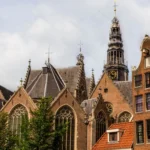
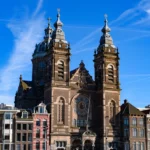
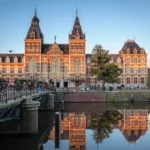
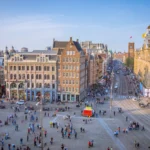
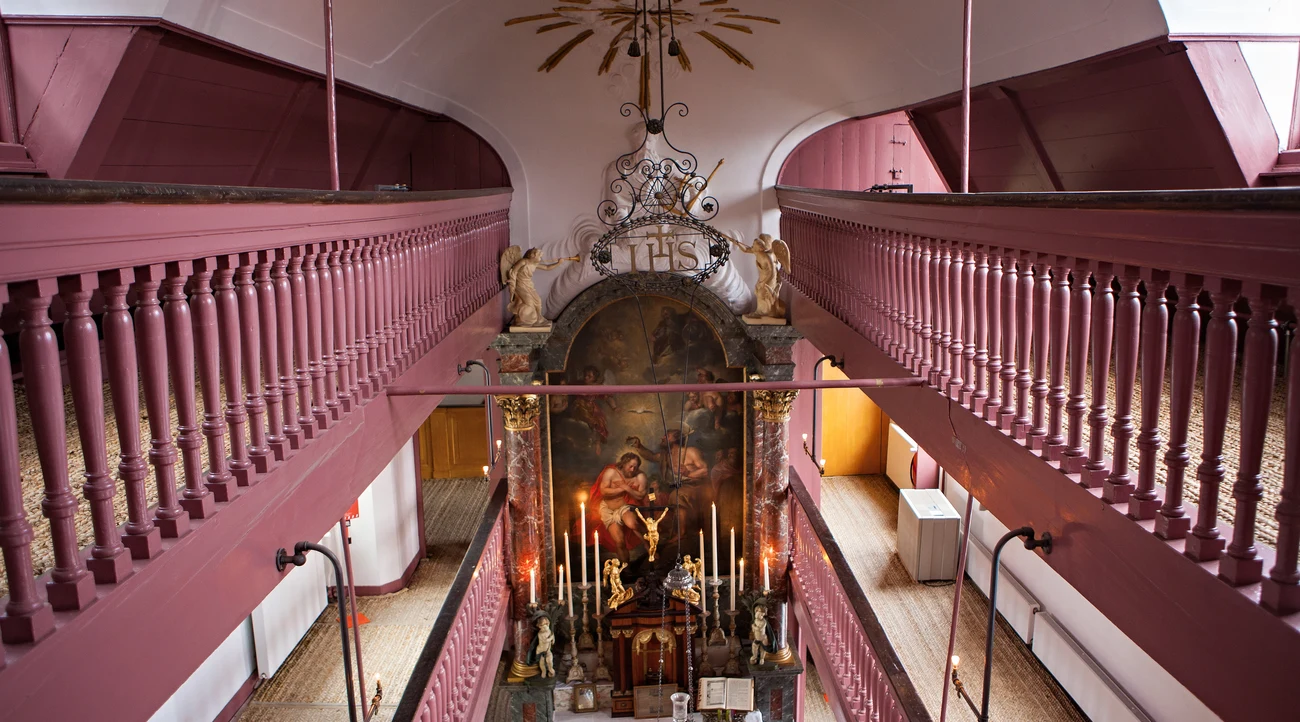
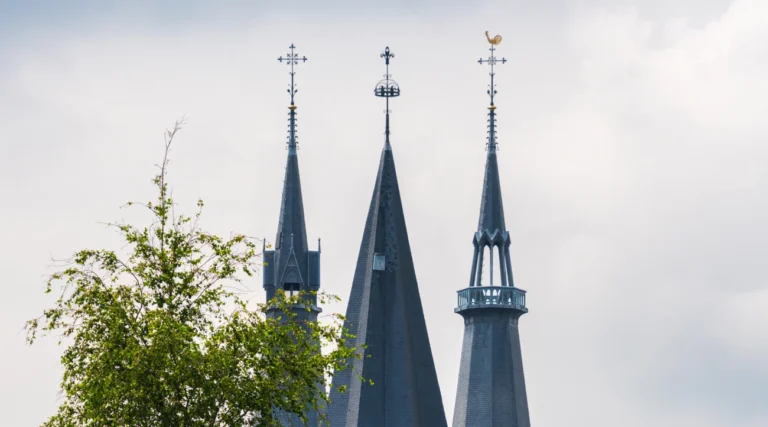
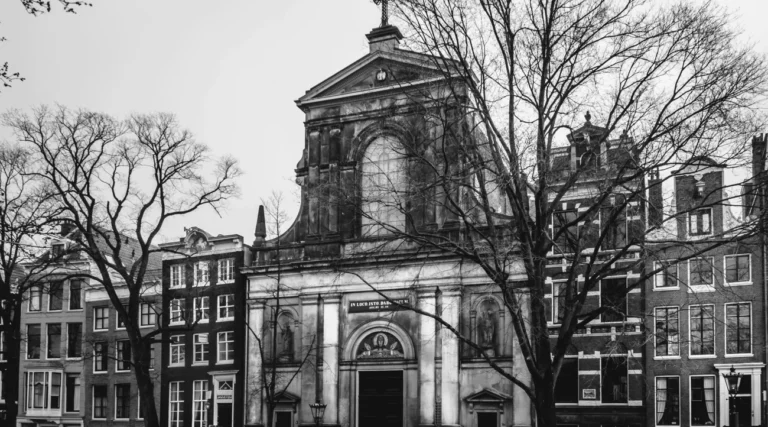
Moses and Aaron Church, or Mozes en Aäronkerk, faces Waterlooplein with a monumental facade that contrasts with the market around it. Its interior brings together a baroque altar, paintings and a celebrated organ. The church remains a place of worship and social commitment, so a visit works best when you allow its present role to shape your expectations.
A Catholic church on Waterlooplein, officially dedicated to Saint Anthony of Padua.
The present building replaced an earlier concealed church.
Visitor opening and worship follow different schedules.
The Sant’Egidio community gives the building a continuing social purpose.
Moses and Aaron Church visiting hours and access
Checked 22 October 2026: ordinary visitor opening is Thursday and Friday, 12:00–16:00. Sunday Eucharist is usually at 11:00; check the current agenda for exceptions and attend a service for worship rather than sightseeing.
The church welcomes visitors during its announced openings. No general ticket tariff is stated on the current visitor page; confirm any arrangements for a particular concert or special event. A paid walking tour is a separate service and does not establish interior access.
What to notice at Moses and Aaron Church
Start outside with the relationship between the church and Waterlooplein, then look towards the altar if a visitor opening permits entry. Turning back towards the organ changes the perspective again. There is enough to notice without treating the interior as a checklist: pause, keep quiet and follow the hosts’ guidance.
Quick summary of a Waterlooplein church visit
An exterior stop takes only a few minutes. For a quiet first look inside, allow roughly 20–40 minutes during a confirmed opening, with longer for a concert or service. Check the day before setting out: the market, an individual event and ordinary church visiting do not share one timetable.
A neighbourhood history walk passing the church
The selected private Jewish-history walk lists Mozes en Aäronkerk as an exterior pass-by within a wider neighbourhood route. It is useful for people seeking the surrounding area’s historical context, rather than a church interior tour. The itinerary does not include admission to this church or Anne Frank House.
Choose it for its wider subject and walking format. If your main purpose is the altar or organ, plan the church separately around its own opening or music programme; a passing tour cannot replace that visit.
Visitor opening is limited to announced times.
Sunday worship and concert attendance are separate from sightseeing.
The church remains connected to prayer and care for vulnerable people.
Ask before taking interior photographs, and respect anyone using the space quietly.
Check the church agenda shortly before your visit.
Look back towards the organ after viewing the altar.
Use Waterlooplein metro for a convenient approach.
Combine a short exterior stop with a separately planned Jewish Quarter or Rembrandt House visit.
How to reach Moses and Aaron Church
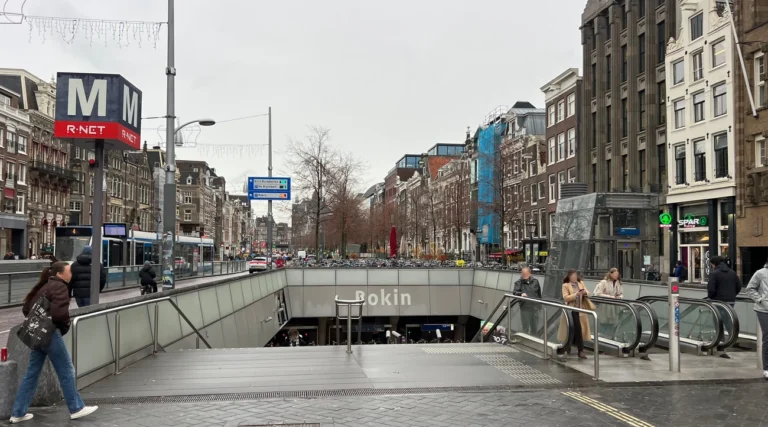
The church’s visitor address is Waterlooplein 207. The neighbouring community address is 205, so follow the church entrance signs. Waterlooplein metro is a practical approach; allow space for market shoppers and cyclists while crossing the square.
From concealed worship to a church of mercy
The earlier concealed church began around 1645. Its houses bore the names Moses and Aaron, which stayed with the congregation. Construction of the present church began in 1837, and the new building was inaugurated in 1841.
Architect Tilleman François Suys designed the neoclassical church. The baroque altar was transferred from the older worship space, connecting the public monument with its concealed predecessor. Looking at these two architectural languages together helps explain why the interior does not simply repeat the exterior’s style.
The building’s twentieth-century life included social and cultural activity, a period outside ordinary worship and major restoration. In 2014 it was entrusted to Sant’Egidio and consecrated again. Its current identity as a church of mercy reflects that continuing relationship between worship and care for the city.
Music is another thread. The Adema organ was built in 1871 from a design associated with Charles-Marie Philbert and expanded in 1887. Its French Romantic character and mechanical innovations distinguish it within Amsterdam’s organ heritage. Franz Liszt had attended a performance of his Graner Mass here in 1866, before the present organ was installed. Hearing music now requires a confirmed programme, rather than assuming the instrument will be played during an ordinary opening.
Names, music and details behind the facade
Moses and Aaron is the familiar name; Saint Anthony is the formal dedication.
The baroque altar belonged to the earlier concealed church.
The present church was inaugurated in 1841.
The organ was expanded after its original nineteenth-century installation.
The building’s social role is part of its current life, not only a historical footnote.
Religious heritage tickets and Jewish Quarter experiences
Find your stay near Moses and Aaron Church
For accommodation near the church, compare the Waterlooplein and Amstel area with the quieter streets towards Plantage. Check room noise, luggage access and the actual walk from the metro. The map is centred on Moses and Aaron Church in Amsterdam.
Moses and Aaron Church visiting questions
More activities and experiences in Amsterdam