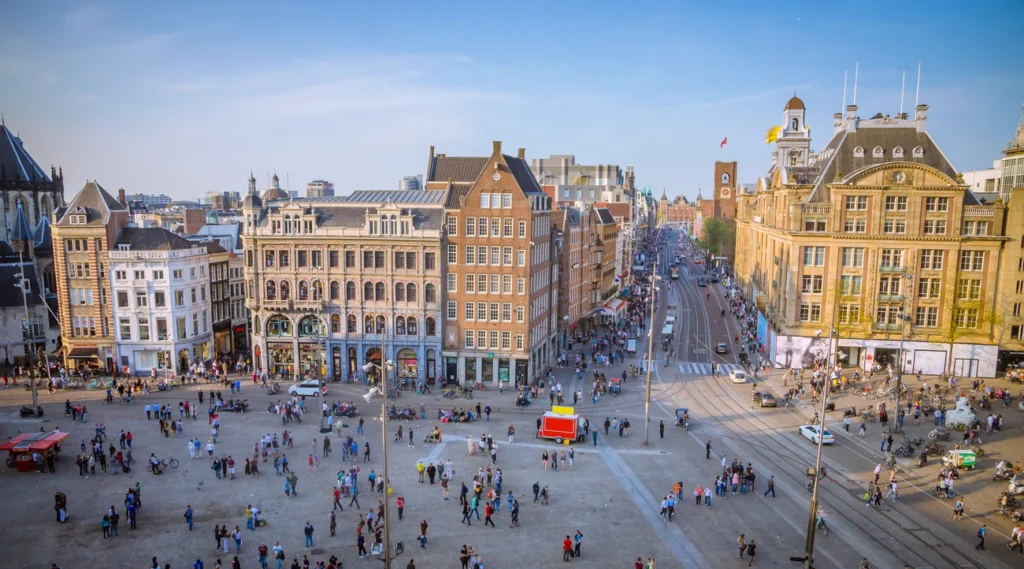
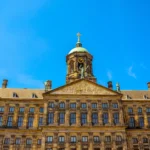
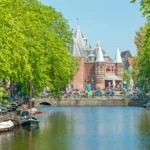
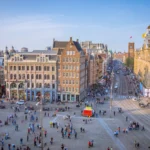
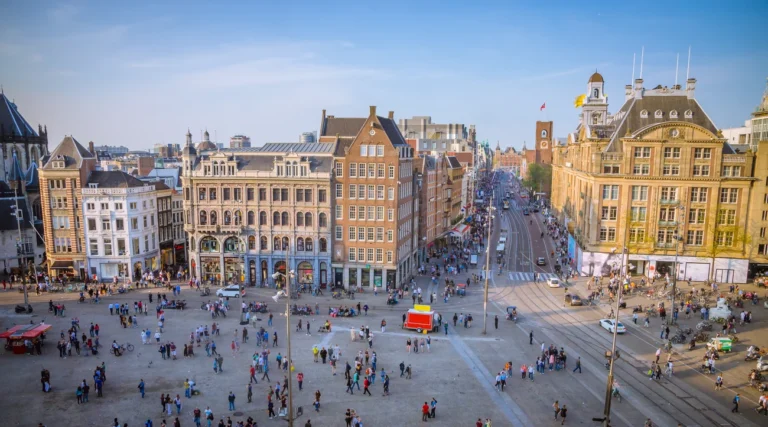
Kalverstraat is the central shopping walk between Dam Square and Muntplein. Shopfronts draw most of the attention, but looking above them and into the side streets reveals an older city: narrow building plots, a church behind a modest entrance and traces of the former Burgerweeshuis complex. The route can be a practical shopping trip or a short urban-history walk.
Walk between Dam Square and Muntplein.
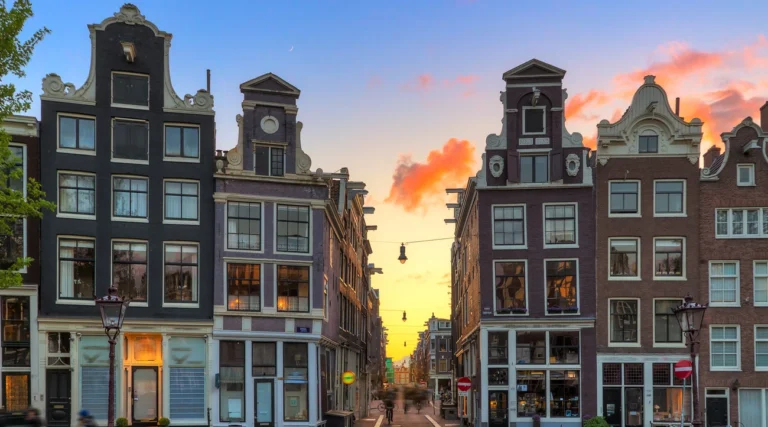
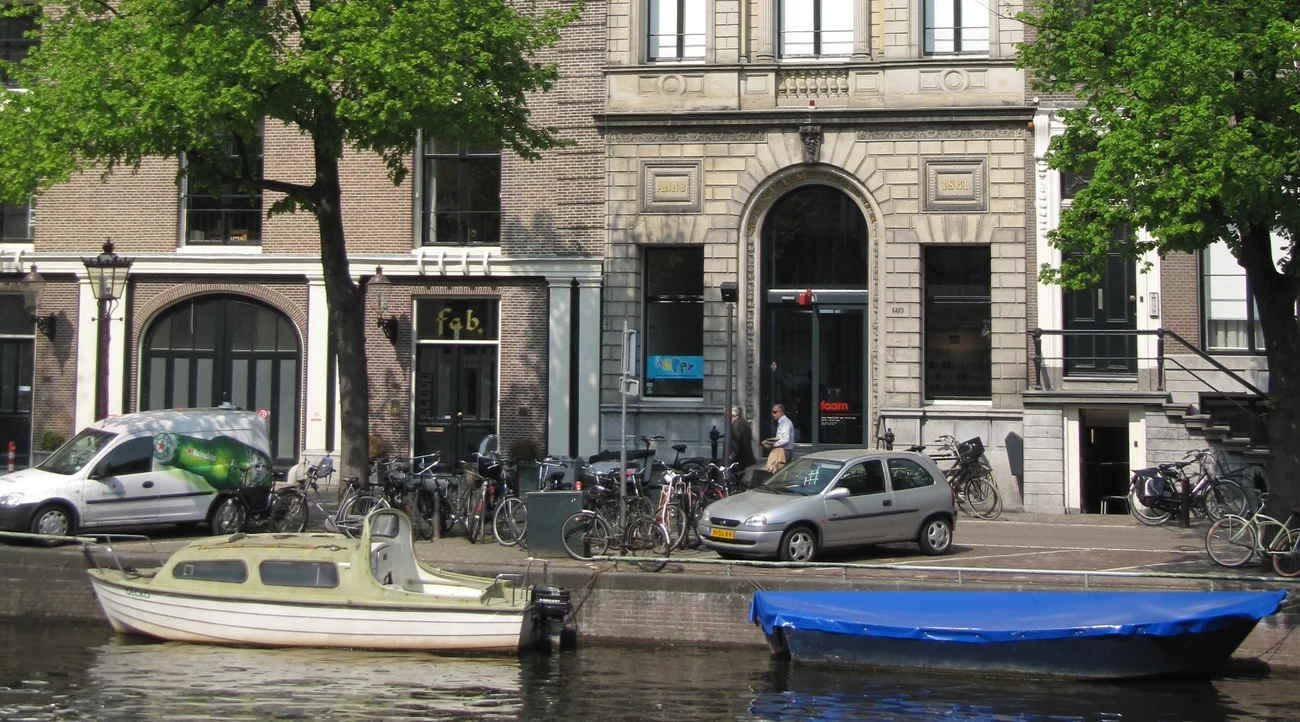
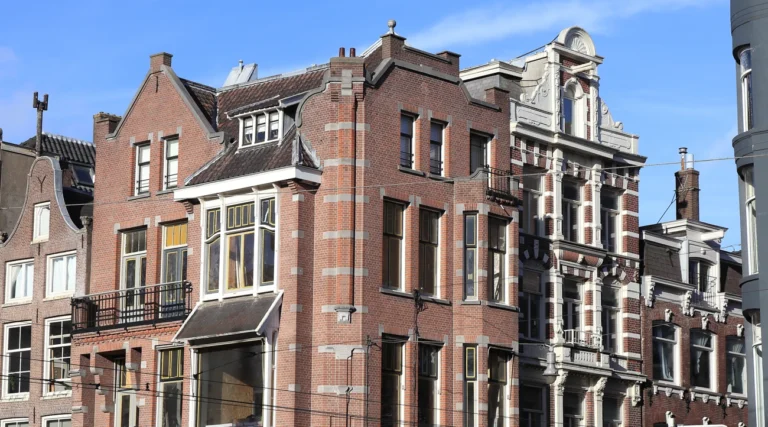
Look above modern shopfronts at the older façades.
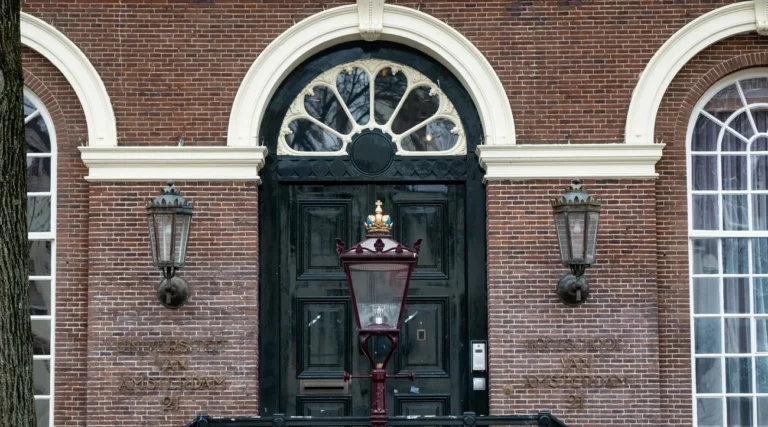
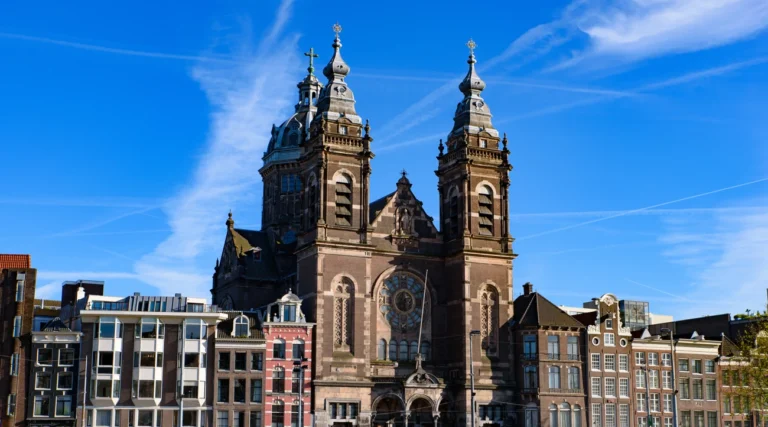
Notice the entrance to De Papegaai at number 58.
Use side connections towards Spui and the quieter lanes.
Check each shop’s hours rather than assuming one timetable for the whole street.
The perfect walk for shopping with a second look at the city
Choose whether you are here to shop or to explore. For browsing, leave time to step into stores and compare options. For a short walk, focus on the upper façades and side connections, taking a break from the main flow near Spui rather than trying to stop in the middle of the street.
What to notice along Kalverstraat
The most interesting contrasts are between the shopfronts and the older fabric around them. A church entrance or a narrow lane can change the mood within a few steps, but access to interiors and courtyards follows separate arrangements.
Quick summary of a Kalverstraat visit
A direct walk is short. Shopping can easily extend the visit, while a historical walk benefits from a few deliberate stops. Allow extra time at busy periods and keep entrances and pedestrian flows clear.
A guided city walk passing through Kalverstraat
The selected small-group city walking tour explicitly includes a pass through Kalverstraat on its wider route. It can add historical context to the shops and façades, but it is not a dedicated personal-shopping service.
Check the exact meeting point and current route on the confirmation: the street is a tour stop, not necessarily the starting place. Walking and window-shopping are free. The booking does not provide shopping credit, entry to nearby attractions or access to the Amsterdam Museum’s closed Kalverstraat site.
Shopping hours vary: individual stores set their own timetable, especially on holidays.
The street is a public walking route; purchases and guided activities cost separately.
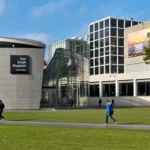
The Amsterdam Museum’s main Kalverstraat location is closed for renovation. Do not plan a normal museum visit there from an older guidebook.
De Papegaai is an active church, with visitor openings and religious services that should be respected.
Look above the shop signs, but step out of the main flow before stopping for photographs.
Use nearby Spui or a café for a longer break.
Check sizes, returns and delivery arrangements directly with the store before buying.
For a church visit, follow the current opening information and avoid disrupting worship.
How to reach Kalverstraat
Kalverstraat runs parallel to Rokin, linking Dam Square with Muntplein. Rokin metro station is a useful approach, with short walking connections into the shopping street. Check current GVB services and the best station exit for the part you want to visit.
From old trading route to shopping street
Kalverstraat’s name recalls the old cattle trade associated with this part of Amsterdam. The present shopping street follows an old route through the city, long predating its modern retail identity.
Nineteenth-century views already show a busy commercial street. Successive generations of shops changed the ground floors, while older façades and building plots continued to shape the streetscape. Looking upwards helps separate those layers.
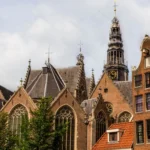
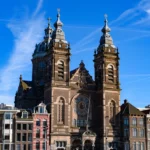
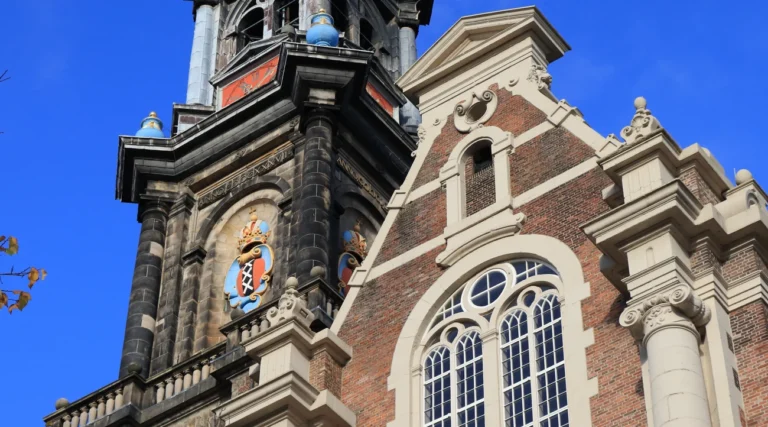
Religious and civic life also left a mark. The church of St Peter and St Paul, known as De Papegaai, occupies a site with a history as a hidden Catholic church; the present church building dates from 1848. Its entrance is easy to overlook among the shops.
The former Burgerweeshuis complex became home to the Amsterdam Museum. That main location is now closed for renovation, so its historic association should not be confused with current visitor access. The street’s story remains visible in its buildings and connections even when a particular interior cannot be entered.
Details beyond the shop windows
A name older than the shop signs: Kalverstraat preserves the memory of an earlier trading role.
A church sits behind an entrance within one of the city’s busiest retail settings.
Parallel Rokin offers a very different streetscape, with tram routes and surviving water.
Side lanes connect shopping with the smaller-scale setting around Spui and the old centre.
Royal Palace tickets and city walking experiences
Find your stay near Kalverstraat
Accommodation near Kalverstraat, Rokin or Spui can suit visitors who want to explore the centre on foot. Check the exact entrance, stairs, delivery access and potential noise from shops or nearby evening routes. The map is centred on Kalverstraat in Amsterdam.
Kalverstraat visiting questions
More activities and experiences in Amsterdam