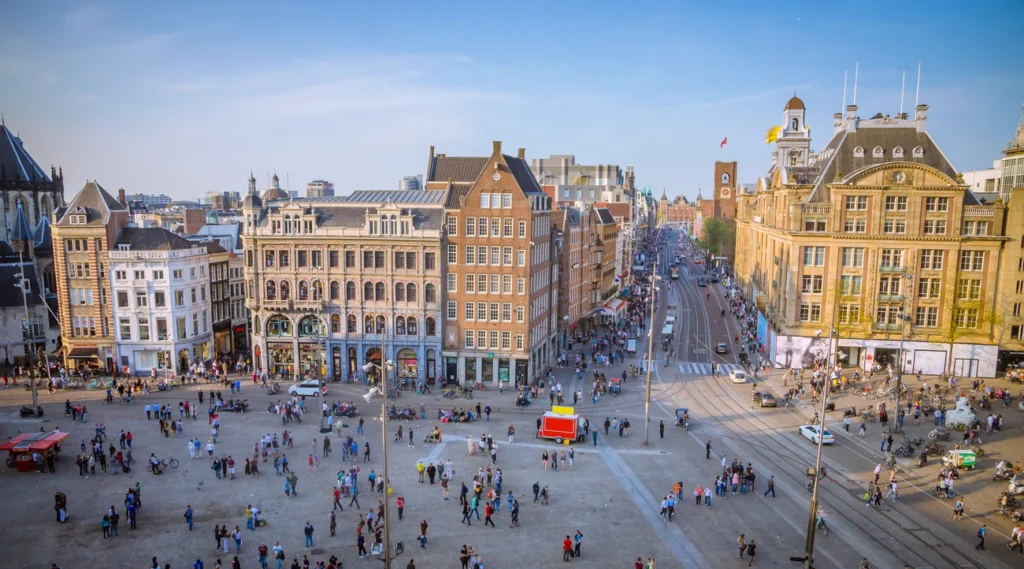
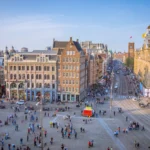
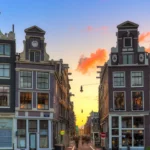
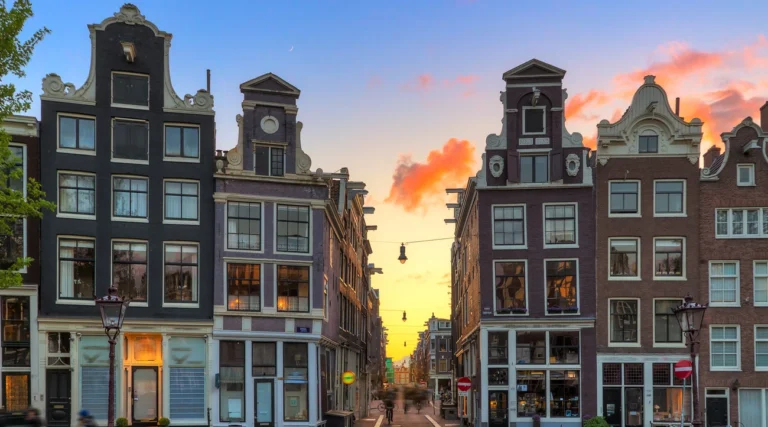
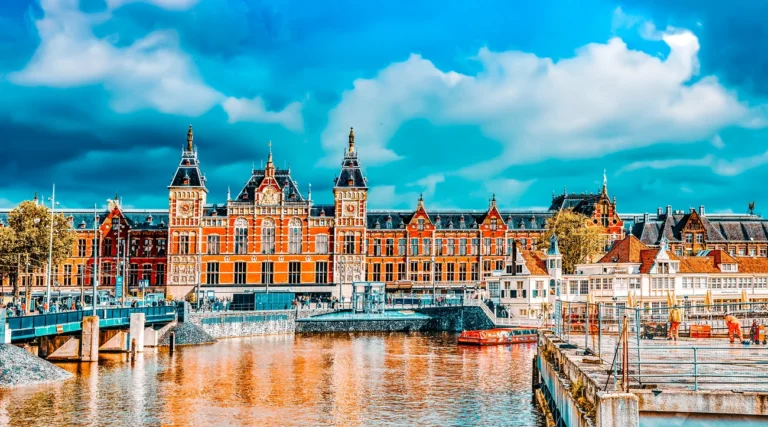
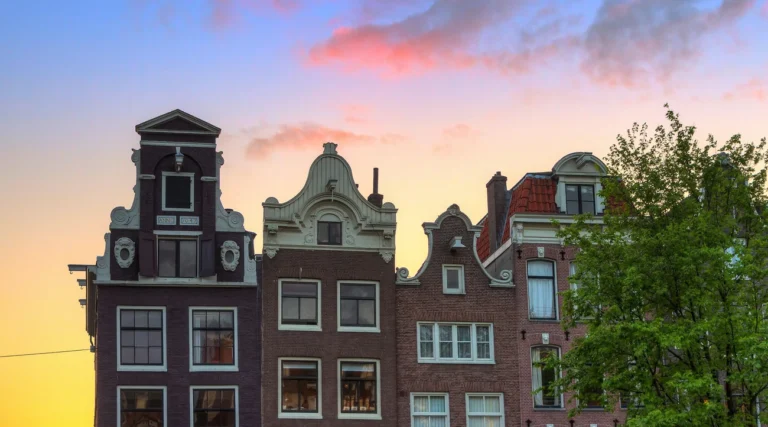
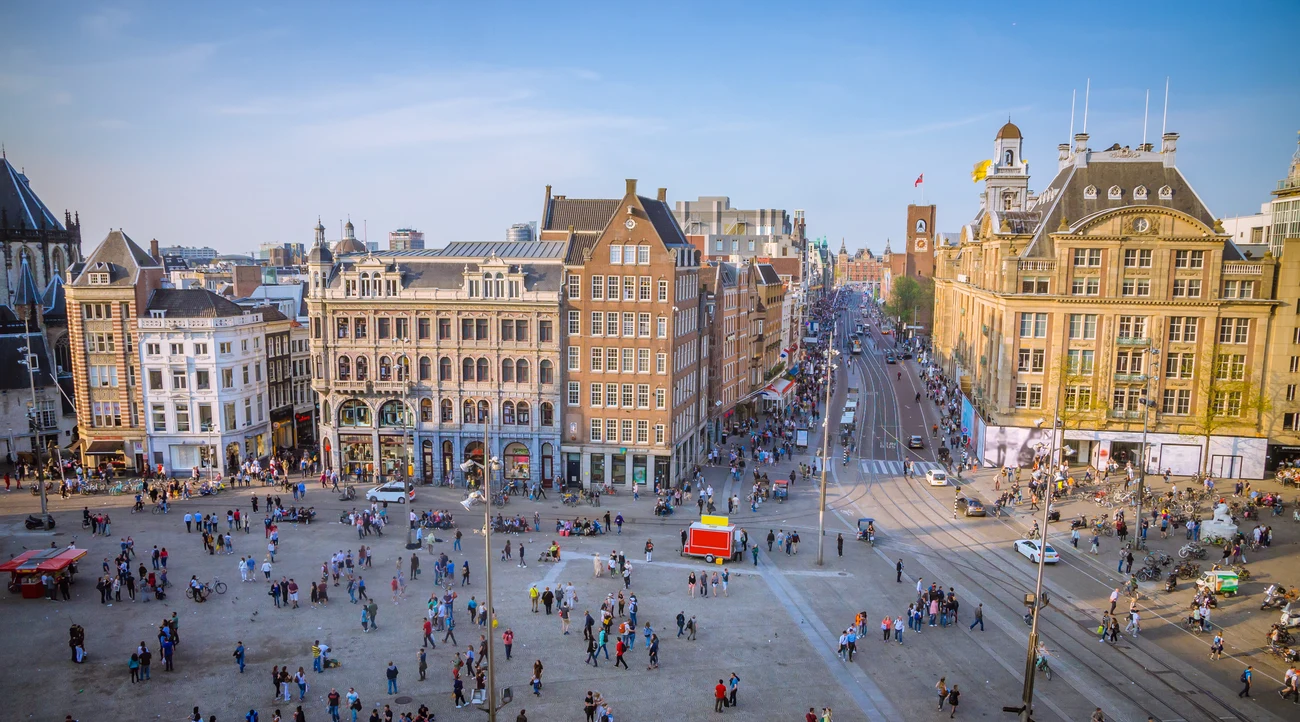
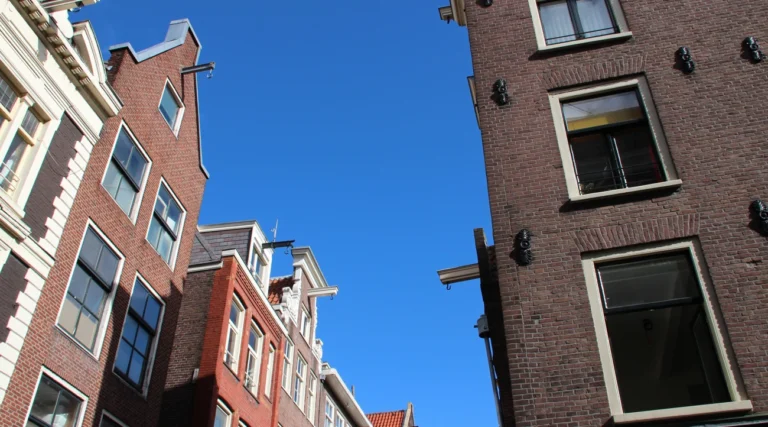
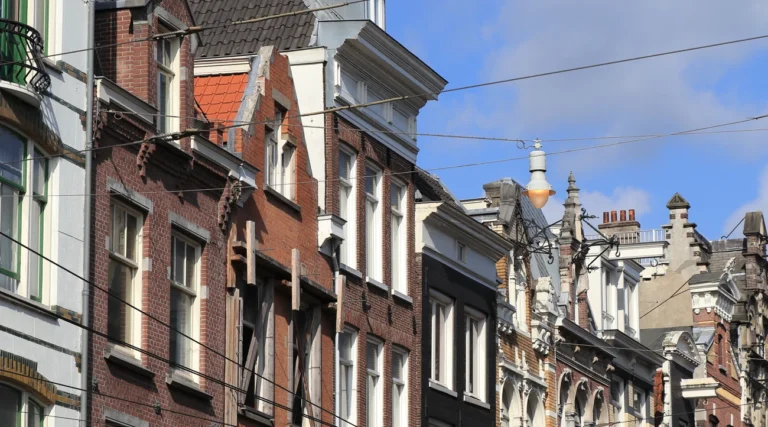
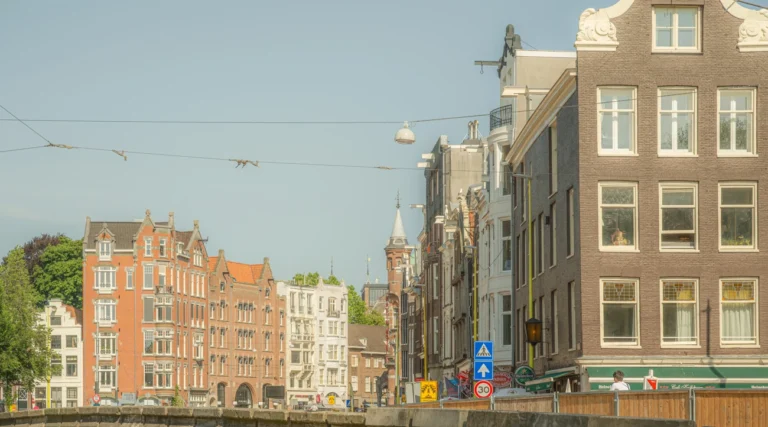
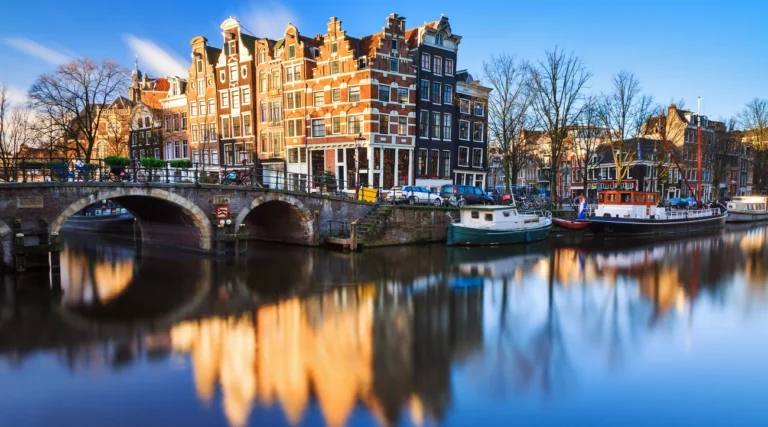
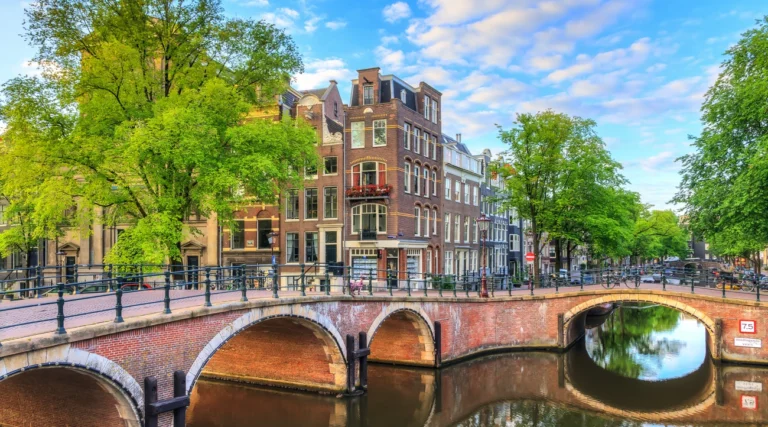
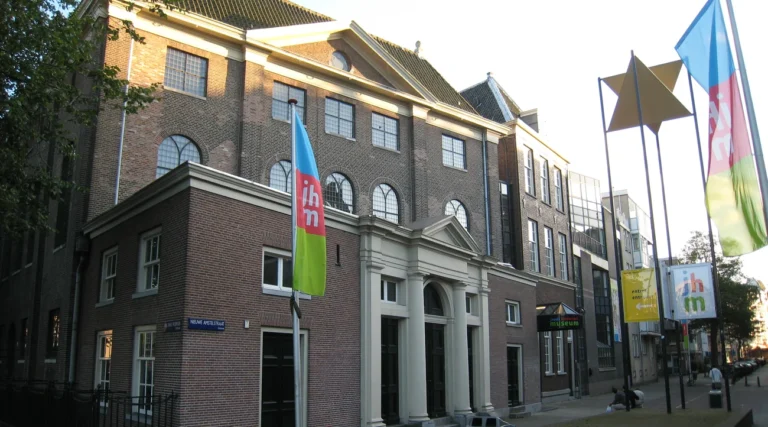
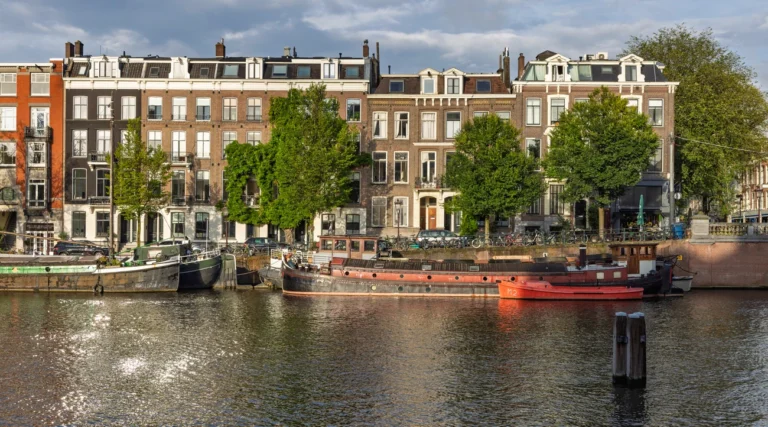
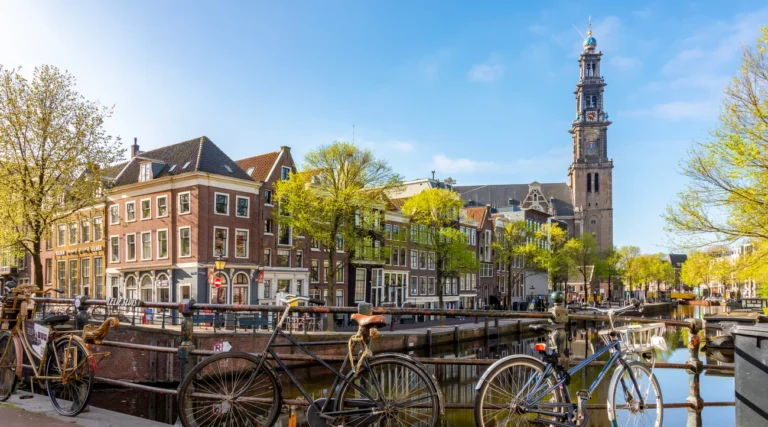
Damrak is one of Amsterdam’s most familiar arrival routes: from Centraal Station, the avenue leads towards Dam Square beside a surviving pocket of the old waterfront. The gabled houses across the water give the classic view, while the Beurs van Berlage and the larger street façades tell a story of trade, rail travel and a changing city centre.
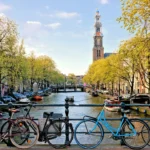
Pause for the waterfront houses at the northern end.
Look at the Beurs van Berlage from the street.
Walk towards Dam Square at your own pace.
Use the side streets to connect with the older centre.
Check the exact departure point for any booked cruise or walk.
The perfect first walk from the station into the old centre
Damrak is at its best when you give it a few deliberate pauses rather than simply following the crowds from the station. Start with the remaining water, then look at the changing scale of the buildings as you walk towards the Dam. Leave the busiest pavement flow before stopping for photographs.
What to see along Damrak
The well-known waterfront is only one part of the route. The avenue also has a major former exchange, commercial buildings and side-street connections that show how a harbour approach became a city boulevard.
Quick summary of a Damrak walk
A direct walk is short, but allow longer for the waterfront, architecture and a look towards Beursplein. An indoor attraction or canal cruise needs a separate block of time; public access to Damrak does not require a booking.
Anatomy, a city walk and a canal-cruise option
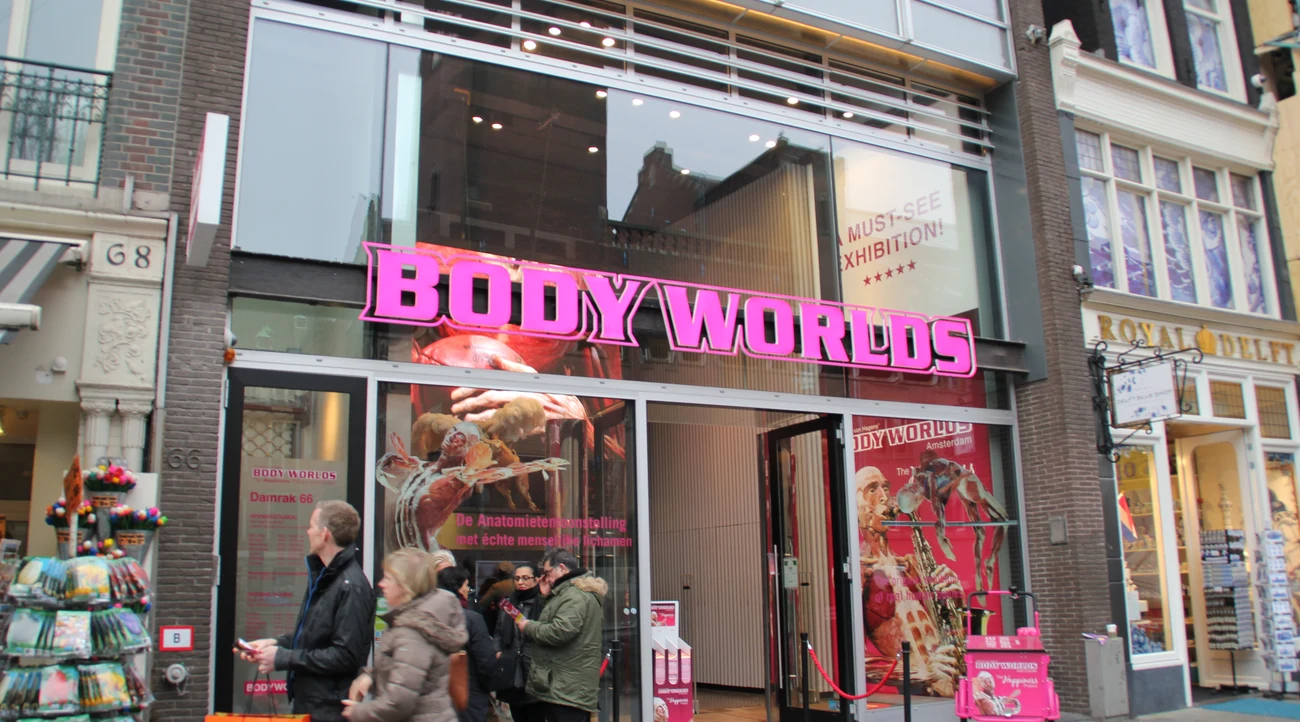
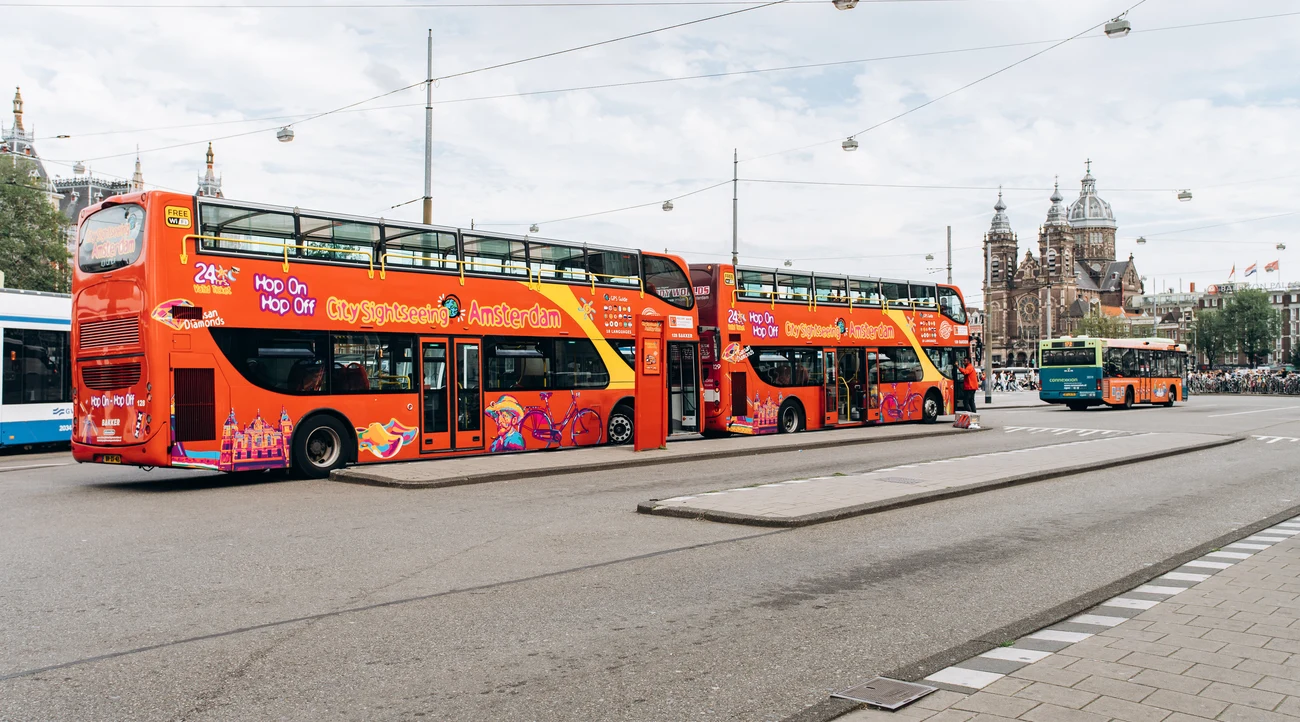
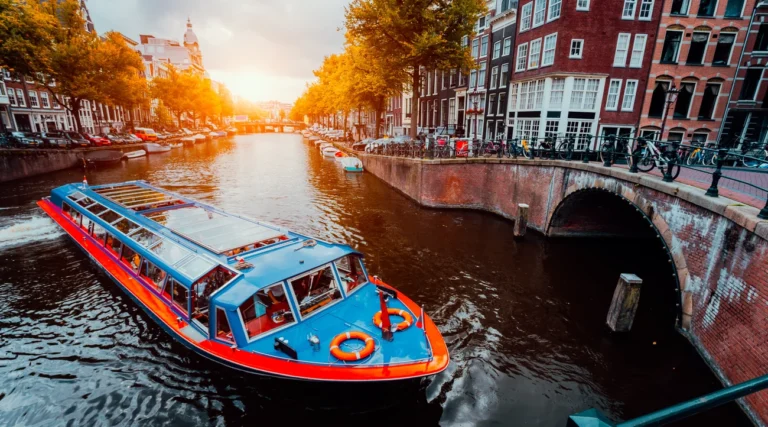
The activities below offer three different additions to a Damrak walk: BODY WORLDS at Damrak 66, an introductory walking tour with a Damrak stop, and a canal cruise listing a Damrak departure option.
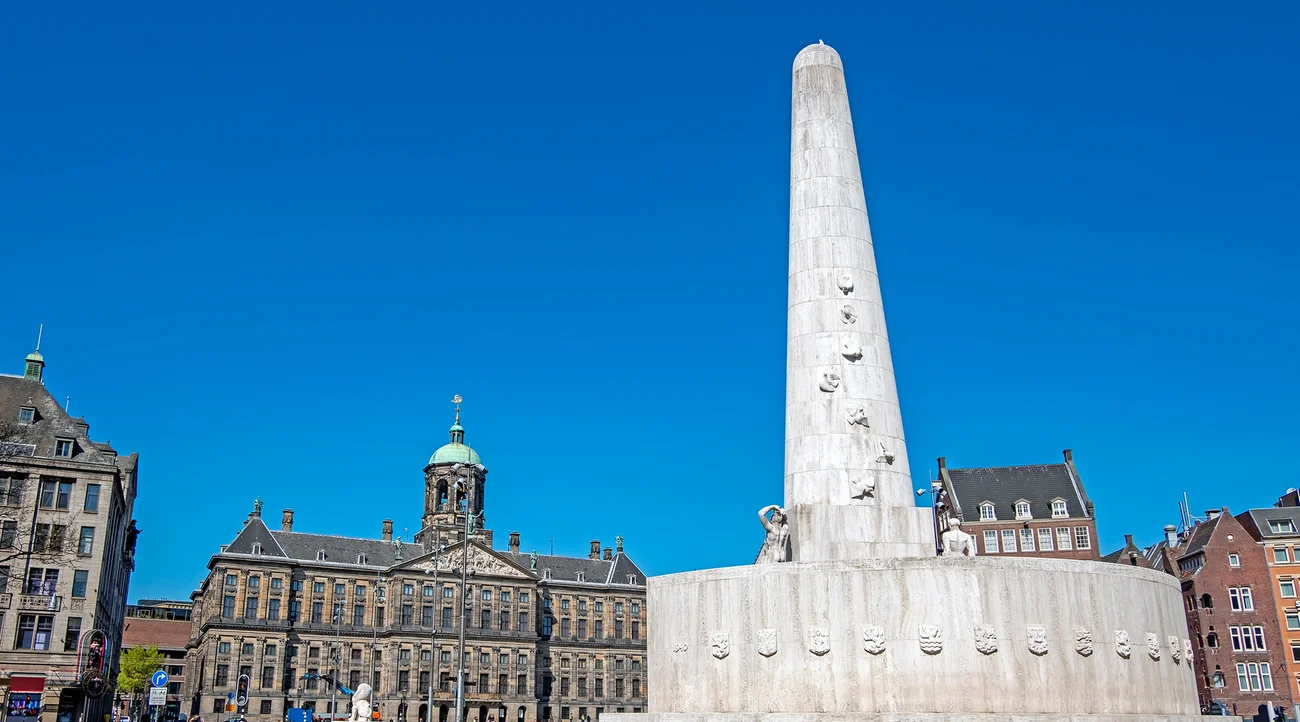
BODY WORLDS is an anatomy exhibition using real human specimens; consider your party’s interests and comfort before booking. The walking tour starts at the National Monument on Dam Square and visits Damrak as part of a wider route. For the cruise, select the correct departure option and pier: the same listing also offers departures elsewhere. The street and waterfront views remain free, and these bookings do not establish access to the Beurs van Berlage.
Water remains at the northern end: most of the walk is along a busy city avenue.
Public views of the gabled houses are free; boat trips and indoor attractions are separate bookings.
BODY WORLDS uses real anatomical specimens, so prepare children and other sensitive visitors before deciding to enter.
A tour stop on Damrak is different from a meeting point on Damrak.
Pause outside the main walking flow, especially when arriving with luggage.
Check for bicycles and trams before changing viewpoint or crossing the avenue.
Read the operator, departure option and pier number on a cruise confirmation.
Allow extra walking time if your visit begins immediately after a train arrival.
How to reach Damrak
The northern end of Damrak is directly outside the city-facing side of Amsterdam Centraal. Dam Square marks its southern end. Use current station signs and designated crossings, and check GVB information if continuing by tram or metro.
From harbour approach to arrival avenue
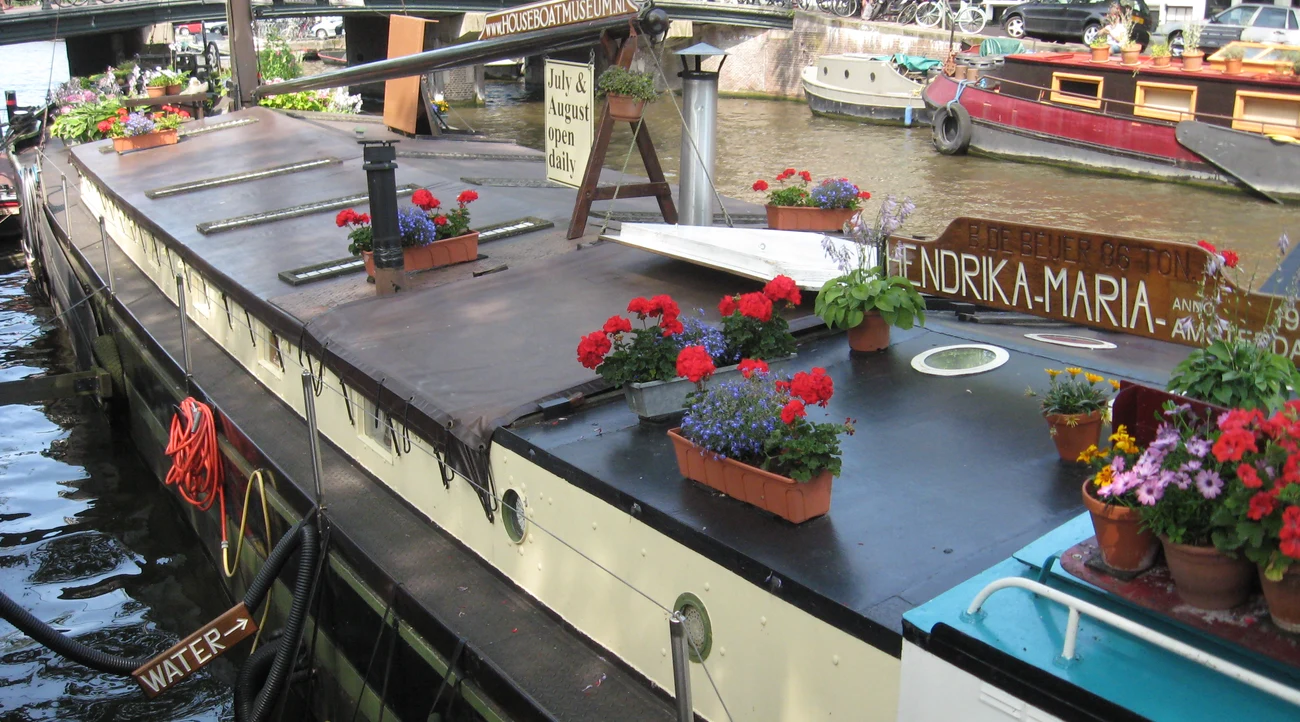
Damrak was once part of Amsterdam’s harbour approach from the IJ to the Dam. The remaining water helps make that earlier relationship visible, even though much of the former waterway was filled as the city changed.
The arrival of Centraal Station in 1889 changed the city’s relationship with its waterfront. Damrak increasingly became an arrival avenue for people coming by rail, framed by hotels, commercial premises and larger buildings.
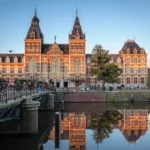
The Beurs van Berlage opened in 1903. Its long brick façade and tower give the route a very different scale from the narrower waterfront houses. Designed by H.P. Berlage, the former exchange is one of the key buildings to notice when reading the avenue as a history of trade and urban change.
Today, photographs often isolate the gabled houses from the rest of the street. Walking the whole route reconnects that view with the station, the former exchange and Dam Square. The result is a fuller picture of how Amsterdam received goods, conducted business and welcomed arrivals at different moments in its history.
Details behind Damrak’s familiar view
A waterfront that became an avenue: the surviving water is a clue to Damrak’s earlier role.
The waterfront houses and Beurs van Berlage show very different building scales along the same route.
The avenue’s importance as an arrival route grew with the opening of Centraal Station.
A brief side turn towards Beursplein changes the view of the exchange and the surrounding city.
BODY WORLDS tickets and city walking experiences
Find your stay near Damrak
A base near Damrak or Centraal can suit visitors prioritising rail connections and central walks. Check the room’s position, stairs, entrance and potential traffic or evening noise. The accommodation map is centred on Damrak in Amsterdam.
Damrak visiting questions
More activities and experiences in Amsterdam