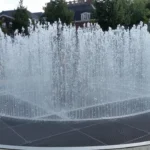
Hide and See(k) turns a corner of the Rijksmuseum gardens into a changing room made of water. Created by Jeppe Hein, the pavilion invites you to watch openings appear and disappear rather than simply admire a fountain from one fixed viewpoint. It is a short outdoor art encounter, separate from the museum galleries.
A contemporary water pavilion in the Rijksmuseum gardens.
Watch the pattern before deciding whether to approach.
The gardens are free when open; museum admission is separate.
Garden access and water operation must be checked for your date.
A short garden stop, with seasonal access to confirm
Plan around 15–20 minutes to observe the work and its changing appearance, if the gardens are open and the installation is operating. Allow longer for a wider garden visit. A museum visit requires its own time slot and substantially more time.
Access check, 22 October 2026: the museum’s detailed practical information states that the gardens open in summer, 09:00–18:00. It does not establish an autumn opening period or a daily fountain schedule. Confirm garden access and the installation’s operation before travelling specifically for it; the museum’s general 09:00–17:00 hours are not a fountain timetable.
What to notice at Hide and See(k)
The interest lies in watching a temporary boundary form and then dissolve. Pause outside the water area first. If access is permitted, follow the signs and staff instructions; you can enjoy the work without trying to cross the jets.
Quick summary of the Rijksmuseum water pavilion
Think of this as a short garden stop that depends on access and operation. Keep an alternative plan for a dry or closed installation. Museumplein and a separately booked museum visit can form part of the same day, but buying admission does not guarantee that the fountain will run.
Add an optional visit to the Rijksmuseum galleries
The offer below is general admission to the Rijksmuseum galleries. It is an optional way to extend an art-focused day, not a ticket for Hide and See(k), garden access or a scheduled fountain performance. The gardens can be visited free when open.
Choose museum admission only if you want the indoor collection, and check the time slot and conditions before booking. Garden season and fountain operation remain separate practical checks.
Garden admission is free when the gardens are open.
Museum tickets do not establish a fountain timetable.
Water can rise unexpectedly; keep cameras and belongings clear.
Follow on-site access rules and supervise children closely.
Watch from the edge before approaching the water area.
Keep valuables protected if you choose to move closer.
Choose a view that includes the surrounding garden as well as the jets.
Leave flexible time rather than planning around an unconfirmed operating hour.
How to reach Hide and See(k)
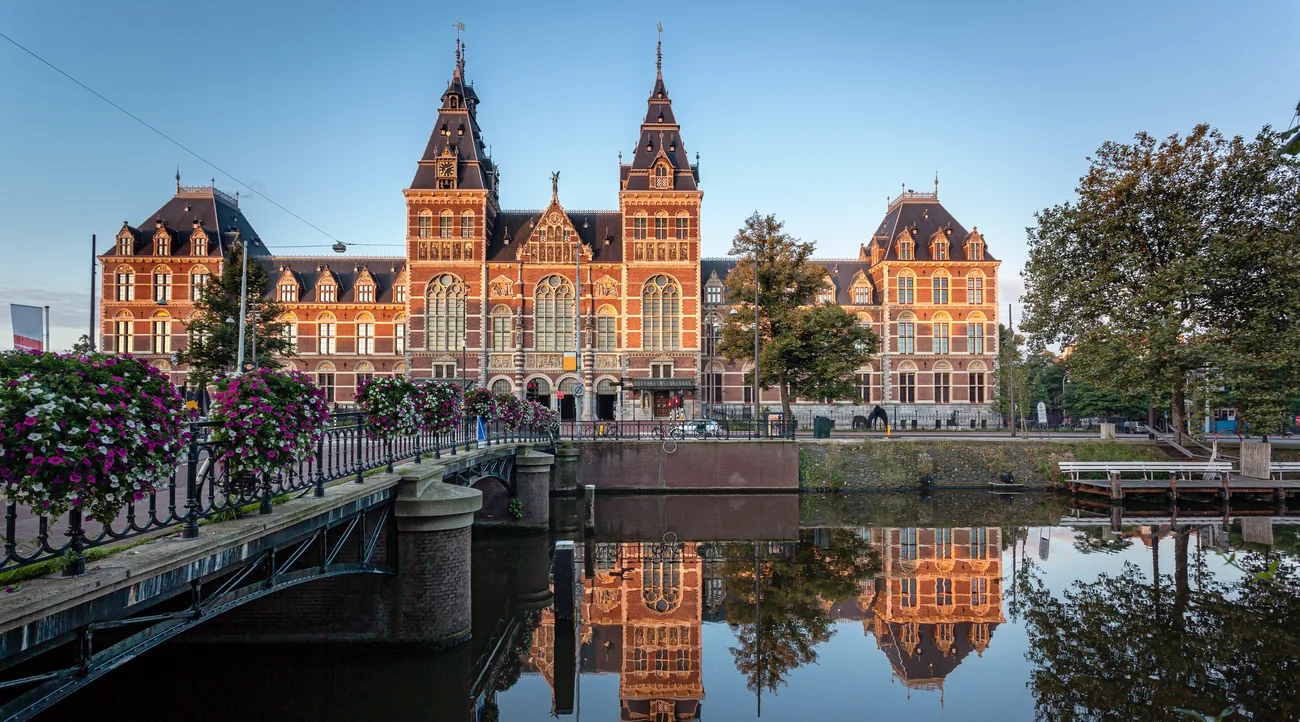
Go to the Rijksmuseum gardens at Museumstraat 1, beside Museumplein. Check the open garden entrance on arrival; the museum entrance, garden gates and cycle passage are different routes. Stay out of the cycle lane while looking for the garden.
A contemporary version of the surprise fountain
The Rijksmuseum identifies the work as a 2013 creation by Jeppe Hein. Its water pavilion revisits the surprise fountains of formal Baroque gardens: movement and an unexpected change are central to the encounter.
The artist describes the design as a contemporary intervention integrated into the museum’s garden setting. A circle and square provide its underlying geometry. The water can define an enclosed space or open corridors, so the apparent room changes without solid walls being moved.
This makes the viewer’s position part of the experience. From one angle you see a boundary; from another, an opening seems to invite movement. Waiting can be as interesting as walking, because a clear route may change before you reach it.
The installation therefore offers a different kind of looking from the paintings inside the museum. Its material is active, temporary and dependent on operation. A photograph captures one arrangement, while a visit may reveal several—or none if the fountain is switched off.
Looking at a room made of water
The title plays with seeing and hiding.
A still photograph cannot show the whole changing sequence.
A dry surface does not establish that the next moment will stay dry.
A contemporary installation can sit within a historic garden design.
Watching from outside is a valid way to experience the work.
Rijksmuseum tickets and guided museum experiences
Find your stay near the Rijksmuseum gardens
The accommodation map is centred on the Rijksmuseum. Compare walking routes, public transport and room conditions when choosing a base around Museumplein. Proximity to the museum does not establish garden opening or fountain operation during your stay.
Hide and See(k) visiting questions
More activities and experiences in Amsterdam