In short
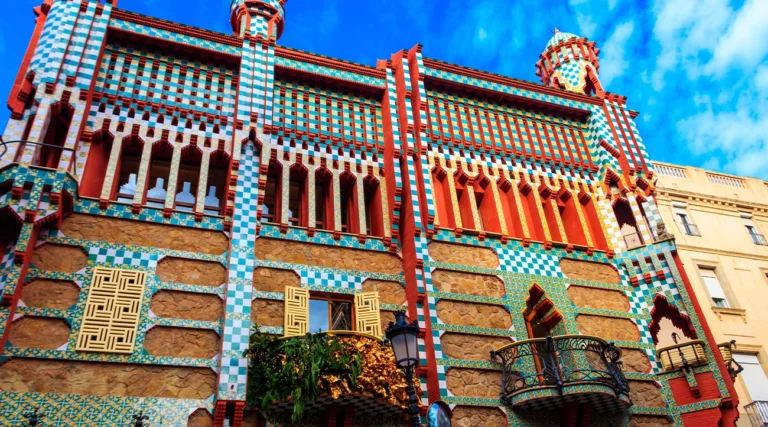
Dominating Passeig de Gràcia, Casa Batlló stands out as one of Antoni Gaudí’s most imaginative residential transformations. Often nicknamed the “House of Bones” for its skeletal stone pillars, this former family home pairs a shimmering, wave-like facade with interior details inspired by marine life and the local legend of Saint George.
- Gaudí’s famed Modernist residential landmark
- Arched roofline designed to mimic the scaly back of a dragon
- Noble Floor featuring expressive stained glass
- Immersive digital art installations including the Gaudí Cube
- Celebrated UNESCO World Heritage site representing Catalan Art Nouveau
☰ Table of content
Prices and opening times of Casa Batlló
Plan your visit by checking current operating hours and standard entrance fees:
Prices
-
Standard daily from 29€
-
Standard night from 25€
-
Reduced price from 23€
Children 13-17, over 65, students, people with disabilities
-
Free entry 0€
Under 12, disabled companion
What to see in Casa Batlló
Look out for these artistic details and signature features throughout the rooms:
Dragon Roof Terrace Incredible views
Tiled rooftop styled like a dragon’s spine, complete with four decorated chimney stacks.
Noble Floor
Former living quarters of the Batlló family overlooking Passeig de Gràcia street below.
Central Light Well
Tiled atrium featuring graduating shades of blue ceramic tiles for balanced light.
Loft Arches
Series of sixty catenary white arches built to support the upper roof structure.
Gaudí Cube
Immersive 360-degree digital room offering a surreal journey inside the architect's mind.
Quick summary of a Casa Batlló visit
Keep these fast practical details in mind when deciding on the best time to tour:
Best moment
Early morning at opening or late evening
Crowd
Very high during mid-day hours
Kid friendly
Interactive augmented reality
Unmissable
Looking up through the central blue tile light well atrium
Type of experience
Architectural, artistic, immersive visual experience, and historical museum
What to expect
Dynamic light displays, fluid organic shapes, crowds, and stairways
How to visit Casa Batlló
Choose between standard augmented-reality self-tours or exclusive evening visits:
Good to know
- Tour requires walking up and down several staircases
- Expect brief waits at major interior photo spots
- Strollers must be checked in
- Elevators are reserved primarily for visitors with reduced mobility
Practical tips
- Buy tickets online ahead of time
- Choose an early morning slot
- Use the provided SmartGuide augmented reality tablet
- Step across the street to capture full facade photos
How to reach Casa Batlló
Reach the building easily from anywhere in the city center via metro, bus, or on foot:
Lines L2, L3, and L4 stop directly at Passeig de Gràcia station.
Multiple local routes including H10, V15, 7, 22, and 24 stop nearby.
A short 10-minute stroll down Passeig de Gràcia from Plaça de Catalunya.
Pg. de Gràcia, 43, 08007
Official Transport in Barcelona
History of Casa Batlló
The building originally constructed in 1877 was a conventional apartment house purchased by textile industrialist Josep Batlló i Casanovas in 1903. Intending to demolish the existing structure to build something fresh, Batlló hired Antoni Gaudí in 1904. However, Gaudí convinced the owner that total demolition was unnecessary, proposing a complete, radical remodel instead.
Read allShow less
Read allShow less
Between 1904 and 1906, Gaudí overhauled the main facade, added top floors, enlarged the central light shaft, and completely redesigned the interior room layout. Working alongside skilled local craftsmen, he replaced straight structural lines with organic curves, integrating colorful ceramics, stone, and forged iron. The result was a groundbreaking piece of Modernisme that shattered traditional Victorian design limits.
After remaining in private hands for decades, the house underwent extensive conservation in the late 20th century. It opened as a cultural site in 1995 and was designated a UNESCO World Heritage site in 2005. Today, Casa Batlló continues to present Gaudí’s artistic vision through ongoing conservation efforts and modern digital exhibits.
Curiosities about Casa Batlló
- The roof design represents the legend of Saint George (Sant Jordi), with the lance tower representing his sword plunged into the dragon’s back.
- The blue tiles in the central light well grow darker toward the top to ensure uniform light distribution across every floor.
- There are virtually no straight lines or sharp right angles anywhere inside the main rooms.
- Local residents originally called it the “House of Bones” (Casa dels ossos) due to the bone-like stone pillars on the lower facade.
- The window handles and wooden doors were ergonomically molded by Gaudí pressing his own hand into soft clay.
Tickets and tours Casa Batlló
Find your stay near Casa Batlló
Browse recommended hotels and boutique apartments located along Passeig de Gràcia and near Casa Batlló:
Frequently Asked Questions - FAQ
Is an audio guide included with standard admission to Casa Batlló?
Yes, standard tickets include an augmented reality SmartGuide that brings Gaudí’s organic design concepts to life.
How much time is needed to visit the entire house?
A typical walkthrough of the interior, loft, roof, and immersive exhibition areas takes about 1 hour to 1.5 hours.
Can I visit Casa Batlló at night?
Yes, night visit entry tickets are available, often featuring special evening roof music sessions and lighting.
Is Casa Batlló wheelchair accessible?
Yes, a historical elevator provides access to most floors, and specialized routes are available for mobility support.
What is the difference between Casa Batlló and Casa Milà?
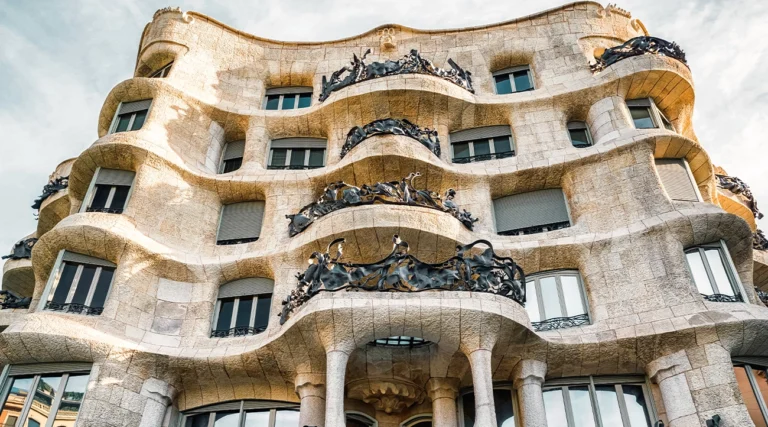
Casa Batlló is a renovated organic townhouse with a colorful facade, while Casa Milà (La Pedrera) is a larger, stone-built apartment block.
Are there photography restrictions inside the building?
Personal photography without flash or tripod equipment is fully permitted throughout the entire house and roof.
Is there a gift shop or cafe inside Casa Batlló?
Yes, a boutique store and a small outdoor terrace drink bar are located near the upper levels of the house.
What is the best time of day for photography of the exterior facade?
Late afternoon provides the best natural sunlight hitting the front ceramic mosaic facade directly.