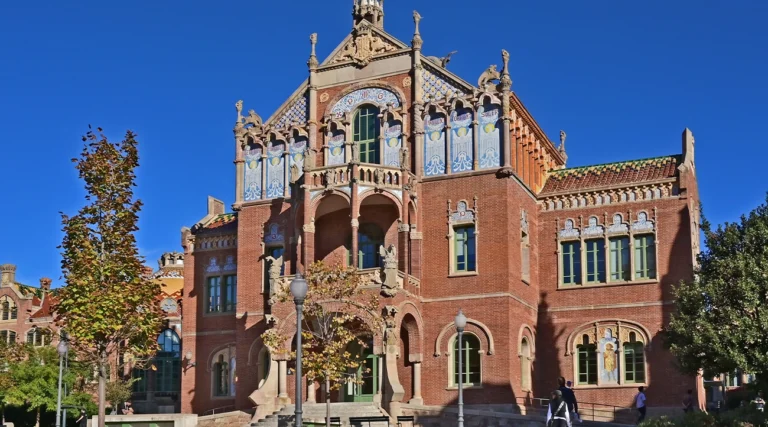
In short
Palau de la Música Catalana is a masterwork of Catalan Modernisme. Commissioned by the Orfeó Català choral society and designed by architect Lluís Domènech i Montaner, this world-famous concert hall is celebrated for its opulent mosaic facade and its breathtaking main auditorium, lit entirely by natural sunlight through an inverted stained-glass skylight.
- UNESCO World Heritage concert hall
- The only concert hall in Europe illuminated by natural daylight
- Spectacular inverted stained-glass dome
- Grand exterior facade covered in colorful mosaics
- Concert stage framed by famous sculptures of Valkyries and Catalan folk music motifs
☰ Table of content
Prices and hours of Palau de la Música Catalana
Check official tour hours and general ticket entry brackets before scheduling your visit:
Hours
-
Individual or guided visit 09:00 - 15:30
50 minutes duration
-
Closures
Depending on show programme
Prices
-
Individual visit from 20€
-
Guided visit from 24€
-
Free entry 0€
Under 10, disabilities over 65%
What to see in Palau de la Música Catalana
Look out for these extraordinary decorative and structural masterpieces throughout the building:
Stained-Glass Dome (The Skylight) Iconic
Inverted golden and blue glass sunburst ceiling panel casting natural light directly over the orchestra seating.
Concert Hall Stage
Proscenium arch adorned with stone sculptures of Wagnerian Valkyries on one side and Anselm Clavé on the other.
Lluís Millet Hall and Balcony
Double-height foyer featuring mosaic-covered outdoor columns, floral ironwork, and massive stained-glass windows.
The Grand Marble Staircase
Opulent entranceway framed by balustrades carved from translucent yellow marble and glass lamp pillars.
Exterior Sculptural Corner
The Catalan Song (La Cançó Popular Catalana) sculpture group by Miquel Blay built onto the building's outer corner.
Quick summary of a Palau de la Música Catalana visit
Keep these quick practical details in mind when planning your itinerary:
Best moment
Morning visits offer bright natural light
Crowd
Moderate inside tour groups
Kid friendly
Highly colorful visual interiors
Unmissable
Standing on the balcony terrace
Type of experience
Architectural tour, historic performance hall, and musical venue
What to expect
Multi-level staircase walkthroughs, rich glasswork, and intimate acoustic spaces
How to visit Palau de la Música Catalana
Choose between self-guided audio tours, live guided visits, or booking tickets for an evening concert:
Good to know
- Self-guided tour tickets include an interactive mobile guide
- Visiting hours for sightseeing end in the early afternoon
- Photography is permitted during sightseeing tours
- Storage lockers are available for larger bags
Practical tips
- Booking a concert ticket often costs only slightly more than a tour ticket
- Combine your visit with a walk through the surrounding El Born
- Stop by the Foyer Cafe located in the glass-covered lower courtyard
- Stand across the narrow street on Carrer del Palau de la Música to photograph the full mosaic corner facade
How to reach Palau de la Música Catalana
Reach this central landmark easily using public transit or on foot from main plazas:
Line L1 (Red) or Line L4 (Yellow) to Urquinaona station, followed by a 3-minute walk.
City bus lines 19, 47, V15, and V17 stop nearby along Via Laietana.
A quick 5-minute walk east from Plaça de Catalunya or Portal de l'Àngel.
C/ Palau de la Música, 4-6, 08003
Official Transport in Barcelona
History of Palau de la Música Catalana
In 1904, the leaders of the Orfeó Català—a influential choral society founded in 1891 to promote Catalan musical heritage—purchased a site in the Sant Pere district to build a permanent home. They hired Lluís Domènech i Montaner, one of the leaders of Catalan Modernisme, to design the structure.
Read allShow less
Read allShow less
Construction began in 1905, funded largely by private donations from wealthy local industrialists and music lovers.
Domènech i Montaner conceived the building as a “garden of music”. Utilizing an innovative steel frame structure—rare for the era—he eliminated heavy load-bearing brick walls, replacing them with massive stained-glass windows to allow sunlight to flood the auditorium. Skilled artisans crafted ceramic mosaics, forged ironwork, and stone sculptures to cover every surface, transforming the building into a landmark of Catalan cultural pride.
The hall officially opened in February 1908 to critical acclaim. In the late 1980s, architect Oscar Tusquets oversaw a major modernization and expansion project, adding an adjoining administrative tower and opening up the glass foyer courtyard. Recognized alongside Domènech i Montaner’s Recinte Modernista de Sant Pau as a UNESCO World Heritage site in 1997, the Palau remains one of Barcelona’s most active and prized cultural institutions.
Curiosities about Palau de la Música Catalana
- It is the world’s only concert auditorium illuminated entirely by natural light during daylight hours.
- The inverted glass drop in the ceiling weighs over one ton and represents a brilliant sun bursting through a blue sky.
- The back of the stage features 18 stone sculptures of muses playing traditional instruments, with their upper bodies emerging from the wall as 3D statues while their lower bodies are tiled in flat mosaic.
- The building’s steel-frame architecture predates many modern skyscraper engineering concepts, allowing maximum space for glass windows.
- Legendary musicians including Igor Stravinsky, Richard Strauss, Pablo Casals, and Arthur Rubinstein have performed on the Palau stage.
Tickets and tours Palau de la Música Catalana
Find your stay near Palau de la Música Catalana
Find boutique hotels and charming guest suites situated around El Born and the historic Sant Pere quarter:
Frequently Asked Questions - FAQ
Is it better to take a guided tour or attend a live concert at the Palau de la Música?
A daytime tour allows full access to all balconies, the stage, and the Millet Hall, while attending a concert lets you experience the hall’s world-class acoustics in action.
How long does a tourist visit take?
A self-guided or guided architectural walkthrough takes approximately 45 to 60 minutes.
Is the Palau de la Música Catalana wheelchair accessible?
Yes, modern renovations added elevators and ramp access connecting all main floors and auditorium seating areas.
What is the dress code for attending an evening concert?
There is no strict formal dress code for regular concerts, though smart-casual attire is recommended.
Can I visit the main auditorium without buying a tour ticket?
No, access to the concert hall and upper foyers requires a valid tour ticket or a concert admission pass.
Are photos allowed inside during sightseeing hours?
Yes, photography without flash is permitted throughout all halls and balconies during public tour times.
Is there a cafe or restaurant inside the Palau?
Yes, the Cafe-Restaurant del Palau operates on the ground floor foyer and serves daily lunch, drinks, and snacks.
How far is the Palau de la Música from Plaça de Catalunya?
It is located roughly 400 meters away, making it an easy 5-minute walk from the central plaza.