[linguise]

Gràcia

Unwind across car-free cobblestone lanes, bustling outdoor cafe terraces, and early Gaudí modernist architecture

In short

Gràcia preserves its roots as a proud 19th-century independent rural hamlet. Characterized by low-rise historic townhouses, narrow pedestrian alleys, and a network of vibrant open-air squares, its intimate streets thrum with independent design boutiques, vegan bakeries, craft beer taverns, and the famous Festa Major, all framed by Antoni Gaudí’s groundbreaking first domestic project, Casa Vicens.

  • Former independent village retaining a distinctive proud local identity
  • Network of sunlit pedestrian squares perfect for terrace dining and vermouth
  • Home to Casa Vicens, the vibrant neo-Mudéjar first house of Antoni Gaudí
  • Epicenter of community spirit celebrated during the annual August Festa Major
  • Creative haven filled with independent fashion ateliers and indie cinema houses

☰ Table of content

What to know before visiting

Quiet mornings along car-free streets transition into lively evening gatherings on welcoming neighborhood stone terraces.

Strenghts

  • Authentic, unhurried local village vibe.
  • Abundance of pedestrianized plazas.
  • Thriving independent shopping scene.
  • Wonderful vegetarian dining options.

To keep in mind

  • Extremely packed during August festival.
  • Many boutique shops close midday.
  • Uphill walking toward northern reaches.
  • Minimal car or taxi access.

What to see in Gràcia

Modernist breakthroughs, civic clock towers, and thriving cultural squares give this former village its unmistakable charm.

1

Casa Vicens Low crowd

Antoni Gaudí's first residential commission, showcasing vibrant turquoise ceramic tiles, Moorish arches, and lush nature motifs.

2

Plaça de la Vila de Gràcia

The historic municipal administrative forum anchored by a striking 33-meter octagonal bell and clock tower.

3

Plaça del Sol

The quintessential bohemian gathering square, filled with sunny cafe terraces and evening guitar sessions.

4

Plaça de la Virreina

A peaceful, shaded stone square flanked by bitter orange trees and the 17th-century parish church of Sant Joan.

5

Mercat de la Llibertat

A magnificent 1893 Modernista covered food market designed by Francesc Berenguer featuring intricate wrought-iron decor.

6

Mercat de l'Abaceria Central

A cherished local market established in the late 19th century by textile workers, preserving culinary traditions.

7

Carrer de Verdi

The cultural backbone of the quarter, packed with independent fashion labels, artisan gelato parlors, and arthouse cinemas.

8

Plaça del Diamant

A historic residential square immortalized in Mercè Rodoreda's famous Catalan Civil War novel, housing an underground air-raid shelter.

The visit at Gràcia

This compact overview gives you the key operational details needed to navigate the village streets with ease.

The best activities in the surroundings

Walking in the neighborhood is completely free, with the open street network welcoming pedestrians around the clock.

Powered by GetYourGuide

Good to know

  • Narrow sidewalks can become congested with locals pushing strollers on market mornings.
  • Boutique shops regularly shut their doors for siesta between 14:00 and 17:00.
  • Taxis rarely penetrate the interior pedestrian maze, requiring pickups on perimeter avenues.
  • The district slopes steadily upward toward the Collserola hills.

Practical tips

  • Catch an original-language indie film at Cine Verdi.
  • Visit in mid-August to see entire streets decorated with handcrafted papier-mâché for Festa Major.
  • Book Casa Vicens morning slots to view the interior solarium in soft light.
  • Order homemade vermouth accompanied by cured anchovies on sunny plaza terraces.

How to reach Gràcia

Positioned right above central boulevards, reaching the quarter requires only a short underground journey.

Metro

Line L3 (Green) stops directly inside at Fontana and Lesseps; Line L4 (Yellow) serves the eastern border at Joanic.

Bus

Lines 22, 24, 39, 114, and V17 connect through perimeter avenues like Gran de Gràcia.

Walking

A gentle ten-minute walk northward along Passeig de Gràcia past Avinguda Diagonal leads straight into the heart of the village.

History of Gràcia

Originally established in the 17th century around a Carmelite convent called Nostra Senyora de Gràcia, this elevated terrain was a pastoral village dotted with rustic country estates, fruit orchards, and natural water springs.

As Barcelona underwent rapid industrialization in the early 19th century, Gràcia transformed into a bustling working-class manufacturing hub, home to major textile mills, artisan brickworks, and cooperative workshops. In 1850, Gràcia officially declared itself an independent municipality, developing its own town hall, civic symbols, and distinct administrative pride.

During its four decades of independence, Gràcia emerged as a hotbed of progressive social movements, workers’ syndicates, and cultural associations. Working-class families established passionate neighborhood traditions, most notably the Festa Major de Gràcia, where neighboring streets competed fiercely to construct elaborate artistic street decorations out of recycled materials. 

When the central government and Barcelona municipal authorities forcibly annexed Gràcia along with other surrounding towns in 1897 to accommodate Cerdà’s grand urban grid, local residents voiced intense opposition, cementing an enduring anti-authoritarian sentiment.

Despite becoming physically joined to Barcelona by the paved avenues of the Eixample, Gràcia never relinquished its unique village consciousness. Its low-scale architecture and tightly knit community protected it from aggressive real estate developments. 

In recent decades, the district transitioned from an industrial working-class enclave into a magnetic sanctuary for artists, writers, filmmakers, and independent creators, successfully maintaining its authentic community rhythm alongside contemporary bohemian energy.

Curiosities about Gràcia

  • Gràcia operated as a completely independent municipality with its own mayor until its forced annexation in 1897.

  • During the Festa Major in August, residents spend months handcrafting life-sized decorations for entire streets.
  • The famous clock tower in Plaça de la Vila rang continuously for days during a workers’ rebellion in 1870.
  • A subterranean air-raid shelter holding up to two hundred people lies buried beneath Plaça del Diamant.
  • Antoni Gaudí was barely thirty-one years old when he completed his vibrant orientalist masterpiece Casa Vicens here.

Tickets and tours in Barcelona

Find your stay near Gràcia

Selecting a boutique guesthouse in these quiet lanes lets you wake up to birdsong and neighborhood bakeries.

Best restaurant in the neighborhood

La Pubilla

A neighborhood culinary benchmark celebrated for its phenomenal esmorzars de forquilla, traditional Catalan fork-and-knife breakfasts, alongside an exceptional daily lunch menu honoring market produce.

Plaça de la Llibertat, 23

Roig Robí

An elegant, long-standing fine-dining institution known for its refined traditional Catalan cuisine, seasonal game, cod specialties, and a magical private leafy garden courtyard.

Carrer de Sèneca, 20

Con Gràcia

An intimate contemporary dining room delivering innovative tasting menus that blend traditional Catalan recipes with imaginative global techniques and meticulous wine pairings.

Carrer de Martínez de la Rosa, 8

Frequently Asked Questions - FAQ

Is Gràcia part of central Barcelona?

Yes, Gràcia is an official municipal district situated immediately north of L’Eixample, barely a twenty-minute walk from Plaça de Catalunya.

The famous street-decorating festival takes place annually for one week in mid-August, usually starting around August 15.

Most interior streets are pedestrianized or designated as low-speed resident zones, severely limiting through vehicle traffic.

Casa Vicens was Antoni Gaudí’s first residential commission, serving as the launching pad for his revolutionary architectural vision.

Plaça de la Virreina and Plaça del Sol are widely regarded as the most picturesque and lively squares for enjoying drinks and tapas outdoors. Check our article Where to eat in Gràcia.

Yes, it offers a peaceful, authentic residential atmosphere with great dining and direct metro connections to the beach and historic center.

Yes, the historic Civil War shelter can be explored through guided tours organized by the local historical association on weekends.

Carrer de Verdi, Carrer de Torrijos, and Carrer d’Astúries feature a dense variety of independent fashion ateliers and sustainable design shops.

More activities and experiences in Barcelona

You might also be interested in...

The journey continues…

Paella in a pan Barcelona
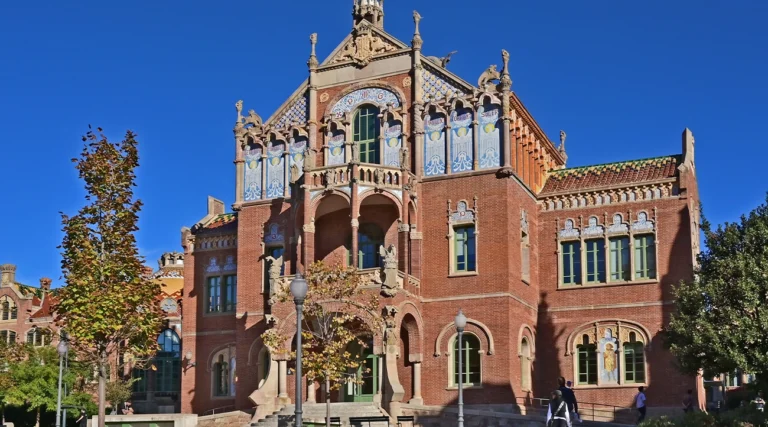
A pavilion of the Recinte Modernista de Sant Pau
Aerial view of Poblenou in Barcelona
Estimar Barcelona El Born restaurant
Plaça d'Espanya panoramic view
Churros con Chocolate in Barcelona

Must-Do Activities & Tours

Share:
Prev
La Barceloneta
Next
L'Eixample