[linguise]

Sagrada Família: all you need to know about Gaudí’s masterpiece

Antoni Gaudí’s Masterpiece: Architecture, Facades, Symbolism, and Sightseeing Details

In short

Standing as Barcelona’s most iconic architectural landmark, the Sagrada Família represents Antoni Gaudí’s visionary fusion of Gothic tradition and organic Modernisme. This unfinished basilica continues to awe visitors worldwide through its soaring forest-like columns, intricate sculptural facades, and breathtaking stained-glass lighting design.

  • Antoni Gaudí’s “unfinished” architectural masterpiece (completed in 2026)
  • Dramatic architectural facades depicting Christ’s life and passion
  • Soaring interior columns designed like a stone forest
  • Vibrant stained glass windows creating stunning natural light
  • UNESCO World Heritage site of outstanding universal value

☰ Table of content

Prices and opening times of Sagrada Família

Plan your visit by reviewing daily entry schedules and available ticket pricing tiers for standard admission:

Hours

  • Winter time 09:00 - 18:00

    On sunday from 10:30

  • Summer time 09:00 - 20:00

    On sunday from 10:30

  • Last entry 45 mins prior
  • Special openings

    On 25 and 26 December, 1 and 6 January, from 9:00 am to 2:00 pm

  • Masses Everyday

    09:00, 10:00, 20:00

  • Masses Sunday

    09:00 (international), 10:30, 11:45, 13:00, 18:30, 20:00

Prices

  • Standard from 26€

    Some info more

  • With towers from 36€
  • Reduced price from 21€

    Senior, students and under 30 get discounts

  • Free entry 0€

    People with disabilities and companion

What to see in Sagrada Família

Discover the primary architectural highlights that make this basilica an extraordinary structural milestone:

1

Nativity Facade

Gaudí’s intricately carved entrance celebrating birth, life, and nature’s organic forms.

2

Passion Facade

Angular, austere stone sculptures representing Christ's suffering, designed by Josep Maria Subirachs.

3

Nave Forest Columns

Branching stone pillars crafted to mimic tall trees supporting the soaring central vault.

4

Stained Glass Windows Majestic

Vibrant glass panels casting warm orange hues west and cool blue shades east.

5

Gaudí Crypt

The underground chapel where architect Antoni Gaudí rests in his final tomb.

Quick summary of a Sagrada Família visit

Evaluate the core practical parameters to organize a comfortable and stress-free landmark experience:

How to visit Sagrada Família

Explore ticket options and tour formats to select the ideal entry experience for your itinerary:

Good to know

  • Dress modestly covering shoulders and knees appropriately.
  • Pass through mandatory airport-style security bag checks.
  • Tower access requires using narrow stairs to descend.
  • Large backpacks must be placed in storage lockers.

Practical tips

  • Purchase official tickets online weeks in advance.
  • Download the official mobile app for audio guides.
  • Visit the underground museum beneath the main nave.
  • Photograph the Nativity facade from Plaça de Gaudí.

How to reach Sagrada Família

Reaching this iconic central monument is seamless via public transportation or walking routes:

Metro

Lines L2 and L5 stop directly outside at the Sagrada Família station.

Bus

Local city bus routes 19, 33, 34, D50, and H10 stop nearby.

Walking

Easily walkable along Avenida Diagonal or Carrer de Mallorca from Eixample.

Carrer de Mallorca, 401, 08013

History of Sagrada Família

The story of the Sagrada Família began in 1882 under architect Francisco de Paula del Villar, who originally designed a standard Neo-Gothic church. However, after technical disagreements led to his resignation just one year later, a young Antoni Gaudí assumed control in 1883. Gaudí completely reimagined the structure, discarding conventional blueprints in favor of a grand, nature-inspired monument blending Gothic verticality with fluid Art Nouveau structural principles.

Gaudí devoted over forty years of his life exclusively to the basilica, residing in his workshop on-site during his final years. When he passed away unexpectedly in 1926 after being struck by a tram, less than a quarter of his ambitious project had been built. Construction was further disrupted during the Spanish Civil War in 1936, when rioters destroyed Gaudí’s original scale models, sketches, and workshop plans.

Subsequent generations of architects, sculptors, and modern structural engineers painstakingly reconstructed Gaudí’s original intent using 3D modeling technology and surviving fragments. Supported entirely by private donations and ticket sales, construction has progressed continuously across decades. The completion of the central Jesus Christ tower marks the final phase of this century-spanning architectural achievement, in 2026.

Curiosities about Sagrada Família

  • Gaudí designed the central Jesus tower to reach 172.5 meters, deliberately keeping it slightly shorter than Montjuïc hill so human work would not surpass God’s creation.
  • The Passion Facade contains a mathematical magic square where every row, column, and diagonal sums to 33, representing Christ’s age at death.
  • The entire interior design relies on hyperboloid and paraboloid geometry derived directly from natural plant structures.
  • It has taken longer to complete the Sagrada Família than it took to construct the Great Pyramids of Giza.
  • The building was consecrated as a minor basilica by Pope Benedict XVI in November 2010 and officially consecrated from Pope Leo XIV in 2026.

Tickets and tours Sagrada Família

Find your stay near Sagrada Família

Frequently Asked Questions - FAQ

Is it mandatory to buy tickets in advance for Sagrada Família?

Yes, ticket entry is strictly managed via timed time slots, and tickets consistently sell out weeks in advance online.

Most visitors spend around 1.5 to 2 hours exploring the main nave, the museum, and outer facades thoroughly.

Tower tickets offer stunning panoramic views over Barcelona, though descent requires walking down narrow spiral staircases.

Yes, while primarily a monument, international mass is held regularly on Sunday mornings inside the main basilica nave.

The Nativity Facade was completed first under Gaudí’s direct supervision and reflects his personal artistic hand.

The crypt is open for daily religious services, allowing visitors to pay respects at Gaudí’s tomb.

The main nave, museum, and facilities are fully wheelchair accessible, though tower ascents are restricted due to narrow stairs.

Entry passes are non-refundable and strictly bound to your chosen time slot, so arriving 15 minutes early is recommended.

More activities and experiences in Barcelona

You might also be interested in...

The journey continues…

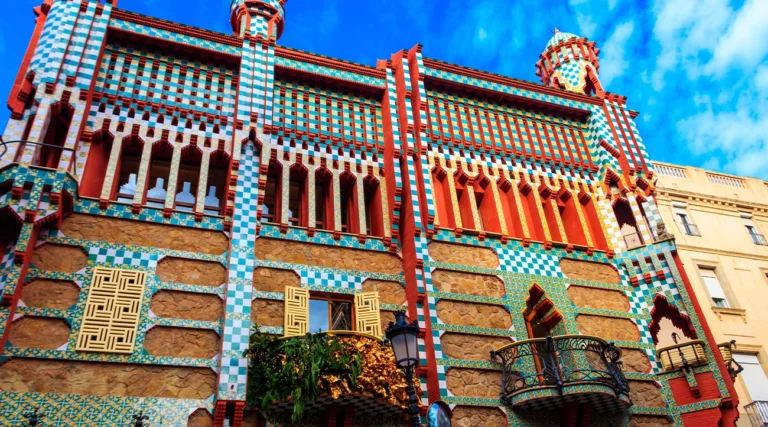
Casa Vicens front view from bottom
Amazing hotel room with vista on Barceloneta
Montjuïc aerial landscape
Plaça de Sant Jaume in the Gothic Quarter
Parc de la ciutadella main fountain
Panoramic terraced restaurant in Barceloneta

Must-Do Activities & Tours

Share:
Prev
Parc Güell: info, tips and history of Gaudí’s garden city
Next
Best Hotels Near the Metro in Barcelona