In short
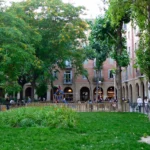
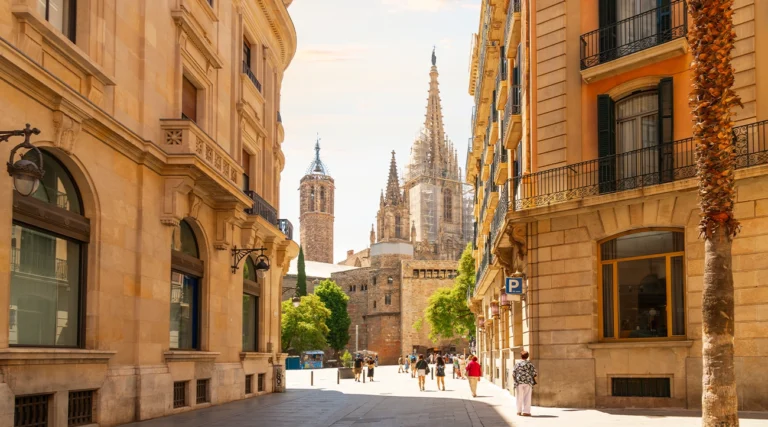
Tucked deep inside the labyrinthine alleys of the Jewish Quarter, this solemn courtyard presents one of Barcelona’s most haunting and poignant urban settings. Dominated by the pockmarked stone facade of its Baroque church, the square balances somber Civil War memories with the gentle murmur of a central stone fountain shaded by mature acacia trees.
- Intimate historic plaza hidden inside the Gothic Quarter
- Shrapnel scars preserved across the Baroque church facade
- Tragic Spanish Civil War memorial site honoring fallen children
- Octagonal stone fountain gurgling softly beneath acacia trees
- Renaissance guild houses reconstructed stone by stone after wartime damage
☰ Table of content
The perfect stop
A contemplative hush envelops this enclosed medieval enclosure throughout quiet daytime moments.
-
Recommended stop time 30'
Offers sufficient time to examine the scarred church walls, sit by the fountain, and absorb the solemn historical atmosphere.
-
Local customs
Schoolchildren run across the cobbles during morning recess, guitarists softly tune instruments in shaded corners, and passersby pause in respectful silence beside the fountain.
What to see in Plaça Reial
Evocative stone masonry, historical guild remnants, and poignant memorials give this modest square deep emotional resonance.
The scarred church facade War signs
Deep pockmarks left by Italian aviation shrapnel during the devastating aerial bombing of January 1938.
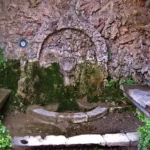
The octagonal fountain
A simple stone basin adorned with a slender column where trickling water breaks the silence.
Casa dels Calderers
A 16th-century coppersmiths guild house salvaged from city renovations and rebuilt along the square.
Casa dels Sabaters
The ornate Renaissance shoemakers guild building featuring carved emblems and classic Catalan window stonework.
The acacia trees
Towering deciduous trees whose delicate leaves filter sunlight and cast shifting shadows across flagstones.
Quick summary of Plaça Reial
Keep these essential points in view while planning an emotional detour through the Old Town.
Explore the squares of Barcelona
Weave through narrow pedestrian passages leading directly from the cathedral into the historic Jewish Call.
Good to know
- The local school uses the square for recess.
- Narrow alleyways block mobile phone navigation signals occasionally.
- Uneven stone cobbles can be challenging for strollers.
- Speaking loudly or shouting disrupts the reverent atmosphere.
Practical tips
- Combine with a tour of Barcelona Cathedral nearby.
- Sit beside the fountain for a mindful break.
- Read the commemorative plaque honoring the bombing victims.
- Enter through Baixada de Santa Eulàlia for drama.
How to reach Plaça Reial
Footpaths through the Gothic Quarter offer the only means to access this fully enclosed square.
Take Line L4 (Yellow) to Jaume I station or Line L3 (Green) to Liceu, walking five minutes through the alleyways.
Lines 47, 120, V15, and V17 stop along nearby Via Laietana, a short walk away.
Head two minutes southwest on foot from the primary portal of the Cathedral of Santa Eulàlia.
Plaça de Sant Felip Neri, Ciutat Vella, 08002
Official Transport in Barcelona
History of Plaça Reial
Long before it became an open public square, the site of Plaça de Sant Felip Neri formed an integral part of the medieval Call, Barcelona’s historic Jewish Quarter, housing dense domestic residences, artisan workshops, and religious quarters.
Read allShow less
Read allShow less
In the mid-18th century, the Congregation of the Oratory of Saint Philip Neri acquired several residential parcels to construct a Baroque church, which was built between 1748 and 1752 under master builder Pere Bertran. The small plaza in front served as a quiet churchyard framed by the convent and neighboring cemetery grounds.
The most tragic chapter in the square’s history unfolded on January 30, 1938, during the height of the Spanish Civil War. Fascist Italian aviation forces supporting General Francisco Franco launched an aerial bombardment directly targeting central Barcelona.
One explosive bomb pierced the roof of the Church of Sant Felip Neri, whose subterranean crypt was serving as a makeshift air-raid shelter for displaced civilians and local children from the neighboring school. As rescue teams scrambled to dig survivors from the smoking rubble, a second bomb struck the identical spot. The tragedy claimed forty-two lives, thirty of whom were young children.
During the postwar era of the 1950s, municipal architect Adolf Florensa oversaw the reconstruction of the ruined square. Rather than clearing the debris for modern structures, Florensa purposefully preserved the blast craters and shrapnel scars across the church facade as an enduring anti-war memorial.
To complete the perimeter, Florensa dismantled endangered Renaissance guild residences from other demolished sectors of the city and reassembled them stone by stone around the perimeter, creating the haunting sanctuary admired today.
Curiosities about Plaça Reial
- Antoni Gaudí was walking toward this church for daily prayer when fatally struck by a tram.
- Rock band Evanescence filmed the music video for My Immortal directly inside this square.
- The tragic 1938 bombing killed forty-two people, mostly schoolchildren sheltering in the crypt.
- Surrounding Renaissance buildings were dismantled elsewhere and reconstructed here after the war.
- Francoist propaganda falsely claimed execution firing squads caused the bullet marks on the walls.
Tickets and tours in Barcelona
Find your stay near Plaça Reial
Select atmospheric historic accommodation nestled deep within the medieval stone corridors of the Gothic Quarter.
Frequently Asked Questions - FAQ
What caused the holes on the facade of the church?
The holes were caused by shrapnel from aerial bombs dropped by Italian aircraft on January 30, 1938.
Is Plaça de Sant Felip Neri open to the public every day?
Yes, the square remains completely accessible to pedestrians twenty-four hours a day without restrictions.
Why are children often playing in the square?
An active local primary school operates inside the historic buildings, using the square as an outdoor schoolyard during recess.
Can visitors enter the Church of Sant Felip Neri?
The church opens intermittently for religious services and quiet prayer, though tourist sightseeing inside is restricted.
Was Antoni Gaudí connected to this church?
Yes, Gaudí walked to this specific church every single afternoon for confession and prayer until his death in 1926.
Are there cafes or restaurant terraces in Plaça de Sant Felip Neri?
A small, quiet outdoor cafe terrace operated by Hotel Neri welcomes guests during spring and summer months.
Is the square wheelchair accessible?
The square is level and accessible, though navigating the surrounding narrow, cobblestoned medieval alleys requires care.
How long does it take to walk here from Barcelona Cathedral?
It takes barely two to three minutes on foot, walking westward past the Archbishop’s Palace.