

























In short
Amsterdam coffeeshops are part of the city’s culture, but toleration is not unrestricted legalisation. Start with the visitor rules and the difference between a coffeeshop, an ordinary café and a museum.
- 18+: identification checks apply.
- Old centre: public cannabis use is prohibited in designated areas.
- Indoors: tobacco and vaping restrictions still apply.
- History: find the full background at the end of this guide.
☰ Table of content
What “coffeeshop” means in Amsterdam
In Amsterdam, coffeeshop means a cannabis venue subject to strict conditions. For ordinary coffee, look for a koffiebar or café. A cannabis-themed sign on a souvenir shop does not establish coffeeshop status, and a museum has a different purpose again.
| Place | What it means | Common confusion |
|---|---|---|
| Café / koffiebar | Ordinary coffee and hospitality | The name is not permission for cannabis use |
| Coffeeshop | A cannabis venue operating under conditions | Not unrestricted legalisation or a general smoking exemption |
| Cannabis museum | Collections, interpretation and cultural history | A museum visit is not a cannabis purchase |
| Souvenir shop | Retail goods with tourist imagery | A cannabis symbol does not establish coffeeshop status |
Age, identification and tourist access
Admission rules concern every person entering, even if the visit is motivated by curiosity. Distinguish Amsterdam’s local practice from the national residence criterion.
Age 18+
Minors are not admitted, including when accompanied by an adult.
Valid identification
Expect an age check; carry a valid identity document.
Tourist access
Amsterdam’s visitor information states that tourists may enter. National residence-policy enforcement differs by municipality.
Local rules apply
Amsterdam’s approach does not establish the rules in another Dutch city.
Cannabis laws: what toleration does and does not mean
The national toleration system, municipal restrictions and indoor smoking rules operate alongside one another. None should be read in isolation.
| Topic | Rule | In practice |
|---|---|---|
| Legal status | Possession, production and sale remain prohibited in law; specified conduct is tolerated under conditions. | “Tolerated” and “legal everywhere” are different claims. |
| Small quantities | National policy generally does not prosecute possession of up to 5 grams of cannabis. | This is a prosecution policy, not permission for public use or cross-border travel. |
| Alcohol | Coffeeshops do not sell or permit consumption of alcoholic drinks. | A bar and a coffeeshop are different types of establishment. |
| Tobacco and vapes | The indoor smoking ban covers tobacco products, tobacco-containing joints and vapes, including nicotine-free vapes. | Coffeeshop status does not cancel the tobacco rules. |
| Hard drugs | Hard drugs are outside the cannabis toleration system. | Do not confuse cannabis policy with a general exemption for drugs. |
| Street behaviour | Nuisance remains prohibited and local restrictions can be stricter. | Respect residents, clear entrances and instructions from staff or enforcement officers. |
Opening hours: the citywide legal limit
Amsterdam sets a specific opening-hours restriction for coffeeshops. The following is the legal framework, rather than opening times for individual businesses.
| Question | Rule |
|---|---|
| Permitted hours | The citywide designation limits coffeeshop opening to 07:00–01:00. |
| Does every venue use the full window? | No. This is a regulatory limit, not a common timetable or a promise of admission. |
| Do bar or nightclub hours apply? | No. Later hours for another hospitality category do not extend the coffeeshop limit. |
| What changed recently? | The designation adopted on 2 September 2026 was published on 19 October 2026; it preserves a specific citywide restriction for coffeeshops. |
Famous names and their cultural significance
Four names help explain the international image of Amsterdam’s coffeeshop culture: early social spaces, public branding, long-standing local identities and cinema.
The Bulldog
Its public identity dates to 1975. The dog emblem became an internationally recognisable part of Amsterdam’s coffeeshop image.
Dampkring
Its appearance in Ocean’s Twelve (2004) brought Amsterdam’s coffeeshop interiors into mainstream cinema. The film connection explains much of its international recognition.
Tweede Kamer
Founded in 1985, it represents an earlier generation of small Amsterdam coffeeshops. Its name echoes the Dutch House of Representatives.
Mellow Yellow
A pioneer in Amsterdam’s early-1970s story, associated with an occupied bakery. It belongs in the historical account rather than a claim that one business invented the entire Dutch system.
Beyond the famous names: art, interiors and neighbourhood culture
Beyond the most recognisable logos, Amsterdam’s coffeeshop story includes gallery-like rooms, handmade fantasy interiors and businesses tied to local artists. Katsu, Abraxas, Siberië and Paradox illustrate four different expressions of that culture.
Katsu — the gallery tradition
Katsu’s own history dates its foundation to 1985 and connects its gallery with support for local artists. The domestic, living-room identity and changing artwork illustrate a coffeeshop tradition built around a social room as well as a business. Its account describes a mixed local and international public.
Abraxas — handcrafted fantasy
Founded in 1992, Abraxas developed an identity through art and handmade interiors. Its account highlights wood, stone and glass; an interview with the second-generation operator traces the founders’ involvement with neighbourhood artists. The distinctive visual world is part of the cultural story in its own right.
Siberië — continuity and changing art
Siberië’s family history begins in 1984. Alongside that continuity, its walls display changing artwork. It illustrates how a long-standing coffeeshop identity can include an exhibition space, with the art changing while the institution remains recognisable.
Paradox — an artist’s legacy
Paradox traces its creative roots to 1991, when it was known as The Painter. Its account links the original wall artwork to local artist Stanley Heinze. Rotating work by local artists, board games and a mixed public form part of its documented social identity.
Explore cannabis history at the museum
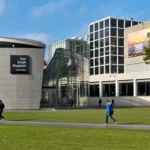
The Hash Marihuana & Hemp Museum explores cannabis through historical objects, art and the industrial uses of hemp. The admission offer below includes an audioguide for a self-guided museum visit.

Hash Marihuana & Hemp Museum: Entry Ticket + Audio Guide
Residents and visitors: two perspectives
A neighbourhood perspective
- Familiar faces: conversation and relationships built over repeat visits can define the atmosphere.
- Art and continuity: local artwork can connect a longstanding business with a wider creative community.
- Everyday respect: residents have a stake in noise, queues and keeping the pavement clear.
A visitor’s perspective
- First impressions: décor, music and recognisable names may stand out before everyday routines.
- Privacy matters: respect other people’s space and ask permission before taking interior photographs.
- Shared places: residents and visitors are overlapping communities, rather than two separate worlds.
Public-space rules in De Wallen and the old centre
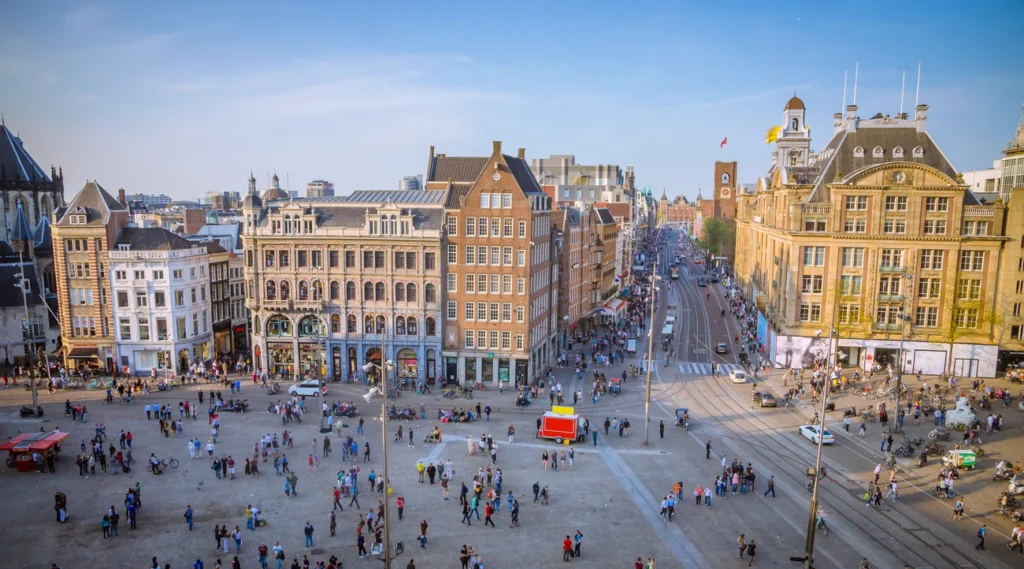
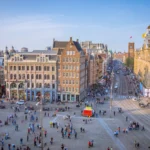
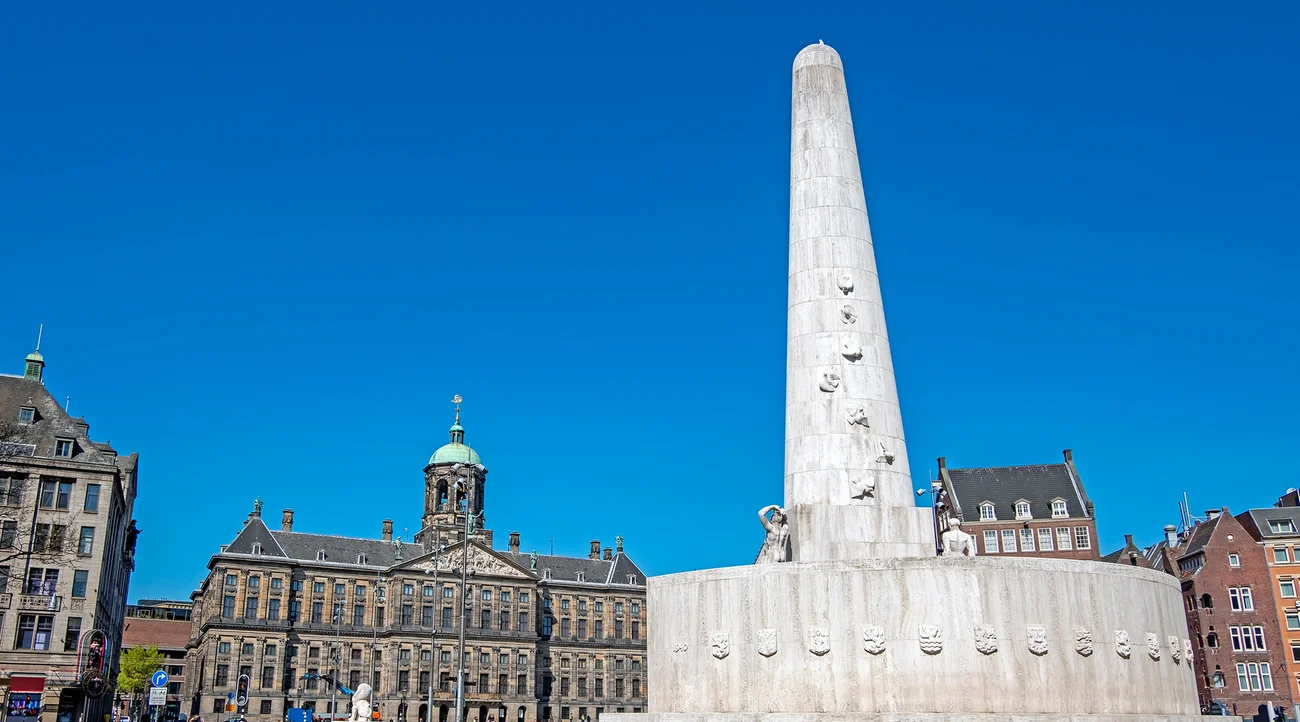
Since 2023, the old-centre restriction has applied to residents and visitors alike. It includes De Wallen, Nieuwmarkt and Dam Square. A nearby coffeeshop does not extend an exemption onto the street, and an ordinary bar’s smoking area is not a general exception.
Good to know
- The public-use ban covers designated old-centre areas, including De Wallen, Nieuwmarkt and Dam Square.
- Look for the signs and respect the marked boundaries.
- Most ordinary bars and clubs do not permit cannabis use.
Avoid these mistakes
- Do not treat five-gram toleration as permission to use cannabis anywhere.
- Do not apply another municipality’s rules to Amsterdam.
- Do not confuse a famous name with a guarantee of access or a general legal exemption.
Driving, cycling and taking cannabis abroad
Driving and cycling
Driving under the influence of drugs is prohibited. The traffic rules also cover bicycles and mopeds.
Leaving the Netherlands
Do not take recreational cannabis across the border, including on journeys within the EU. Local toleration does not extend to international travel.
More Amsterdam visits
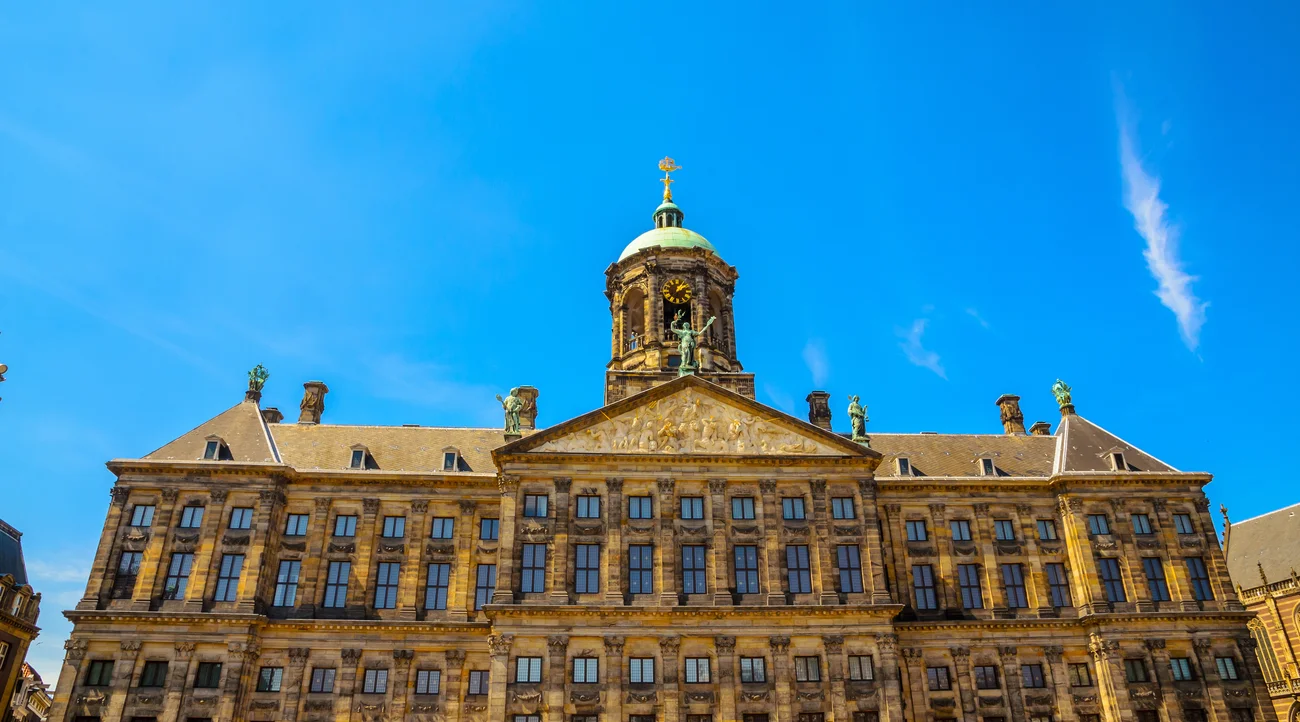
Continue planning your trip with Royal Palace admission and guided walks through Amsterdam’s historic centre.
The history of Amsterdam coffeeshops
Amsterdam’s story grew out of the 1960s counterculture, youth meeting places and debates about how to respond to drug use. Informal social spaces came before the recognisable coffeeshop model. That background matters: the system was not created as a tourism attraction.
Read allShow less
Mellow Yellow, associated with an occupied bakery in the early 1970s, became a reference point in Amsterdam’s history. Accounts of the “first coffeeshop” require care: an Amsterdam milestone is not automatically the first example anywhere in the Netherlands.
The Bulldog opened in 1975. Its development from a small establishment into a recognisable international identity illustrates the change from countercultural meeting places to a highly visible part of the city’s public image. Later names such as Tweede Kamer and Dampkring belong to subsequent stages of that story.
The 1976 amendment of the Opium Act distinguished soft and hard drugs. The associated approach aimed to separate markets and treat drug use through public-health policy as well as criminal law. Gedoogbeleid describes toleration under conditions; it does not mean that the underlying prohibitions disappeared.
The enduring “back-door” problem is the mismatch between tolerated retail activity and the historically illegal supply chain feeding it. The controlled supply-chain experiment addresses that tension in participating municipalities. Amsterdam is not one of those participating municipalities, so the experiment should not be described as Amsterdam-wide legalisation.
Tourism then amplified a selective picture of the city. The visibility of De Wallen, recognisable branding and cinema connections made coffeeshops internationally famous. Current debates also involve residents, public space, nuisance and the balance between everyday neighbourhood life and visitor demand. Amsterdam’s canals, institutions and communities have much broader histories than this single image.
Frequently asked questions about Amsterdam coffeeshops
Are coffeeshops ordinary cafés?
No. The Dutch tourist meaning of coffeeshop is a cannabis venue. Ordinary coffee bars, cafés and cannabis museums are distinct.
Are tourists banned from Amsterdam coffeeshops?
Amsterdam’s visitor information currently states that tourists are allowed. National residence-policy enforcement differs between municipalities, so do not extend Amsterdam’s position to the whole country.
Can under-18s enter with a parent?
No. Coffeeshop admission is restricted to people aged 18 and over, and identification checks apply.
Can you smoke cannabis anywhere in the city centre?
No. Public cannabis use is prohibited in designated old-centre areas, including De Wallen, Nieuwmarkt and Dam Square. Follow the signs and the boundaries of the restriction.
Are coffeeshops exempt from the indoor tobacco ban?
No. The ban covers tobacco, tobacco-containing joints and vapes. Venue policies may impose additional restrictions.
Does 01:00 mean every coffeeshop stays open until then?
No. It is the citywide regulatory limit; it is not a universal operating timetable.
Can I understand the culture without using cannabis?
Yes. Museum collections, city history and the debates about toleration provide a cultural introduction without consumption.