



















Fare
Free on the IJ crossings
Main departure
Centraal: IJ side
EYE / A’DAM
F3 → Buiksloterweg
STRAAT / wharf
F4 → NDSM
In short
The free IJ ferries are the simplest link between Amsterdam Centraal and the waterfront in Noord. Choose the landing before joining the queue: Buiksloterweg serves EYE and A’DAM, while NDSM serves STRAAT and the former shipyard. They are separate destinations, not neighbouring stops on one short walk.
- F3 to Buiksloterweg: the short crossing for EYE, A’DAM and the IJpromenade; it operates 24/7.
- F4 to NDSM: a longer crossing for STRAAT and the wharf. Check the timetable for your actual return date.
- F7 to NDSM: departs from Pontsteiger in the Houthavens area, not from Centraal.
- These GVB IJ crossings are free for pedestrians and bicycles; no canal-cruise ticket or day pass is needed.
☰ Table of contents
Free Amsterdam ferry routes: Buiksloterweg, NDSM and Pontsteiger
For most first visits to Noord, three connections do the work. The destination written on the ferry matters more than joining whichever boat arrives first. In particular, IJplein is not the same landing as Buiksloterweg.
| Ferry | Crossing | Useful for |
|---|---|---|
| F3 | Centraal ↔ Buiksloterweg | EYE, A’DAM Tower and the IJpromenade. Crossing under five minutes; add the walk and queue. |
| F4 | Centraal ↔ NDSM | STRAAT and the NDSM wharf. The timetable shows a crossing of about 14 minutes, before waiting and walking. |
| F7 | Pontsteiger ↔ NDSM | Arriving from the Houthavens side. NDSM describes a crossing of about seven minutes; the return brings you to Pontsteiger, not the railway station. |
Other free crossings serve different neighbourhoods: F2 connects Centraal with IJplein; F1 links Azartplein and Zamenhofstraat; F6 links Pontsteiger and Distelweg. F9 connects Sporenburg and Zeeburgereiland on weekdays and carries only pedestrians and bicycles. These routes can be useful for a specific address, but they are not substitutes for F3 when your destination is EYE.
Ferry map and boarding on the IJ side of Amsterdam Centraal
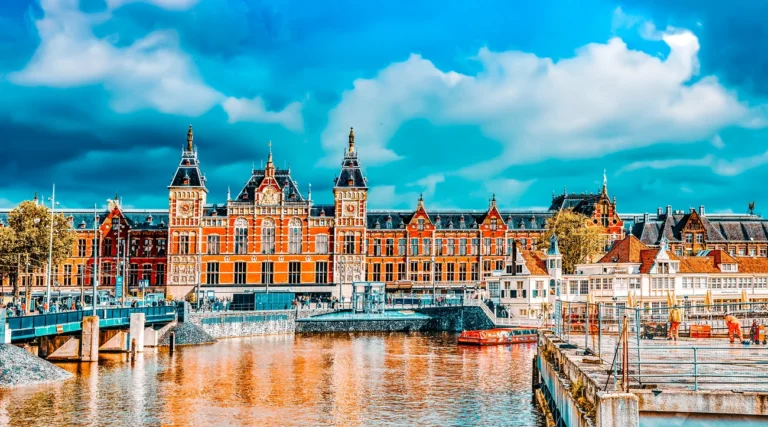
The station’s IJzijde exit faces the water and the ferry landings. Damrak and Stationsplein are on the city side. If you arrive by train or metro, follow the ferry/IJ signs rather than walking towards Dam Square. Boarding positions and access paths can change during station works, so use the current destination signs on the quay.
This original schematic shows the relationship between the three visitor routes. It is not to scale or a sailing chart. On a small screen, swipe across the map to read all four landings.
- Set the landing as your first destination. For EYE, choose Buiksloterweg; for STRAAT, choose NDSM. A search for “Amsterdam Noord” is too broad to identify the correct ferry.
- Follow the IJ-side signs at Centraal. Once you reach the waterfront, read the destination display before joining the queue. Do not enter a paid canal-cruise boarding area by mistake.
- Let arriving passengers leave, then board. Bicycles and pedestrians share the ferry. Follow the crew’s directions and keep the access route clear.
- Add the walk after landing. A ferry arrival is not the museum entrance. EYE is along the IJpromenade; STRAAT’s entrance is at NDSM-Plein 1.
Buiksloterweg ferry for EYE, A’DAM and the IJpromenade
F3 is the useful crossing for the waterfront directly opposite Centraal. EYE describes a crossing of under five minutes followed by approximately three minutes on foot to its building at IJpromenade 1. It is a practical short outing when you want to see the waterfront without committing to a journey to the NDSM wharf.
EYE’s cinema sessions and exhibitions have their own admission arrangements. Nearby A’DAM LOOKOUT is another separate booking; the free ferry does not provide tower admission or access to every bar or restaurant inside A’DAM Tower. Use the entrance specified for the visit you booked.
The route continues outdoors after the ferry. EYE advises following temporary yellow diversion signs when works affect the approaches. The IJpromenade is for pedestrians and cyclists; EYE says mopeds and scooters must be parked before the canal bridge. For a hotel farther inland in Noord, compare the actual address with M52 rather than assuming every Noord address is close to this landing.
NDSM ferry for STRAAT and the former shipyard
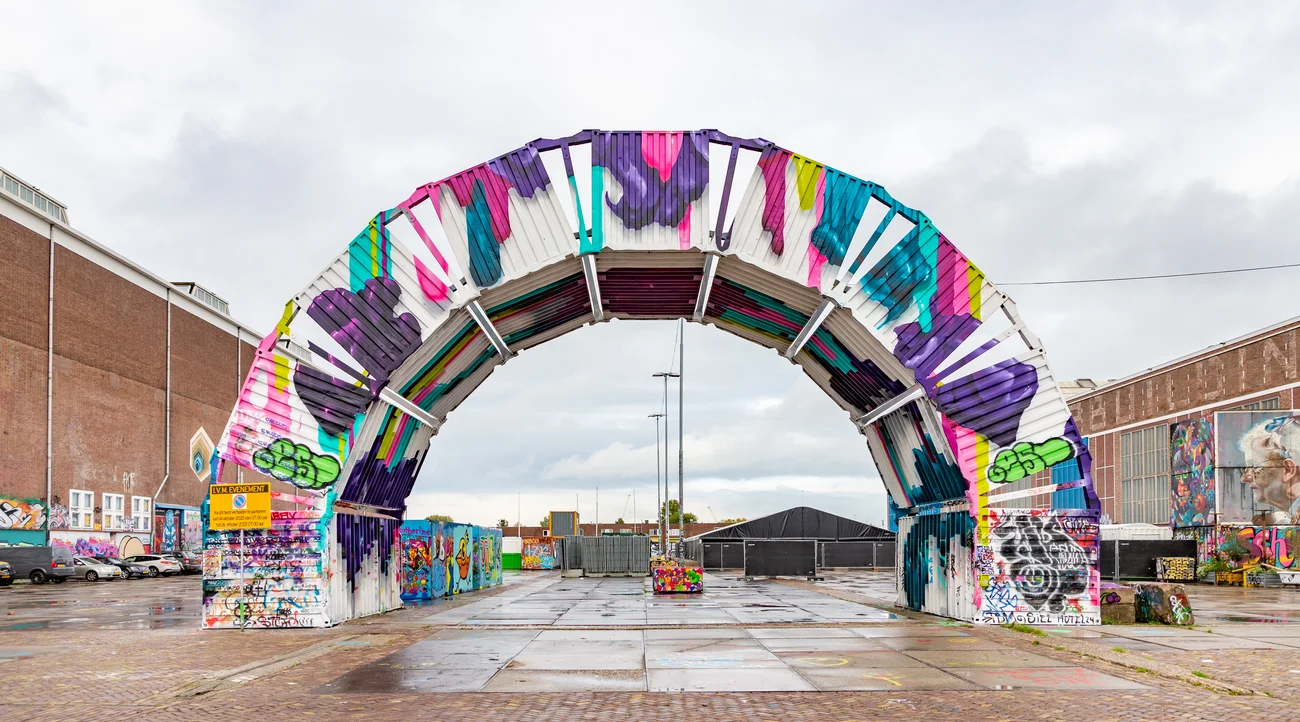
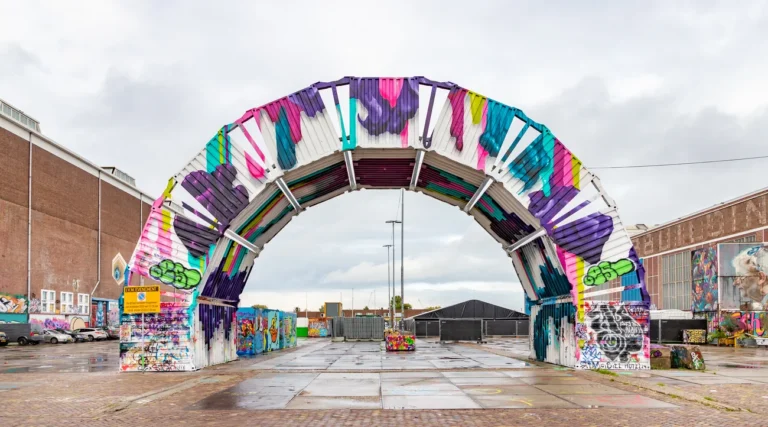
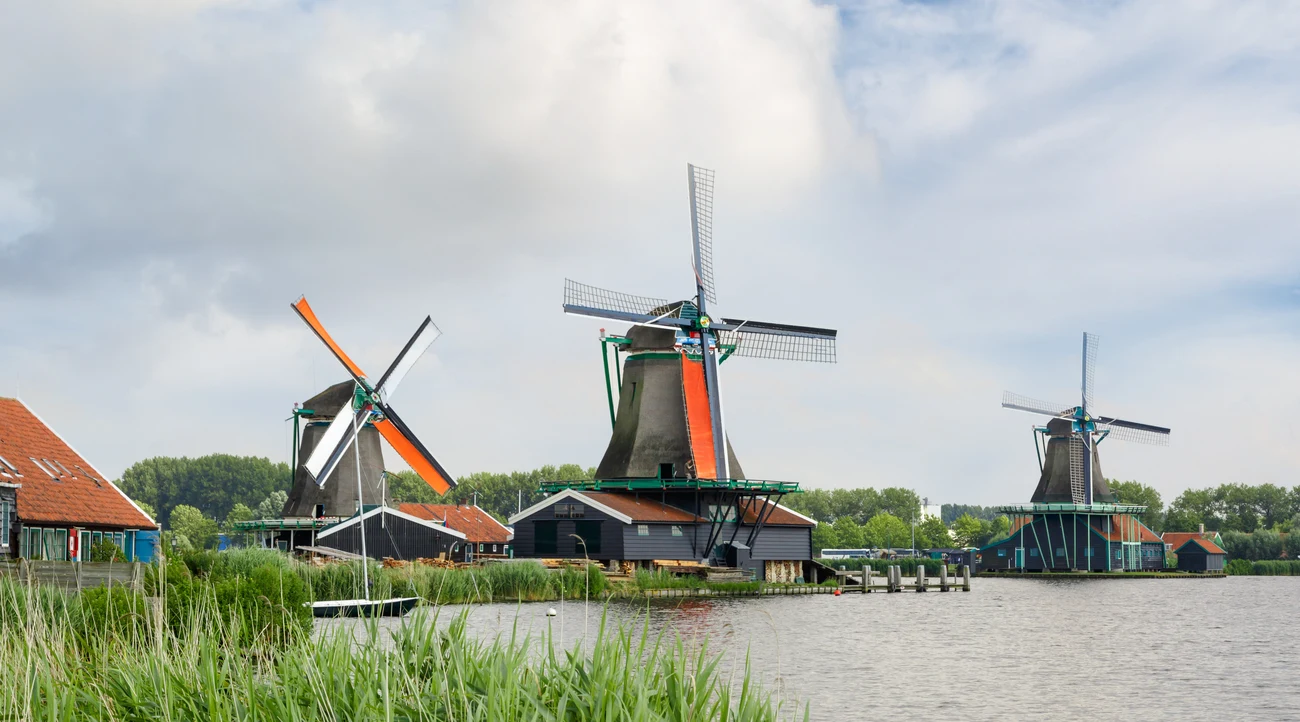
Take F4 from Centraal to NDSM for the former shipyard and STRAAT’s large-scale street-art collection. The museum gives its address as NDSM-Plein 1, 1033 WC Amsterdam. Plan the walk from the landing as part of your arrival, especially with a timed museum booking.
NDSM and the Buiksloterweg waterfront make different outings. The F3 crossing can look tempting because it is frequent, but landing beside EYE still leaves an onward journey to NDSM. If STRAAT is the purpose of the trip, the direct F4 is the clearer starting point from Centraal.
F7 is useful when your day starts near Pontsteiger or Houthavens. It connects that part of the city with NDSM, without first taking you to Centraal. On the return, choose F4 if you need the railway station and F7 if you need Pontsteiger. Check the destination again: both boats serve NDSM, but they leave you on different parts of the southern bank.
Bicycles, luggage and accessible boarding on the IJ ferries
Ordinary bicycles can travel on the IJ ferries without buying the separate bicycle ticket used on some other GVB transport. Walk the bicycle aboard, put it in the designated area and switch off its lights. Follow crew instructions rather than trying to ride through a crowded boarding area.
Travelling with a bicycle
GVB permits bicycles and certain other slow vehicles on its IJ crossings, with exceptions. F9 is limited to pedestrians and bicycles; a small enclosed moped car is not permitted on the IJ ferries.
Pushchairs and wheelchairs
Use the designated space; GVB gives a wheelchair priority over a pushchair when space is limited. For an access requirement, check the actual landing and onward route as well as the ferry. Works near EYE can affect the approach.
Luggage after the airport train
Choose the landing that serves the accommodation’s real address. A room near NDSM and a room near A’DAM Tower require different crossings. Keep bags out of the boarding flow; the quay and onward streets are part of the transfer.
Do not transfer ferry rules to the rest of the network. Bicycles are not generally allowed on GVB buses or ordinary trams; tram 26 is an exception with its own rules. If a journey combines a ferry with metro or tram travel, check the rules for that second vehicle separately.
Returning from Noord after dinner, a film or an event
F3 runs 24 hours a day, seven days a week. That is useful after an EYE screening or an evening near A’DAM. Frequency can be lower overnight, so “24/7” does not mean there is always a boat waiting at the landing.
Do not apply the F3 timetable to F4 from NDSM or F7 to Pontsteiger. Check the return on the correct calendar date, including any after-midnight departure. Special events can bring extra sailings; an event-weekend timetable is not a reliable promise for an ordinary weekday.
The journey also continues after you reach the city side. A ferry operating overnight does not guarantee that the connecting M52, a tram to Museumplein or an NS train to your next destination is still running. Check the whole trip before choosing a late return from Noord.
Free IJ ferry or paid canal cruise: different kinds of boat trip
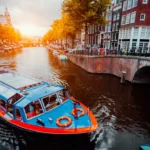
The GVB ferry is a short public-transport crossing, without a sightseeing commentary or a route through the canal belt. It is a good way to reach Noord and see the IJ waterfront, but it does not replace a canal cruise through Prinsengracht, Herengracht or the Amstel.
A paid cruise has a specific boarding point, duration and boat type. Some leave near Centraal; others use piers elsewhere in the city. If you book one, follow that booking’s pier information rather than automatically heading to the free ferry landings behind the station. Neither a ferry crossing nor arrival at the NDSM wharf includes admission to a museum.
What to know
- For EYE and A’DAM, read Buiksloterweg / F3 on the destination display.
- For STRAAT, use NDSM / F4 from Centraal and continue to NDSM-Plein 1.
- F7’s city-side landing is Pontsteiger, useful for Houthavens rather than the station.
Keep in mind
- Do not buy a GVB day pass solely to make the free IJ crossing.
- Do not mistake IJplein for the Buiksloterweg landing beside EYE.
- Do not assume a late ferry arrival at Centraal guarantees a connecting metro or train.
Frequently asked questions
Do tourists pay for the Amsterdam ferry to Noord?
The GVB IJ crossings described here are free for pedestrians and bicycles. You do not need a GVB day ticket or a paid canal-cruise booking for F3, F4 or F7. Vehicle crossings on the Noordzeekanaal have different arrangements.
Which ferry goes to EYE and A’DAM LOOKOUT?
Take F3 from the IJ side of Amsterdam Centraal to Buiksloterweg. EYE is a short walk along the IJpromenade after landing. Admission to exhibitions, cinema sessions or the A’DAM observation deck is separate.
Which ferry should I take for STRAAT Museum?
From Centraal, choose F4 to NDSM, then walk to the museum at NDSM-Plein 1. From the Houthavens/Pontsteiger area, F7 is another direct crossing to NDSM.
Are all ferries in Amsterdam open all night?
No. F3 is a 24/7 service, but other crossings have their own timetables. Check F4 or F7 for the actual return date and do not rely on special-event extra sailings.
Can I take a bicycle on the ferry for free?
Bicycles can use the IJ crossings for free. Walk the bike aboard and use the designated area. Rules for a connecting tram, bus or metro journey are different.
Is Pontsteiger the same as Amsterdam Centraal?
No. Pontsteiger is on the Houthavens side of the city. F7 links it with NDSM; F4 links NDSM with Centraal. Check the southern-bank destination before boarding at NDSM.
Visits on the two different Noord waterfronts
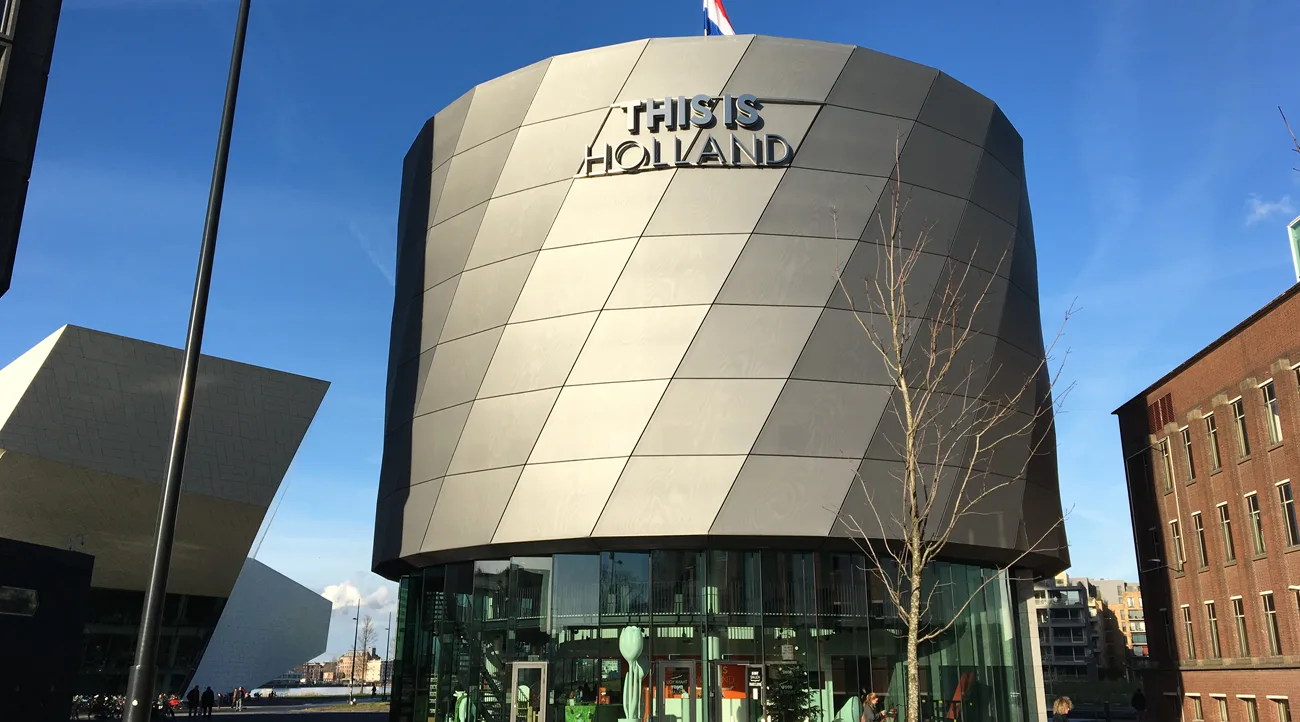
These optional visits use different landings: STRAAT is reached via NDSM; THIS IS HOLLAND is near Buiksloterweg. The advertised prices below are for the attraction or experience, while the GVB ferry crossing remains free.