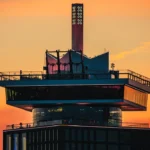
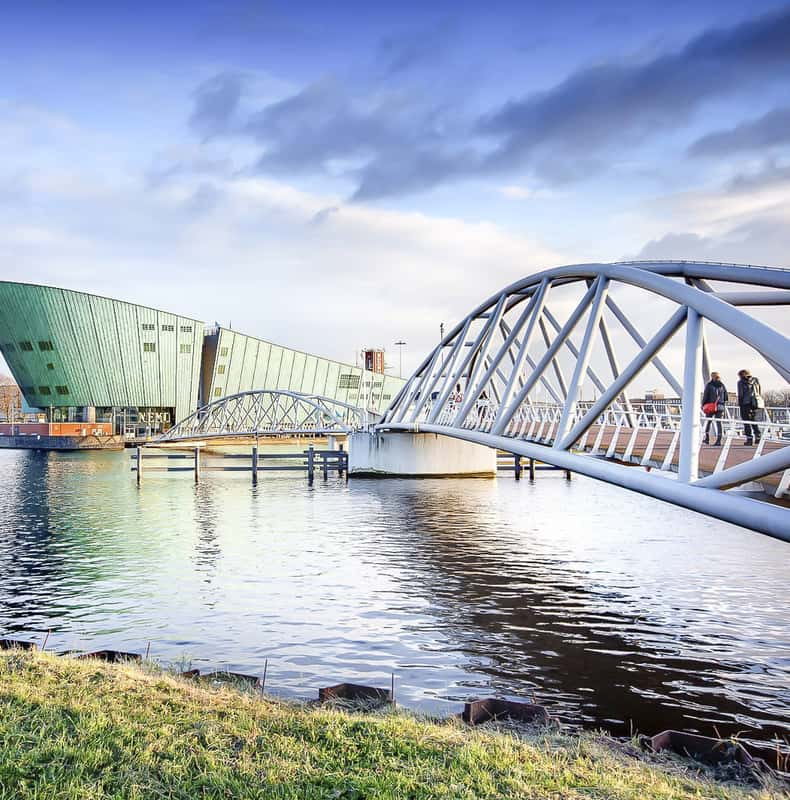
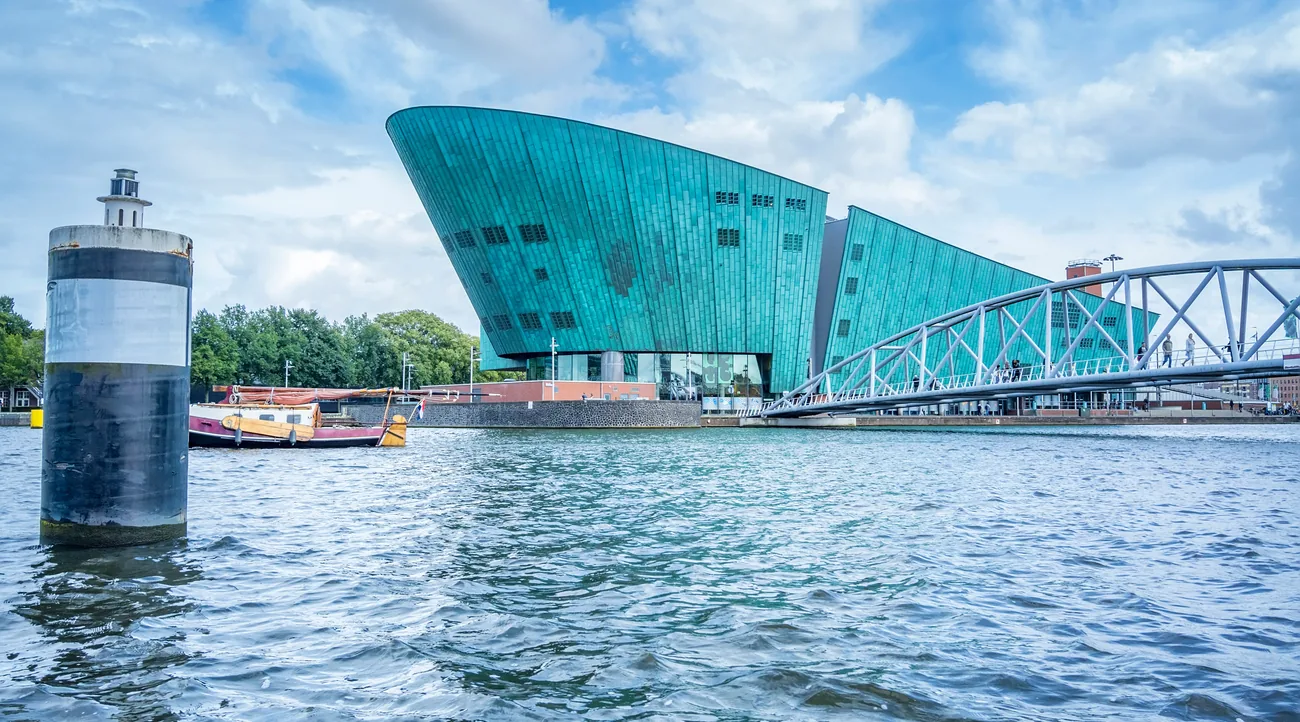
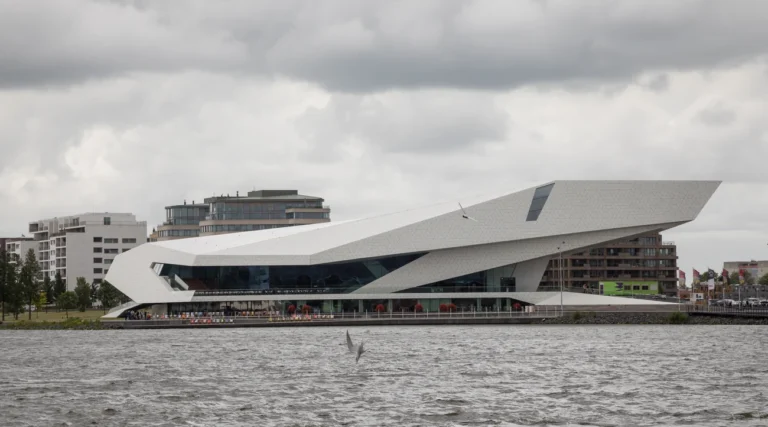
NEMO Science Museum turns questions about everyday life into things you can try. Its interactive exhibitions invite you to experiment, compare results and ask why something happened. Inside the copper-green building at Oosterdok, science ranges from physical phenomena and technology to the human body; outside, the Rooftop Square connects observation with Amsterdam’s urban environment.
Prices and hours of NEMO Science Museum
NEMO normally opens Tuesday–Sunday 10:00–17:30. Monday opening depends on the season, school holidays and published dates. The current calendar includes 26 October and 2 November 2026; do not assume every winter Monday is open. New Year’s Day has a later 12:00 opening.
Selected Tiqets admission starts from €21.50 at the 23 October 2026 check; the checked GetYourGuide entry starts from €22. Choose the correct age or card category and reserve a start time, including when using a Museumkaart or I amsterdam City Card.
What to explore at NEMO
Choose an experiment, make a prediction and then compare it with what happens. A useful NEMO visit is about asking questions rather than pressing every button as quickly as possible. The main exhibition themes move from physical phenomena to everyday technology, matter and the human experience. The daily programme adds demonstrations and laboratory activities.
Quick summary of a NEMO visit
Allow around 2–3 hours for a selective visit and longer if your family wants to revisit experiments or join several activities. This is a planning allowance, not a fixed route. The museum suggests weekdays after 14:00 can be less busy; choose a start time that still leaves enough time before closing.
How to visit NEMO Science Museum
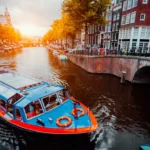
The offers below include independent museum admission, with one combination adding a separate canal cruise. Check the museum start time, cruise departure point and any additional reservation steps. Museum workshops and demonstrations follow the day’s programme; a general ticket is not a private guided lesson.
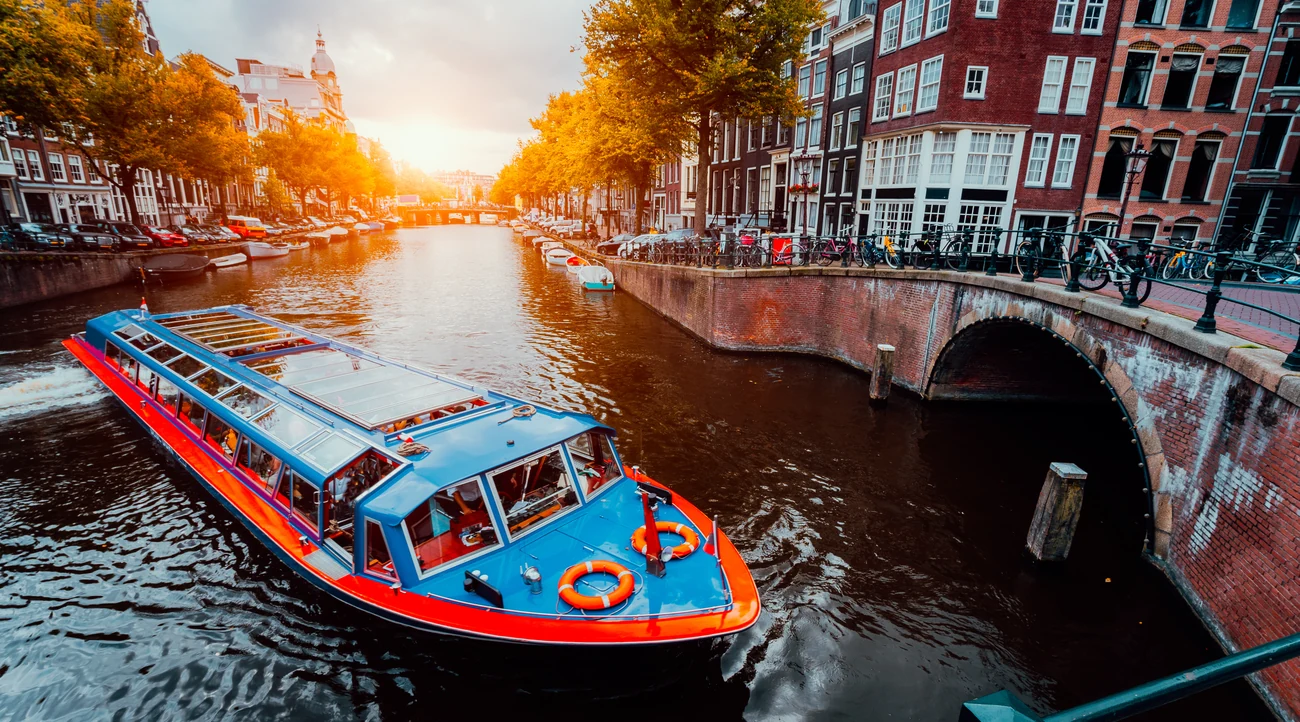
The Rooftop Square has free outdoor access under its own published opening arrangements. A rooftop visit does not provide admission to the indoor exhibitions. The wider canal-experiences guide below describes additional boat options around Amsterdam.
Reserve a start time even when using a museum or city card.
All museum levels are served by lifts.
Some exhibits use flashing lights or magnetic fields; consult the museum’s accessibility information for specific needs.
The free rooftop and paid indoor galleries have different access arrangements.
Let children predict a result before trying an experiment.
Check demonstration and laboratory times on arrival.
Choose a few exhibition themes and allow breaks.
Bring weather-appropriate clothing for an outdoor rooftop stop.
How to reach NEMO at Oosterdok
The museum is at Oosterdok 2, 1011 VX Amsterdam. Plan the final approach from your transport stop and leave a buffer before the booked start time. If you need assistance with the walking route, check the museum’s access advice before travelling.
From an industrial collection to hands-on science
NEMO’s story began in 1923 with industrial artist Herman Heijenbrock, whose collection connected technology, work and a belief in progress. The institution changed alongside Dutch society, eventually developing from a collection-centred museum into a place where visitors learn through experiments.
In the post-war decades, the institution became the Netherlands Institute for Industry and Technology, or NINT. It encouraged young people to understand industry through objects, models, photographs and demonstrations. As attitudes towards technological progress changed, so did the questions the museum asked.
From the late 1970s, science-centre approaches placed greater emphasis on play and discovery. In 1997, NewMetropolis opened at Oosterdok in the striking building designed by Renzo Piano, above the IJtunnel. The architecture gave the institution a visible new identity on the waterfront.
The museum later became NEMO Science Centre and then NEMO Science Museum. Today its programme extends beyond the building through education, online material and activities around the Netherlands. Its changing history is a reminder that science communication is also shaped by social priorities, from industrial development to sustainability and new technology.
A century of changing questions
NEMO traces its origins to Herman Heijenbrock’s museum in 1923.
The Oosterdok building opened as NewMetropolis in 1997.
Renzo Piano designed the recognisable copper-green building.
NEMO’s technological heritage collection contains around 20,000 objects, many held in storage.
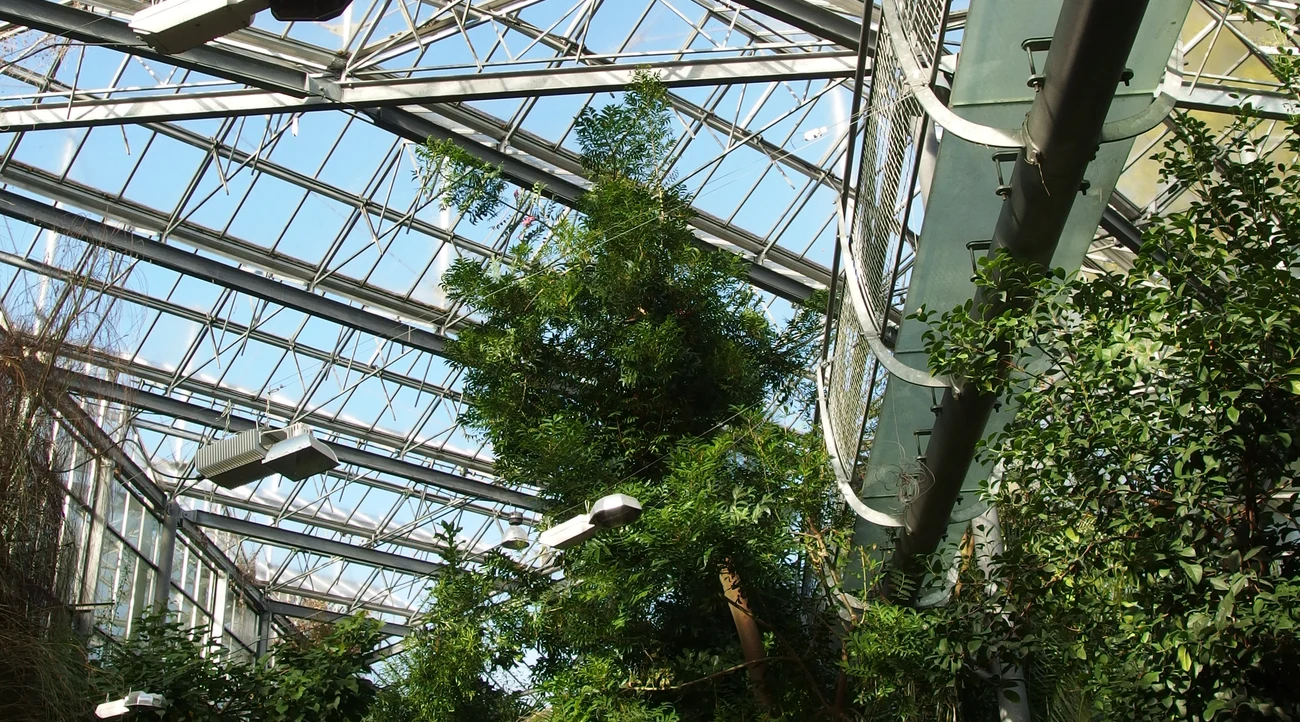
The rooftop garden brings urban nature and measurement into the visit.
NEMO tickets and Amsterdam canal experiences
Find your stay near NEMO
Compare accommodation around Oosterdok using the map centred on NEMO. Check walking routes, family room arrangements and connections for the rest of your trip as well as the nightly rate. Being close to the museum is useful only if the location also suits your wider itinerary.
NEMO Science Museum visiting questions
More activities and experiences in Amsterdam