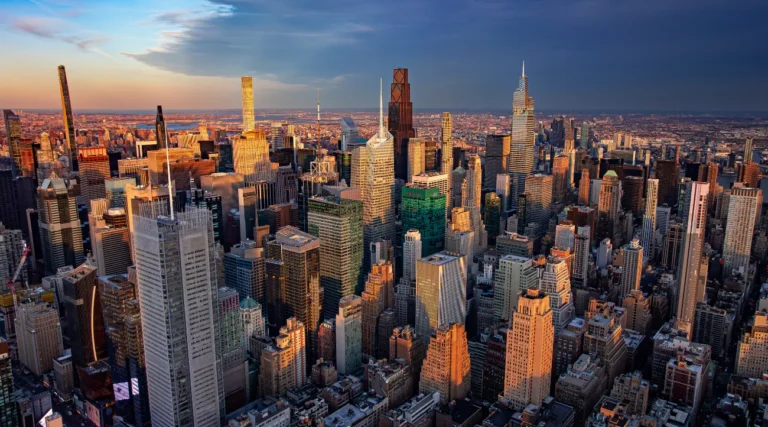
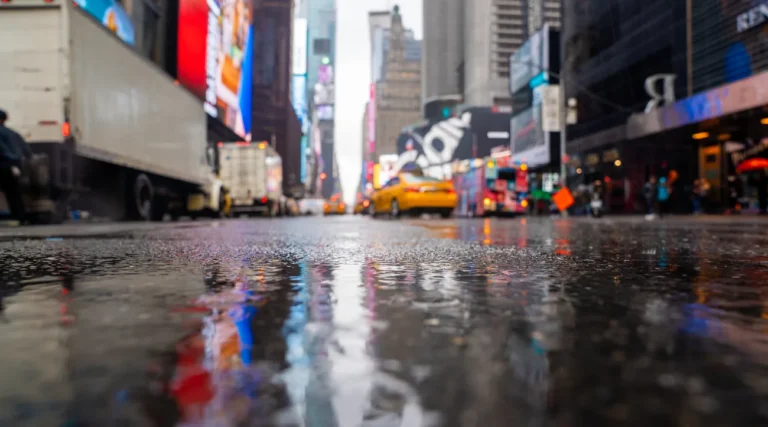
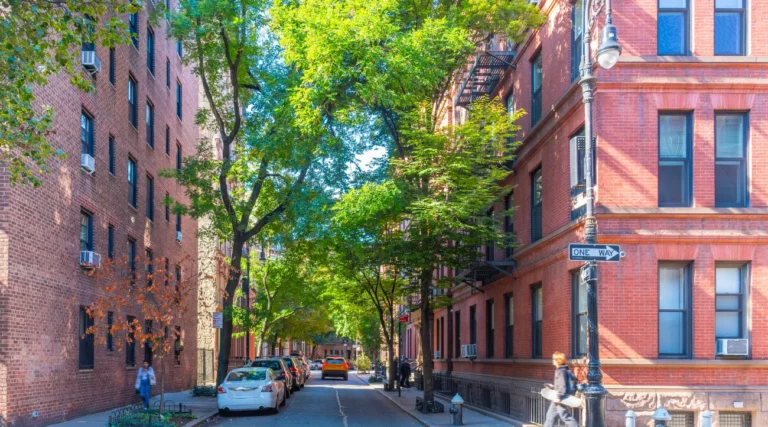
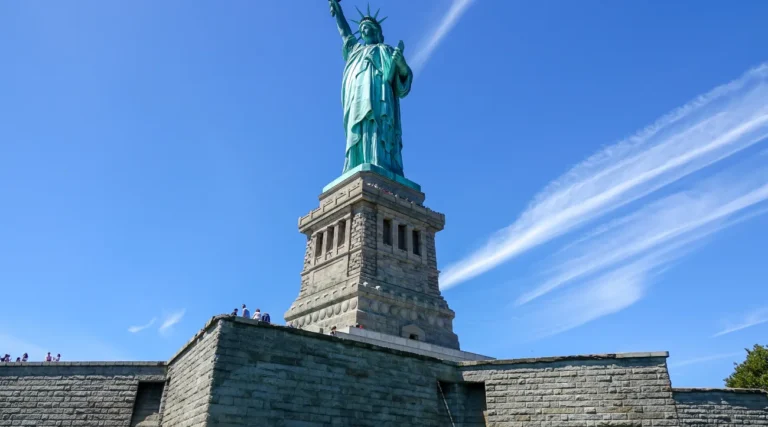
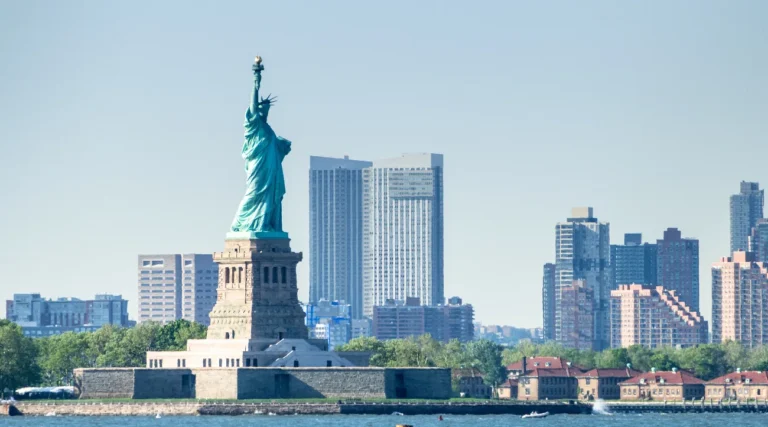
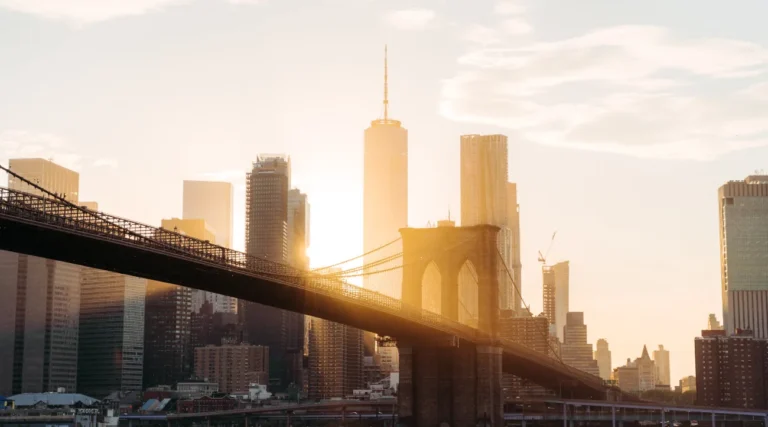
On a first visit, New York is easier than it looks. Most of what you want to see is in Manhattan, an island about 13 miles long and 2 miles wide, where numbered streets and avenues form a grid above 14th Street. You pay for the subway by tapping a bank card or phone at the turnstile; the fare is $3 and is capped at $35 over seven days. Prices on menus and shelves do not include sales tax, and tips of 18 to 20 percent are expected in restaurants. Book the Statue of Liberty, one observation deck and any Broadway show in advance, and leave the rest of your time for walking.
How New York is laid out
New York has five boroughs, but a first trip usually means Manhattan plus a walk into Brooklyn. Learn three words and you can find anything: Downtown means south, Uptown means north, and Crosstown means east–west.
Getting around: tap, ride, walk
You do not need a car, and you rarely need a taxi. The subway runs 24 hours a day and reaches almost every sight.
Paying for the subway and buses
Tap a contactless bank card, a phone or an OMNY card on the reader at the turnstile or on the bus. Each ride costs $3. After 12 paid rides in seven days with the same card or device, further rides are free, so you never pay more than $35 a week. MetroCards are no longer sold. Up to four people can tap in with one card, but only the first rider earns credit toward the weekly cap.
Uptown, Downtown, local and express
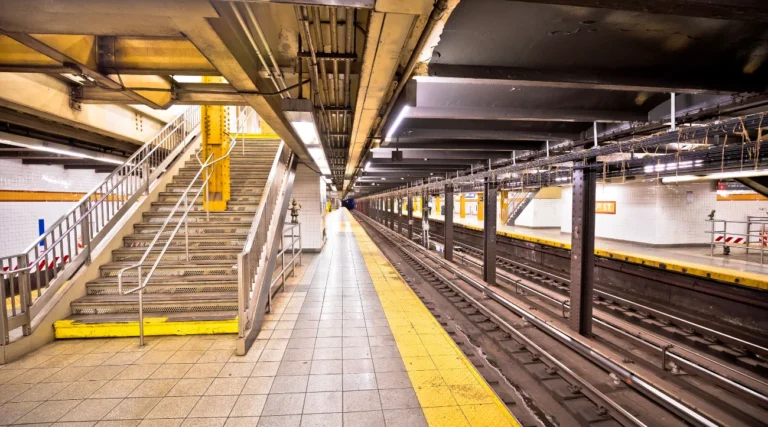
Before you go through the turnstile, check that the entrance serves your direction: many stations have separate entrances for Uptown and Downtown trains. On the platform, express trains skip most stops and local trains stop everywhere. The map shows express stops as white dots and local stops as black dots.
From the airport to your hotel
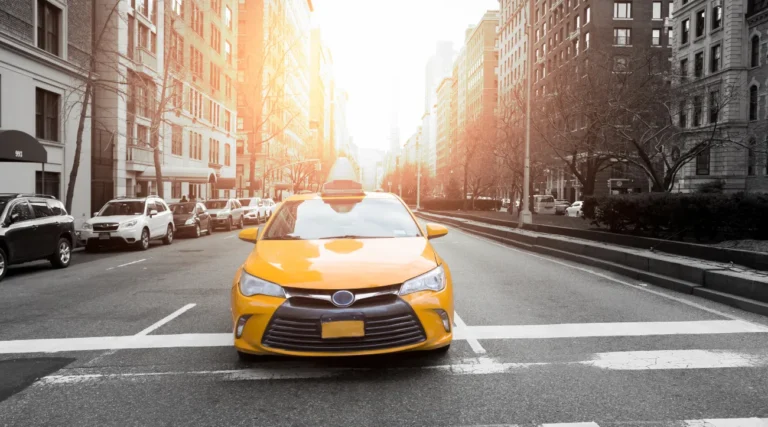
From JFK, take the AirTrain ($8.75) to Jamaica for the E train or the Long Island Rail Road, or to Howard Beach for the A train. A yellow taxi to Manhattan has a flat fare of $70 before surcharges, tolls and tip, usually $90 to $110 in all. From LaGuardia, the free Q70 bus runs to the subway at Jackson Heights–Roosevelt Avenue. From Newark, the AirTrain connects to NJ Transit trains for Penn Station. Ignore anyone who approaches you inside the terminal offering a ride; use the official taxi line or a ride-hailing app.
Money, manners and what to expect
Prices, tax and tipping
The price you see is not the price you pay. Sales tax of 8.875 percent is added at the register to most goods and to restaurant bills. Clothing and shoes under $110 per item are tax-free. In restaurants with table service, tip 18 to 20 percent of the pre-tax bill; in bars, $1 to $2 per drink; in taxis, 15 to 20 percent.
Sidewalk and subway etiquette
New Yorkers walk fast and keep to the right. Step to the side before you stop to look at your phone or take a photo. On escalators, stand on the right and walk on the left. In the subway, let passengers off before boarding and take your backpack off in a crowded car.
- Walking from Times Square to the Brooklyn Bridge takes well over an hour.
- Group your sights by area and use the subway for anything over 20 blocks.
Tap water, restrooms and Wi-Fi
Tap water is safe and good. Public restrooms are scarce: use those in Bryant Park, Grand Central, department stores, museums and larger parks. Free Wi-Fi is available in subway stations, public libraries and at the LinkNYC kiosks on the sidewalks.
- The subway runs all night, though less often after midnight and with route changes at weekends.
- Most museums close one day a week; The Met is closed on Wednesdays and MoMA is open daily.
- You must be 21 to drink alcohol, and bars check ID.
- Do not stay only in Midtown; the Village, Brooklyn and the parks show a different city.
- Do not buy attraction or ferry tickets from sellers on the street.
- Do not plan more than two or three major sights a day.
How many days and where to stay
Four to five days suit a first visit: enough for the main landmarks, one or two museums, a Broadway show and a day in Brooklyn. For a first trip, Midtown is the most practical base; the Upper West Side and Lower Manhattan are quieter and often cheaper. Wherever you stay, be within a five-minute walk of a subway station.
Tickets worth having before you arrive
These are the visits that sell out or have long lines. Book a timed slot and plan the rest of the day around it.
Start planning with these guides
Compare ticket types for the most requested landmark, then choose a tour or cruise to see the city from another angle.
Frequently asked questions
More activities and experiences in New York