







Operator
MTA New York City Transit
Network
472 stations on 25 routes
Payment
Tap a card, phone or OMNY Card
Hours
24 hours a day, every day
In short
The subway is the fastest way around New York and runs all day and all night. Routes are identified by a letter or number; the colors on the map only show which avenue they share in Manhattan. Two ideas explain most of the system: trains run Uptown (north) or Downtown (south), and they are either local, stopping everywhere, or express, skipping most stations. You pay $3 by tapping a contactless card or phone at the turnstile, whatever the distance, and never more than $35 in seven days.
☰ Table of contents
The subway lines visitors use most
You will use five or six routes for almost everything. Lines that share a color run on the same tracks through Manhattan.
| Line | Route in Manhattan | Useful for |
|---|---|---|
| 1 | Broadway and Seventh Avenue, local | South Ferry, 9/11 Memorial, Times Square, Lincoln Center, Upper West Side |
| 4 · 5 · 6 | Lexington Avenue; 4 and 5 express, 6 local | Wall Street, Brooklyn Bridge, Grand Central, The Met (86th Street) |
| A · C · E | Eighth Avenue; A express | JFK via Howard Beach (A), World Trade Center (E), Penn Station, Natural History Museum (C) |
| B · D · F · M | Sixth Avenue | Rockefeller Center, Bryant Park, West 4th Street, DUMBO (F), Coney Island (D, F) |
| N · Q · R · W | Broadway | Times Square, Herald Square, Union Square, SoHo, Central Park South |
| 7 | 42nd Street crosstown | Hudson Yards, Times Square, Grand Central, Long Island City |
| L | 14th Street crosstown | Union Square to Williamsburg, Brooklyn |
| S | 42nd Street Shuttle | Times Square to Grand Central in two minutes |
Reading the subway map
The official map shows every line, station and transfer. Open it on your phone or pick up a paper copy at a station booth.
Black and white dots
A black dot is a local stop; a white dot is an express stop, served by both local and express trains.
Uptown and Downtown
In Manhattan, Uptown means north and Downtown means south. Trains to other boroughs are signed by their destination, such as Brooklyn or Queens.
Letters, not colors
New Yorkers say "take the A" or "the 6", never "the blue line". Check the letter or number on the front and side of each train.
Weekend changes
Maintenance reroutes several lines every weekend and late at night. Look for the posters in stations or check the MTA app.
The right station for the main sights
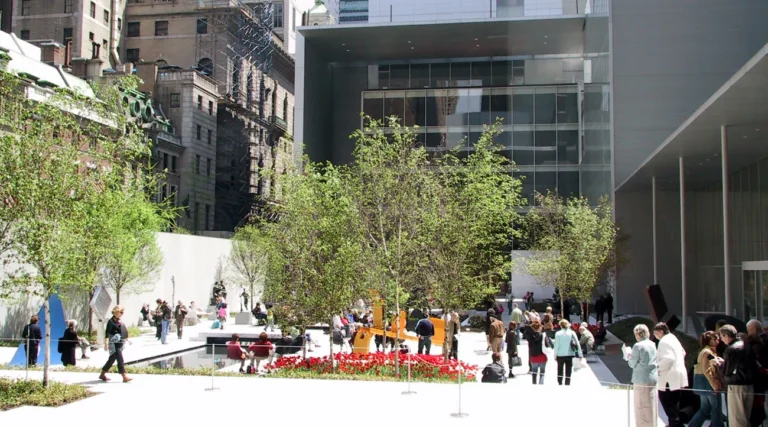
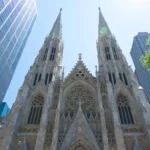
Midtown: Times Square–42nd Street (1, 2, 3, 7, N, Q, R, W, S) for the theaters; 34th Street–Herald Square (B, D, F, M, N, Q, R, W) for the Empire State Building; 47–50th Streets–Rockefeller Center (B, D, F, M) for Top of the Rock and St. Patrick’s; Grand Central–42nd Street (4, 5, 6, 7, S) for Summit and the Chrysler Building; 5th Avenue–53rd Street (E, M) for MoMA.
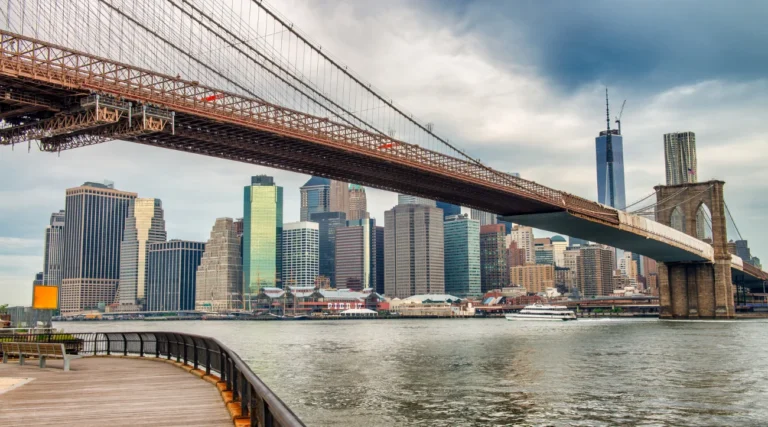
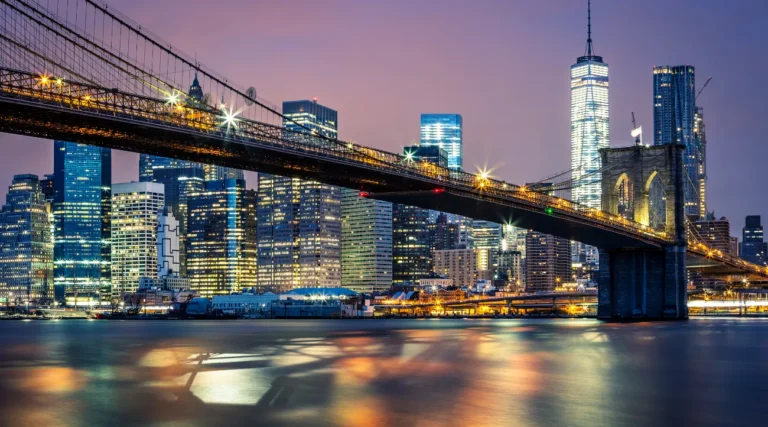
Downtown: World Trade Center (E) or WTC Cortlandt (1) for the 9/11 Memorial; Wall Street (2, 3 or 4, 5) for the Stock Exchange; South Ferry (1) or Bowling Green (4, 5) for Battery Park, the Statue of Liberty boats and the Staten Island Ferry; Brooklyn Bridge–City Hall (4, 5, 6) for the bridge walkway; West 4th Street (A, B, C, D, E, F, M) for Greenwich Village.
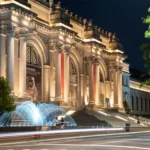
Uptown and Brooklyn: 86th Street (4, 5, 6) for The Met and the Guggenheim; 81st Street–Museum of Natural History (B, C); 59th Street–Columbus Circle (1, A, B, C, D) for Central Park; 125th Street (A, B, C, D or 2, 3) for Harlem; York Street (F) or High Street (A, C) for DUMBO; Bedford Avenue (L) for Williamsburg.
Subway fares
One flat fare covers any distance, including transfers between lines inside the system.
| Fare | Price | Notes |
|---|---|---|
| Subway or local bus | $3 | Tap a contactless card, phone or OMNY Card |
| Seven-day cap | $35 | After 12 paid rides in seven days with the same card or device, further rides are free |
| Single-ride paper ticket | $3.50 | From station vending machines; no free transfer |
| Reduced fare | $1.50 | For eligible seniors and riders with disabilities |
| Children | Free | Under 44 inches tall, up to three with a paying adult |
| AirTrain JFK | $8.75 | Charged at Jamaica and Howard Beach, separate from the subway fare |
A tap also gives one free transfer between subway and bus, or between buses, within two hours. MetroCards are no longer sold, and existing ones are being phased out.
Entering, riding and leaving
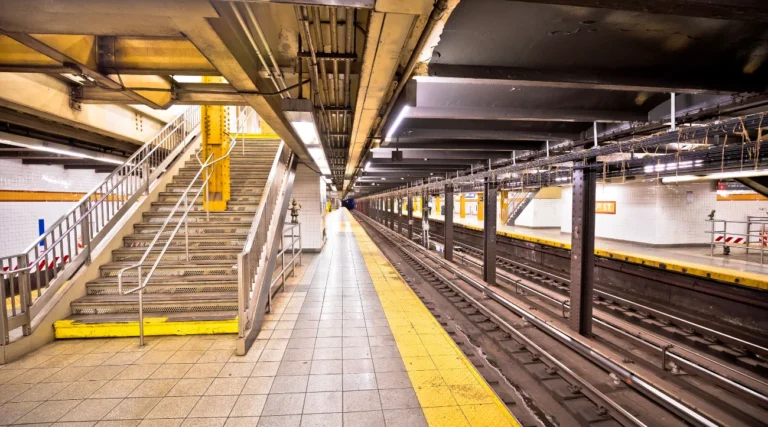
Before you go down the stairs, read the sign over the entrance. It lists the lines served and, at many stations, the direction: “Uptown & The Bronx” or “Downtown & Brooklyn”. Some entrances serve one direction only, and once you have paid you cannot cross over without leaving and paying again.
Hold your card or phone flat against the OMNY reader until it shows GO, then walk through the turnstile. Use the same card or device every time so that your rides count toward the weekly cap. On the platform, signs and countdown clocks show the next trains; check the letter or number on the arriving train, since several routes may use the same track.
Let passengers off before you board, move into the middle of the car and take off your backpack when it is crowded. There is no need to tap when you leave. Follow the exit signs for the street corner you want; large stations have exits several blocks apart.
Elevators, luggage and airport trains
About a third of stations have elevators, marked with a wheelchair symbol on the map. Elevators are sometimes out of service; the MTA website and app list outages in real time. Elsewhere, expect stairs.
Luggage is allowed. Use the wide gate next to the turnstiles: tap, then push the gate or ask the station agent. Avoid rush hours, roughly 7:30 to 9:30 am and 4:30 to 7 pm on weekdays, when trains are packed.
For JFK, take the A train to Howard Beach or the E to Sutphin Boulevard–Archer Avenue and change to the AirTrain. For LaGuardia, take the E, F, M, R or 7 to Jackson Heights–Roosevelt Avenue for the free Q70 bus. Newark Airport is reached by NJ Transit train from Penn Station, not by subway.
Late nights and weekends
The subway never closes, but after about midnight trains run every 20 minutes, most express services run local, and some routes are shortened or replaced by others. Allow extra time and check the app before you set out.
At night, wait in the Off-Hours Waiting Area near the station booth and ride in the middle car, where the conductor is. Stations in Manhattan stay busy until late; if a platform is deserted, wait near the entrance until the train is announced.
What to know
- The fare is the same for one stop or for the whole line.
- An express train can save 15 minutes on long trips up or down Manhattan.
- Free Wi-Fi and phone signal are available in underground stations.
Keep in mind
- Check Uptown or Downtown before you tap; some entrances serve one side only.
- A train on the local track may be running express, and the reverse; listen to announcements.
- Do not move between cars while the train is in motion.
Frequently asked questions
How much is the subway in New York?
$3 per ride, with a cap of $35 in any seven-day period when you use the same card or device.
Can I pay for the subway with a credit card?
Yes. Tap any contactless credit or debit card, or a phone or watch with a mobile wallet, on the reader at the turnstile.
Does the subway run 24 hours?
Yes, every day, with reduced frequency late at night.
What is the difference between local and express trains?
Local trains stop at every station; express trains stop only at major ones, shown as white dots on the map.
Is the subway safe?
Yes for normal use. Keep your belongings close, and late at night ride in the middle car near the conductor.
Does the subway go to the airports?
Not directly. It connects with the AirTrain for JFK and with the free Q70 bus for LaGuardia.
Sights at the end of a short subway ride
The Empire State Building is one block from Herald Square, and hop-on hop-off buses offer an above-ground alternative for a first overview.