













































Type
Open-top sightseeing buses with commentary
Routes
Downtown loop and Uptown loop
Tickets
One-day or multi-day passes, booked online
Best for
A first overview of Manhattan from above the traffic
In short
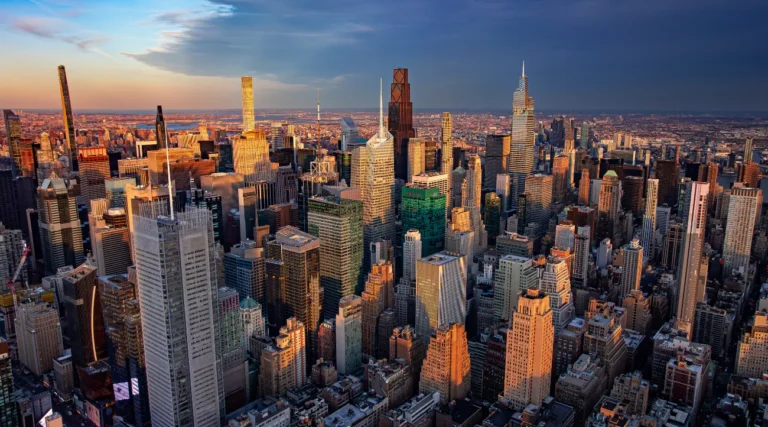
Hop-on hop-off buses are a sightseeing service, not public transport: you buy a pass for one or more days and ride open-top double-deckers around fixed loops, getting off wherever you like. They are slower than the subway and cost more, but on a first day they give you something the subway cannot: a clear picture of how Manhattan fits together, with the landmarks in view the whole way.
☰ Table of contents
The two loops
Operators change the details from season to season, but the pattern is stable: one loop south of Midtown, one loop north of it, both starting around Times Square.
| Loop | Main stops | Time for a full circuit |
|---|---|---|
| Downtown | Times Square, Empire State Building, Flatiron, SoHo, Chinatown, World Trade Center, Battery Park, South Street Seaport, United Nations, Rockefeller Center | About 90 minutes to two hours, depending on traffic |
| Uptown | Times Square, Lincoln Center, Upper West Side, Harlem, Museum Mile, Central Park | About 90 minutes to two hours |
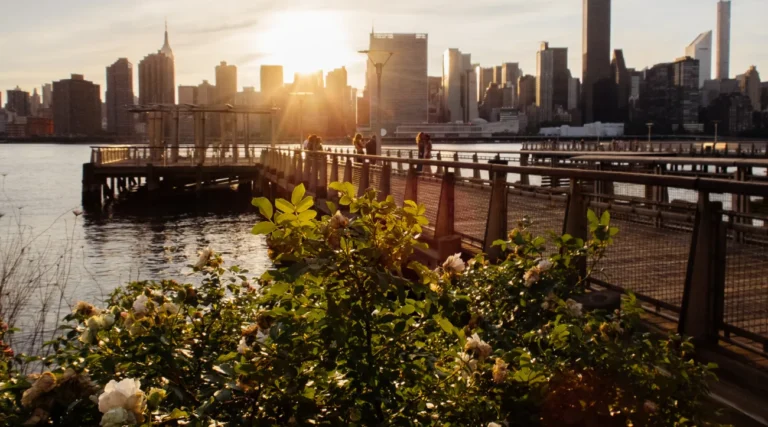
| Night tour | A non-stop evening ride through Midtown and across to Brooklyn for the skyline | Around 90 minutes; you stay on board |
How the pass works
You book a pass, show the code on your phone at any stop and climb to the top deck. From then on you can leave and rejoin as often as you like while the pass is valid.
One day or more
A one-day pass suits a single overview. Two-day or longer passes make sense only if you plan to use the bus as your main transport.
Commentary
Buses have a live guide or recorded commentary through headphones, usually in several languages.
Frequency
Buses pass each stop every 15 to 30 minutes in the daytime; waits are longer early and late in the day.
Extras
Some passes add a harbor cruise, a night tour or attraction entry. Compare what is included before choosing.
Stops close to the main sights
The Downtown loop is the more useful one. It passes the Empire State Building, runs down through SoHo and Chinatown to the World Trade Center and Battery Park, where the Statue of Liberty boats leave, then returns up the East Side.
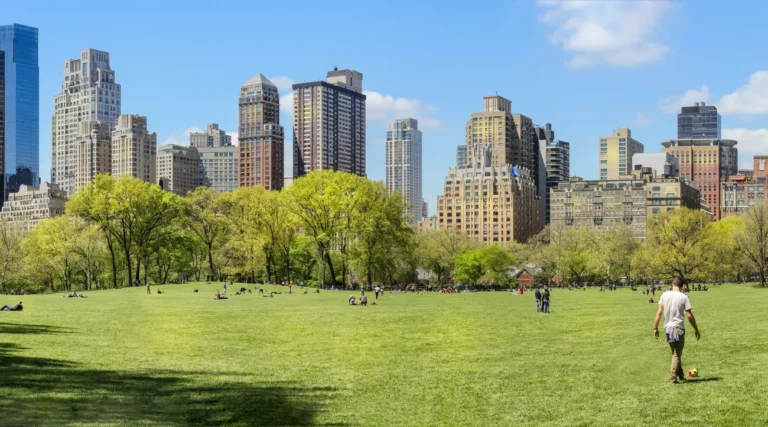
The Uptown loop covers Central Park, the American Museum of Natural History, Harlem and the museums along Fifth Avenue, including the Met and the Guggenheim.
Stops are marked on the street with the operator’s sign and staffed at the busiest points around Times Square.
Sightseeing bus or public transport?
The two do different jobs. Use this comparison to decide where a pass fits in your plans.
| Hop-on hop-off bus | Subway and city bus | |
|---|---|---|
| Price | A day pass costs many times a subway fare | $3 a ride, capped at $35 a week |
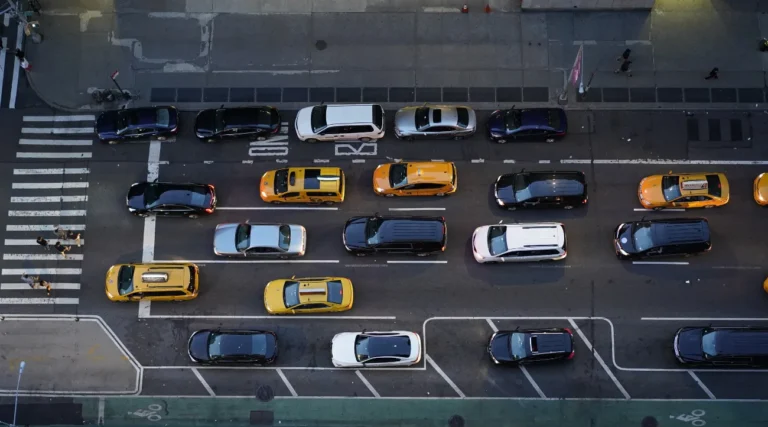
| Speed | Slow in Midtown traffic | Fast and predictable |
| Views | Open top deck, landmarks in sight | Underground for most trips |
| Commentary | Included | None |
| Hours | Daytime, with a separate night tour | 24 hours a day |
A common plan is to ride one full loop on the first morning without getting off, then switch to the subway for the rest of the stay.
Getting the most from a day pass
Start early. The first buses of the morning are the emptiest, traffic is lighter and the low light is better for photos.
Ride the Downtown loop first and get off no more than two or three times; each stop adds a wait for the next bus.
Sit on the right-hand side for the best view of the sidewalks and building fronts, and bring a layer: the top deck is windy even on warm days.
Weather, accessibility and children
The top deck is open. In rain operators hand out ponchos, but the lower deck has limited views; on a wet day a museum is the better plan.
Buses have a ramp and a wheelchair space on the lower deck. Folded strollers can be stored downstairs.
Children usually enjoy the top deck more than any museum queue, and a loop is a good way to rest tired legs in the middle of the day.
Evenings and seasons
Daytime loops stop in the early evening. The separate night tour runs after dark and does not allow hopping off.
In winter days are short and the top deck is cold; services run less often. From spring to fall buses are frequent but fill quickly around midday.
What to know
- The Downtown loop covers the most landmarks
- Buses come every 15 to 30 minutes in the daytime
- Passes are shown on your phone
- A full loop without stops takes about two hours
Keep in mind
- Much slower than the subway in Midtown
- Each hop-off adds a wait for the next bus
- The top deck is open to sun, wind and rain
- Night tours do not let you get off
Frequently asked questions
Is a hop-on hop-off bus worth it in New York?
It is worth it on a first visit if you want an overview with commentary. As everyday transport, the subway is faster and far cheaper.
How long does a full loop take?
Roughly 90 minutes to two hours without getting off, depending on traffic.
Where do the buses start?
Both loops start around Times Square, where the operators have staffed stops and ticket desks.
Can I use the bus to reach the Statue of Liberty ferry?
Yes. The Downtown loop stops at Battery Park, a short walk from the Statue City Cruises departure point.
Do the buses run in the evening?
Daytime loops finish in the early evening. A separate night tour runs after dark as a non-stop ride.
Do I need to book in advance?
Booking online is simpler and often cheaper than buying on the street, and the pass is activated only when you first board.
Choose your sightseeing bus
Compare the current passes, routes and combined tickets on our hop-on hop-off page, along with the tickets visitors book most.