In short
The American Museum of Natural History fills four city blocks on the Upper West Side, facing Central Park. Its halls hold one of the largest dinosaur collections in the world, a life-size blue whale, dioramas of animals from every continent, glittering gems and the planetarium of the Rose Center for Earth and Space. It is the classic rainy-day museum for families, but adults love it just as much. Plan at least three hours and choose your halls in advance.
☰ Table of content
Natural History Museum hours and tickets
The museum is open every day. General admission covers more than 40 permanent halls; the planetarium Space Show, the giant-screen film and some exhibitions need an upgraded ticket.
Hours
-
Every day 10 am – 5:30 pm
Last entry around 5 pm
-
Holidays Closed
Thanksgiving and Christmas Day
Prices
-
Adults $37
General admission
-
Seniors and students $30
With valid ID
-
Children 3–12 $22
Under 3 free
-
With exhibitions From $43
Adds the Space Show or an exhibition
What to see at the Natural History Museum
The museum is a maze of halls on four floors. These are the ones most visitors put at the top of their list.

Fossil halls Don't miss
T. rex, Apatosaurus and a cast of a 122-foot titanosaur on the fourth floor.
Hall of Ocean Life Iconic
The 94-foot blue whale hangs above a two-level hall of marine life.
Rose Center for Earth and Space
The Hayden Planetarium inside a giant sphere in a glass cube.
Gilder Center
The canyon-like atrium, the butterfly vivarium and the insectarium.
Halls of Gems and Minerals
Huge crystals, meteorites and the Star of India sapphire.
The museum at a glance
The essentials to plan your time before you go.
How to visit the Natural History Museum
Go straight to the fourth floor for the dinosaurs before the crowds arrive, then work your way down to the Hall of Ocean Life and the Rose Center. If you want the Space Show, book a time slot when you buy your ticket and plan the rest of the visit around it. Use the Central Park West entrance or the Gilder Center entrance on Columbus Avenue, which is often less busy.

American Museum of Natural History (AMNH): Entry Ticket
Good to know
- General admission includes the Rose Center building and the Gilder Center.
- New York State residents may pay what they wish for general admission, with ID.
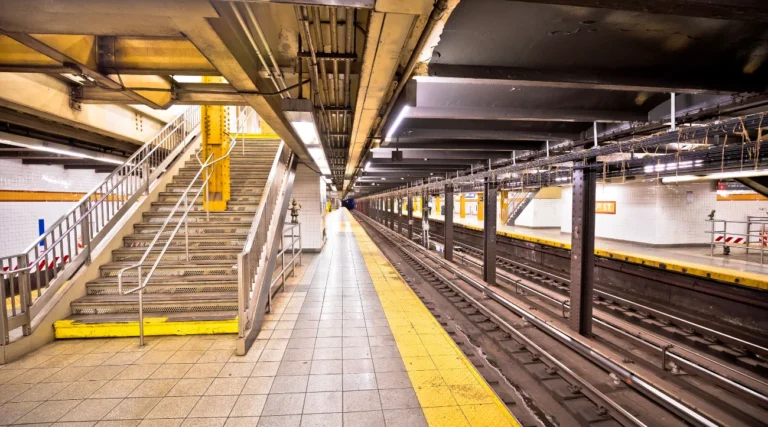
- The 81 St–Museum of Natural History station opens directly into the lower level of the museum.
- There are cafes inside, and Central Park is right across the street for a picnic.
Practical tips
- Start with the dinosaurs on the fourth floor before school groups arrive.
- Book the Space Show for the middle of your visit as a seated break.
- Pick up a map at the entrance: the building is easy to get lost in.
- Combine the visit with a walk in Central Park or The New York Historical next door.
How to reach the Natural History Museum
The museum stands on Central Park West between 77th and 81st Streets, with a subway station in its own basement.
Take the B or C train to 81 St–Museum of Natural History, which has an entrance inside the museum. The 1 train stops at 79 St, three blocks west.
The M79 crosstown bus and the M10 along Central Park West stop by the museum.
From The Met, cross Central Park along the 79th or 81st Street paths in about 20 minutes.
American Museum of Natural History, 200 Central Park West, New York, NY 10024
Getting around New York
A museum the size of a neighborhood
The museum was founded in 1869 by a group of New Yorkers that included the naturalist Albert Bickmore and Theodore Roosevelt Sr., father of the future president. Its first building on Manhattan Square opened in 1877, and over the following decades expeditions sent home fossils, minerals and animals from every corner of the world.

Read allShow less
Read allShow less
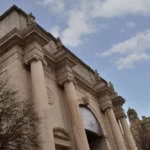
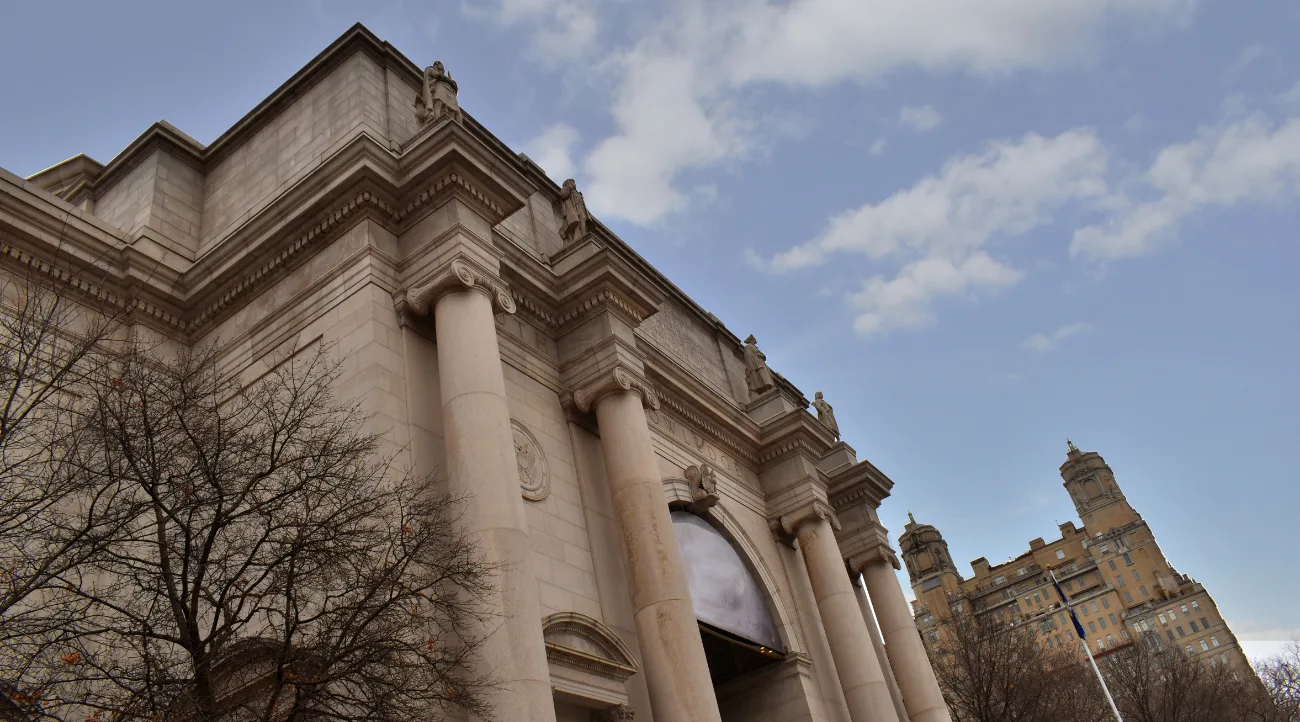
The grand Central Park West facade with its equestrian memorial to Theodore Roosevelt was completed in 1936, the same period as the Hayden Planetarium. The Rose Center for Earth and Space replaced the old planetarium in 2000, and the Richard Gilder Center for Science, Education, and Innovation opened in 2023, linking several buildings. The collections now count more than 34 million specimens and artifacts.
Details and stories to look out for
- The blue whale model in the Hall of Ocean Life is 94 feet long and was installed in 1969.
- The Barosaurus in the entrance rotunda rears up to protect its young from an attacking Allosaurus.
- The Star of India, a 563-carat sapphire, was stolen in 1964 and recovered a few months later.
- The museum inspired the Night at the Museum films.
- The Hayden Sphere of the Rose Center is 87 feet across and holds the planetarium theater.
Tickets for the museum and nearby attractions
Find your stay near the museum
The Upper West Side is a calm, residential base between Central Park and the Hudson River. Compare current availability on the map below.
Frequently Asked Questions - FAQ
How much time do I need?
At least three hours; a full day with the Space Show and an exhibition.
Is the museum open every day?
Yes, from 10 am to 5:30 pm. It closes on Thanksgiving and Christmas Day.
Is it pay what you wish?
Only for New York State residents, with ID, for general admission.
Is the planetarium included?
The Rose Center is included, but the Space Show needs a ticket with one or all exhibitions.
Where are the dinosaurs?
In the fossil halls on the fourth floor.
Is it good for children?
Very. The dinosaurs, the whale and the dioramas are favorites with all ages.
Is there food inside?
Yes, there is a food court and several cafes.
What is nearby?
Central Park, The New York Historical and the Upper West Side.