
























In short
Etihad Museum explains the formation of the United Arab Emirates through documents, images, films and interactive displays. Its Jumeirah location includes the historic Union House setting, giving the subject a direct connection with the place. Choose it for modern national history rather than a general collection of world art or a quick skyline photograph.
The central narrative concerns the years around the Union, particularly 1968–1974.
The museum is on Jumeirah Street, separate from the Creek heritage district.
Allow time for films and interpretation, not just the entrance pavilion.
Admission concessions and guided programmes have their own eligibility and schedule.
☰ Table of content
Etihad Museum admission, opening hours and a realistic visit length
The museum suits visitors who want to understand the political and social setting behind the country’s development. Start with its historical sequence rather than treating the interactive displays as isolated attractions. Films, photographs and documents work together, so leave enough time to follow the story.
The museum information lists daily opening 10:00–20:00 and last entry at 19:00. The official tariff schedule gives individual admission from AED 25, with concessions for eligible students and groups. Check the current date and eligibility when booking; guided sessions and temporary events can have separate arrangements.
Hours
-
Museum opening 10:00–20:00
Published daily hours; confirm the date
-
Last entry 19:00
Leave enough time to follow the galleries
-
Suggested time 1½–2 hours
Editorial allowance; add time for a guided programme
Prices
-
Individual admission From AED 25
About €6; official tariff
-
Eligible students From AED 10
About €2.50; full-time students aged 5–24 in the tariff
-
Groups of 5 or more From AED 20
About €5 per person; check applicable conditions
Follow the Union story through the galleries
Follow the events leading to the Union and the changes that followed it. The late 1960s and early 1970s form the museum’s main frame, giving the images and objects a clear chronology. Read the captions around a film or interactive display before moving on, particularly if the founding of the UAE is unfamiliar to you.
The pre-Union context
Read the circumstances before the federation alongside the story of the agreement.
The founding sequence
Follow the chronology instead of seeing the exhibits as separate displays.
Photographs and films
These help connect political events with people and places.
The entrance pavilion
Its document-inspired form sets up the subject of the museum.
The Union House setting
The site provides a direct historical context for the galleries.
Read the entrance pavilion and Union House setting together
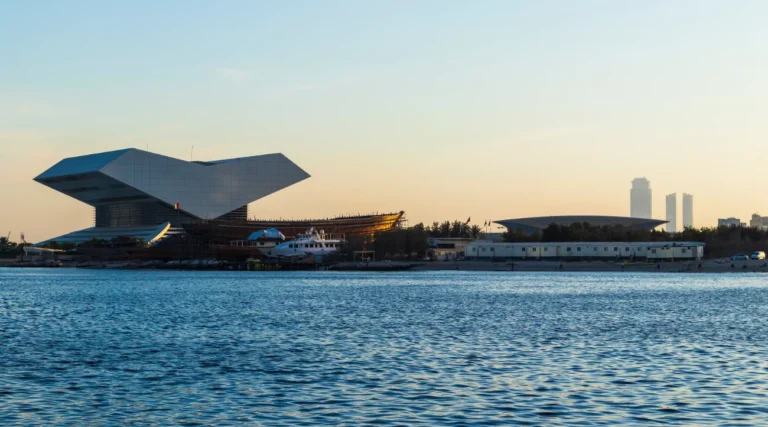
The architecture introduces the subject before the galleries do. The curved entrance pavilion evokes a document, while the columns refer to the pens associated with the constitution. The Union House setting then links the interpretation to a historic place rather than leaving it as an abstract national timeline.
Much of the museum journey continues beyond the entrance pavilion. Photographing the exterior is therefore a different visit from spending time with the exhibitions. Keep these two intentions separate when deciding how long to stay.
Build a Jumeirah cultural visit without rushing the museum
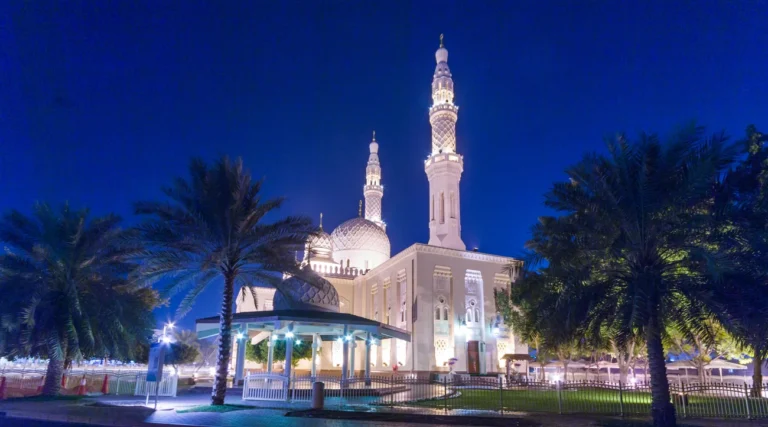
Jumeirah Mosque can make a useful cultural pairing, but its hosted public programme begins at set times. Choose which visit is the priority and leave transport and registration time between them. A museum closing time and a mosque presentation are different kinds of scheduling constraint.
For a slower day, keep Etihad Museum as the main indoor visit and add a nearby meal or exterior walk. Do not try to fit the Creek heritage museums, Downtown and the coast into one short cultural morning simply because they appear close on a city overview map.
Good to know
The museum and Jumeirah Mosque have different admission arrangements.
Allow for the last-entry time as well as closing.
Bring evidence if claiming a student or other eligible concession.
An exterior photo stop does not cover the gallery visit.
Practical tips
Begin with the pre-Union context to make the later exhibits easier to follow.
Leave time for films rather than scheduling only a fast walk-through.
Use a bus or taxi connection if the final Metro walk is impractical in the heat.
Fit a mosque visit around its registration and presentation times.
How to reach Etihad Museum on Jumeirah Street
The visitor address is 1 Jumeirah Street. There is no Metro entrance at the museum door, so compare a bus or taxi connection with the length of the final walk. Give the museum’s name and address rather than Union House alone if arranging a drop-off.
For a mosque pairing, plan the next leg to Jumeirah Mosque specifically. A city tour may stop at another mosque or omit museum interiors; read its actual itinerary rather than assuming all cultural stops are included.
Specify Etihad Museum, 1 Jumeirah Street, and use the visitor entrance signs.
The Red line can form part of the journey, followed by a bus or taxi. There is no Metro entrance at the museum.
Check the actual route to Jumeirah Mosque before joining two cultural visits on one day.
Etihad Museum, 1 Jumeirah Street, Jumeirah 1, Dubai, United Arab Emirates
Getting around Dubai
Local route: plan the museum entrance first, then any onward Jumeirah stop. An exposed street walk and an air-conditioned gallery visit need different time allowances in Dubai’s heat.
Distinguish national history from Dubai’s Creek heritage
Etihad Museum focuses on the formation of the UAE, while Al Shindagha explores different aspects of Dubai’s local heritage and life around the Creek. The two museums answer related but distinct questions. Choosing one for a limited visit can be more rewarding than rushing both.
Neither is an observation deck or an entertainment museum. Make the choice around your interests: a national founding story here, a network of themed heritage houses at Al Shindagha, or a different kind of attraction elsewhere.
The story of Etihad Museum
The museum’s subject centres on the events that led to the declaration of the UAE in 1971 and the surrounding years. The historic Union House site gives that national story a physical setting within Dubai.
Read allShow less
Read allShow less
Six emirates formed the federation on 2 December 1971; Ras Al Khaimah joined the following year. The exhibition’s wider chronology helps explain the period before and after that moment rather than reducing the story to a single ceremony.
The new museum architecture and the historic site serve different roles. The entrance pavilion introduces the idea of the founding document, while the galleries use interpretation and archival material to build the narrative. Seeing the setting and the museum together helps explain why this location matters.
Dubai Frame tickets and guided city experiences
Frequently Asked Questions - FAQ
What is Etihad Museum about?
The formation of the United Arab Emirates, especially the years around 1968–1974, presented through documents, images, films and interactive exhibits.
Where is it?
At 1 Jumeirah Street in Jumeirah, on the historic Union House site. It is separate from the Creek heritage district.
What are the published hours?
Daily 10:00–20:00, with last entry at 19:00 in the museum information. Confirm the selected date.
What does individual admission cost?
The official tariff lists from AED 25, about €6. Eligible students and groups have separate rates and conditions.
How much time should I allow?
Around 1½–2 hours as a first-visit allowance, with additional time for any guided programme or temporary exhibition.
Can I reach it directly by Metro?
There is no station at the entrance. Compare a bus or taxi connection and the final walk.
Is it the same as Al Shindagha Museum?
No. Etihad concerns the UAE’s founding story; Al Shindagha covers Dubai heritage through themed houses near the Creek.
Can I combine it with Jumeirah Mosque?
Yes, with realistic travel time and the mosque’s separate registration and public-session schedule.