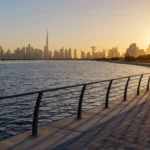
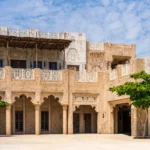
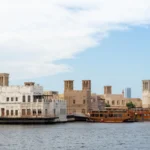
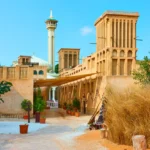
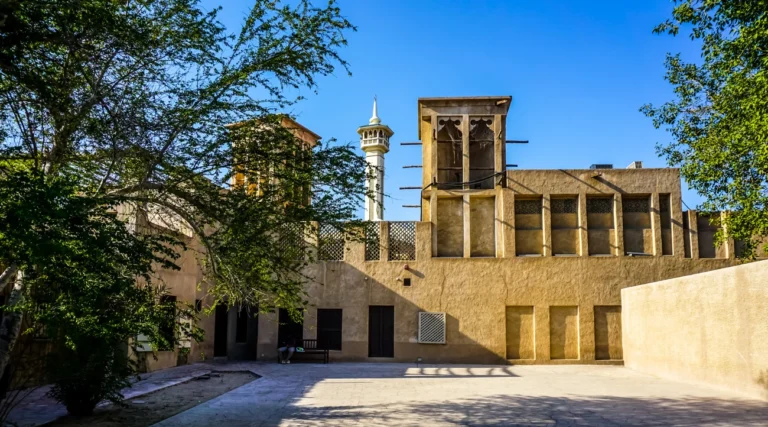
Bur Dubai is the Creek-side district where Dubai’s older urban pattern is easiest to read on foot. Within it, Al Fahidi Historical Neighbourhood concentrates wind towers, courtyards and narrow lanes. The textile-market streets and the waterfront add working commerce to that heritage setting; they are not simply backdrops for photographs.
Finding Al Fahidi within the wider Bur Dubai district
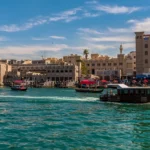
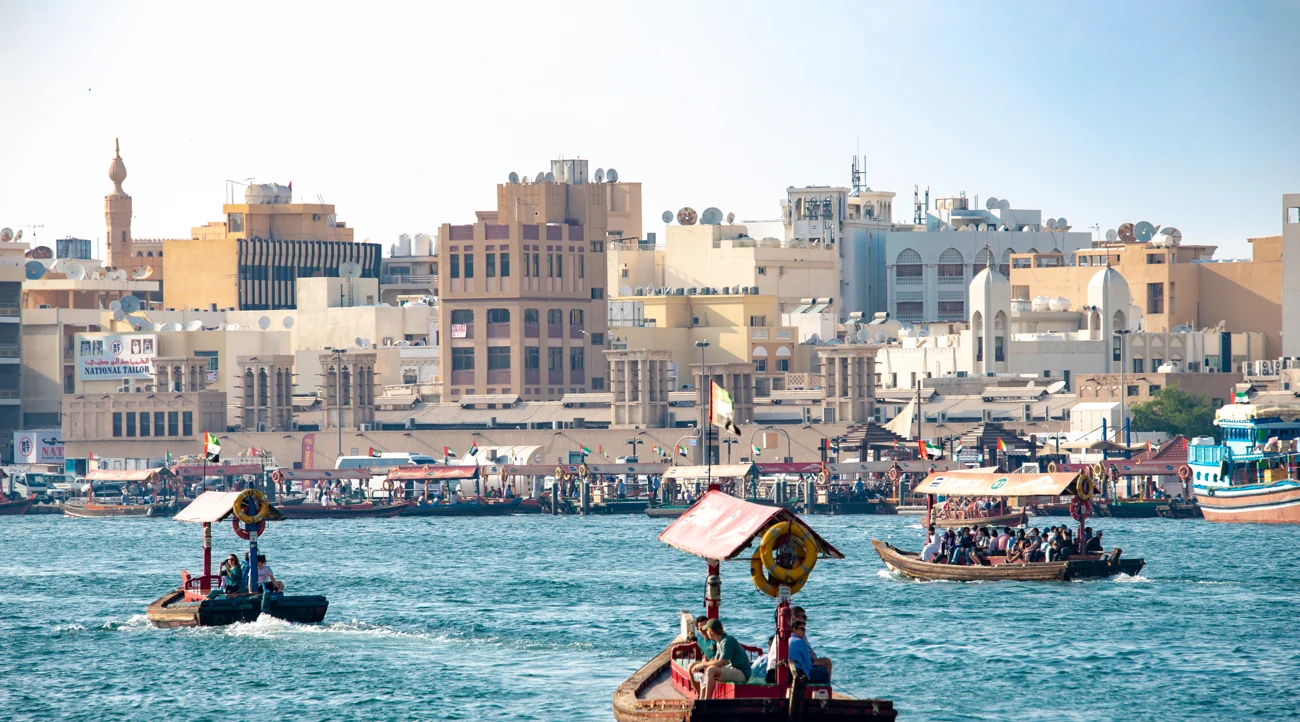
Stay aware of the Creek bank. Al Fahidi, the textile-market area and Al Seef are on the Bur Dubai side. Deira’s souks lie across the water. A short abra ride links the banks, but its exact landing pair changes your onward walk.
Al Fahidi is a small heritage area inside the wider district. An address labelled Bur Dubai can be well beyond its lanes, so check the actual location before assuming that a museum, hotel or restaurant is part of a short heritage circuit.
- Choose a starting point: The Bur Dubai bank of Dubai Creek.
- Keep one main visit: leave time for the district itself instead of buying several back-to-back admissions.
- Local arrival: Green Line, then a local walk.
- Read the exact address: a district name does not establish the correct attraction entrance or pickup point.
- Outdoor conditions matter: use indoor breaks when heat makes the walking sections uncomfortable.
- Separate access: meals, paid attractions and hotel facilities have their own conditions.
Six places and choices that explain Bur Dubai and Al Fahidi
These six places and planning points help you read Bur Dubai and Al Fahidi on the ground. They form an editorial shortlist rather than six compulsory paid stops. Choose the elements that fit your time and interests.
A practical walk through Bur Dubai and Al Fahidi
Begin in Al Fahidi when the outdoor conditions suit walking. Explore the lanes, pause in a café or open cultural venue, then continue towards the textile-market streets and Creek. The market and waterfront provide a useful contrast with the quieter courtyards.
From the water, choose between an Al Seef extension on the same bank and an abra crossing to Deira. Those are different continuations. Do not rush through both simply to collect two place names, and do not assume entry to Dubai Museum at Al Fahidi Fort as part of this route.
Guided Old Dubai walks to compare
A guided Old Dubai walk can add cultural context to the heritage lanes and souks. Compare the actual route, meeting point and inclusions below. An abra crossing or a tasting is included only when the selected offer says so; a public lane does not require a tour ticket.
- Do not plan by skyline alone: use the exact entrance and ground-level route.
- Do not bundle every optional attraction: one well-chosen visit leaves room for Bur Dubai and Al Fahidi.
- Do not assume inclusions: a ticket or venue reservation covers only the services stated in that offer.
- Build the day around one part of Bur Dubai and Al Fahidi. Then add a meal, a manageable walk and a clear return connection.
- The practical transport guide below helps with the journey rather than adding another sightseeing obligation.
Getting to Bur Dubai and Al Fahidi
The Green Line is useful for the wider Bur Dubai area. Choose a station and exit for the part of the district where your walk begins; Sharaf DG and Al Ghubaiba serve different approaches. Taxis also need a named accessible pickup point rather than a narrow lane inside Al Fahidi.
Choosing a base near Bur Dubai and Al Fahidi
A Bur Dubai or Deira base favours Creek-side walks and the older trading districts. They are different banks and not interchangeable addresses. Compare noise, room access, metro walking routes and the exact property location. Our Deira accommodation guide gives a separate shortlist across the water.
Practical Dubai guides for your visit
A meal or café break in Bur Dubai and Al Fahidi
Bur Dubai suits a café break during a heritage walk and a more substantial meal in the wider trading streets. Choose the actual venue and menu rather than assuming that every heritage-style building serves Emirati food. A cultural meal with a host is a separate experience and should be booked on its own terms.
Bur Dubai’s trading roots beside the Creek
Bur Dubai’s relationship with the Creek reflects the trading settlement that preceded the modern skyline. Waterborne commerce, market streets and homes developed close to one another. The surviving heritage setting explains why the district feels different from the planned boulevards of Downtown.
Al Fahidi’s wind towers are part of that architectural story: their form helped bring moving air into buildings before modern air conditioning. The courtyards and close-grained lanes also shape shade and movement. Read these features as responses to local living conditions, rather than as decorative details copied from a theme park.
Wind towers, courtyards and two Creek banks
Compare the lanes with the trading waterfront. The shift from quiet courtyards to textile-market streets and boat landings is a useful way to understand the district. You do not need to turn each building into a paid visit.
The two Creek banks tell a connected story. A crossing to Deira extends the commercial context, while an Al Seef walk stays on the Bur Dubai side. Choose the continuation that fits your time and interests.
Tickets and experiences to consider
Questions about Bur Dubai and Al Fahidi