




























In short
Al Shindagha Museum explores Dubai’s heritage through themed houses beside the Creek. Trade, seafaring, crafts, scents and domestic life provide different ways into the story. Choose a manageable sequence of pavilions rather than expecting every subject to fit inside a single short gallery visit.
The museum is spread across a heritage district near Al Ghubaiba.
Begin with the visitor arrangements and the Dubai Creek story.
Perfume House and Culture of the Sea offer distinct themes.
A walk through Old Dubai does not automatically include museum admission.
☰ Table of content
Al Shindagha admission, opening hours and a multi-house visit
This is a museum district with several themed pavilions, not one building to tick off quickly. Plan around two or three subjects that interest you, leaving time to walk between houses and follow the interpretation. A complete survey needs longer than a short museum stop.
The museum brochure lists daily hours of 10:00–20:00. Current visitor-product instructions give last admission at 19:00. The official individual tariff is from AED 50, with separate group and eligible student rates; reseller offers may differ. Check the precise ticket and current pavilion access before choosing a route.
Hours
-
Museum hours 10:00–20:00
Published daily hours; confirm current access
-
Last admission 19:00
Listed in visitor-product instructions
-
First-visit allowance 2–3 hours
Editorial selection of houses, not a complete survey
Prices
-
Individual tariff From AED 50
About €12.50; official tariff
-
Eligible students From AED 20
About €5; full-time students aged 5–24
-
Groups of 5 or more From AED 40
About €10 per person; conditions apply
Choose the heritage themes that interest you most
The Creek narrative gives useful context for the later houses: how water routes, trade and livelihoods shaped the city. From there, choose a theme such as scent, maritime life or traditional craft. This makes a coherent visit rather than a race between every door on the map.
Dubai Creek: Birth of a City
Use the waterway story as an introduction to the museum district.
Perfume House
Explore the cultural role of scent and the materials behind traditional fragrances.
Culture of the Sea
Consider livelihoods linked to the sea, including the heritage of pearl diving.
Traditional crafts
Look at the techniques and materials alongside the people who used them.
Al Maktoum Residence
A historic residence forms part of a much wider museum setting.
Start with the Creek, then move between the houses
Start with orientation before choosing the next house. The visitor map groups the museum into themed pavilions spread through historic houses. Some displays can be temporarily unavailable, so ask which parts are open on your date and build the route around them.
The houses and the lanes between them are both part of the setting. Even though exhibitions are indoors, moving across the district adds outdoor time. In hot weather, a smaller selection with pauses is more realistic than assuming the entire visit is continuously air-conditioned.
Combine the museum with the Bur Dubai trading district
The museum works naturally with a wider Bur Dubai walk because Al Ghubaiba and the older trading areas are nearby. Choose whether the museum or the souks are the main purpose of the outing; a long museum visit followed by Al Fahidi and a Deira crossing can become a full day.
If crossing Dubai Creek, go to a designated abra station and read the route signs. The inexpensive transport crossing is different from a private cruise or a guided heritage tour. A tour that passes the district may not include entry to the themed houses.
Good to know
The museum district is not one continuously indoor hall.
Ask about current pavilion access before choosing a route.
Group and student tariffs require the relevant eligibility.
An Old Dubai walk and museum admission are separate arrangements.
Practical tips
Begin with the Creek story, then select two or three themes.
Use the visitor map to avoid retracing the same lanes unnecessarily.
Allow outdoor walking time between houses in warm weather.
Keep a later souk visit or Deira crossing flexible.
How to reach Al Shindagha from Al Ghubaiba
Al Ghubaiba on the Green line is a practical approach to the Al Shindagha district. Follow the visitor-centre directions rather than navigating only to one historic house. The museum’s various entrances and pavilions make a precise starting point useful.
By taxi, specify Al Shindagha Museum and the visitor entrance. If arriving by water transport, check the actual service, stop and timetable; a museum address beside the Creek is not a universal boat boarding point.
Al Ghubaiba on the Green line serves the district. Follow the museum visitor-centre signs.
Specify Al Shindagha Museum and its visitor entrance, not only a house name.
Use a designated abra or water-transport stop and confirm the exact route. A museum ticket is not a transport pass.
Al Shindagha Museum, Al Shindagha Historical District, Bur Dubai, Dubai, United Arab Emirates
Getting around Dubai
Local route: begin at the visitor arrangements near Al Ghubaiba, choose your museum houses, then continue towards the older Bur Dubai trading area only if time and heat allow.
Understand the district beyond a single historic house
The museum is more than the Al Maktoum Residence alone. Its wider programme connects maritime life, craftsmanship, food, faith and everyday practices. Read each pavilion as one aspect of the district’s story rather than assuming the same ticket means every room is operating.
Al Fahidi and Al Seef are different places on the Bur Dubai bank. They can extend an Old Dubai outing, but they are not alternative names for Al Shindagha Museum or proof that a free neighbourhood walk includes its exhibitions.
The story of Al Shindagha Museum
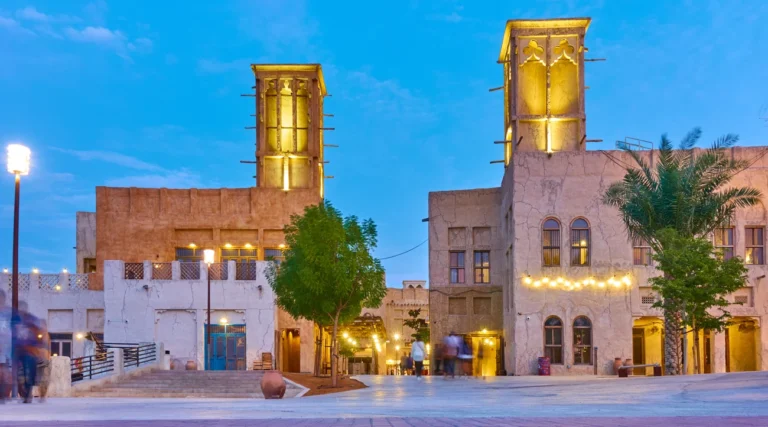
Al Shindagha sits beside the waterway around which Dubai’s trading life developed. The museum uses the district’s houses to tell stories of maritime livelihoods, domestic life and the skills that supported the city.
Read allShow less
Read allShow less
Rather than putting every subject into one new building, the museum distributes its interpretation across heritage houses and themed pavilions. That layout makes the movement between spaces part of the experience, while modern displays help explain practices and objects that may be unfamiliar to visitors.
The Al Maktoum Residence provides one historical focus, but the district’s wider stories concern communities as well as rulers. Scent, craft, food and the sea reveal different kinds of knowledge and exchange. Following a small group of those themes can give a deeper understanding than trying to see the entire museum district in a hurry.
Dubai passes and Old Dubai walking experiences


Frequently Asked Questions - FAQ
Is Al Shindagha one building?
No. It is a museum district with themed pavilions spread through heritage houses.
How much time should I allow?
Around 2–3 hours for a selected first visit, with longer needed to explore more themes or join a programme.
What are the opening hours?
Published daily hours are 10:00–20:00, with last admission at 19:00 in visitor-product instructions. Check the selected date and pavilion access.
What is the individual tariff?
The official tariff lists from AED 50, about €12.50. Reseller offers can differ; check the actual ticket and eligibility.
Which Metro station is useful?
Al Ghubaiba on the Green line, followed by the walk to the museum visitor arrangements.
Is everything indoors?
Exhibitions are in different houses, so moving between them adds outdoor walking. Plan for the heat.
Does an Old Dubai walking tour include the museum?
Only if the selected itinerary explicitly includes admission. Passing the district is different from entering its exhibitions.
Is it the same as Al Fahidi or Al Seef?
No. These are different places on the Bur Dubai side of the Creek, with their own character and visitor arrangements.