























Explore all cities

Passeig del Born in Barcelona: medieval history, nightlife, and culture

An insider walkthrough exploring medieval tournament grounds, Santa Maria del Mar, cast-iron market halls, tapas bars, and evening traditions.

In short

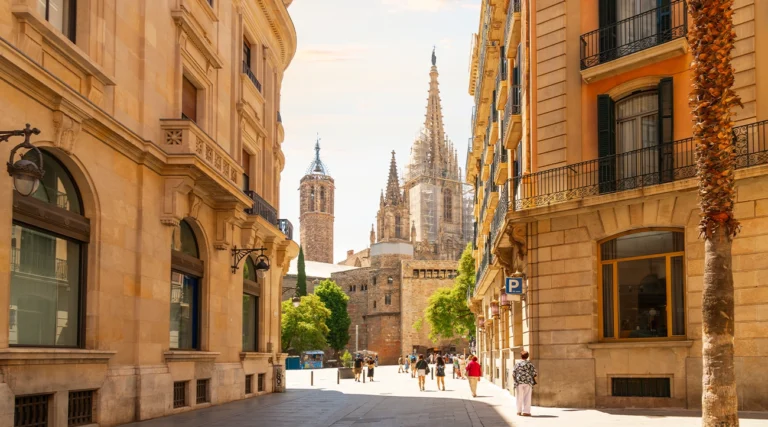
Passeig del Born is the vibrant historic spine of Barcelona’s La Ribera district, spanning 200 meters from the Gothic basilica of Santa Maria del Mar to the cast-iron market hall of El Born CCM. In the Middle Ages, this wide tree-lined esplanade served as the city’s central arena for jousting tournaments, public executions, and carnival celebrations. Today, stone benches beneath leafy plane trees sit alongside independent designer ateliers, traditional vermouth bars, and contemporary cocktail lounges.

  • 200-meter pedestrian avenue linking Santa Maria del Mar to El Born CCM.

  • Former medieval arena for jousting tournaments and festival celebrations.

  • Heart of El Born’s lively artisan shopping and cocktail scene.

  • Bordered by fourteenth-century Gothic architecture and nineteenth-century cast iron.

  • Served by Jaume I and Barceloneta metro stations on line L4.

☰ Table of content

The perfect stop

Historic stone benches under plane trees overlook fourteenth-century Gothic facades and nineteenth-century cast-iron architecture.

  • Recommended stop time 35'

    Provides sufficient time to sit beneath the plane trees, savor a glass of vermouth at a sidewalk terrace, inspect Gothic stonework on Santa Maria del Mar, and watch passersby along the pedestrian strip.

  • Local customs

    Residents stop for a midday vermut served with skewered olives and crisps, patrons carry draft craft beers to stone benches as twilight falls, and locals greet neighbors outside wine bodegas before late-night dinners.

What to see on Passeig del Born

Strolling along this historic 200-meter pedestrian esplanade reveals centuries of civic trade, medieval spectacles, and architectural evolution.

1

Santa Maria del Mar Must see

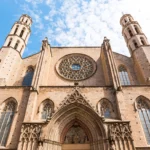
Fourteenth-century Catalan Gothic basilica featuring soaring octagonal towers.

2

El Born CCM

Nineteenth-century iron market hall preserving 1714 archaeological ruins.

3

Medieval tournament grounds

Open stone esplanade once hosting knights and festivals.

4

Carrer de Montcada corner

Historic lane lined with grand medieval merchant palaces.

5

Historic plane trees

Shaded canopy framing boutique shops and cocktail bars.

Quick summary of Passeig del Born

A walk along Passeig del Born combines medieval pageantry, poignant 18th-century Catalan history, and vibrant contemporary bar culture.

Explore activities on Passeig del Born

Deepen your experience with guided medieval history walking tours of La Ribera, fast-track entry to Santa Maria del Mar’s rooftop terraces, and evening tapas crawls.

Moco Museum

Barcelona: "El Born" Walking Tour + Entry to Picasso and Moco Museums

See more of Spanish culture with a walking tour and admission to two museums
A person in a dynamic pose with water droplets around them, wearing a black outfit against an orange background.

Barcelona: Flamenco Show at La Perla del Born

Listen to live music and watch traditional performances
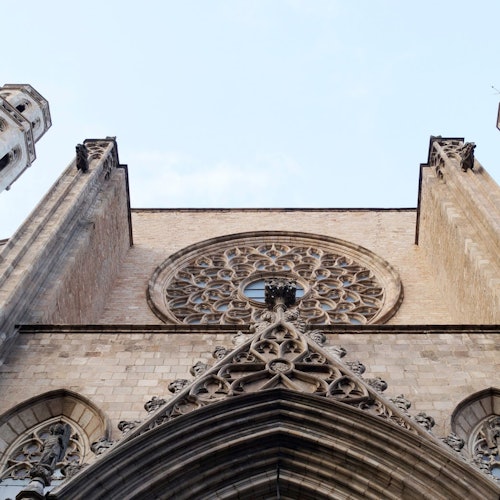
Santa Maria del Mar

Santa Maria del Mar Guided Tour: Interior and Terraces

A guided tour through Santa Maria del Mar, and up to the roof!

Good to know

  • Fully pedestrianized walkway: vehicles cannot enter, ensuring relaxed walking.

  • Ruins inside market hall: Born cultural center entry remains completely free.

  • Metro Jaume I closest: five minutes walk along vibrant shopping streets.

  • Nightlife draws lively crowds: evenings become noisy with outdoor drinkers.

Practical tips

  • Visit market hall ruins: view excavated 1714 streets beneath glass walkways.

  • Climb church rooftop terraces: catch sunset panoramas above Santa Maria del Mar.

  • Order vermouth at counters: traditional bodegas charge less inside than terraces.

  • Watch belongings at night: keep personal items secure during busy evenings.

How to reach Passeig del Born

Accessing this historic avenue is straightforward due to its central location in the old quarter and short walking distances from nearby metro and railway stations.

Metro

Take line L4 to Jaume I and walk east along Carrer de l'Argenteria, or exit at Barceloneta and walk five minutes north.

Bus

Ride routes 47, 120, V15, or V17 stopping near Via Laietana or Pla de Palau.

Walking

Cut through the Gothic Quarter via Plaça de l'Àngel, stroll down from Parc de la Ciutadella, or walk up from Port Vell.

Passeig del Born, Barcelona

History of Passeig del Born

Passeig del Born took shape during the 13th century as an open sandy expanse just outside the original Roman city walls. Situated in the La Ribera district, which flourished thanks to thriving maritime trade and seafaring guilds, the avenue became the premier public square of medieval Barcelona. The Catalan word born itself referred directly to a jousting field, where armored knights collided in equestrian tournaments before roaring crowds of merchants and nobles.

Beyond chivalric contests, the promenade was the democratic beating heart of civic life. It hosted lively seasonal fairs, carnival masquerades, and solemn religious processions, but also darker public events, including Inquisition trials and public executions. Rising directly at its western end in the 14th century was the basilica of Santa Maria del Mar, built entirely by local guild dockworkers (bastaixos) as a monumental symbol of community devotion and merchant wealth.

The avenue’s historical trajectory changed irrevocably following the War of the Spanish Succession. After the brutal 1714 Siege of Barcelona, King Philip V ordered the demolition of a vast section of the La Ribera neighborhood directly adjacent to the promenade to erect the Ciutadella military fortress, designed to subjugate the local population. The avenue fell into economic stagnation for decades under the shadow of royal artillery.

Revitalization arrived in 1876 with the inauguration of the Mercat del Born at the avenue’s eastern terminus, designed by Josep Fontserè as Barcelona’s first major cast-iron civic hall. The market revitalized merchant life for nearly a century until its closure. In the early 2000s, archaeological digs inside the market uncovered the preserved 1714 city ruins, transforming the space into a memorial cultural center and securing Passeig del Born as an enduring crossroads of medieval triumph, wartime memory, and contemporary social life.

Curiosities about Passeig del Born

  • Medieval jousting arena: the word born means tournament field, where knights competed in grand chivalric jousts during the 13th century.

  • Dockworkers built the basilica: port carriers known as bastaixos transported massive Montjuïc stones on their backs to build Santa Maria del Mar.

  • Buried 1714 city streets: the iron market hall houses an entire neighborhood preserved under glass, destroyed after the historic siege of 1714.

  • Site of Inquisition trials: during the 16th century, the promenade served as the public square where religious courts held trials and executions.

  • First cast-iron civic market: the Mercat del Born opened in 1876 as the city’s very first covered iron and glass retail structure.

Tickets and tours on Passeig del Born

Find your stay on Passeig del Born

Staying near Passeig del Born immerses you in Barcelona’s most atmospheric medieval district, where historic stonework, artisan workshops, and vibrant culinary nightlife converge outside your door.

Frequently Asked Questions - FAQ

What is the best time to visit Passeig del Born?

Mornings before 11:00 offer calm, quiet walks among historic landmarks, while evening after 19:00 provides the best tapas and cocktail atmosphere.

Yes, access to the elevated viewing walkways inside the cast-iron building is free, while guided excavations require a separate ticket.

Yes, the avenue is crowded, well-lit, and lively until late, though keeping bags zipped protects against opportunistic pickpockets in crowded bars.

It is roughly a 15-minute walk south past the historic Pla de Palau directly down to the sands of Barceloneta Beach.

Jaume I on line L4 is the closest station, located just a three-minute stroll down Carrer de l’Argenteria.

No, the entire length of the boulevard is completely pedestrianized, paved with stone, and free of motor vehicle traffic.

The 1714 siege resulted in the destruction of the surrounding neighborhood by royal decree, whose preserved street foundations remain visible inside the market.

Yes, the surrounding pavement is flat and level, and the basilica provides ramp access at its main portals.

More activities and experiences in Barcelona

You might also be interested in...

The journey continues…

Poblenou aerial view
Basilica de Santa Maria del Pi facade
Entrance of the Poble Espanyol
Barcelona romantic hotel with Cathedral vista
Montjuïc aerial landscape
Focused woman navigating with map

Must-Do Activities & Tours

Share:
Prev
The best paella in Barcelona
Next
Passeig de Gràcia: architecture, shopping, and landmarks

Explore all cities